By Oko
Founder, Offshore Pipeline Insight
March 15, 2026
The drilling sector in oil and gas—especially offshore and deepwater—is undergoing rapid transformation in 2026. With rig utilization high, day rates elevated, and pressure to cut costs while meeting ESG goals, operators are scaling technologies that reduce non-productive time (NPT), enhance precision, and minimize environmental impact. From autonomous systems to advanced analytics, these five trends are reshaping how wells are planned, drilled, and managed.Here are the key ones to watch this year.
1. Agentic AI and Autonomous Drilling Optimization
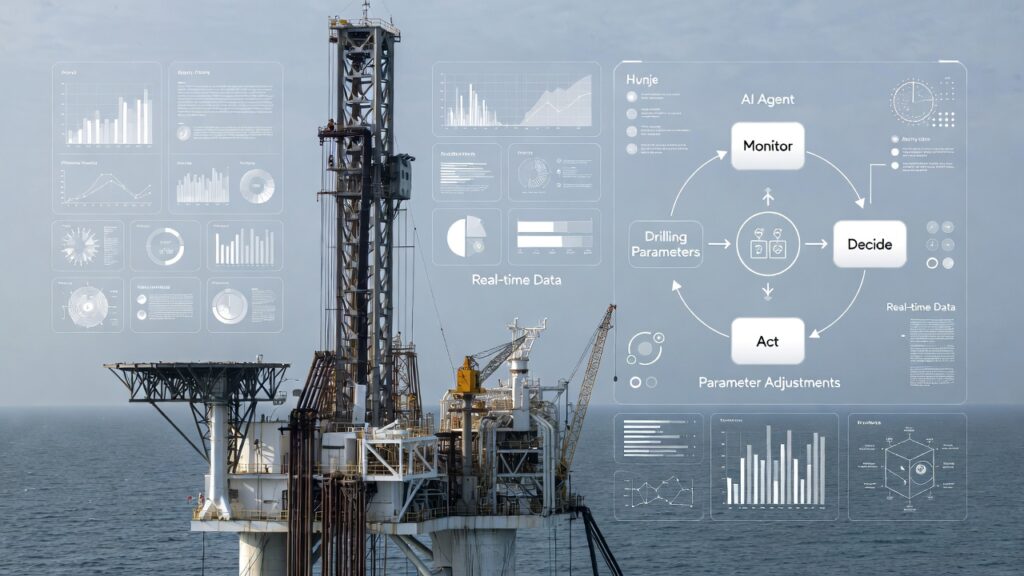
Agentic AI—autonomous, goal-oriented systems that sense, reason, plan, and act moves from pilots to production-scale in 2026. These systems integrate real-time data from downhole sensors, seismic, and surface equipment to autonomously adjust drilling parameters like weight-on-bit, ROP, and mud flow. This reduces NPT by 15–30%, improves safety in HPHT environments, and optimizes trajectories in complex wells.In offshore settings, agentic AI enables closed-loop control, predicting issues like stuck pipe or kicks before they occur. Deloitte and industry reports highlight AI/gen AI spending surging, with agentic applications in drilling optimization leading the charge.
Offshore drilling rig with digital overlay showing AI-driven real-time parameter adjustments.Another diagram illustrating agentic AI workflow in drilling operations.
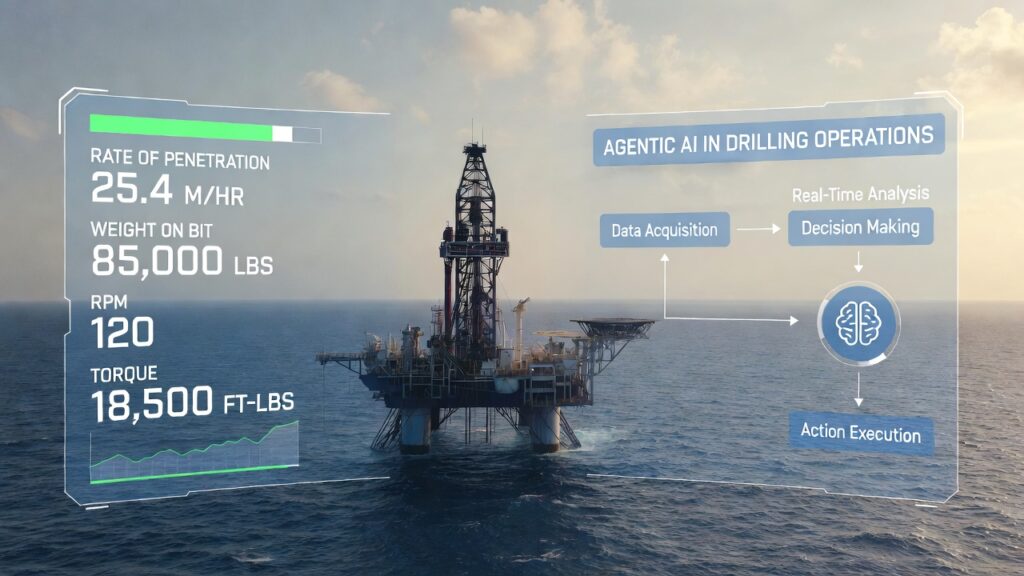
Another diagram illustrating agentic AI workflow in drilling operations.
2. Automation, Robotics, and Rigless/LWI Operations
Automation and robotics are standardizing on rigs: automated pipe handling, robotic inspections, and remote-operated vehicles (ROVs) reduce human exposure to hazards. Rigless plug and abandonment (P&A) and light well intervention (LWI) using coiled tubing or wireline from vessels cut costs by up to 50% compared to full rigs.Baker Hughes and others deploy robotic systems for multi-well campaigns, while autonomous drilling control systems become common on newbuilds. This trend accelerates in deepwater where vessel constraints are tight.Photo of automated drilling rig floor with robotic arms handling pipe.
3. Digital Twins and Real-Time Simulation for Drilling
Digital twins virtual replicas of wells, rigs, and reservoirs evolve into simulation engines in 2026. They integrate IoT sensor data for real-time modeling, predictive maintenance, and scenario testing before drilling starts. This optimizes bit selection, trajectory planning, and fluid dynamics, reducing surprises and improving recovery.In offshore, twins help simulate deepwater challenges like pressure management or hydrate risks. Combined with edge computing, they enable on-rig decisions without constant shore communication.Schematic of a digital twin for drilling operatio
4. Advanced Drilling Automation and Closed-Loop Systems
Closed-loop drilling systems use AI/ML to automatically adjust parameters based on downhole feedback, minimizing human intervention. This includes managed pressure drilling (MPD) enhancements, automated directional control, and predictive analytics for tool wear.Trends show adoption in challenging applications: longer laterals, U-turn horizontals, and HPHT wells. Real-time analytics cut drilling time and costs while boosting accuracy.Diagram of closed-loop drilling control system with sensors and AI feedback.
5. Sustainability-Focused Drilling Tech: Low-Emission Rigs and CCUS Integration
Drilling tech increasingly prioritizes emissions reduction: hybrid/electrified rigs, low-carbon drilling fluids, and methane capture. CCUS tie-ins allow CO₂ injection during or post-drilling in depleted fields.Offshore, hybrid platforms reduce flaring and auxiliary power emissions. This aligns with regulations and investor demands, with tools like advanced cementing for permanent barriers in abandonment.Photo of a modern hybrid offshore drilling rig with emission reduction features.
Looking Ahead
These five trends agentic AI, automation/robotics, digital twins, closed-loop systems, and sustainability tech are converging to make drilling faster, safer, cheaper, and greener in 2026. Operators adopting them gain competitive edges in a high-cost, regulated environment.
For offshore pros: Which trend is impacting your operations most this year? Share in the comments!