By Oko
Founder, Offshore Pipeline Insight
March 15, 2026
Subsea infrastructure trees, manifolds, flow lines, risers, umbilicals, and jumpers—operates in one of the harshest environments on Earth: high pressure, low temperature, corrosive seawater, cyclic loading, and remote access. Integrity monitoring is essential to detect degradation (corrosion, fatigue, erosion, cracks, leaks, or anode depletion), prevent failures, comply with regulations (e.g., DNV-RP-F206, ISO 19901-9), and extend asset life cost-effectively.
In 2026, operators combine traditional inspection with advanced real-time and predictive techniques to shift from periodic to continuous, condition-based integrity management.
This blog outlines the leading subsea integrity monitoring techniques, their applications, and benefits, with visuals for clarity.
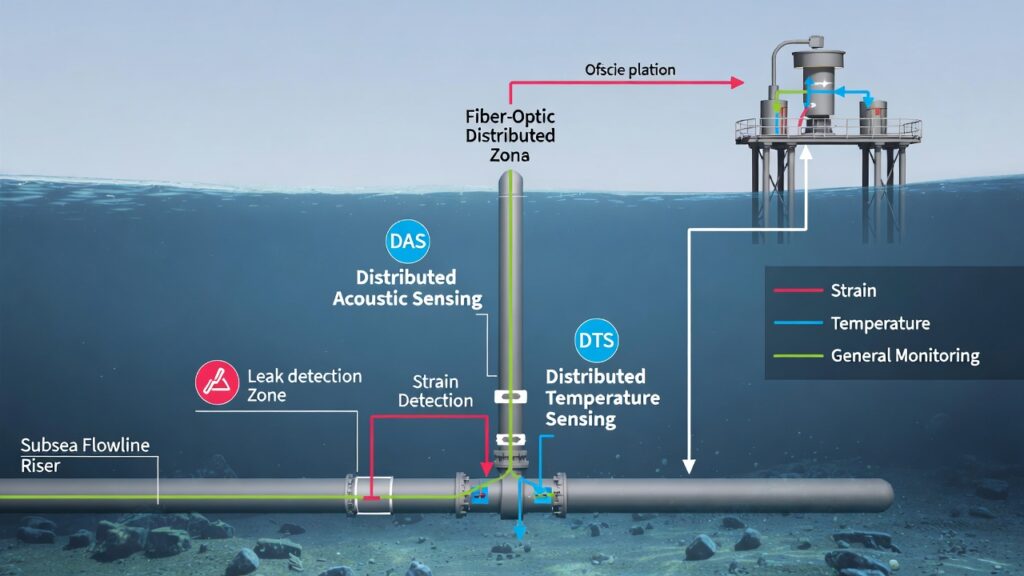
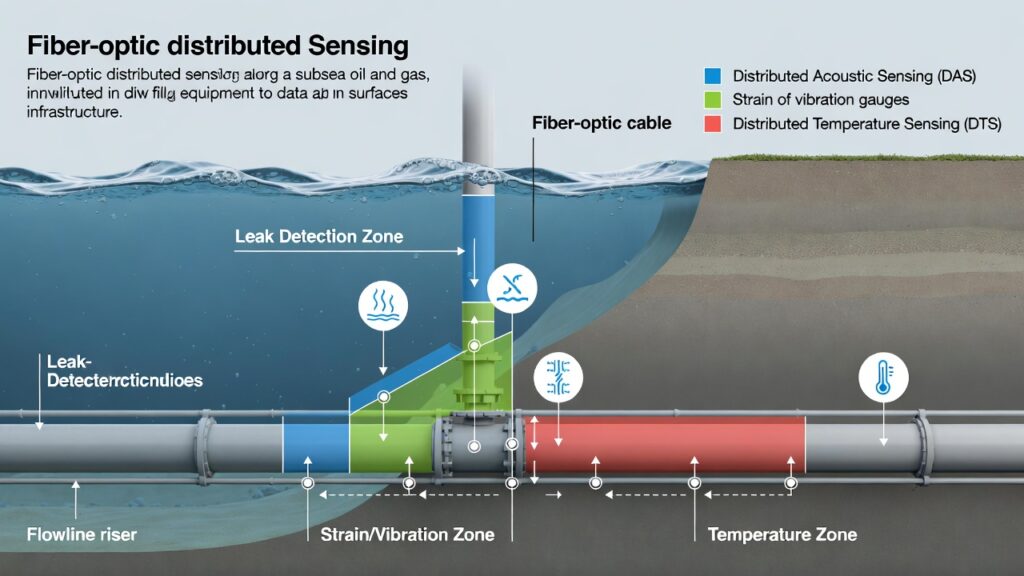
1. Fiber-Optic Distributed Sensing (DAS / DTS / DSS)
Fiber-optic cables integrated into umbilicals or flow
lines provide continuous, distributed monitoring along the entire asset length.
- Distributed Acoustic Sensing (DAS) : Detects vibrations, leaks, third-party interference, and flow-induced noise.
- Distributed Temperature Sensing (DTS) : Identifies cold spots (hydrate risk), hot spots (annular pressure buildup), or leaks via temperature anomalies.
- Distributed Strain Sensing (DSS) : Measures mechanical strain for fatigue and buckling assessment.
Advantages: Real-time coverage over kilometers, no power required along the line, high sensitivity.
Visual: Diagram of fiber-optic distributed sensing (DAS/DTS) along a subsea flow line and riser, showing detection zones for leaks, strain, and temperature.
2. Subsea Corrosion & Erosion Monitoring
Dedicated sensors monitor material loss in high-risk areas (bends, welds, chokes, sand-producing wells).
- Electrical Resistance (ER) Probes : Measure wall thickness loss via resistance change.
- Field Signature Method (FSM) : Non-intrusive, monitors corrosion/erosion at field joints or welds.
- Ultrasonic Wall Thickness Sensors : Permanently installed for continuous or periodic readings.
- Acoustic Sand Monitoring : Detects sand production to prevent erosion damage.
These tools feed data into predictive models for remaining life estimates.Visual: Subsea pipeline bend with installed ER probe and ultrasonic sensors for corrosion/erosion monitoring.
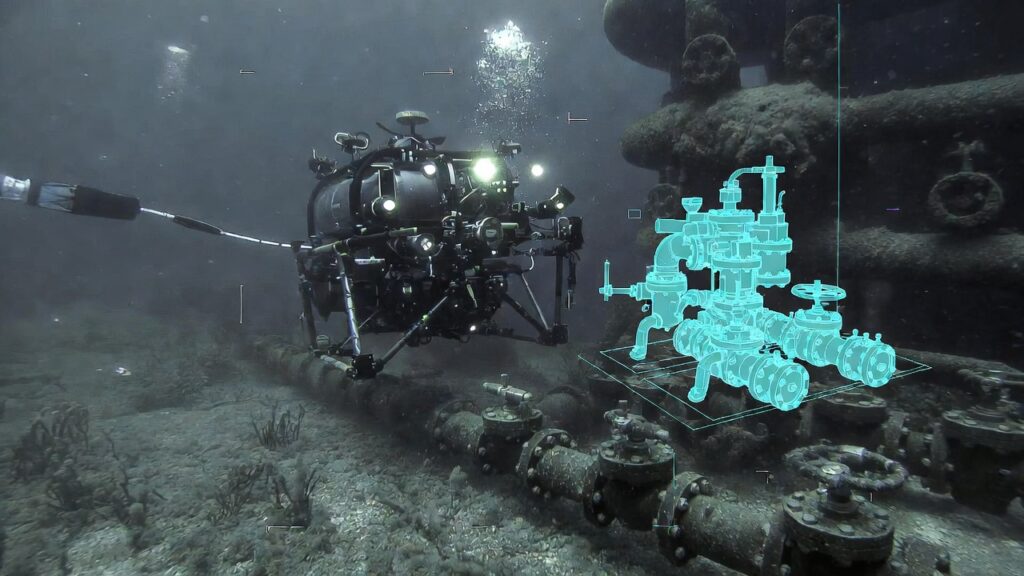
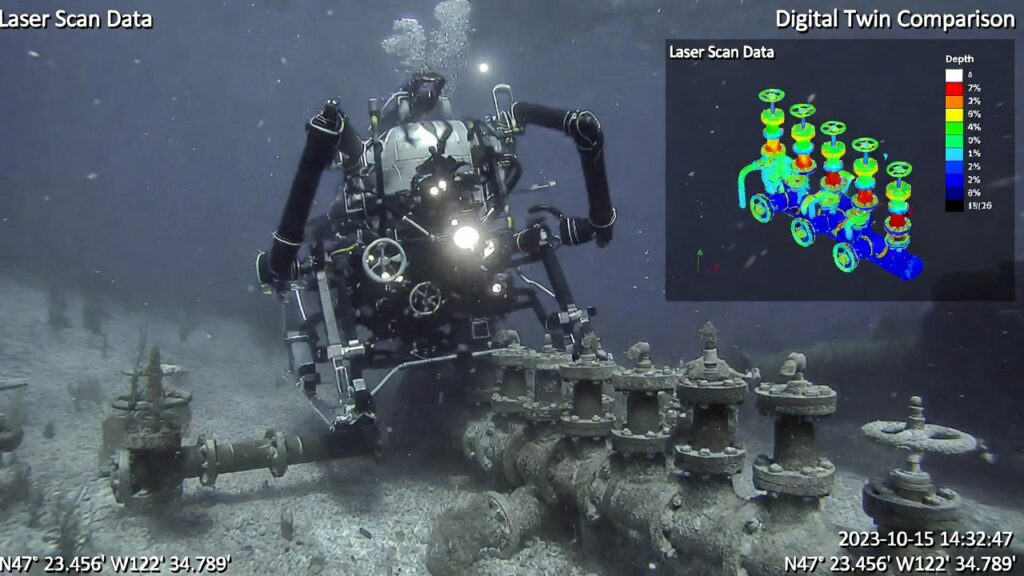
3. Subsea ROV & AUV Inspection with Digital TwinsTraditional visual inspection is enhanced with robotics and digital integration.
- ROV Inspection : Equipped with HD cameras, laser scanners, CP probes, and wall-thickness UT tools for periodic campaigns.
- Autonomous Underwater Vehicles (AUVs) : Increasingly used for long-range surveys with multi -beam sonar, side-scan sonar, and photogrammetry.
- Digital Twins : Create 3D models from inspection data, track changes over time, and predict degradation hotspots.
Visual: ROV conducting subsea inspection on a manifold, with laser scan overlay showing digital twin comparison.
4. Cathodic Protection (CP) Monitoring
Continuous CP monitoring ensures protection against external corrosion.
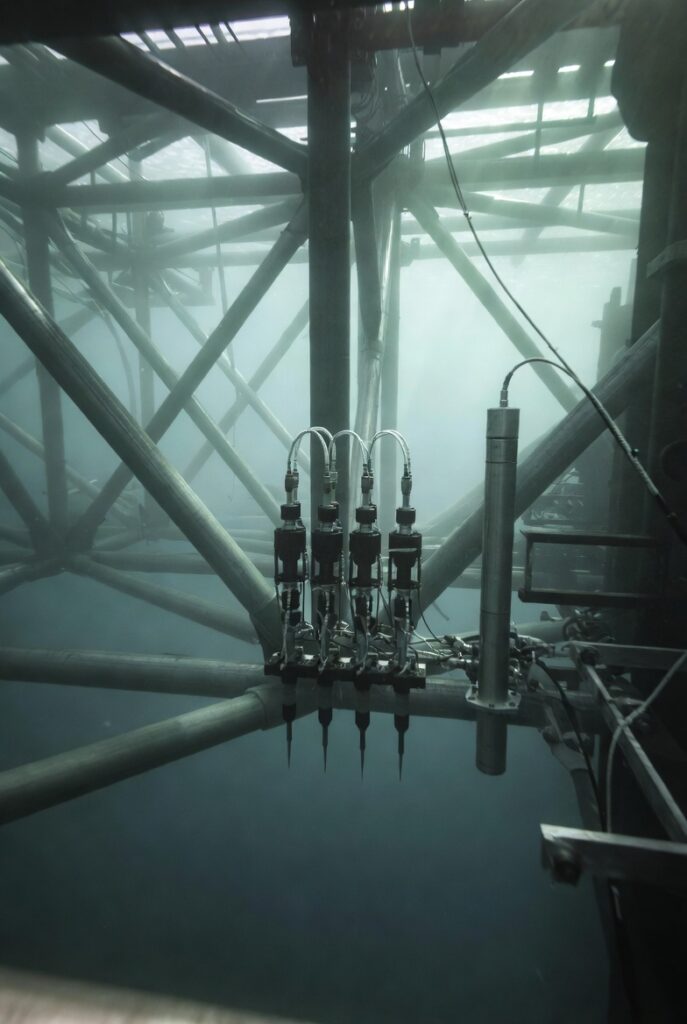
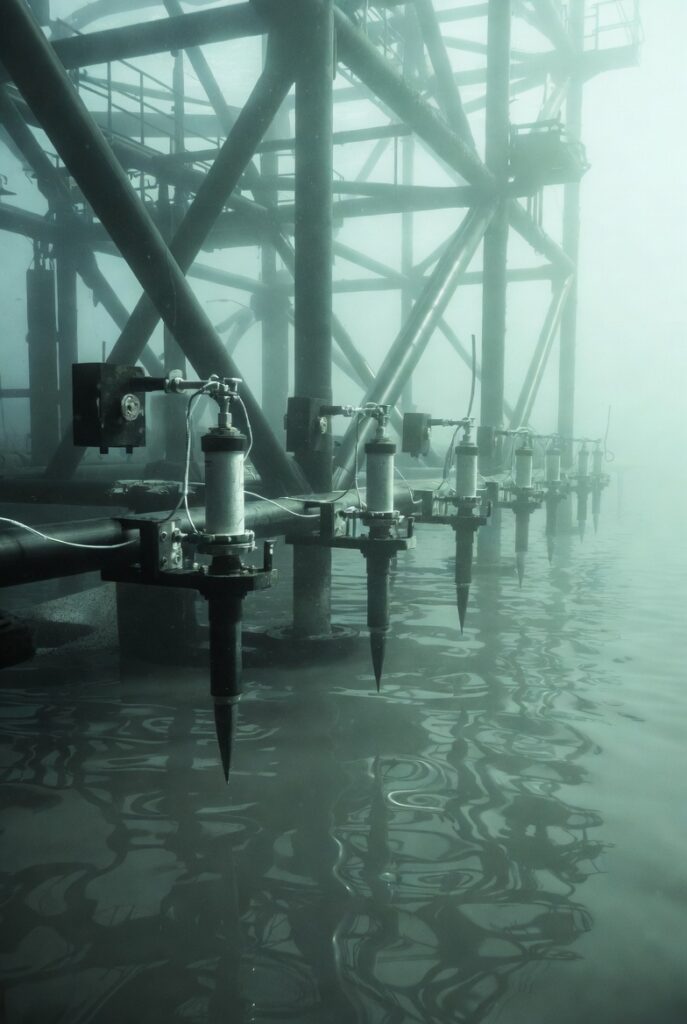
- Subsea CP Probes : Measure potential and current density at critical points (anodes, structures).
- Remote Monitoring Units : Transmit data via acoustics or umbilical to topsides.
- Anode Depletion Tracking : Use potential trends and consumption models to predict anode life.
Visual: Subsea structure with installed CP monitoring probes and reference electrodes.
5. Acoustic & Pressure Monitoring for Integrity Events
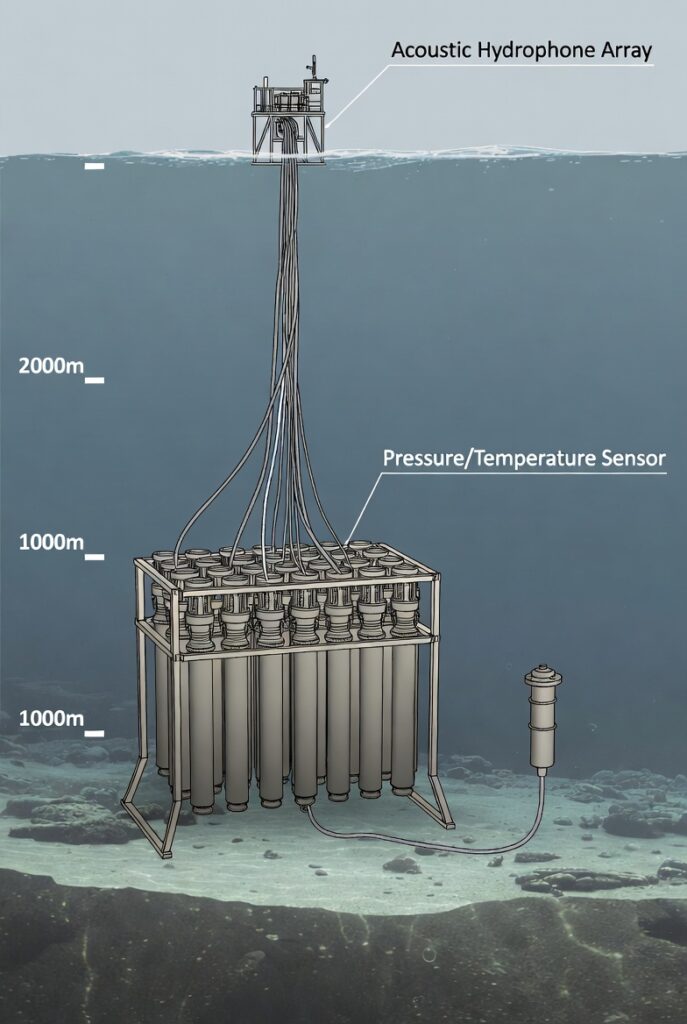
- Passive Acoustic Monitoring : Detects leaks, valve operations, or impact events via hydrophones.
- Pressure & Temperature Gauges : Permanent downhole and subsea gauges track annular pressure buildup (APB) or leaks.
- Integrated Leak Detection Systems : Combine pressure transients, acoustic signals, and flow balance to detect small leaks early.
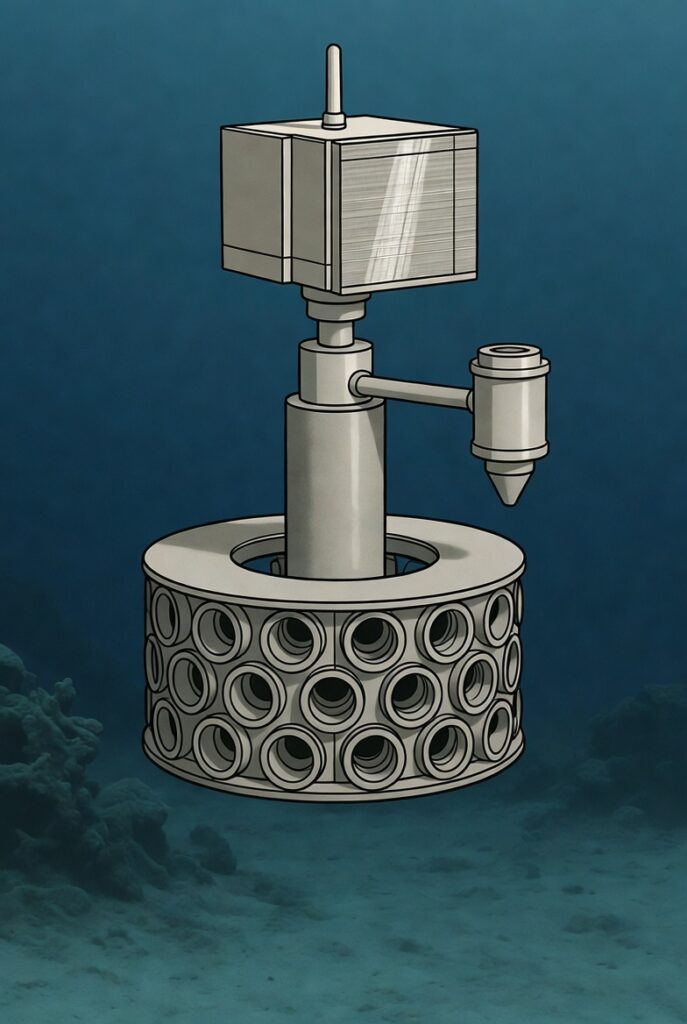
Visual: Subsea acoustic hydrophone array and pressure/temperature sensor configuration for leak and integrity event detection.
6. Emerging Trends in 2026
- AI & Machine Learning Integration : Predictive analytics on multi-sensor data forecast failures (e.g., fatigue cracks, hydrate plugs).
- Battery-Powered Wireless Sensors : For remote or retrofitted assets without umbilicals.
- Satellite + Subsea Hybrid : GHGSat/MethaneSAT for topside-offshore leak detection, combined with subsea sensors.
Conclusion: From Reactive to Predictive Integrity
Subsea integrity monitoring in 2026 combines fiber-optic sensing, permanent probes, robotic inspection, CP tracking, and acoustic/pressure systems into a layered, predictive framework. This reduces risk, extends asset life, minimizes intervention costs, and meets stringent regulatory and ESG expectations.For subsea and pipeline professionals:
Which integrity monitoring technique has given you the biggest confidence boost or cost saving? Share your experience in the comments!