By Oko
Founder, Offshore Pipeline Insight
March 15, 2026
Qatar is executing one of the world’s most ambitious energy projects: the North Field East (NFE) expansion, the first phase of the broader North Field mega-expansion. This initiative will increase Qatar’s LNG production capacity by approximately 50%, adding 32–33 million tonnes per annum (MTPA) through four new mega-trains (each ~8 MTPA), boosting total output from ~77 MTPA to ~110 MTPA by the late 2020s (with further phases pushing toward 142 MTPA by 2030).A critical component is the North Field East System offshore pipeline network — expected to span around 500 km in total length (including trunk lines and intra-field pipelines). When commissioned in 2026, it ranks among the longest offshore gas pipelines to come online that year, supporting gas transfer from the North Field (the world’s largest non-associated gas field) to onshore liquefaction facilities at Ras Laffan.
Project Overview and Technical Highlights
- Location: North Field, offshore northeast Qatar (shared with Iran’s South Pars field).
- Capacity: ~6 billion standard cubic feet per day (BSCFD) of feed gas.
- Infrastructure:
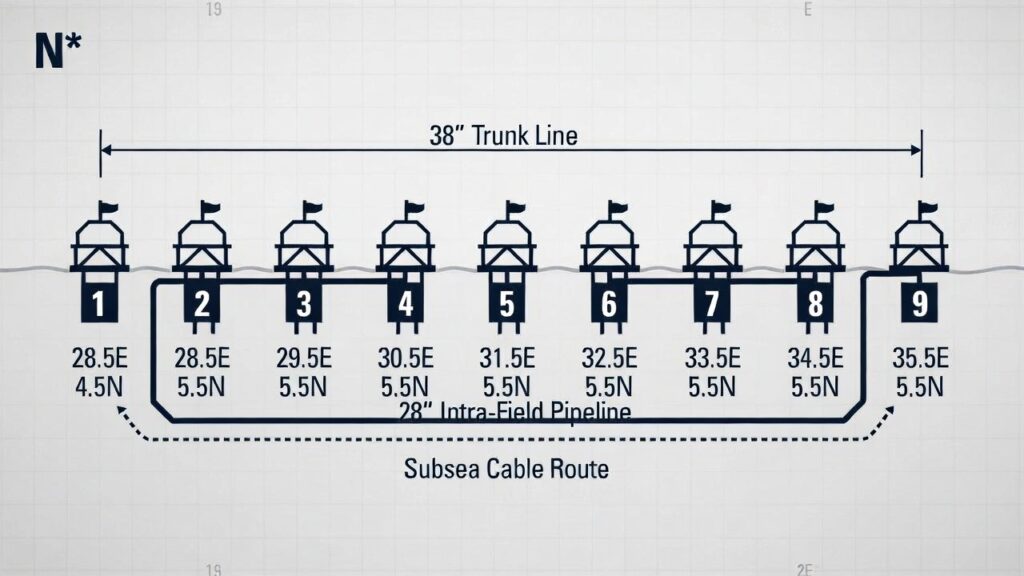
- 8 wellhead platforms (with 80+ new wells).
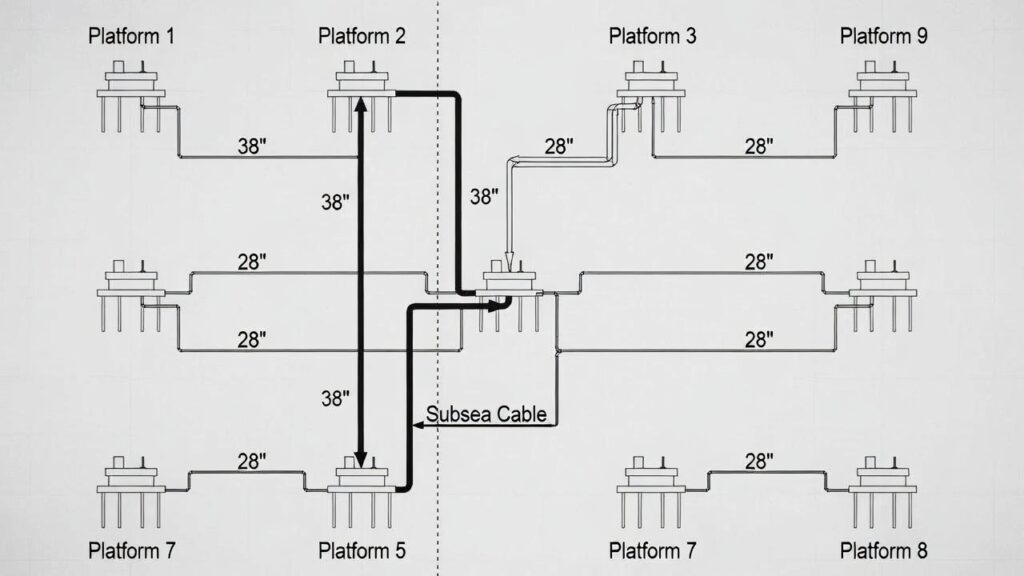
- Four 38-inch trunk lines (main export lines) and 28-inch intra-field pipelines.
- Subsea cables (225 km of 33 kV power cables) and MEG supply lines.
- Timeline: First LNG production targeted for late 2026 (slight delay from earlier mid-2026 plans due to construction scale).
- Partners: QatarEnergy (main operator), with equity stakes from ExxonMobil, Shell, TotalEnergies, Eni, ConocoPhillips (total ~25%).
- Sustainability: Includes carbon capture and storage (CCS) facilities to reduce emissions intensity.
The pipeline network is laid in shallow waters, using proven installation techniques (S-lay/J-lay), with McDermott handling major EPCI (engineering, procurement, construction, installation) for topsides, pipelines, and subsea cables.
Visuals: Project Geography and Infrastructure
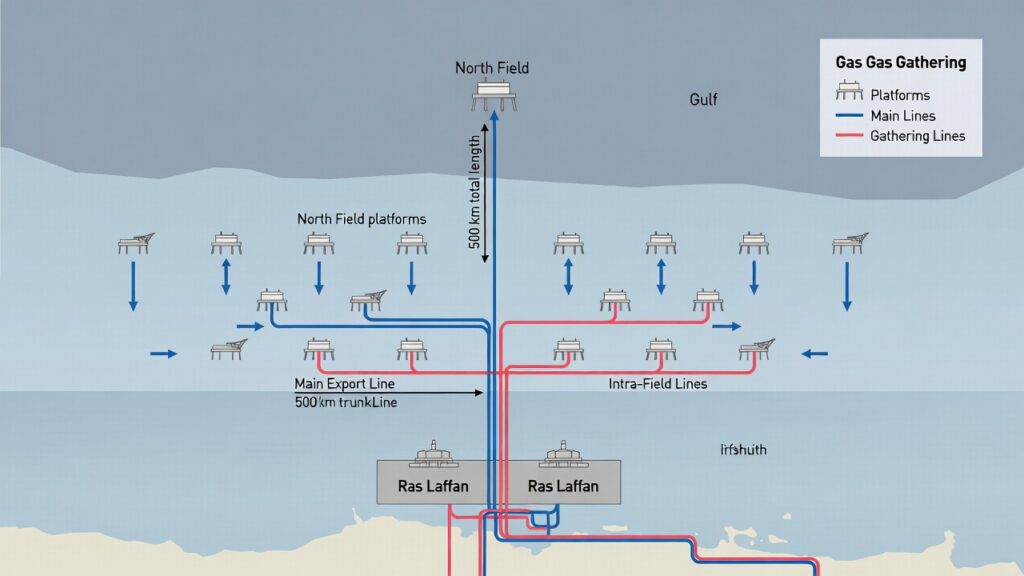
- North Field East Pipeline Route Overview
Map showing the offshore gas gathering from North Field platforms → trunk lines → Ras Laffan onshore facilities. The ~500 km total includes main export and intra-field lines in shallow Gulf waters.
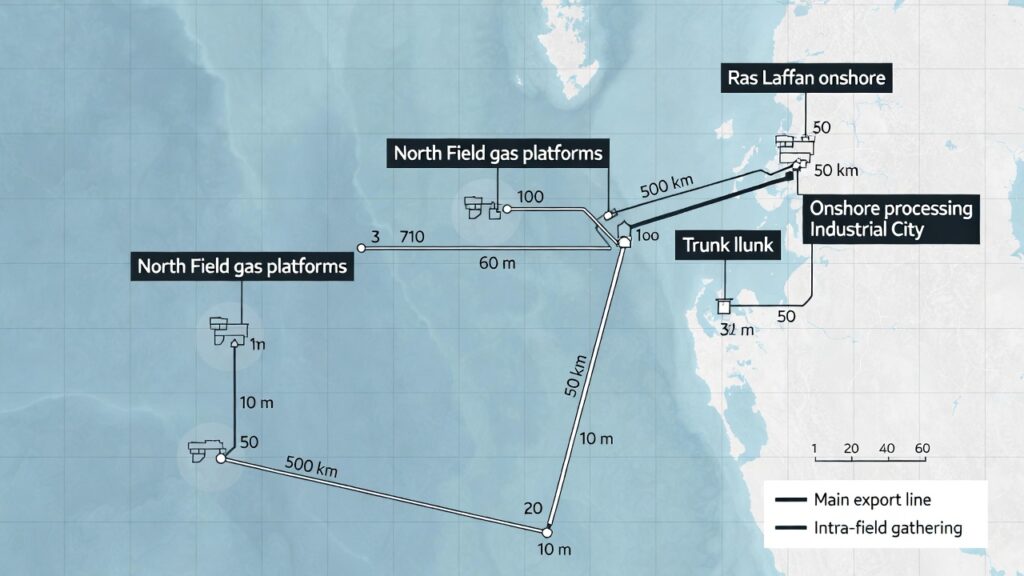
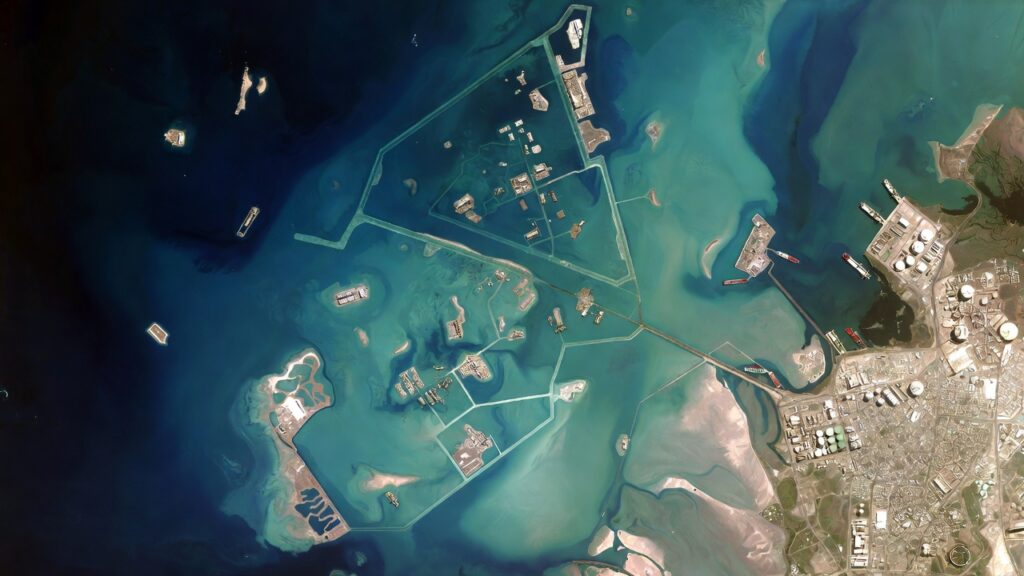
2. Regional Location Map (North Field to Ras Laffan)
Satellite-style overview of Qatar’s North Field (northeast offshore) and the pipeline path to Ras Laffan Industrial City (onshore LNG complex). Highlights the shallow-water environment and strategic export hub.
3. Offshore Wellhead Platforms and Pipeline Network Concept
Schematic of the 8 wellhead platforms, trunk lines (38-inch), intra-field pipelines (28-inch), and subsea cable routes supporting gas flow to shore
4. North Field East Mega-Trains Conceptual View
Artist rendering of the four new LNG mega-trains at Ras Laffan, fed by the offshore pipeline system, with CCS integration visible.
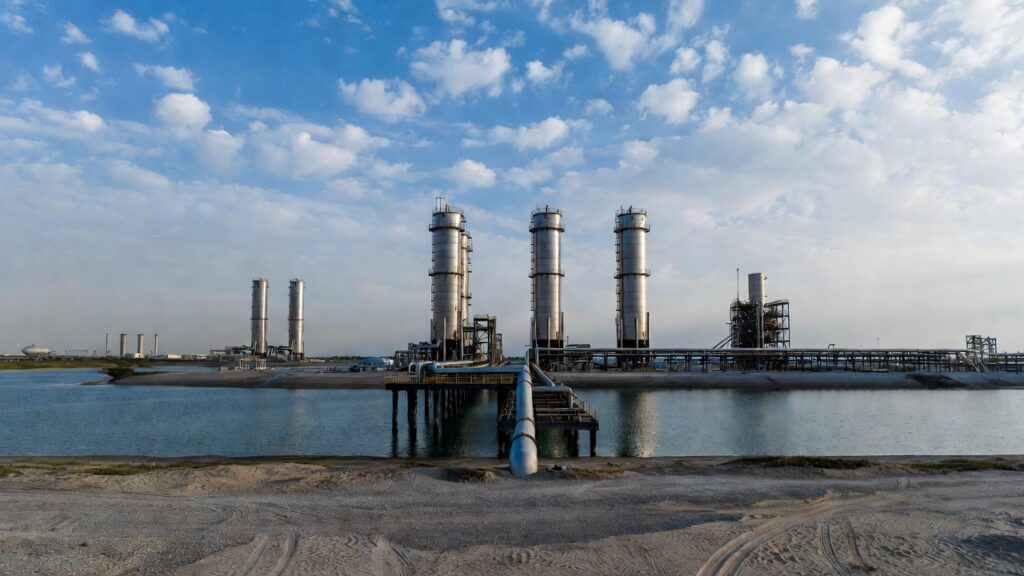
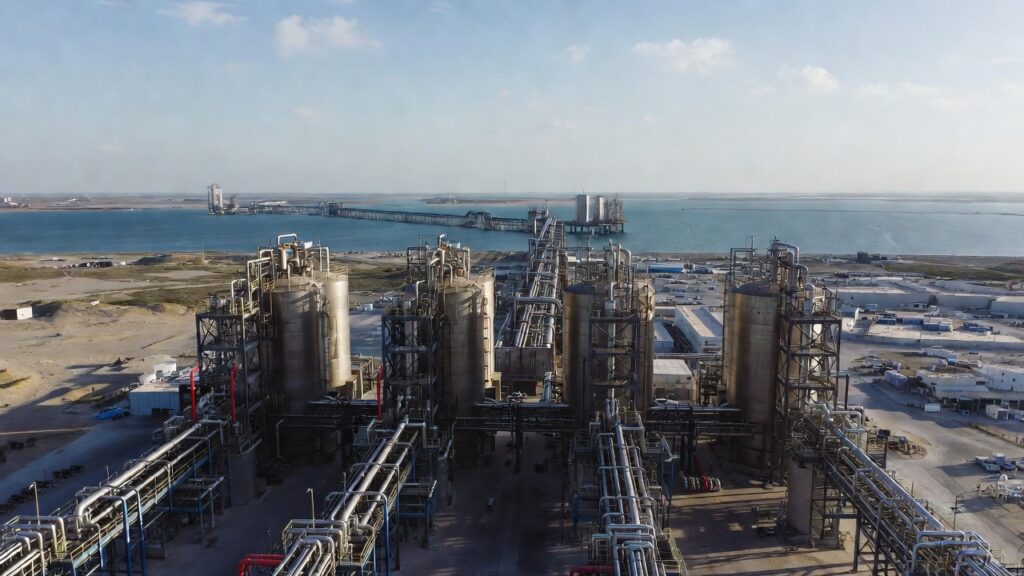
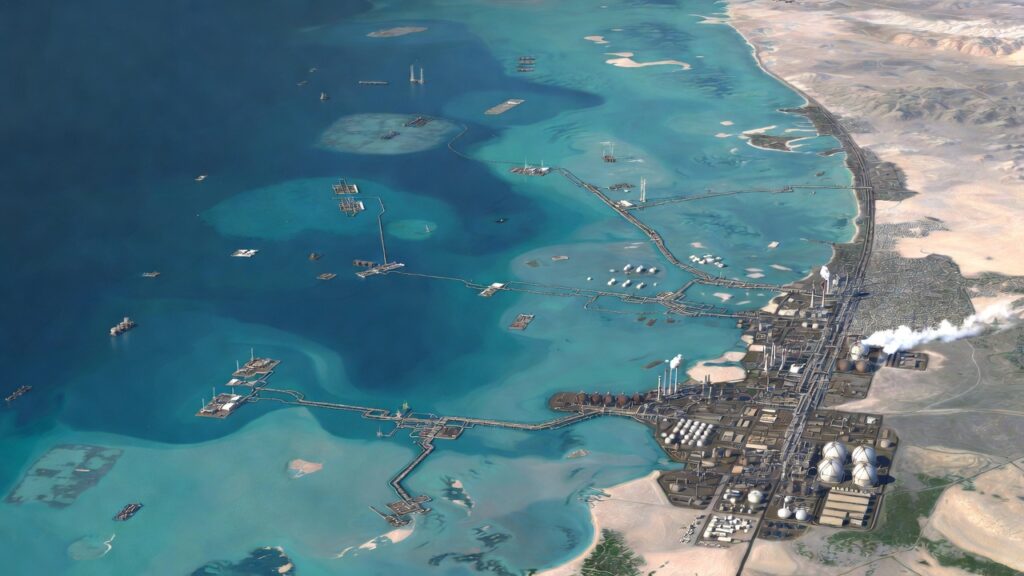
5. Ras Laffan LNG Complex Aerial (Supporting Infrastructure)
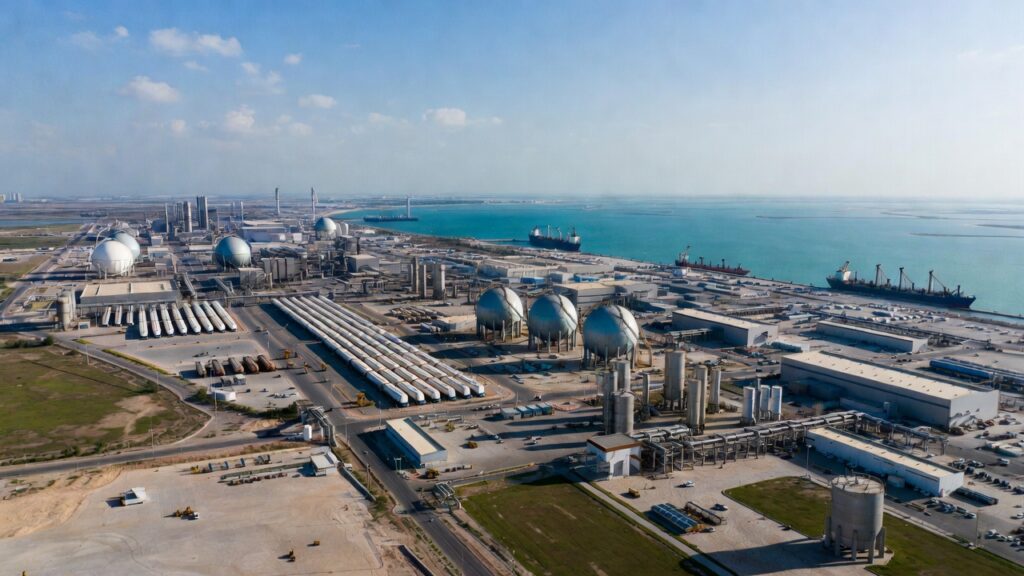
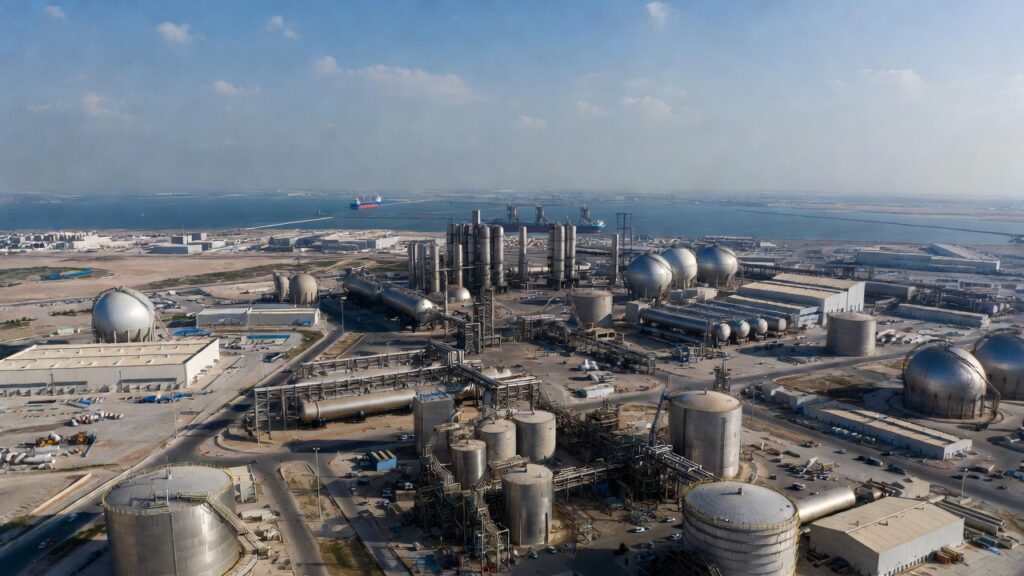
Real-world aerial photo of Ras Laffan Industrial City, showing existing LNG trains, storage tanks, and berths — the onshore destination for NFE gas.
Strategic Impact
The NFE project (and follow-on North Field South/West) solidifies Qatar’s position as the world’s leading LNG exporter, targeting 142 MTPA by 2030. The 500 km offshore pipeline network is pivotal, enabling efficient, high-volume gas transport from the field to shore while incorporating sustainability features like CCS.
For pipeline and offshore professionals: How might the NFE pipeline’s scale influence subsea integrity, flow assurance, or regional energy geopolitics?
Share your thoughts below!
Author’s Contact : oko@offshorepipline.com