By Oko Immanuel, M.Eng – Founder, Offshore Pipeline Insight
March 18, 2026
The Paleogene play in the ultra-deepwater Gulf of Mexico (GoM) has long been one of the industry’s most tantalizing yet elusive frontiers. Buried beneath 20,000–35,000 feet of sediment in water depths exceeding 5,000–8,000 feet, these reservoirs promise billions of barrels of recoverable oil—but extreme pressures (>20,000 psi), high temperatures (>300°F), tight formations, and complex salt tectonics have historically made development technically and economically challenging.
In 2026, that’s changing fast. Breakthroughs in 20K (20,000 psi) HPHT subsea technology, advanced materials, subsea boosting, and digital integrity monitoring are finally enabling operators to conquer the Paleogene. Two flagship projects highlight this shift: Beacon Offshore Energy’s Shenandoah South tieback and BP’s long-awaited return via the Conifer-1 exploration well—both leveraging innovations that reduce risk, accelerate timelines, and unlock massive resources.
The Paleogene Challenge: Why It’s Been “Locked” Until NowThe Paleogene (Wilcox, Lower Tertiary) formations sit in the inboard GoM, with reservoirs often at true vertical depths >30,000 feet subsea. Key hurdles include:
- Ultra-high pressure/temperature (HPHT): Equipment must handle 20K+ psi and 350°F+ without failure.
- Salt canopy complexities: Seismic imaging distortions, borehole stability issues.
- Tight, compartmentalized reservoirs: Low permeability requires stimulation or long horizontals.
- Subsea tieback economics: Distance from existing infrastructure, flow assurance in cold deepwater.
Until recently, only a handful of Paleogene wells produced commercially (e.g., Chevron’s Anchor, the first 20K project online in 2024). But 2026 marks the tipping point—proven 20K tech, better seismic (e.g., high-resolution ocean-bottom nodes), and subsea processing are turning “stranded” resources into viable developments.
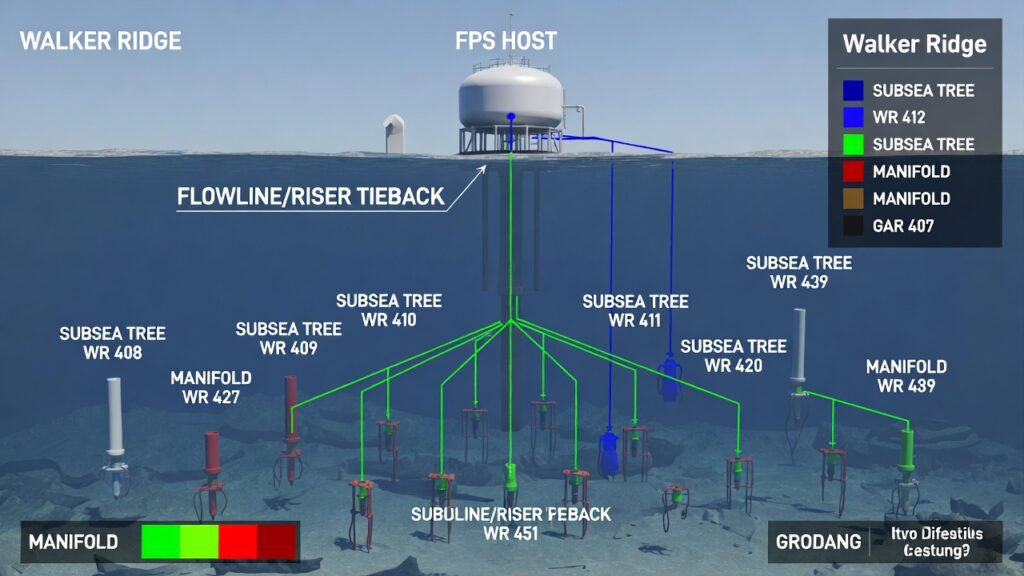
Key Project 1: Beacon Offshore Energy’s Shenandoah South – Efficient Subsea Tieback in Walker RidgeBeacon Offshore Energy’s Shenandoah FPS (Walker Ridge 52, ~5,800 ft water depth) reached peak rates of 100,000 BOPD / 117,000 BOE/D in late 2025 after ramping four Phase 1 wells. Designed as a regional host, the FPS (120,000 BOPD nameplate, expandable to 140,000 BOPD by early 2026) now supports nearby tiebacks, including Shenandoah South(Walker Ridge 95, 5,800–6,000 ft water depth).
- Development details: Sanctioned in 2025, Shenandoah South involves a cost-effective subsea tieback via a ~3-mile flowline and dedicated riser to the Shenandoah FPS. Plan: Drill and complete two wells, with first production targeted for Q2 2028.
- Estimated resources: ~74 MMBOE (P50/proven + probable).
- Partners: Beacon (operator), Houston Energy, HEQ Deepwater, Navitas Petroleum.
- HPHT tech enablers: Leverages proven 20K-rated subsea trees, manifolds, and flowlines from Shenandoah Phase 1. Subsea boosting (planned pump installation) addresses flow assurance in cold deepwater, while advanced materials (e.g., high-strength alloys, thermal insulation) manage thermal expansion and pressure integrity.
Shenandoah South exemplifies the “hub-and-spoke” model: Use existing infrastructure to reduce CAPEX by 30–50% vs. standalone FPS, unlocking smaller Paleogene accumulations that were previously uneconomic.
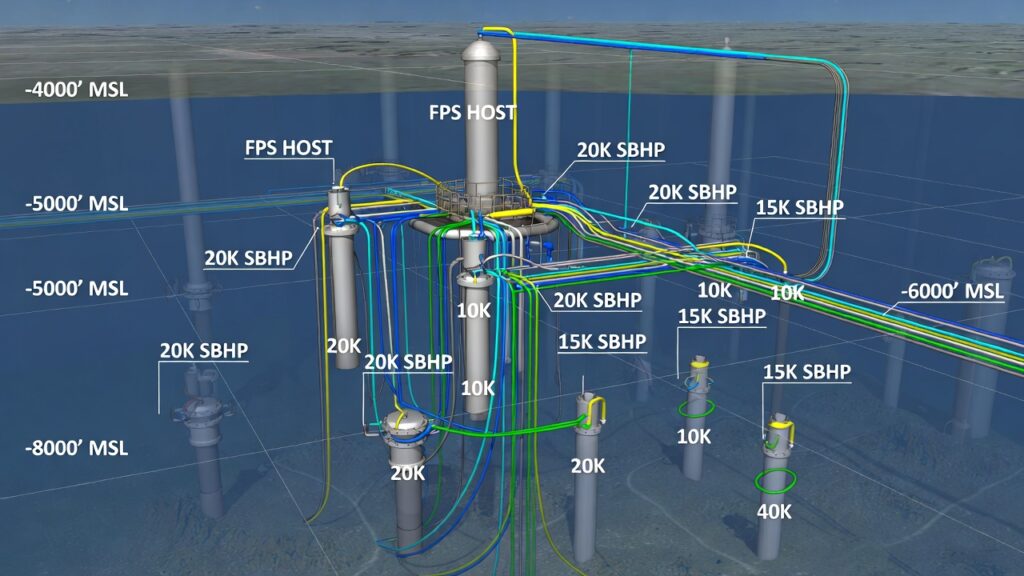
Figure 1: Conceptual subsea tieback layout for Shenandoah South to the Shenandoah FPS
( image: 3D schematic showing FPS host, flowline/riser tieback, subsea trees/manifolds in Walker Ridge blocks, with depth labels and HPHT equipment callouts. Color-coded for 20K-rated components.)
Key Project 2: BP’s Conifer-1 – The Long-Awaited Paleogene Return
After years of patience (and pioneering 20K tech development), BP is drilling Conifer-1 in 2026—the first dedicated Paleogene exploration well since their major discoveries (Tiber, Kaskida, etc.). Conifer targets a large prospect in the same prolific Paleogene trend as BP’s Kaskida (approved March 2026, FID ~$5B, production start ~2029) and Tiber-Guadalupe projects.
- Status: Spud expected “later in 2026” (per BP upstream exec Gordon Birrell, Q4 2025 earnings call).
- Significance: Conifer could extend the Paleogene longevity for BP’s GoM portfolio. If successful, it may tie back to Kaskida (ultra-deepwater hub) or future phases, unlocking part of the ~10 billion barrels BP estimates in Paleogene resources.
- Tech drivers: Relies on 20K-rated drilling/completion systems (proven at Anchor/Shenandoah), advanced seismic imaging (to penetrate salt), and subsea HPHT equipment (trees, connectors, flowlines) capable of extreme conditions.
BP’s return signals confidence: 20K tech maturity, regulatory approvals (e.g., Kaskida greenlight), and economic viability in a high-oil-price environment.
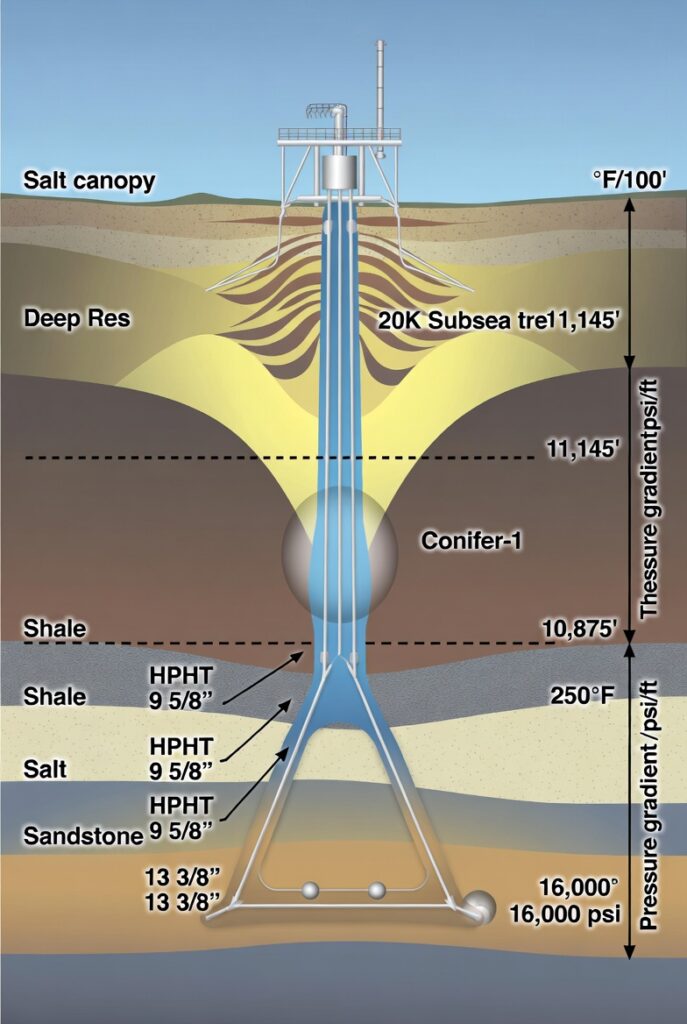
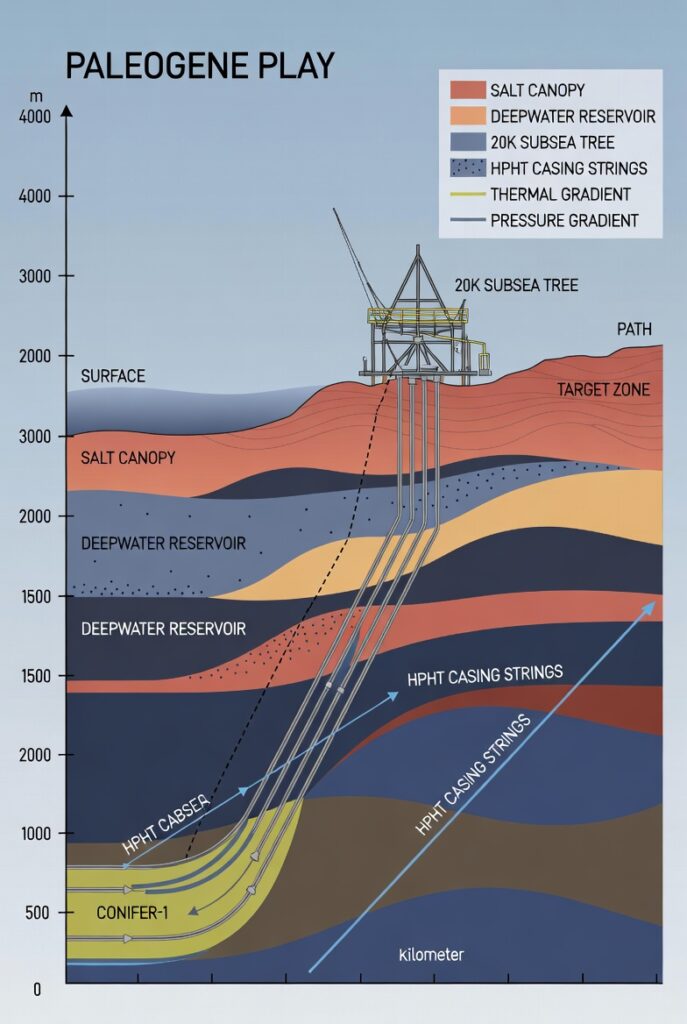
Figure 2: Paleogene reservoir cross-section with HPHT subsea wellhead and completion stack
(Insert image: Geological cross-section of Paleogene play showing salt canopy, deep reservoir, 20K subsea tree, HPHT casing strings, and thermal/pressure gradient labels. Highlight Conifer-1 target zone.)
Enabling Technologies: The 20K HPHT Subsea Revolution in 2026
- 20K-rated equipment: Trees, manifolds, connectors (e.g., from TechnipFMC, SLB) handle 20,000 psi + 350°F.
- Subsea boosting & processing: Pumps accelerate flow from tight reservoirs, mitigate hydrate risks.
- Advanced materials: Corrosion-resistant alloys, thermal insulation for flow assurance.
- Digital twins & monitoring: Real-time pressure/integrity modeling during testing/production.
- Seismic & drilling advances: High-res OBN seismic + MPD (managed pressure drilling) for safe HPHT wells.
The Bottom Line for 2026
Shenandoah South and Conifer-1 prove the Paleogene is no longer “locked”—it’s being unlocked by proven 20K HPHT subsea tech, regional hubs, and tieback economics. The GoM’s deepest reservoirs could add hundreds of millions of barrels in the coming years, reshaping US offshore production.Engineers: What’s your take on 20K tech maturity for Paleogene tiebacks?
Drop a comment or connect on LinkedIn—let’s discuss real-field applications.
Stay sharp out there, brothers. The Gulf’s deepest plays are just getting started.
Oko Immanuel
Subsea Engineering Specialist | Offshore Pipeline Insight