By Oko Immanuel, M.Eng – Founder, Offshore Pipeline Insight
March 19, 2026
The offshore energy landscape in 2026 is undergoing a profound convergence: the hard-earned expertise from high-pressure high-temperature (HPHT) deepwater oil and gas is directly accelerating the scale-up of offshore wind, particularly in deepwater and ultra-deepwater environments (>60 m water depth). While HPHT has been forged in extreme reservoir conditions (>15,000–20,000 psi, >300°F), its technologies—advanced materials, subsea power systems, flow assurance, integrity monitoring, and fatigue-resistant designs—are proving transferable to the mechanical, thermal, and dynamic challenges of floating offshore wind turbines (FOWT), subsea cables, moorings, and deepwater foundations.
This synergy is not coincidental. As oil & gas moves toward energy transition, HPHT engineers are repurposing skills to support the massive build-out of floating wind farms in frontier waters (e.g., U.S. West Coast, Northeast Atlantic, California OCS, and emerging basins). The result: faster innovation, lower risks, and reduced costs for deepwater wind.
Why HPHT Expertise is Critical for Deepwater Offshore Wind
Floating wind in >60 m depths demands solutions to extreme loads, corrosion, fatigue, and thermal management—challenges HPHT has already solved at scale.
- Subsea Power Cables & Export Systems
HPHT flowlines handle high-pressure, high-temperature multiphase fluids with thermal gradients and pressure integrity. Offshore wind subsea cables face analogous issues: high-voltage DC power transmission, thermal cycling from variable loads, burial/trenching in deepwater, and fatigue from wave/current dynamics. HPHT expertise in:- Thermal insulation and heat transfer modeling
- Fatigue and buckling analysis
- High-strength materials and coatings is directly applied to cable design, ampacity planning, and dynamic performance under fluctuating wind generation.
- Mooring Systems & Anchors
HPHT subsea production systems use taut-leg moorings, suction piles, and drag embeds to resist extreme loads in deepwater. Floating wind platforms (semi-sub, spar, TLP) face similar dynamic forces (wind thrust, wave excitation, current drag). HPHT-derived:- Mooring line fatigue assessment
- Shared anchor designs
- Soil-structure interaction modeling are reducing risks in deepwater wind moorings, especially in soft seabeds or high-current areas.
- Integrity & Monitoring (Digital Twins)
HPHT wells require real-time pressure/temperature monitoring, annulus pressure management, and digital twins for predictive integrity. Offshore wind adopts this for:- Structural health monitoring of floating platforms
- Cable condition assessment (thermal hotspots, fatigue cracks)
- Predictive maintenance on moorings/anchors HPHT’s digital twin workflows (physics-based + AI) are being repurposed for wind farm lifecycle management.
- Deepwater Foundations & Installation
HPHT drilling/completion in 5,000–8,000 ft water depths uses managed pressure drilling, high-departure wells, and subsea boosting. Deepwater wind benefits from:- Advanced installation tech (e.g., heavy-lift vessels, dynamic positioning)
- Geotechnical expertise for suction/pile anchors
- ROV/AUV inspection for foundation integrity
Key Convergence Examples in 2026
- Floating Wind in Deepwater U.S. West Coast Projects in California OCS (>1,000 m depths) leverage HPHT mooring and cable tech for semi-sub and spar platforms.
- North Sea to Atlantic Margin Transition North Sea HPHT operators (Equinor, TotalEnergies) apply subsea power and integrity know-how to floating wind arrays in deeper waters.
- Cable Thermal Integrity HPHT thermal modeling tools optimize subsea cable ampacity under variable wind loads, preventing hotspots and failures.
Figure 1: HPHT-to-Offshore Wind Technology Convergence Map
(Insert image: Diagram showing HPHT elements (subsea tree, flowline insulation, mooring fatigue) linked to wind equivalents (subsea cable, floating platform moorings, dynamic cable thermal management). Color-coded arrows for tech transfer.)
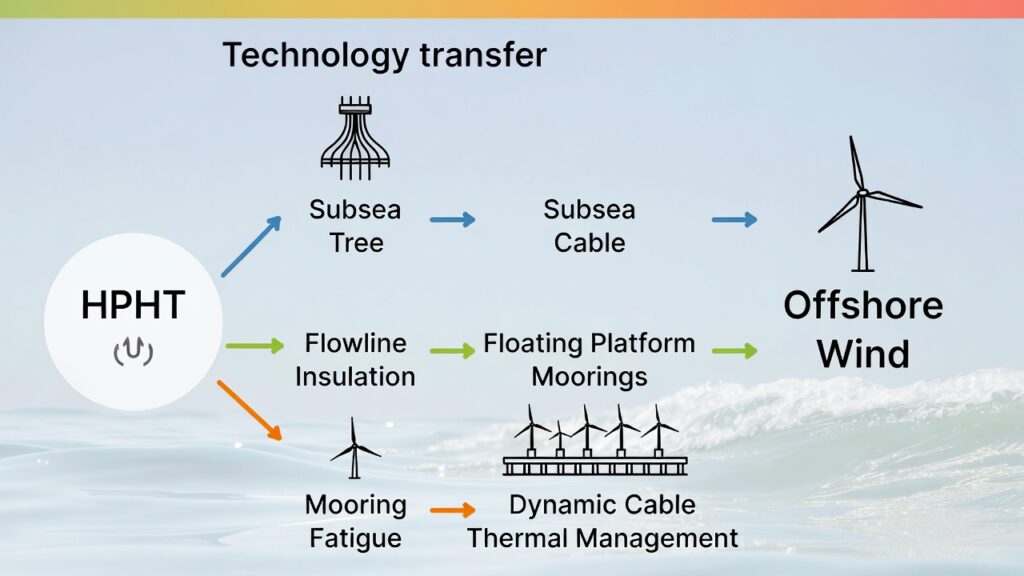
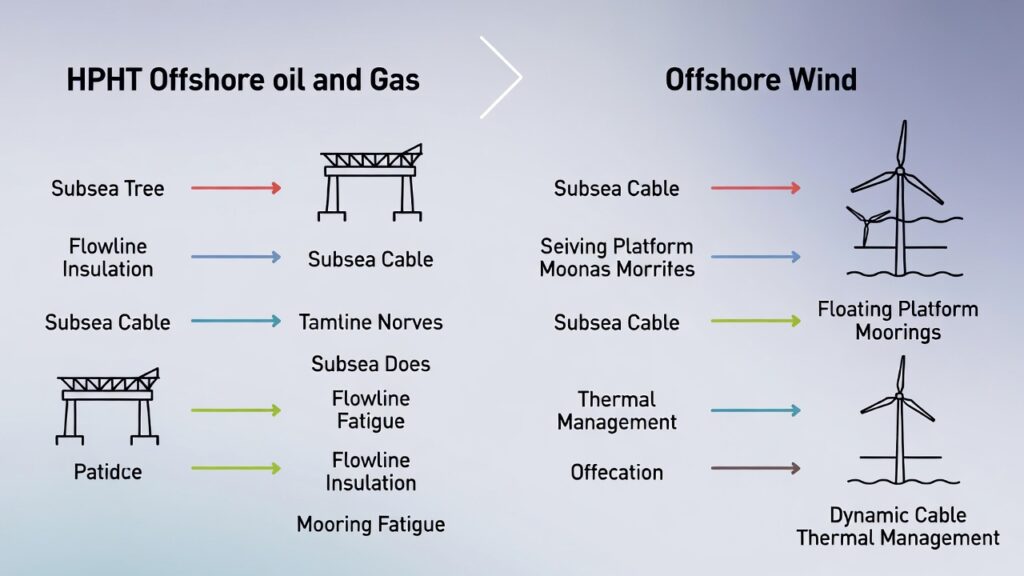
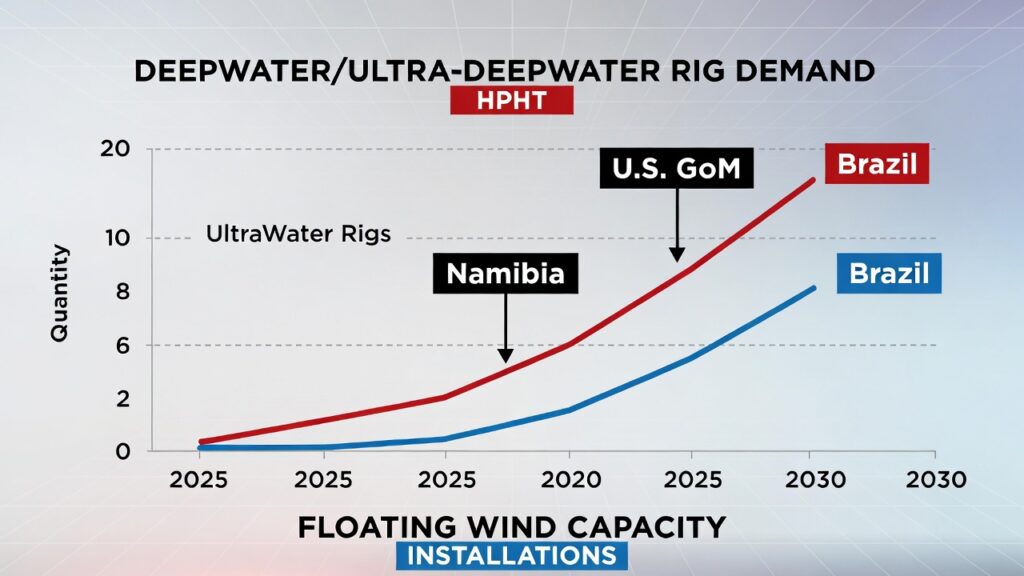
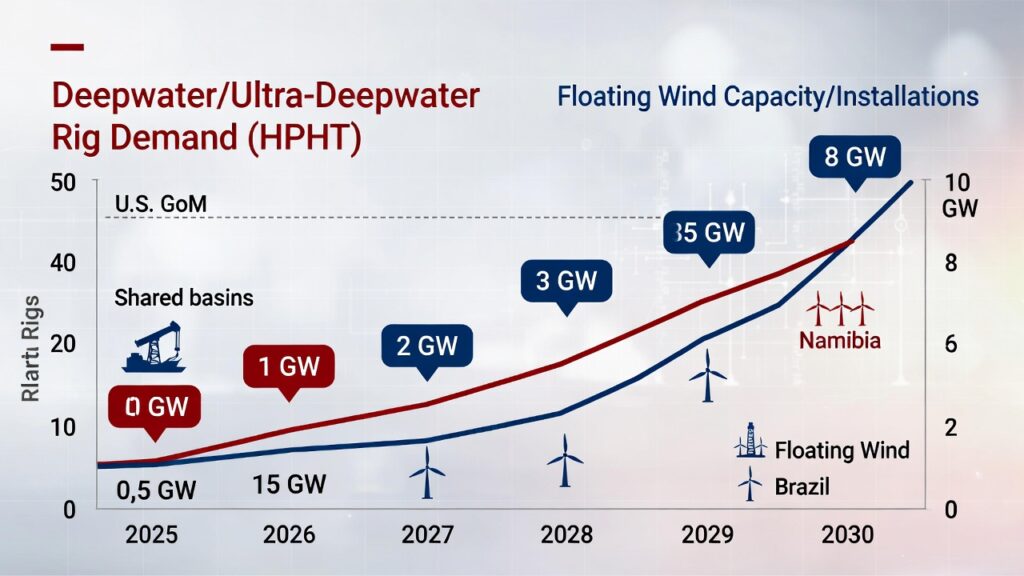
Figure 2: Deepwater Rig Demand & Floating Wind Growth Alignment
(Insert image: Line chart showing rising deepwater/ultra-deepwater rig demand (HPHT) alongside increasing floating wind capacity/installations in 2025–2030, with callouts for shared basins like U.S. GoM, Namibia, Brazil.)
The Bottom Line for 2026
The deepwater convergence is real: HPHT expertise born from extreme oil & gas conditions—is anchoring the offshore wind revolution in deep waters. By repurposing materials science, subsea power systems, fatigue analysis, and digital monitoring, the industry is accelerating floating wind deployment, reducing costs, and de-risking frontier projects.Engineers from both worlds:
What HPHT tech do you see having the biggest impact on deepwater wind—cable thermal management, mooring fatigue resistance, or integrity twins?
Drop a comment or connect on LinkedIn—let’s share field insights.
Stay sharp out there, brothers. The convergence is powering the energy transition.
Oko Immanuel
Subsea Engineering Specialist | Offshore Pipeline Insight