By Oko Immanuel, M.Eng – Founder, Offshore Pipeline Insight
March 19, 2026
Offshore projects in 2026 operate at the absolute extremes: HPHT oil & gas (20,000+ psi, 350°F+, 5,000–8,000 ft water depths) and floating offshore wind (>60 m depths, dynamic loads from 15–20 MW turbines, harsh North Atlantic/GoM conditions). Both demand extreme logistics—vessel availability, heavy-lift capacity, subsea installation precision, supply chain resilience, and crew safety in remote, high-risk environments.Yet the logistical challenges and solutions are converging.
The same ultra-deepwater supply chain, specialized vessels, and expertise pool that conquered HPHT are now enabling the rapid scale-up of floating wind. This article explores the shared logistical realities and how HPHT lessons are helping wind projects survive and thrive at the extremes.
1. The Extreme Logistics Landscape in 2026Both HPHT and floating wind share common logistical pain points:
- Ultra-deepwater access: Water depths >1,000 m require DP3 vessels, ROV/AUV spreads, and long umbilicals/cables.
- Heavy-lift & installation: HPHT subsea trees/manifolds (100–200 tonnes) and floating wind foundations/turbines (1,000–3,000 tonnes per unit) demand the same scarce heavy-lift fleet.
- Weather windows: North Sea, U.S. GoM, and Atlantic Margin have narrow operable seasons due to hurricanes/winter storms.
- Supply chain strain: Specialized HPHT components (20K trees, high-strength alloys) and wind components (dynamic cables, suction anchors) compete for the same limited manufacturing slots.
- Remote operations: Crew transfers, resupply, and emergency response in 100+ nm offshore locations.
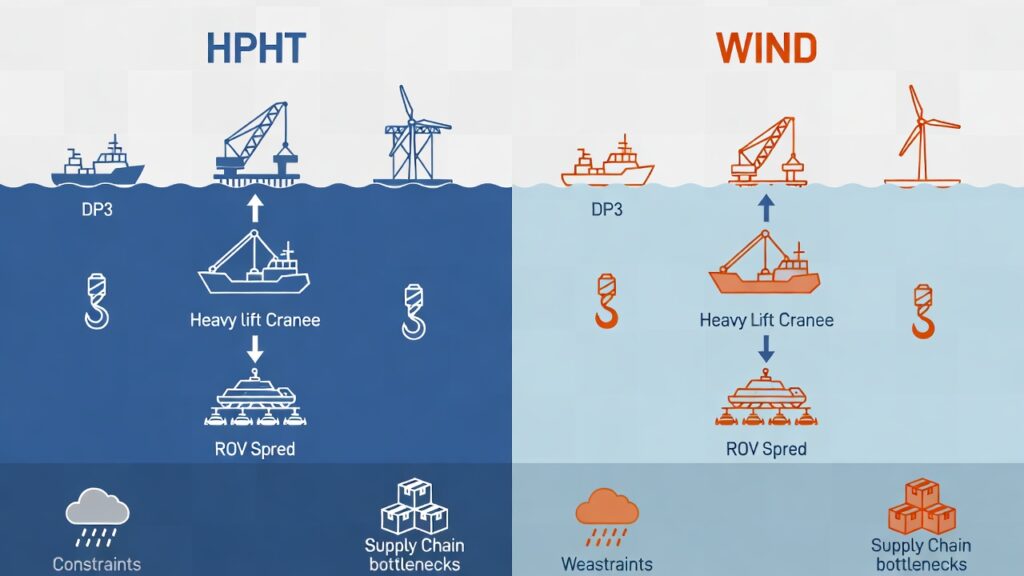
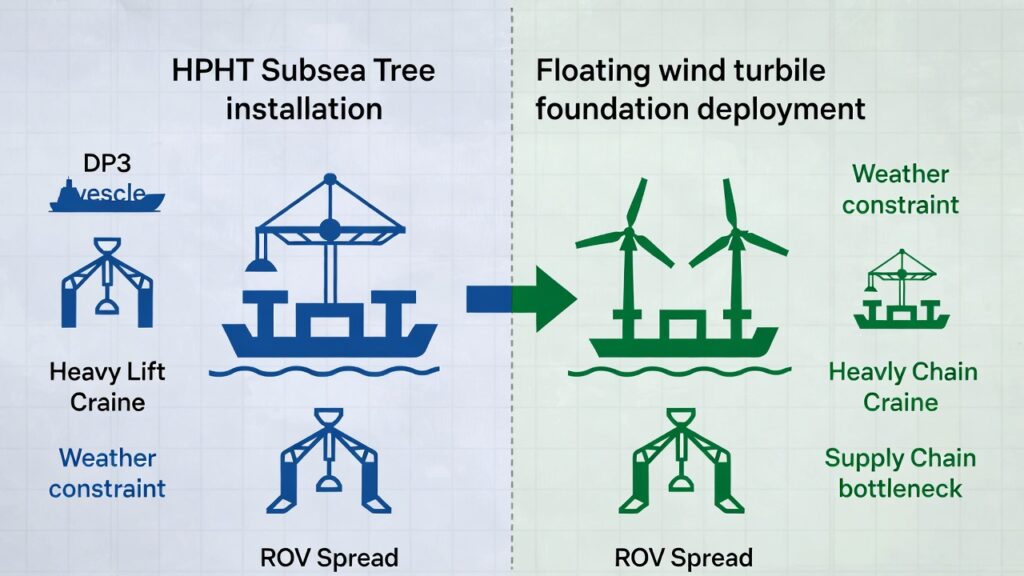
Figure 1: Shared Logistics Challenges – HPHT vs. Floating Wind
(image: Side-by-side comparison diagram showing HPHT subsea tree installation vs. floating wind turbine foundation deployment. Icons for DP3 vessel, heavy-lift crane, ROV spread, weather constraints, and supply chain bottlenecks. Color-coded to highlight overlaps.)
2. HPHT Lessons Powering Floating Wind Logistics
HPHT projects have spent decades solving extreme logistics; wind is adopting these solutions at speed.
- Vessel & Crane Capacity
HPHT tiebacks (e.g., Chevron Anchor, BP Kaskida) rely on ultra-deepwater construction vessels (e.g., Saipem 7000, Pioneering Spirit) with 10,000+ tonne crane capacity. Floating wind uses the same vessels for turbine installation (e.g., Vestas V236-15.0 MW on spar platforms). Lesson: Early vessel booking and multi-project sharing reduce costs and delays. - Subsea Installation Precision
HPHT requires ROV/AUV-guided tree/manifold placement with <10 cm accuracy under high currents. Floating wind applies this to dynamic cable lay and mooring anchor deployment. Lesson: Advanced ROV spreads and digital twin simulation minimize rework. - Weather & Downtime Mitigation
HPHT projects use predictive metocean modeling and managed pressure drilling to extend operable windows. Floating wind adopts similar forecasting and “weather downtime” buffers in scheduling. Lesson: Hybrid planning tools reduce installation risk by 20–30%. - Supply Chain & Material Resilience
HPHT demands high-strength alloys and fatigue-resistant connectors. Wind uses similar materials for mooring lines and tower bases. Lesson: Shared supplier networks (e.g., TechnipFMC, Subsea 7) enable economies of scale and faster delivery.
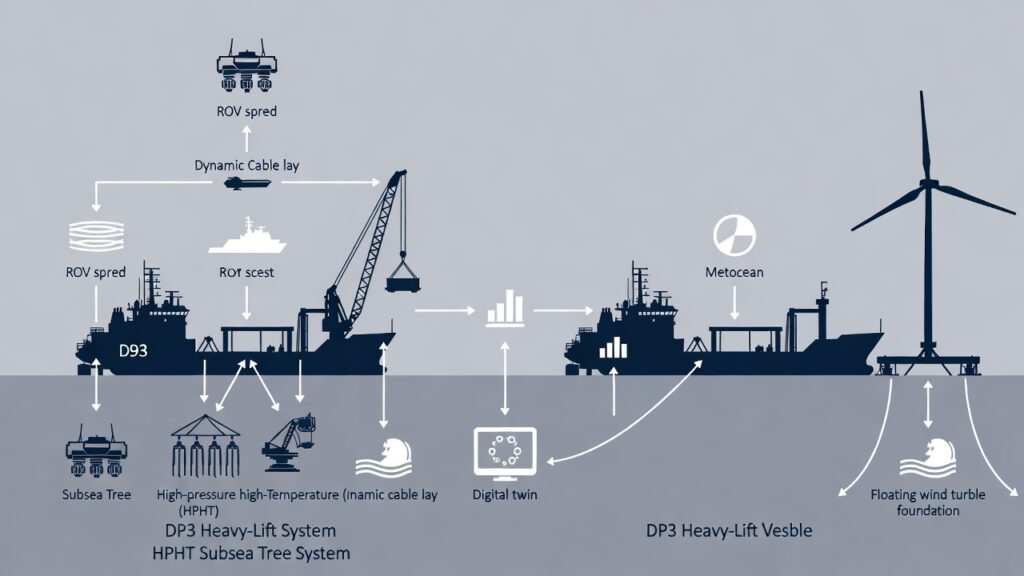
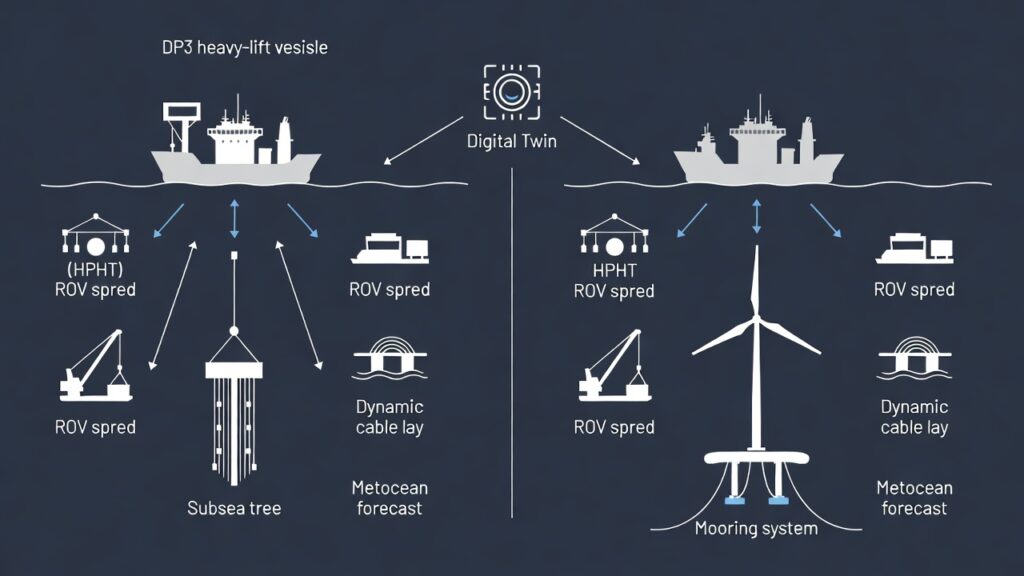
Figure 2: Vessel & Installation Synergy Diagram
(image: Diagram showing a single DP3 heavy-lift vessel performing HPHT subsea tree installation on one side and floating wind turbine foundation/mooring deployment on the other. Shared icons: ROV spread, crane, dynamic cable lay, metocean forecast, digital twin monitoring.)
3. Emerging Hybrid Logistics Models
The convergence is creating new operational models:
- Multi-purpose hubs: Floating wind farms co-located with existing oil & gas platforms share export cables, power-to-platform supply, and maintenance vessels.
- Shared fleet contracts: Operators (e.g., Equinor, BP, TotalEnergies) charter vessels across HPHT tiebacks and wind farm installations in the same region.
- Digital twin logistics: Real-time monitoring of vessel position, weather windows, and asset status optimizes scheduling across projects.
- Crew & training crossover: HPHT saturation divers and ROV pilots transition to wind foundation inspections and cable burial.
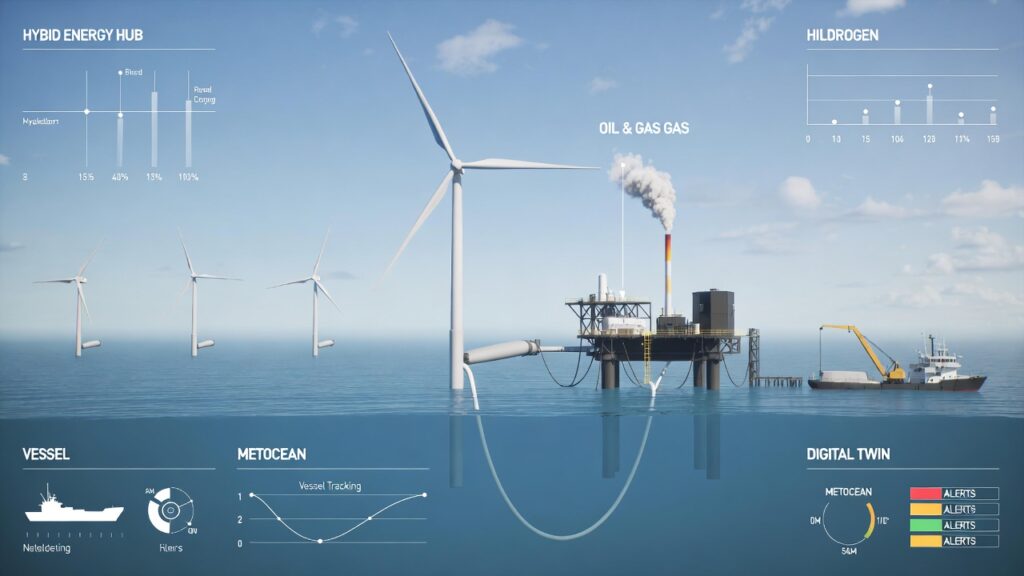
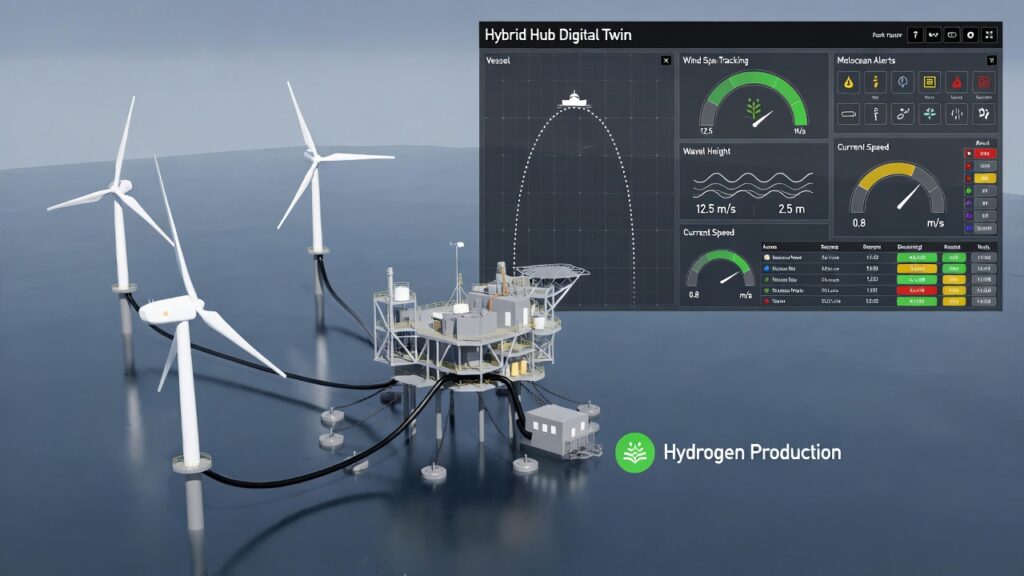
Figure 3: Hybrid Hub Logistics Concept
( image: Conceptual overview of a hybrid hub: floating wind turbines powering an oil & gas platform, shared subsea cable, mooring integration, hydrogen module, and digital twin dashboard showing vessel tracking and metocean alerts.)
The Bottom Line for 2026
Survival at the extremes requires logistics mastery. HPHT’s hard lessons in deepwater installation, vessel management, and supply chain resilience are directly anchoring the offshore wind revolution. By sharing vessels, expertise, and infrastructure, the industry is not just balancing energy security—it is building a more resilient, efficient offshore future.Engineers in both worlds:
What logistical breakthrough from HPHT has made the biggest difference in your wind project—or vice versa? Comment below or connect on LinkedIn.Stay sharp out there, brothers. The extremes are where the real innovation lives.
Oko Immanuel
Subsea Engineering Specialist | Offshore Pipeline Insight