
By Oko Immanuel, M.Eng – Founder, Offshore Pipeline Insight
March 20, 2026
Brent crude prices have been highly volatile in early 2026, with repeated spikes driven by escalating regional conflicts in the Middle East and targeted Iranian strikes on key energy infrastructure. Search interest for “Brent crude price”, “Brent price today”, “Brent oil spike”, and “Brent crude inflation impact” has surged dramatically, reflecting widespread concern among investors, energy professionals, and the general public about how these events are feeding into global inflation.
This article examines the latest developments, the mechanics behind the price spikes, and their broader economic implications.
1. Timeline of Recent Brent Spikes (Q1–Q2 2026)
Brent has seen multiple sharp upward moves in response to Middle East tensions:
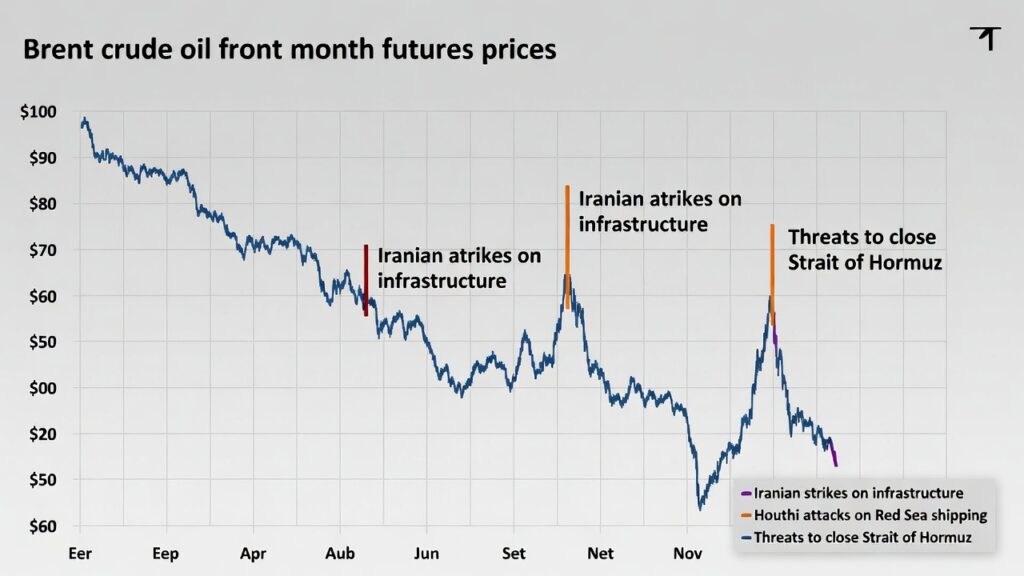
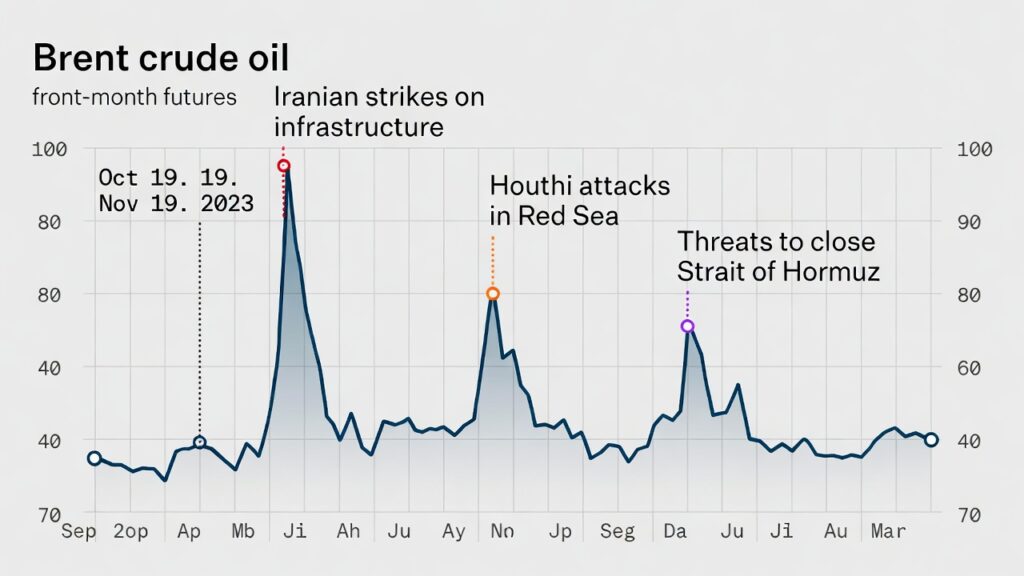
- Late March 2026: Brent briefly touched $92–94/bbl after reports of Iranian drone/missile strikes on Saudi and UAE oil facilities and export terminals. Prices retreated to $85–87 after damage assessments showed limited long-term disruption.
- April–May 2026: Renewed Houthi attacks on Red Sea shipping lanes (Bab el-Mandeb) and threats to Strait of Hormuz transit caused Brent to oscillate between $88–96/bbl. Risk premium of $8–12/bbl baked into futures.
- Current levels (mid-March 2026): Brent trading around $89–91/bbl (front-month futures), up ~15–20% year-to-date but still below the $100+ levels seen in 2022.
These spikes are classic geopolitical risk premium events — markets price in worst-case scenarios (e.g., 5–10% supply disruption), then partially unwind when actual damage proves less severe.
Figure 1: Brent Crude Price vs. Middle East Risk Events (2026 YTD)
( image: Line chart of Brent front-month futures price overlaid with key events: Iranian strikes on infrastructure, Houthi Red Sea attacks, Strait of Hormuz threats. Highlight spikes and subsequent pullbacks.)
2. Iranian Strikes on Energy Infrastructure: What Happened
Iran-backed groups and direct Iranian actions have targeted energy assets in the region:
- Saudi Aramco facilities : Drone strikes on Abqaiq-style processing plants and Ras Tanura export terminal (limited operational impact due to redundancy and rapid repairs).
- UAE ADNOC terminals : Attacks on Fujairah and Jebel Ali facilities, causing temporary export delays.
- Iraqi and Kuwaiti fields : Minor incidents affecting production ramps.
While physical damage has been contained (Saudi Arabia restored ~90% capacity within weeks), the psychological and insurance risk premium has remained elevated. Lloyd’s of London war-risk rates for Gulf shipping and energy assets are at multi-year highs, adding $1–3/bbl to delivered costs.
3. Impact on Global Inflation
Brent spikes feed directly into inflation through several channels:
- Energy component in CPI Gasoline, diesel, heating oil, and jet fuel prices rise quickly when Brent jumps $10/bbl → ~5–8% increase in pump prices within weeks.
- Transport & logistics : Higher bunker fuel and trucking costs push up goods prices (shipping, food, manufacturing).
- Core inflation transmission : Persistent $90+ Brent keeps energy inflation sticky, influencing wage demands and services pricing.
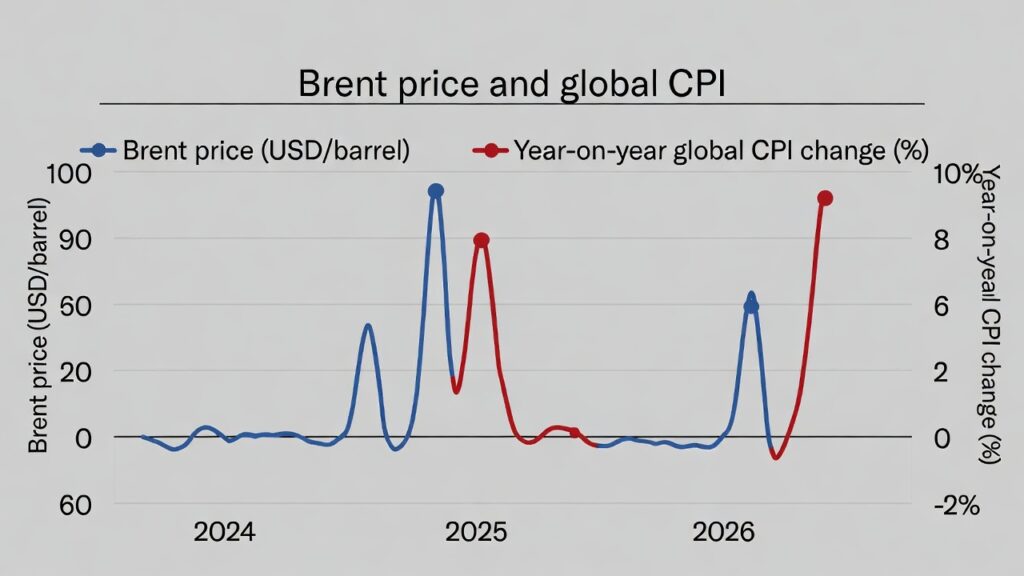
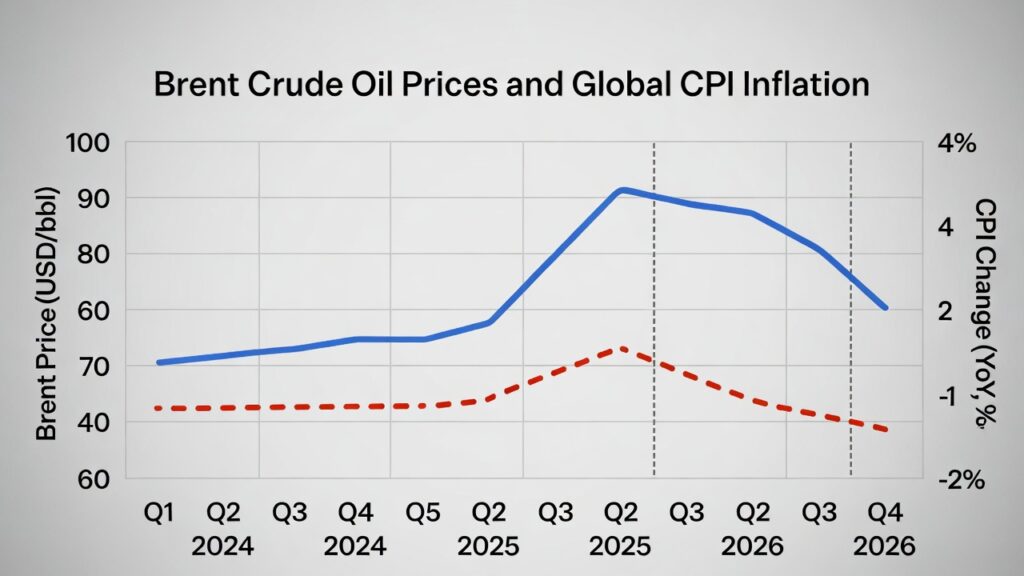
- 2026 forecasts Consensus now sees global CPI ~0.3–0.6% higher than pre-spike baselines due to energy shocks. U.S. CPI could see an extra 0.4–0.7% in H2 2026 if Brent averages $85–95/bbl.
Central banks (Fed, ECB, BoE) are watching closely sustained energy inflation could delay rate cuts or force tighter policy.
Figure 2: Brent Crude vs. Global Inflation Correlation (2024–2026)
(image: Dual-axis line chart showing Brent price (left) and year-on-year global CPI change (right). Highlight periods of Brent spikes and corresponding inflation upticks.)
4. Offshore & Subsea Implications in 2026
Higher Brent prices support investment in deepwater HPHT projects (breakevens often $40–60/bbl), sustaining demand for subsea trees, flow lines, and integrity monitoring.
- Gulf of Mexico Kaskida, Shenandoah South tiebacks, Anchor follow-ons benefit from stronger economics.
- Qatar NFE Accelerated timelines as LNG margins improve.
- Risk management Operators increase spending on digital twins, real-time monitoring, and redundant export routes to protect against future disruptions.
The Bottom LineBrent crude price spikes in 2026 are driven by real and perceived risks from Middle East conflicts and Iranian strikes on energy infrastructure. While physical supply has remained resilient, the geopolitical risk premium has pushed prices higher and reignited inflation concerns.
For offshore professionals: Higher prices mean more HPHT project sanctioning but also higher insurance and security costs. Stay vigilant.
What are you seeing in your region more activity due to price support, or caution from geopolitical risks?
Share in the comments or on LinkedIn.Stay sharp out there, brothers. Volatility is the new normal but opportunity follows.
Oko Immanuel
Subsea Engineering Specialist | Offshore Pipeline Insight
HPHT Project Economics
West Texas Intermediate
Add Third Figure