April 1, 2026 In late March 2026, the Trump administration finalized a nearly $1 billion settlement with French major TotalEnergies, terminating two offshore wind leases (Attentive Energy off New York/New Jersey and Carolina Long Bay off North Carolina). The ~$928 million in lease payments is being redirected into U.S. offshore oil, shale gas, and the Rio Grande LNG export terminal in Brownsville, Texas.
This policy-driven “Offshore Swap” marks a decisive shift away from federally supported offshore wind and toward proven hydrocarbon infrastructure with direct technical and project pipeline implications for subsea engineers, flow assurance specialists, and pipeline designers.
TotalEnergies : pivoting nearly $1 billion from canceled Atlantic wind leases into Gulf of Mexico and LNG projects.
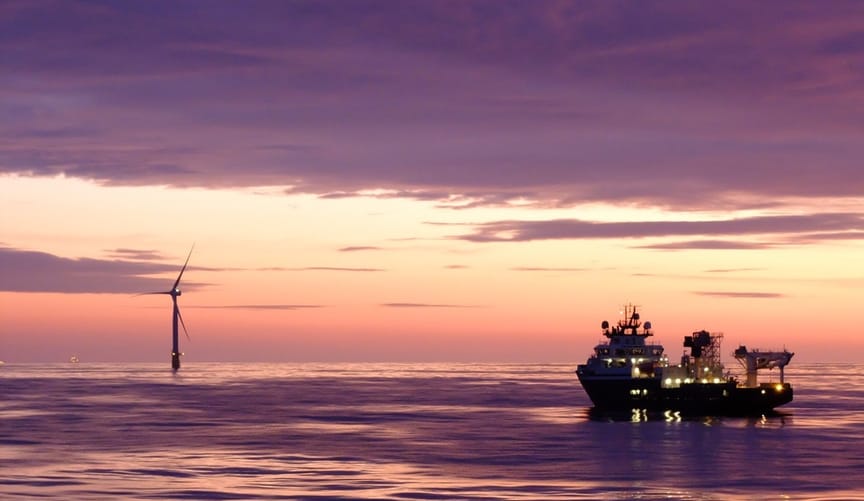
Installation vessels and subsea cabling infrastructure now sidelined under this deal.Redirected – Oil & Gas / LNG Side
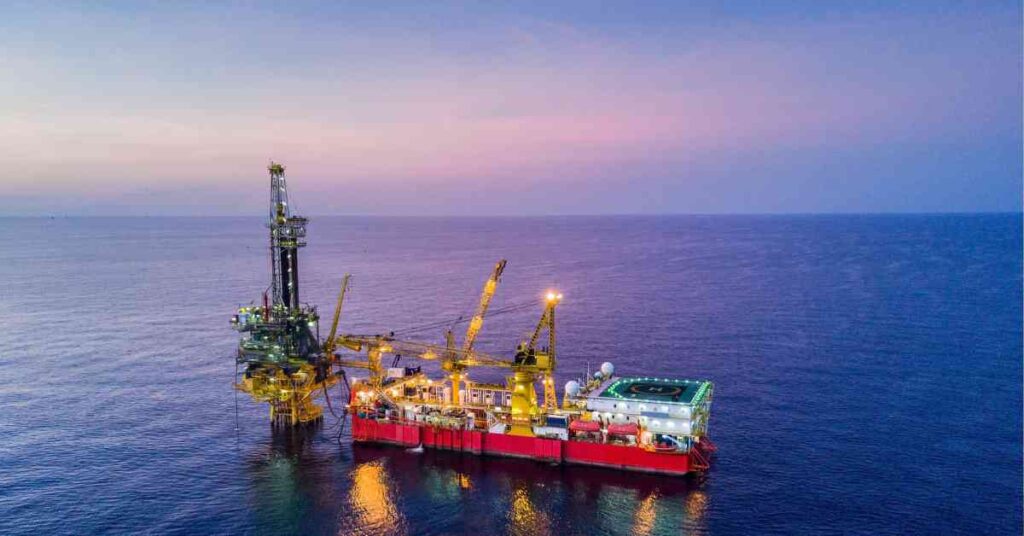
Gulf of Mexico platform supporting subsea tie-backs the type of host facility gaining new production from redirected capital.
Technical Implications for Subsea Pipeline & Flow Assurance Professionals
This capital reallocation is not abstract it directly boosts demand for subsea tie-backs, HPHT flow lines, and LNG feed-gas pipeline systems.
Here’s the detailed breakdown:
1. Subsea Tie-Back Trends Accelerating in the Gulf of Mexico (2025–2026)
The GoM is in the middle of a clear tie-back renaissance. Operators are favoring subsea tie-backs over new standalone hosts because they deliver lower CAPEX (often 50–70% cheaper), shorter cycle times, and extended life for existing floating production units (FPUs) and platforms.
Key active and upcoming tie-backs include:
- Ballymore (Chevron, started April 2025): 3-well subsea tie-back to Blind Faith FPU, targeting the emerging Upper Jurassic/Norphlet HPHT play. Peak rates up to 75,000 bopd. First major Norphlet development — requires 20K psi-rated trees, manifolds, and flowlines.
- Argos Southwest Extension (BP, early startup 2025): Multi-well tie-back adding ~20,000 boepd.
- Dover (Shell, 2025): Tie-back to Appomattox FPU.
- 2026 startups: Silvertip Phase 3 (Shell), Longclaw (Murphy), and Monument (Navitas) a subsea tie-back to the new Shenandoah FPU.
Technical pipeline challenges and solutions driving these projects:
- HPHT reservoirs (up to 20,000 psi and 350°F+): Demand corrosion-resistant alloy (CRA) pipe-in-pipe (PIP) or wet-insulated flowlines with advanced thermal coatings to manage cool-down and thermal expansion. HIPPS (High-Integrity Pressure Protection Systems) are increasingly specified to allow lower-pressure downstream equipment.
- Flow assurance: Longer tie-backs (3–10+ miles typical, trending longer) increase hydrate and wax risks. Operators use subsea boosting (multiphase pumps or compressors), direct electrical heating (DEH), electrically heat-traced flowlines (EHTF), or chemical inhibition (LDHI, methanol). Insulation keeps arrival temperatures above hydrate/wax thresholds.
- Materials & design: High-strength steels, mechanically lined pipe, and buoyancy modules for jumpers/umbilicals reduce installation costs. Pipeline-in-pipeline systems with centralizers and vacuum insulation are standard for ultra-deepwater tie-backs.
- Carbon & cost benefits: Reusing existing hosts amortizes fixed infrastructure over more barrels, lowering overall project emissions intensity.
These trends align perfectly with the redirected TotalEnergies capital — expect more tie-back FIDs in the GoM through 2027.
2. LNG Export Pipeline Innovations & Feed-Gas InfrastructureOn the LNG side, the swap accelerates gas gathering and export pipeline networks feeding liquefaction trains. The standout project is the Rio Bravo Pipeline system dedicated to Rio Grande LNG:
- Pipeline specs: ~137 miles of parallel large-diameter pipelines (48-inch and 42-inch) from a new compressor station in Kleberg County to the Brownsville terminal. Includes a 2.4-mile header system at the plant.
- Compression: One major station with gas-turbine-driven (43,000 hp) and electric-driven (55,000 hp) compressors — the electric option reflects growing focus on lower-emission midstream.
- Flow assurance & design: High-volume dry gas service requires internal coatings for efficiency, pigging facilities for maintenance, and robust SCADA for real-time pressure/flow monitoring. Sourced from low-cost Eagle Ford and Permian basins via the Agua Dulce hub, the system is engineered for flexible interruptible/firm capacity to capture price arbitrage.
- Broader innovations: Industry-wide, LNG feed-gas pipelines are adopting composite wraps for repair, advanced leak detection (fiber-optic DTS/DAS), and modular compressor designs for faster deployment. Cryogenic considerations appear only downstream of liquefaction, but the upstream gas pipelines emphasize high throughput (Bcf/d scale) and minimal pressure drop over long distances.
These pipelines directly support Rio Grande LNG’s ramp-up to ~30 Mtpa under construction (Trains 1–5), strengthening U.S. LNG export capacity and associated gathering/export systems.
The Bigger Picture for Offshore Pipeline Professionals
The “Offshore Swap” reinforces a return to reliable base load energy infrastructure. For those of us designing, installing, and maintaining subsea flowlines, export pipelines, and LNG feed systems, this means:
- More HPHT tie-back opportunities with demanding flow-assurance packages.
- Expanded demand for large-diameter gas pipelines and associated compressor stations.
- Continued innovation in insulation, heating, boosting, and materials to handle longer, deeper, and hotter tie-backs.
Whether you’re on the drilling side, in integrity management, or specifying 20K equipment, the project pipeline looks stronger heading into 2026–2027.
What’s your field perspective? Are you seeing more tie-back RFPs or LNG-related pipeline work?
Drop a comment or email me at oko@offshorepipelineinsight.com
(mailto:oko@offshorepipelineinsight.com).
I’ll follow up with a deeper technical deep-dive on HPHT flow assurance strategies and subsea boosting for long-distance tie-backs in the next article.
Stay sharp out there,Oko Immanuel, M.Eng
Founder, Offshore Pipeline Insight
Texas A&M Subsea & Petroleum Engineering
Bridging Academia and the Field