April 16, 2026 – U.S. Gulf of Mexico (GoM) oil production is approaching or holding near record levels (~2 million bpd projected for 2026), even as onshore shale growth slows and operators maintain capital discipline. With production plateauing, the name of the game in 2026 is efficiency squeezing more barrels from existing and new assets with lower costs, fewer rigs, and smarter technology.
Two standout enablers are emerging: Agentic AI systems that move beyond analytics to autonomous action, and 20,000 psi (20K) drilling/completion equipment that unlocks previously challenging deep, high-pressure reservoirs. Recent honors at the Offshore Technology Conference (OTC) 2026 further underscore this shift, with multiple Spotlight on New Technology Awards going to innovations in autonomous well construction and AI-driven modeling.
What is Agentic AI and Why It Matters for Drilling
Traditional AI in oil & gas has focused on prediction — analyzing seismic data, forecasting rates, or spotting anomalies. Agentic AI takes the next step: these autonomous systems observe real-time conditions (downhole sensors, pressure, temperature, vibration, cuttings), reason through options, and adjust drilling parameters without constant human intervention.
Examples in practice:
- Real-time optimization of weight-on-bit (WOB), rotary speed (RPM), and mud flow to maximize rate of penetration (ROP) while minimizing vibration, stick-slip, or bit wear.
- Autonomous agents that diagnose issues (e.g., wellbore instability), evaluate interventions, and trigger adjustments or alerts.
- Multi-agent orchestration: one agent handles geosteering, another manages pressure, while a supervisory agent ensures alignment with safety and economic goals.
Industry reports indicate only ~13% of operators have deployed agentic systems in production so far, but nearly half plan to scale in 2026. Events like the Agentic AI Challenge 2026 and the AI in Oil & Gas Conference highlight growing momentum for closed-loop drilling optimization.For subsea and pipeline engineers, this upstream efficiency translates downstream: smoother, more consistent well delivery means predictable tie-back schedules, reduced non-productive time (NPT), and better-characterized reservoir fluids entering your flow assurance models.
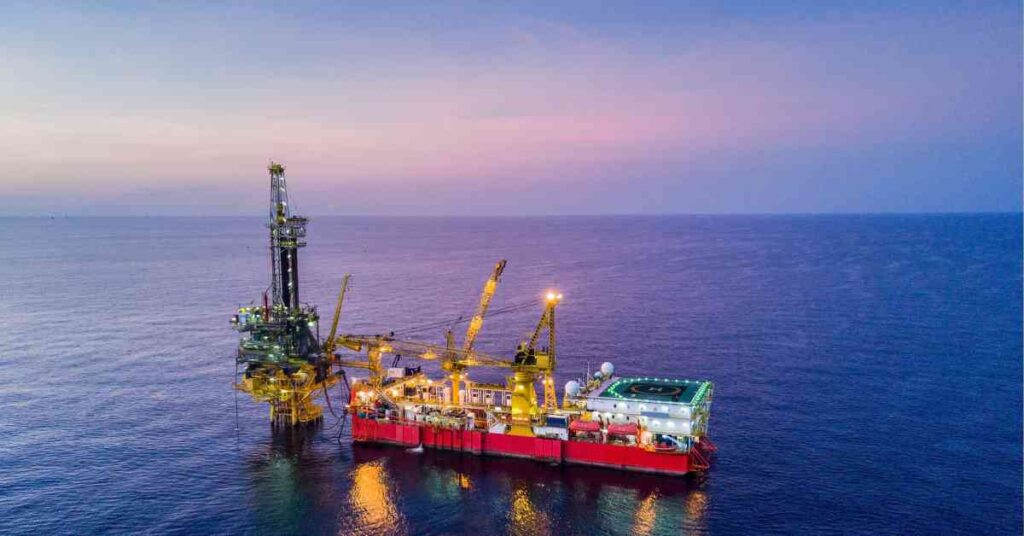
Gulf of Mexico deepwater platform host for high-tech wells enabled by 20K equipment and AI-driven drilling.
20,000 PSI Drilling: Opening New Frontiers in the GoM
Extreme reservoir pressures and depths (up to ~30,000 ft TVD) have historically limited access to promising plays like the Inboard Wilcox and Norphlet trends. New 20K-rated equipment — including blowout preventers (BOPs), risers, wellheads, trees, manifolds, and intervention systems — is changing that.
Key example:
Beacon Offshore Energy’s Shenandoah field (off Louisiana) is the second major 20K deepwater development in the GoM (after Chevron’s Anchor). Reservoirs here face pressures exceeding 20,000 psi in water depths up to ~5,500 ft. Recent deployments include:
- Trendsetter Engineering’s Trident 20K open-water intervention riser system (first used for flowback operations from Transocean’s Deepwater Atlas drillship).
- Advanced 20K production manifolds, umbilicals, risers, and flowlines.
These technologies reduce risk, enable safer drilling and completions in ultra-high-pressure environments, and support tie-backs to existing or new floating production units (FPUs) acting as regional hubs.
Pipeline & Flow Assurance Implications:
- Higher-pressure wells often deliver hotter, higher-GOR fluids → increased demands on HPHT flowline design (CRA materials, pipe-in-pipe insulation, thermal expansion management).
- More consistent drilling (thanks to AI + 20K tech) means fewer surprises in fluid composition, helping refine hydrate/wax predictions and chemical injection strategies.
- Subsea tie-backs to hosts become more attractive as new reserves are unlocked without always needing brand-new standalone facilities.
OTC 2026 Spotlight Winners: Spotlight on Autonomy and Intelligence
The Offshore Technology Conference recently recognized 17 innovations with Spotlight on New Technology Awards. Standouts relevant to high-tech drilling include:
- Baker Hughes Kantori™ — autonomous well construction solution.
- CNPC USA UltraSense™ — UHTHP (ultra-high-temperature/high-pressure) bit intelligence.
- Fugro GeoAI Framework — AI-driven geotechnical modeling.
- Other winners in autonomous systems, advanced bit tech, and digital tools.
These awards highlight the industry’s push toward autonomous operations and smarter modeling — reducing human error, accelerating decision cycles, and improving safety in complex deepwater environments.
What This Means for Offshore Pipeline & Subsea Professionals
As drilling becomes faster, safer, and more precise:
- Tie-back opportunities increase : new wells from 20K plays can tie back over longer distances to existing infrastructure, amplifying demand for robust flow assurance packages (insulation, DEH/EHTF, subsea boosting).
- Data quality improves : Agentic AI delivers richer real-time downhole data, feeding better digital twins for pipeline integrity, corrosion modeling, and transient simulations.
- Efficiency focus : With production plateauing, operators will prioritize TOTEX optimization. Technologies that shorten drilling campaigns or extend well life directly support more tie-backs and phased developments.
- Hybrid challenges : Expect continued evolution in managing HPHT fluids from these new wells: advanced materials for flow lines, HIPPS for pressure protection, and integrated boosting/heating for long step-outs.
The combination of Agentic AI and 20K hardware is making deepwater more accessible and economical — exactly when capital is shifting back toward reliable hydrocarbon developments.
Looking Ahead
2026 looks like the year efficiency technologies move from pilot to broader deployment. For those of us on the pipeline and subsea side, staying close to these drilling advancements will be key to anticipating fluid characteristics, tie-back designs, and integrity requirements.
What’s your experience with AI-assisted drilling or 20K equipment on recent projects?
Are you seeing impacts on flow assurance or tie-back planning?
Share in the comments or email me at oko@offshorepipelineinsight.com (mailto:oko@offshorepipelineinsight.com).
Next up, I’ll dive deeper into how these upstream techs influence subsea system design and pipeline integrity management in HPHT tie-backs.,
Oko Immanuel, M.Eng
Founder, Offshore Pipeline Insight
Texas A&M Subsea & Petroleum Engineering
Bridging Academia and the Field.