By Oko, Founder of Offshore Pipeline Insight
Published: April 17, 2026
After years of chasing volume and growth at all costs, the world’s leading oil majors are entering a new era in 2026 — the era of the “Lean” Oil Major.
Faced with softer oil prices, investor pressure for disciplined returns, and the need to balance traditional operations with the energy transition, companies like ExxonMobil, Chevron, Shell, ConocoPhillips, and TotalEnergies are aggressively cutting costs, high-grading portfolios, and optimizing existing assets.
This structural shift toward capital discipline, operational efficiency, and leaner organizations is reshaping upstream, midstream, and especially offshore pipeline strategies.
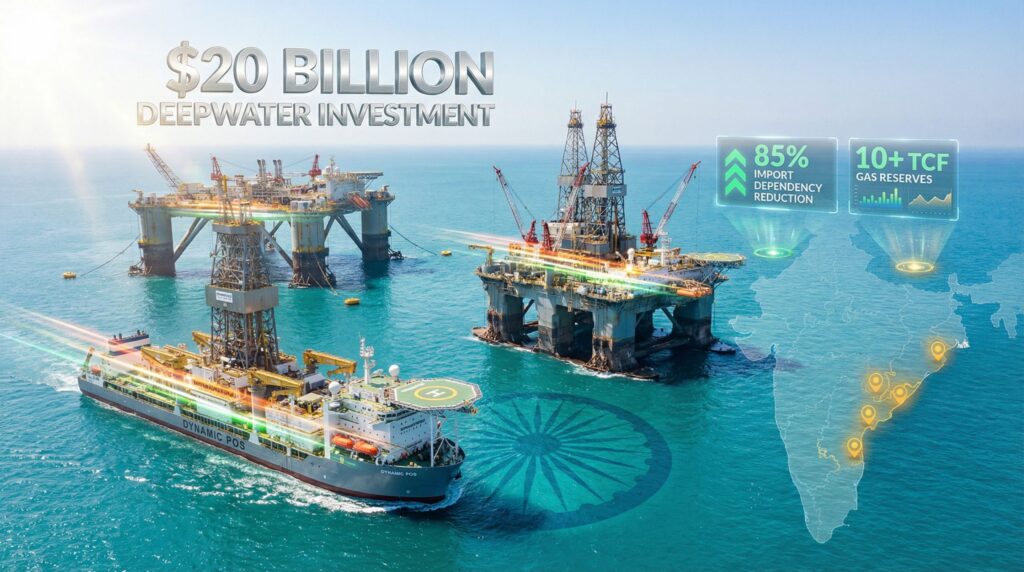
Modern deepwater offshore platforms with advanced support vessels 2026 will see majors focus on optimizing these high-cost assets through efficiency gains rather than new mega-projects.
What “Lean” Means for Oil Majors in 2026
The new playbook focuses on:
- Significant Cost Reductions: Multi-billion-dollar savings targets in capital and operating expenses while protecting shareholder returns.
- Portfolio High-Grading: Divesting marginal assets and concentrating on highest-return basins and projects.
- Organizational Lean: Smaller, more agile teams supported by digital tools and automation.
- Capex Discipline: Prioritizing brownfield optimizations, short-cycle projects, and high-ROIC developments over large greenfield spends.
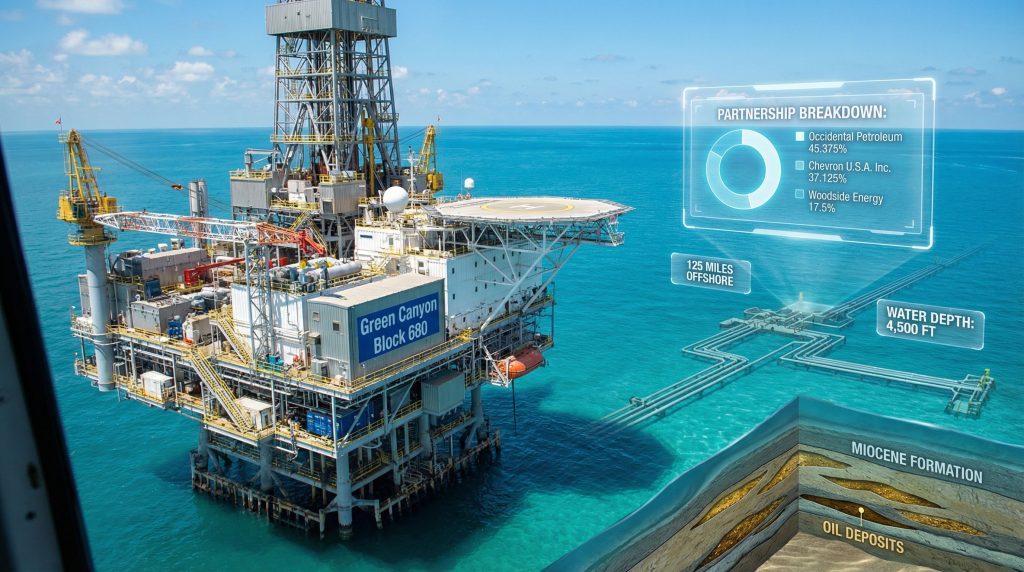
Advanced deepwater offshore platform in the Gulf of Mexico — a typical high-value asset that majors are now optimizing through tiebacks, life extension, and efficiency upgrades in 2026.
Key Drivers Behind the Efficiency Revolution
- Lower forecasted oil prices and potential oversupply.
- Investor demand for strong free cash flow and returns on invested capital (ROIC).
- Digital and AI technologies delivering measurable cost savings and uptime improvements.
- Need to maintain cash flow while funding selective low-carbon investments.
Implications for Offshore Pipelines and Midstream
The lean approach has direct consequences for offshore infrastructure:
- Brownfield & Tieback Focus: Increased investment in subsea tiebacks and life extension of existing flowlines and risers instead of new platforms.
- Cost-Effective Solutions: Greater use of standardized designs, modular installation methods, and advanced materials to reduce CAPEX.
- Digital Optimization: Widespread adoption of predictive maintenance, digital twins, and real-time monitoring to reduce non-productive time (NPT) and integrity costs.
- Concentrated Hubs: Rationalization of assets leading to fewer but more efficient production hubs with optimized gathering and export systems.
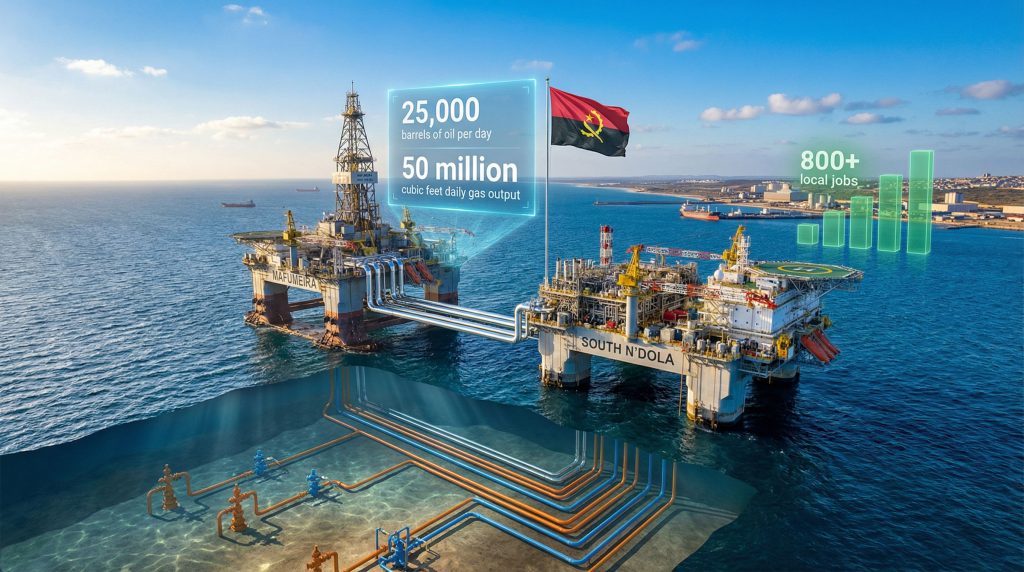
Modern offshore platform complex with subsea tieback infrastructure lean majors are maximizing recovery from existing facilities through cost-effective brownfield developments and tiebacks.
Digital twin technology applied to offshore platforms AI and real-time monitoring are key tools helping majors achieve lean operations by reducing downtime and optimizing maintenance in 2026.
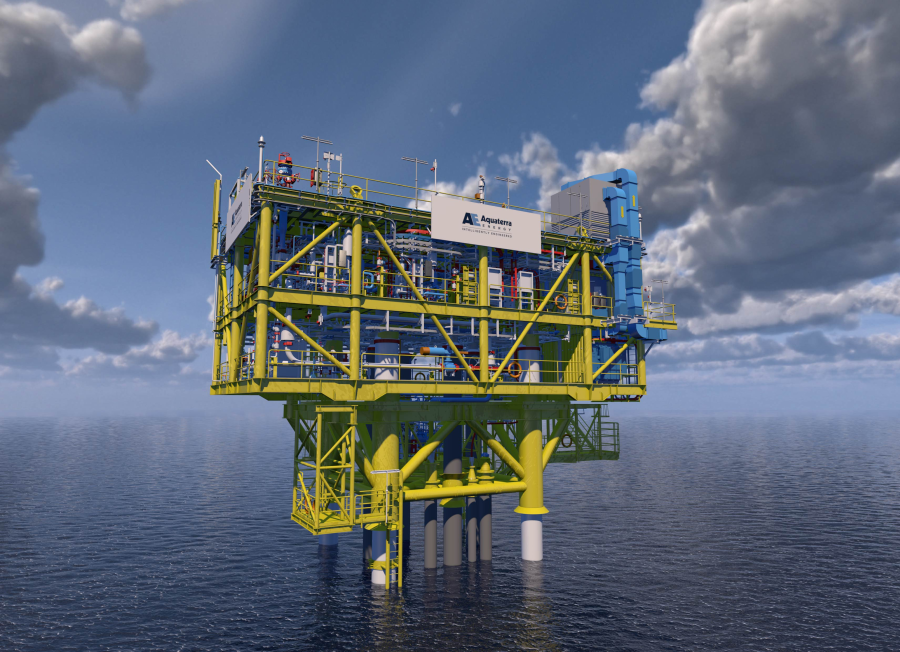
Compact, efficient offshore platform design — lean principles favor modular and optimized structures that lower installation and operating costs while maintaining safety and reliability.
Challenges of Going Lean
- Risk of losing institutional knowledge from headcount reductions.
- Need for flawless execution with fewer resources.
- Balancing short-term efficiency with long-term innovation and energy transition goals.
Looking Ahead
2026 is shaping up as the defining year for the Lean Oil Major. Companies that master capital discipline while leveraging digital tools and smart asset optimization will deliver stronger returns and position themselves better for the future — whether in traditional hydrocarbons, low-carbon molecules, or both.
For pipeline engineers and midstream professionals, this means more work in optimization, integrity management, tieback strategies, and cost-effective technology deployment.What efficiency measures or lean initiatives are you seeing from the majors in your projects in 2026?
How is this shift affecting subsea tiebacks, HPHT systems, or pipeline integrity programs?