The Permian Basin continues to lead the shale revolution, and in 2026, artificial intelligence and machine learning have become indispensable tools for operators. Companies like Chevron and ExxonMobil are deploying AI at scale to optimize drilling, implement predictive maintenance, reduce costs, and improve capital efficiency — even amid geopolitical volatility and sustained high oil prices.
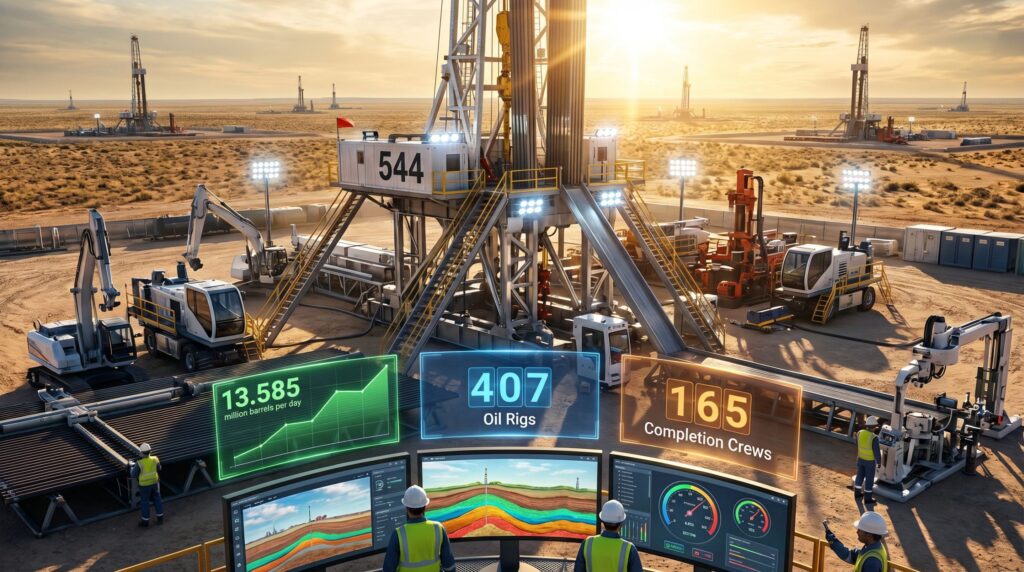
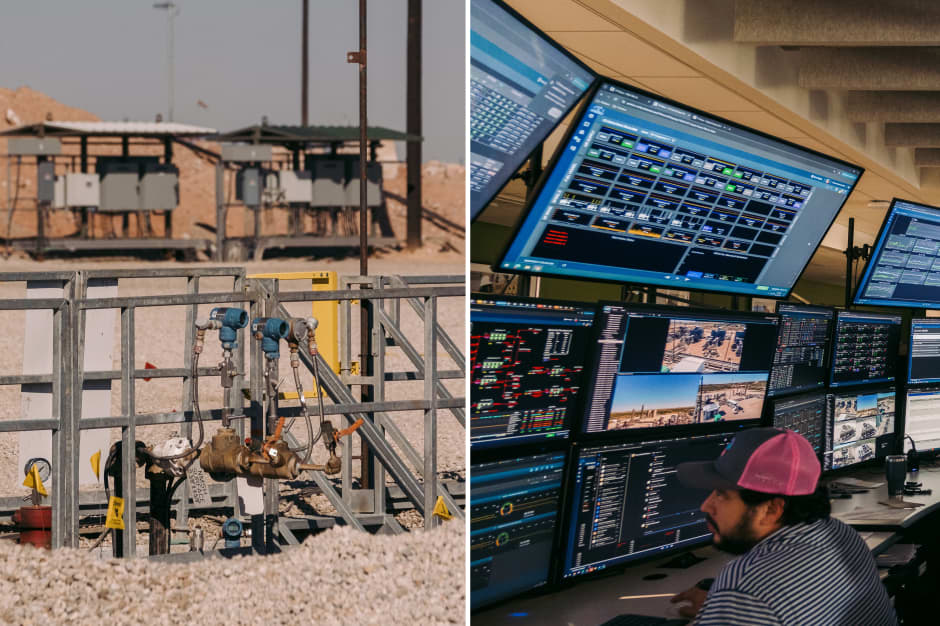
Why the Permian is Ground Zero for AI in Oil & GasThe sheer scale of the Permian — with thousands of wells, dense pad drilling, and massive real-time data from sensors — makes it the perfect laboratory for AI. Operators now process billions of data points daily, enabling rapid model training and continuous improvement.Core Benefits Driving Adoption:
- Significant reduction in drilling costs and non-productive time (NPT)
- Real-time optimization of drilling parameters
- Predictive maintenance to prevent equipment failures
- Better reservoir understanding and well placement
Chevron’s Aggressive AI Deployment in the Permian
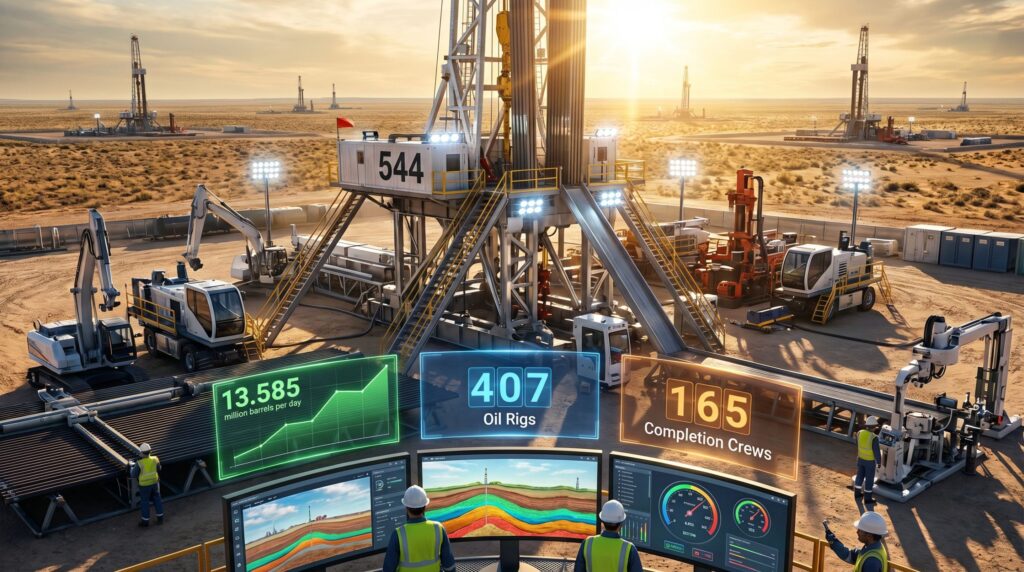
Chevron operates one of the most advanced digital programs in the basin. Using its Integrated Operations Centers, the company analyzes 165+ million data points daily across hundreds of facilities.
Key Results:
- 25–50% drilling cost reductions in optimized programs
- Up to 30% faster drilling rates through AI-driven autonomous steering and parameter optimization
- Advanced predictive maintenance on pumps, compressors, and artificial lift systems
- Digital twins for real-time reservoir modeling and production forecasting
Chevron’s platforms integrate seismic data, drilling operations, and asset performance for end-to-end optimization.
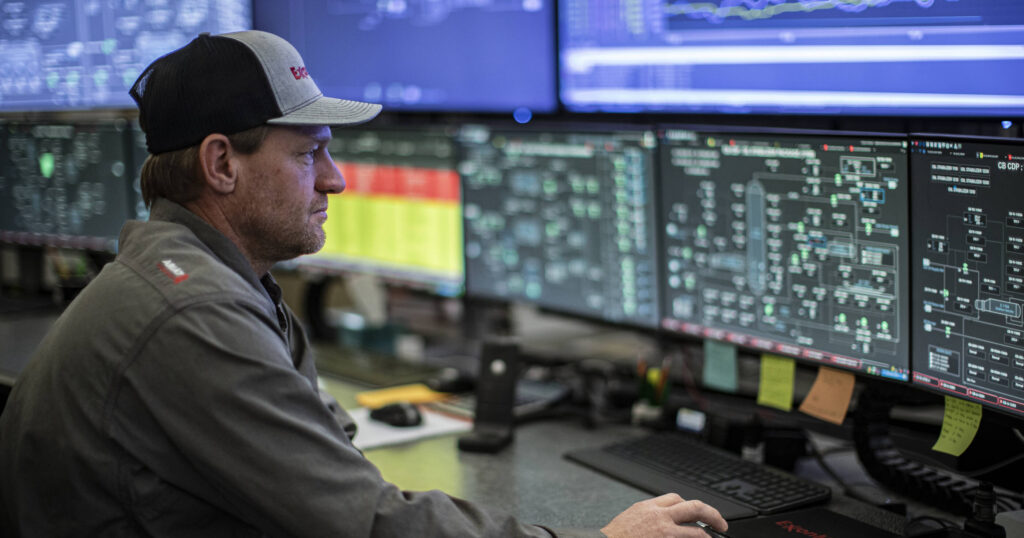
ExxonMobil’s AI Scaling Post-Pioneer AcquisitionWith its massive Permian position strengthened by the Pioneer acquisition, ExxonMobil is rapidly expanding AI applications across drilling, completions, and production.
Notable Initiatives:
- Machine learning for real-time geosteering and drilling optimization
- Predictive analytics for equipment health monitoring
- Automated anomaly detection across large well inventories
- AI-enhanced subsurface modeling to reduce uncertainty
These efforts support ExxonMobil’s ambitious target of 2 million barrels of oil equivalent per day in the Permian by 2027 while maintaining strict capital discipline.
How AI Powers Predictive Maintenance and Cost ReductionPredictive Maintenance:
- Continuous sensor data feeds ML models that detect early signs of vibration anomalies, temperature spikes, pressure irregularities, and wear.
- Operators shift from scheduled to condition-based maintenance, cutting unplanned downtime by 30–50%.
Drilling Optimization:
- Real-time AI adjusts weight-on-bit, RPM, rate of penetration (ROP), and torque to maximize efficiency and bit life.
- Predictive models forecast stuck pipe risks, bit wear, and formation changes.
Broader Cost Impacts:
- Lower per-foot drilling costs
- Optimized well spacing and completion designs
- Improved capital allocation and project forecasting
- Reduced emissions through more efficient operations
Challenges on the Path ForwardDespite strong results, operators face hurdles:
- Integrating AI with legacy systems and ensuring high-quality data
- Developing talent with both petroleum engineering and data science skills
- Managing cybersecurity in highly connected operations
- Maintaining human oversight alongside AI recommendations
The most successful teams combine domain expertise with powerful AI tools.Transferable Lessons for Offshore & Subsea ProfessionalsThe AI breakthroughs in the Permian have direct applications offshore:
- Predictive maintenance for subsea equipment and HPHT systems
- Digital twins for long tie-backs and flow assurance
- Real-time optimization of all-electric subsea controls
- AI-driven anomaly detection on pipelines and platforms
By Oko Immanuel, M.Eng
Founder, Offshore Pipeline Insight | Subsea Engineering Specialist
May 2026