Written by Oko
Founder, Offshore Pipeline Insight
May 23, 2026
In 2026, offshore operators face aging infrastructure, rising maintenance costs, stricter regulations, and pressure to minimize environmental risks. Subsea pipelines — often in ultra-deepwater or harsh environments — demand smarter integrity management. AI-powered digital twins have moved from pilot projects to production tools, delivering predictive maintenance, real-time anomaly detection, and optimized risk-based inspections.
This article explores how operators deploy these technologies, real-world case studies showing reduced downtime and improved compliance, and the measurable ROI driving adoption.
Understanding Digital Twins in Offshore PipelinesA digital twin is a virtual replica of a physical asset that mirrors its condition in real time. For subsea pipelines, it integrates:
- Multi-source data — IoT sensors, fiber-optic monitoring, inline inspection (ILI) tools, ROV/AUV surveys, and historical records.
- Physics-based models — Corrosion, fatigue, and flow simulations.
- AI/ML layers — For pattern recognition, prediction, and optimization.
Unlike static 3D models, live digital twins update continuously. They shift from CapEx-focused design tools to OpEx/reliability platforms that support production optimization.
Four-tier architecture is common:
- Data Acquisition Layer — Sensors, SCADA, drones.
- Edge Computing Layer — Real-time processing and triage.
- Digital Twin Processing Layer — AI analytics and scenario modeling.
- Visualization & Decision Layer — Dashboards, 3D overlays, and alerts for engineers.
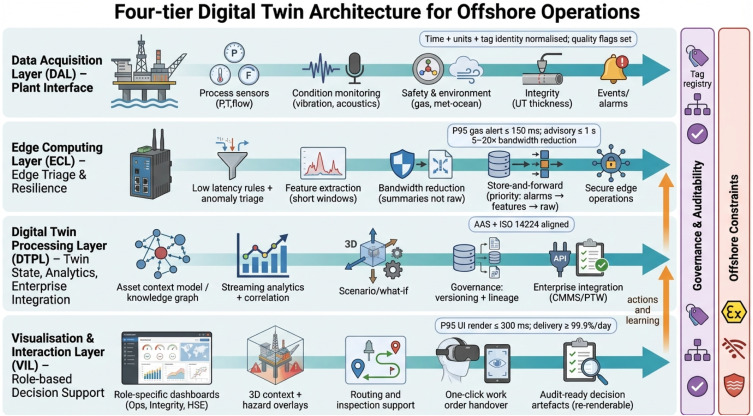
This layered approach enables operators to move “from data to decisions” efficiently in deepwater operations.
Key AI Applications in Pipeline Integrity Operators use AI-driven digital twins for several high-impact areas:
- Predictive Maintenance & Anomaly Detection — AI analyzes vibration, pressure, temperature, and acoustic data to predict failures days or weeks in advance. Models detect early corrosion, dents, or buckling.
- Leak Detection and Localization — Adaptive digital twins use machine learning for real-time leak detection in gas pipelines, improving accuracy across varying configurations.
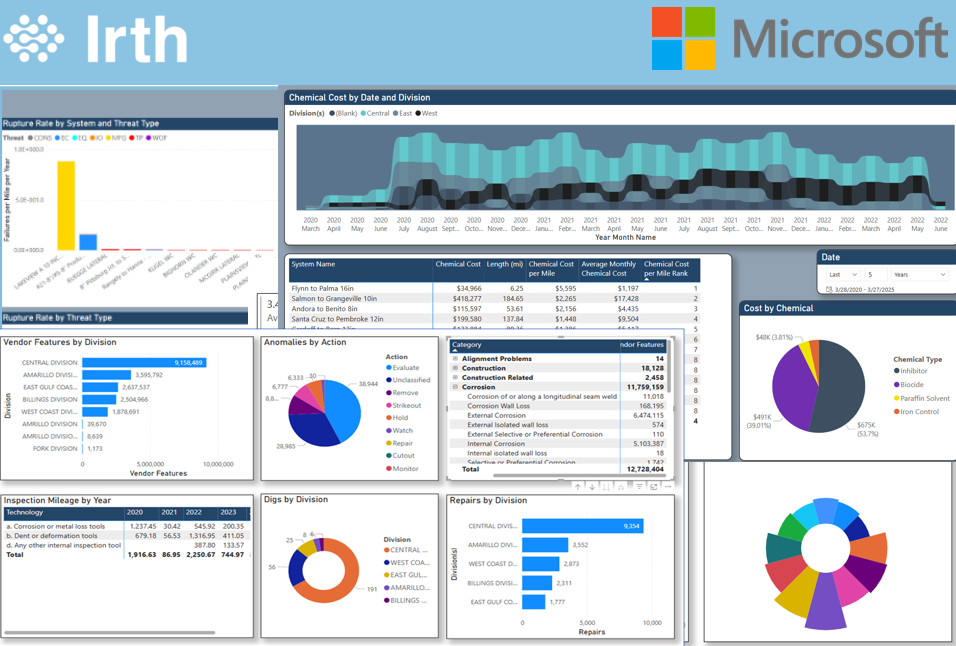
- Corrosion and Fatigue Modeling — Digital twins simulate pitting, top-of-line corrosion, and fatigue under cyclic loading, integrating cathodic protection data.
- Risk-Based Inspection (RBI) Optimization — AI prioritizes inspection campaigns by risk, potentially extending intervals where data supports lower threat levels. This reduces costly offshore interventions.
These applications integrate inspections, sensors, and simulations into a unified live model.
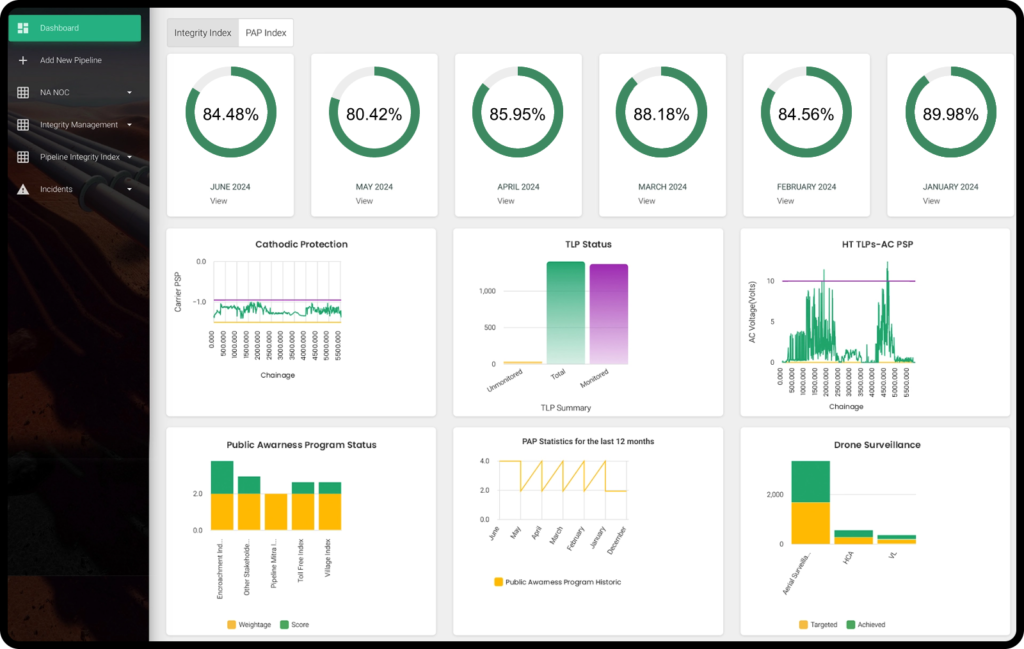
Real-World Case Studies (2025–2026) Penspen’s THEIA + Senslytics CausX AI (Pipeline Integrity Management): This combination creates continuously updated digital twins by aligning multiple inspection datasets. It strengthens corrosion and threat prediction, enabling proactive maintenance and better compliance with PHMSA Gas Mega Rule standards. Operators report improved risk assessment and reduced failures.
North Sea & Gulf of Mexico Deployments: BP’s APEX system and Equinor initiatives use digital twins for subsea infrastructure. These have shown strong results in aging assets, supporting life extension while meeting regulatory monitoring requirements.
SLB OptiSite (2025 Launch): This AI + digital twin solution provides end-to-end oversight of production networks, including pipelines. It delivers predictive insights for asset health, reliability, and integrity, helping operators reduce emissions and unplanned events.
These examples highlight rapid adoption amid rising maintenance costs for aging infrastructure.
Technical Challenges and Solutions
Implementing digital twins offshore involves hurdles:
- Data Quality & Integration — Subsea sensors face bandwidth limits and harsh conditions. Edge computing and hybrid cloud solutions help.
- Cybersecurity — Increased connectivity raises risks. Secure architectures with role-based access are essential.
- Model Accuracy — Physics + data-driven hybrids (e.g., LSTM, GRU, or ensemble models) improve reliability.
- Connectivity in Deepwater — Satellite and fiber improvements, plus onboard processing, address this.
Solutions like IoT advancements, drones, and standardized frameworks are accelerating progress.
ROI and Business Impact
Digital twins and AI deliver clear financial returns:
- Unplanned Downtime Reduction — Often 35–72% in mature implementations, avoiding losses of tens to hundreds of thousands per event.
- Maintenance Cost Savings — 25–40% through optimized scheduling and reduced unnecessary interventions.
- Inspection Efficiency — Risk-based approaches cut offshore campaigns, lowering vessel and ROV costs significantly.
- Asset Life Extension — Better integrity management defers replacement or decommissioning.
- Safety & Compliance — Fewer incidents and automated reporting support evolving regulations.
Industry benchmarks show 3–10x ROI within 18–24 months for well-executed programs. Pipeline integrity management market growth reflects this value, driven by AI and digital twin integration.
Traditional vs. AI + Digital Twin:
- Traditional: Time-based, reactive, higher costs and risks.
- AI Twin: Condition-based, predictive, lower total ownership costs.
Future Outlook (2027–2030)
Digital twins will expand into hydrogen and CCS pipelines, integrate with autonomous underwater vehicles (AUVs) for closed-loop inspection, and incorporate agentic AI for automated decision support. Greater focus on emissions tracking and energy transition assets will drive further innovation.
Conclusion and Recommendations
AI-driven digital twins are transforming subsea pipeline integrity from a cost center into a strategic advantage. In 2026, operators who adopt these tools gain better reliability, lower costs, regulatory resilience, and a competitive edge.
Recommendations for Operators:
- Start with high-risk or high-value pipeline segments for pilots.
- Invest in data quality and cross-functional teams (integrity, IT, operations).
- Partner with proven platforms while building internal capabilities.
- Measure success with clear KPIs: downtime reduction, cost savings, and risk score improvements.
The shift from data overload to actionable intelligence is here. For offshore pipeline professionals, embracing digital twins is no longer optional — it’s essential for safe, efficient, and sustainable operations.