Written by Oko
Founder, Offshore Pipeline Insight
May 23, 2026
The global oil industry continues to handle a wide spectrum of crude oil qualities — from light, sweet crudes produced in the Arab Gulf to heavy, extra-heavy crudes from Venezuela and similar regions. This difference significantly impacts offshore pipeline transportation, especially in subsea environments where conditions are already challenging.
Understanding these differences is critical for pipeline engineers, integrity managers, and operators involved in deepwater developments and tie-back projects.
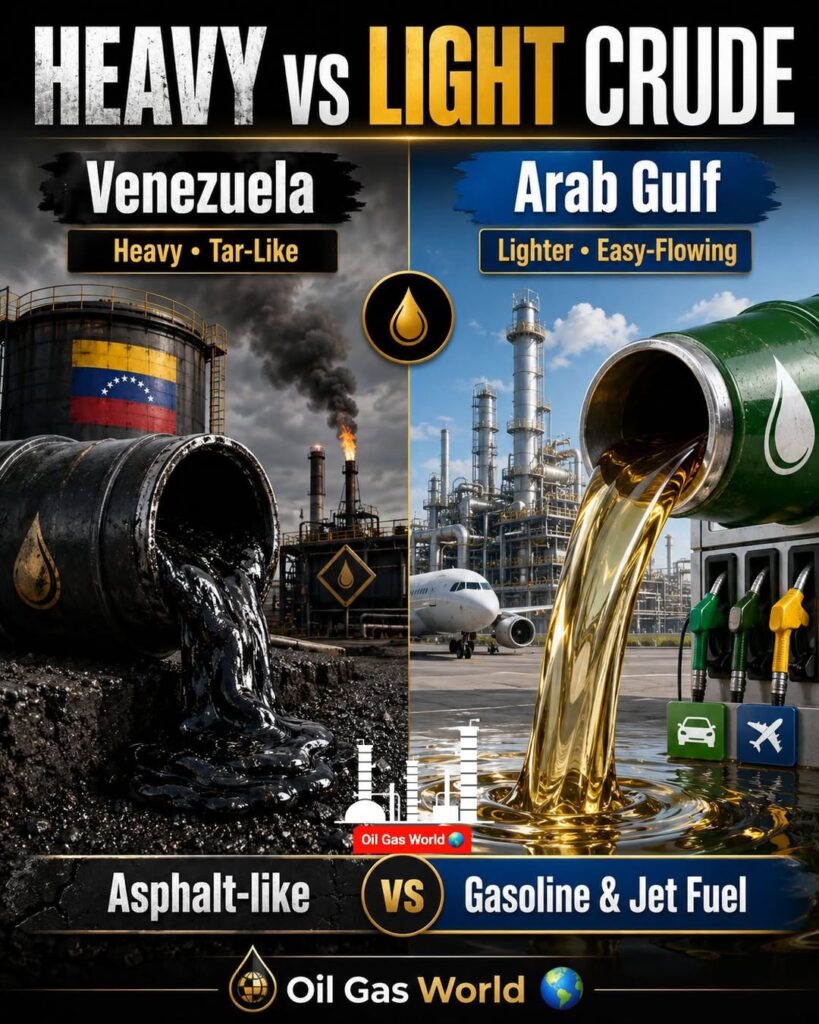
What is the Difference Between Heavy and Light Crude?Light Crude (typically API gravity > 31.1°):
- Lower density and viscosity
- Higher proportion of lighter hydrocarbons
- Easier to flow, lower sulfur content in many cases (sweet)
- Yields more valuable products like gasoline, jet fuel, and diesel
Heavy Crude (API gravity < 22.3°):
- High density and viscosity (often tar-like at ambient temperature)
- Higher content of heavy fractions, asphaltenes, and resins
- Often higher sulfur and metals content
- Requires more processing and yields more asphalt and residual fuel oil
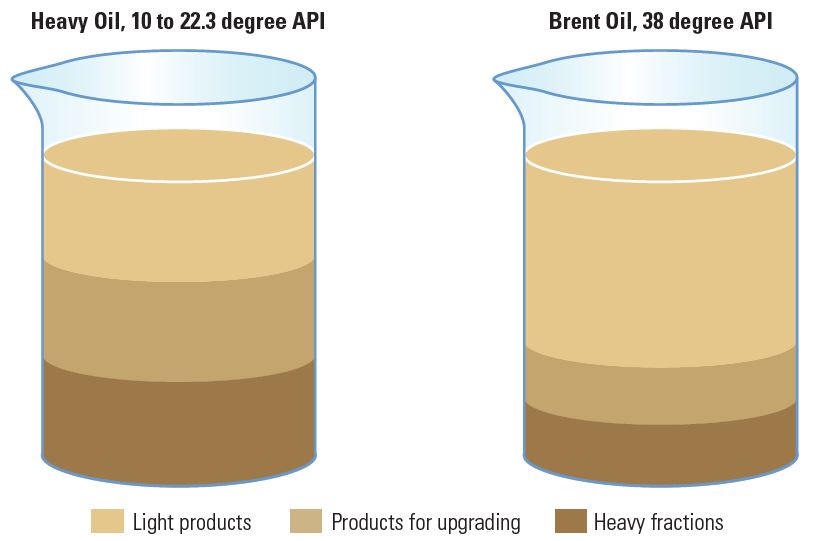
Visual comparison of heavy oil (left) vs. light crude like Brent (right) showing the significant difference in composition and flow behavior.
Why This Matters for Offshore Pipelines
In offshore environments, transporting crude through long subsea pipelines introduces unique challenges that are amplified with heavy crudes:
- Flow Assurance Issues
- Heavy crude has much higher viscosity, leading to increased pressure drops and higher pumping energy requirements.
- Risk of wax and asphaltene deposition is significantly higher.
- Pour point and cold flow properties become critical in deepwater low-temperature conditions.
- Pipeline Design Considerations
- Larger diameters or insulated pipelines are often needed for heavy crude.
- Heating systems (active heating or trace heating) or diluent injection (condensate or lighter hydrocarbons) are common mitigation strategies.
- Higher design pressures and specialized materials to handle potential corrosion from higher sulfur and acid content.
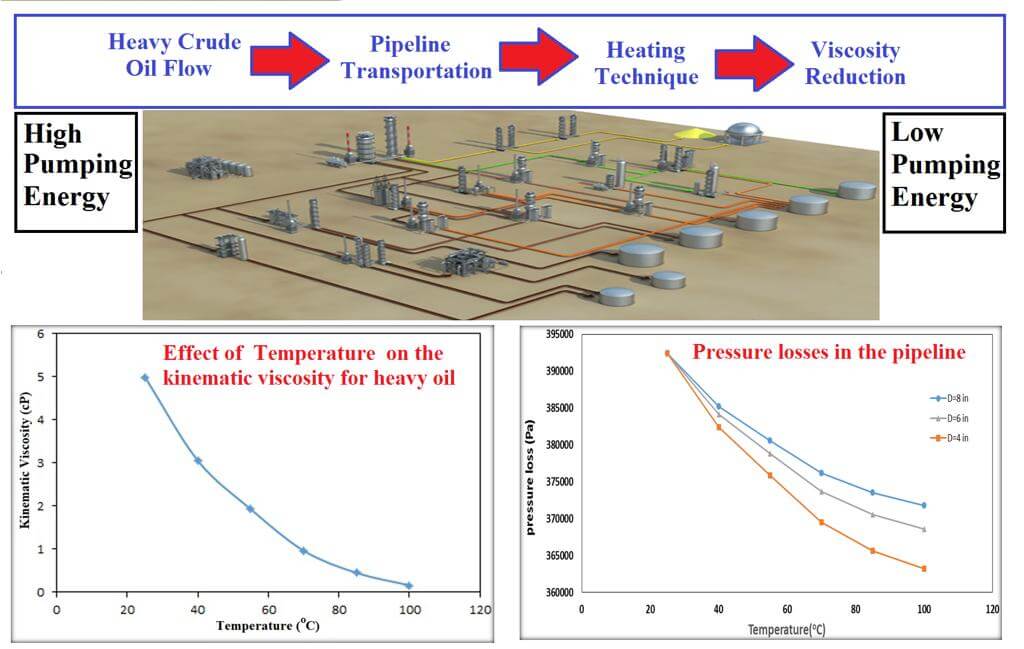
Heating-induced viscosity reduction is one of the most effective methods used in heavy crude pipeline transportation. The graph clearly shows how temperature dramatically reduces kinematic viscosity and pressure losses.
- Integrity Management Challenges
- Higher risk of internal corrosion due to contaminants.
- Increased mechanical stress from higher viscosity and pressure requirements.
- More frequent pigging operations needed to manage deposits.
- Greater challenges in leak detection due to slower flow characteristics.
Real-World Offshore Examples
Projects like Who Dat in the Gulf of Mexico have successfully handled both light and heavy oil through the same subsea infrastructure by using insulated flow-lines, flexible risers, and careful system design.
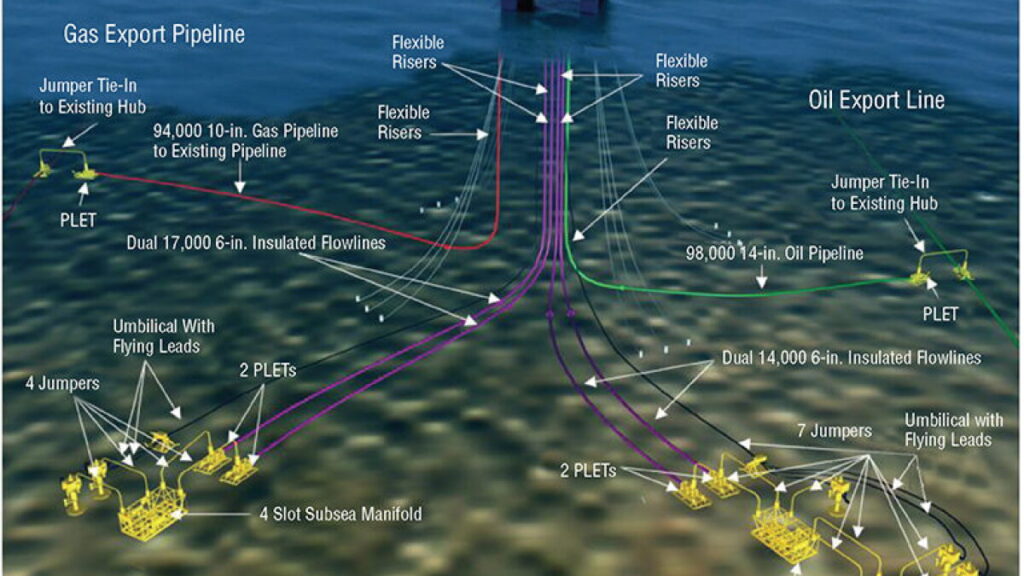
Typical subsea layout showing oil export pipelines and flowlines that must be designed for different crude properties.In Brazil’s pre-salt fields and Venezuela’s heavy oil projects, operators have invested heavily in:
- Subsea separation and boosting systems
- Chemical inhibition programs
- Electrically heated pipelines
- Advanced flow assurance modeling using OLGA and other multiphase simulators
North Sea operators transporting medium-to-heavy crudes have also demonstrated success with bundle systems and regular pigging campaigns.
Economic and Operational Impact
| Aspect | Light Crude | Heavy Crude |
|---|---|---|
| Transportation Cost | Lower | Significantly Higher |
| Pumping Energy | Low | Very High |
| Diluent / Heating Cost | Minimal | High |
| Integrity Management | Standard | Intensive |
| Netback Value | Higher | Discounted (but still viable) |
While heavy crudes often trade at a substantial discount, the additional OPEX for offshore transport can quickly erode margins if not engineered properly. This makes early-stage flow assurance studies and robust integrity programs critical for project economics.
Best Practices for Operators
- Comprehensive Crude Assay Analysis during concept selection and FEED.
- Integrated Flow Assurance Strategy from reservoir to topsides.
- Material Selection aligned with expected corrosivity (sour service, CO₂, etc.).
- Digital Monitoring — Deploy fiber-optic sensing, IoT, and digital twins for continuous visibility.
- Risk-Based Inspection (RBI) tailored to crude type.
- Contingency Planning for cold restarts after shutdowns (especially critical for heavy crudes).
Conclusion
The contrast between heavy and light crude goes far beyond refinery yields — it fundamentally shapes offshore pipeline design philosophy, flow assurance strategy, and long-term integrity management.As operators continue to develop marginal fields and tie-backs containing heavier crudes, the ability to safely and economically transport these challenging fluids will separate industry leaders from the rest.Mastering heavy crude pipeline engineering is not just a technical challenge — it is a commercial imperative in today’s offshore environment.