Written by Oko
Founder, Offshore Pipeline Insight
May 24, 2026
The offshore oil and gas industry has entered a new technical era in 2026 with the successful deployment of 20,000 psi (20k) High-Pressure High-Temperature (HPHT) systems. This represents a significant leap from the previous industry standard of 15,000 psi and is enabling operators to access ultra-deep, high-pressure reservoirs that were previously considered technically and economically unviable.
One of the landmark projects demonstrating this capability is Beacon Offshore Energy’s Shenandoah field in the U.S. Gulf of Mexico.
The Technical Challenge of Extreme HPHT Conditions
Traditional deepwater developments operated safely up to 15,000 psi. However, many Paleogene reservoirs in the Gulf of Mexico (such as the Inboard Wilcox trend) exhibit reservoir pressures exceeding 20,000 psi and temperatures above 200°F (93°C). These conditions create severe engineering challenges:
- Equipment must withstand crushing forces and extreme thermal cycling.
- Materials face accelerated corrosion, fatigue, and elastomer degradation.
- Flow assurance risks (hydrates, wax, asphaltenes, and scale) become far more complex.
- Well control and safety margins are significantly reduced.
20k HPHT technology — including fully rated subsea trees, manifolds, flowlines, risers, and blowout preventers — has now proven field-ready.
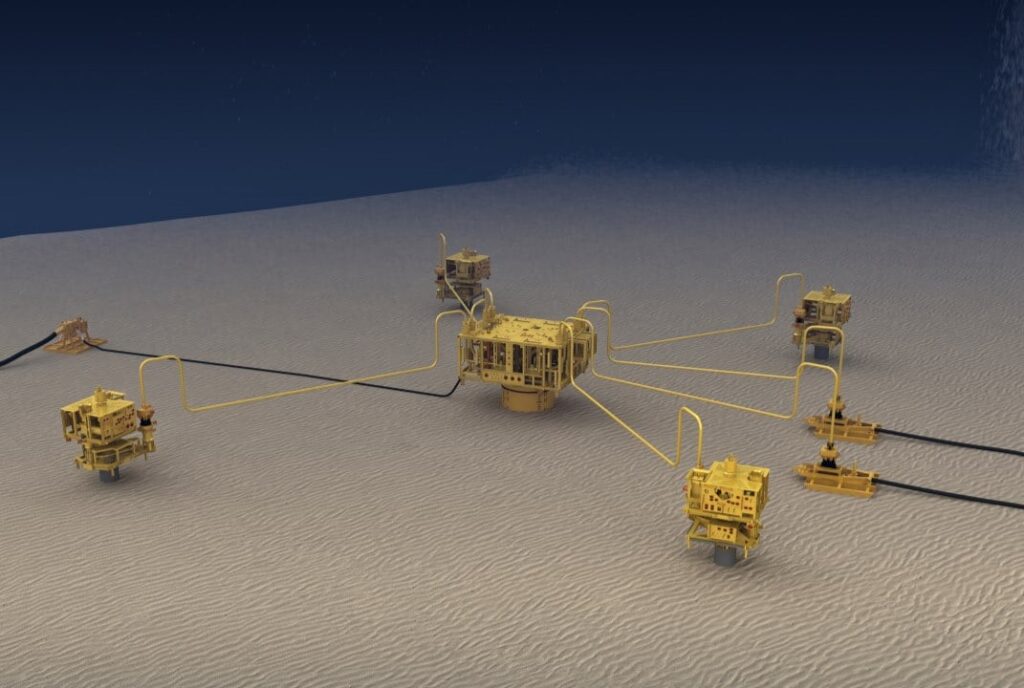
20,000 psi HPHT Subsea Production System — Advanced equipment designed for extreme pressure environments.
Case Study: Beacon Offshore Energy’s Shenandoah Field
Location: Walker Ridge Block 52, Gulf of Mexico
Water Depth: Approximately 5,800 feet (1,768 m)
Reservoir Depth: ~30,000 feet TVD
Pressure Rating: 20,000+ psi
Production Start: July 2025
Phase 1 Peak Production: 100,000 barrels of oil per day (bopd) — achieved within just 75 days of first oil, one of the fastest ramp-ups in deepwater history.
Shenandoah targets high-quality oil sands in the Inboard Wilcox formation. The project features a semi-submersible Floating Production System (FPS) with initial capacity of 120,000 bopd, expandable in future phases.
Key Technical Innovations at Shenandoah:
- Deployment of fully 20,000-psi rated subsea trees and manifolds.
- Advanced HPHT materials and corrosion-resistant alloys.
- Sophisticated flow assurance programs with real-time chemical injection.
- Subsea boosting systems to reduce backpressure and maximize recovery.
- Integration of digital monitoring and sensors for continuous integrity management.
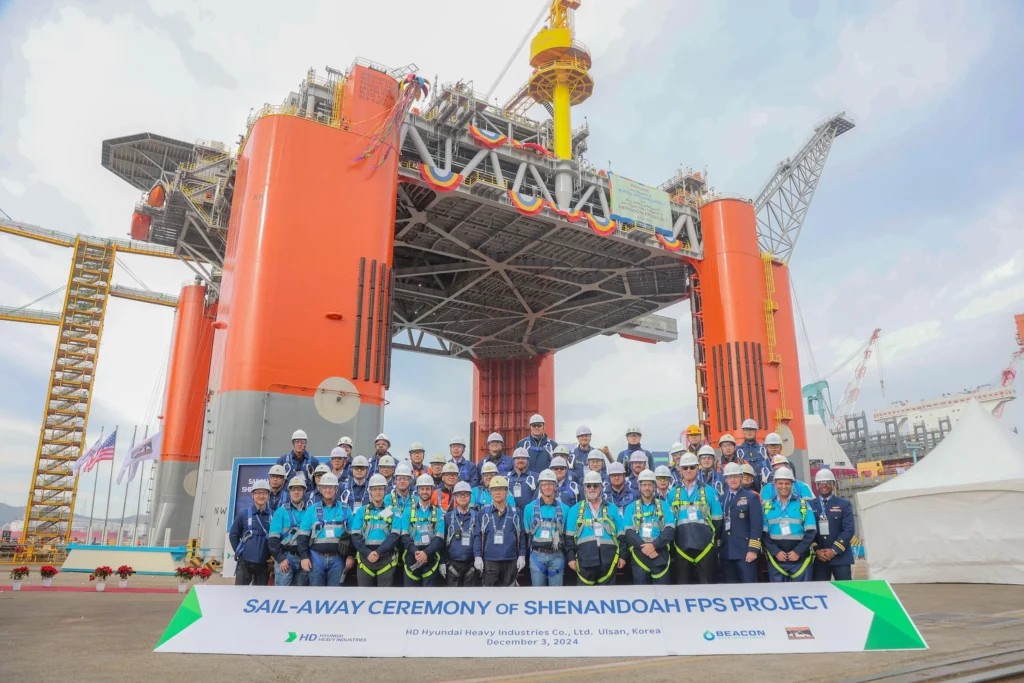
Shenandoah FPS Sail-Away Ceremony — The floating production unit built for the project.
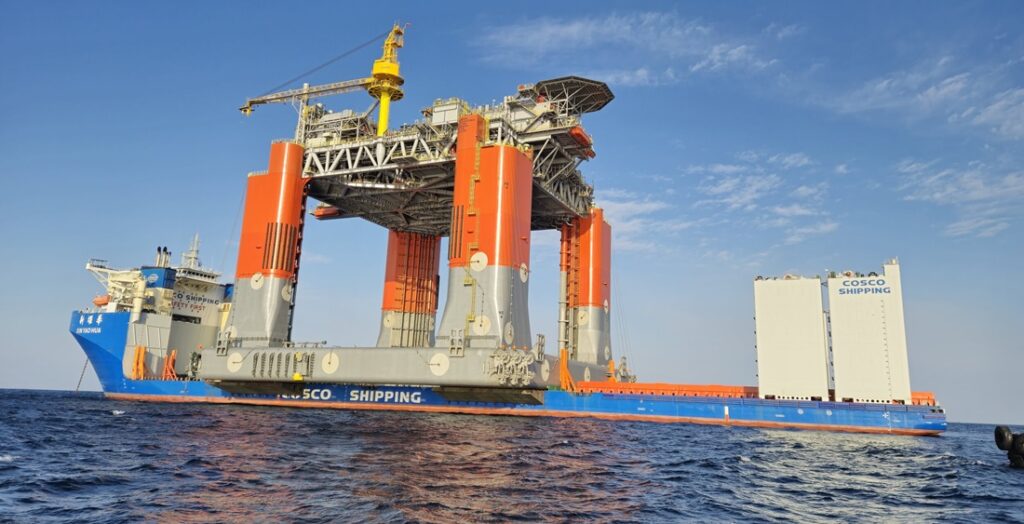
Shenandoah Semi-Submersible FPS Under Tow — Heading to its final location in the Gulf of Mexico.
Why Shenandoah Is a Game-Changer
- It proves that 20k psi technology is now commercially viable and reliable.
- It unlocks billions of barrels in previously stranded or marginal reservoirs.
- It positions the Shenandoah FPS as a potential hub for future tie-backs in the Inboard Wilcox trend.
- It sets a technical benchmark for upcoming projects such as BP’s Kaskida and others in the Gulf of Mexico.
Lessons Learned for the Industry
- Materials and Sealing: Advanced alloys and specialized elastomers are critical for long-term integrity.
- Flow Assurance: Real-time monitoring and inhibition strategies are essential under extreme pressure drops.
- Subsea Boosting: Multiphase pumps rated for HPHT conditions dramatically improve production performance.
- Digital Integration: Sensors and digital twins help manage risks in real time.
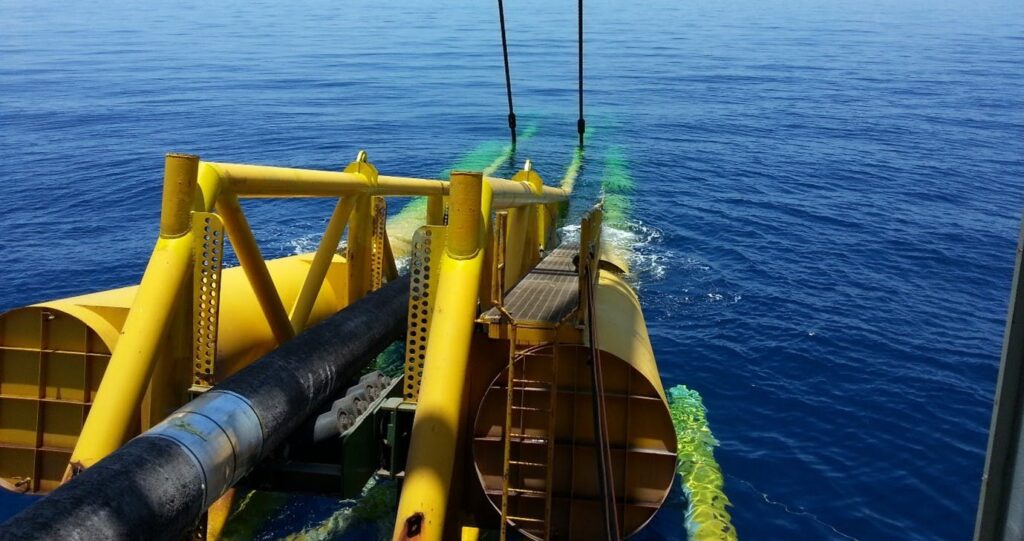
HPHT Subsea Infrastructure Layout — Typical configuration for high-pressure deepwater developments.
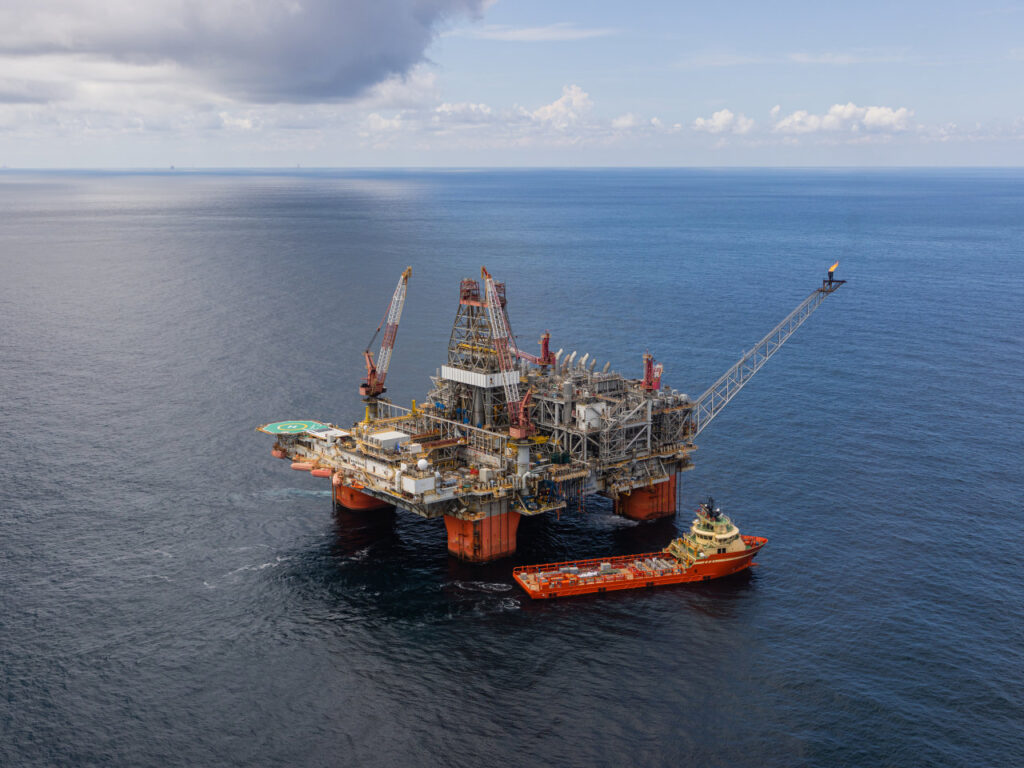
Deepwater Drilling Rig in the Gulf of Mexico — Operating in extreme HPHT conditions.
Future Outlook for 20k HPHT Projects
The success of Shenandoah and Chevron’s Anchor project has de-risked this technology. Industry analysts expect a wave of new 20k developments in the Gulf of Mexico and similar basins globally over the next 5–10 years.
For pipeline and subsea professionals, this trend means increased demand for:
- HPHT-rated pipeline design and materials expertise
- Advanced flow assurance and integrity management
- Experience with subsea boosting and digital monitoring systems
Conclusion
Beacon Offshore Energy’s Shenandoah field stands as a landmark achievement in deepwater engineering. By successfully operating at 20,000 psi and beyond, it has opened access to a new generation of high-pressure reservoirs and raised the technical bar for the entire offshore industry.As operators continue to push into more extreme environments, projects like Shenandoah demonstrate that with cutting-edge technology, rigorous engineering, and strong collaboration, the industry can safely and profitably develop resources that were once considered unreachable.