Written by Oko
Founder, Offshore Pipeline Insight
May 25, 2026
The offshore oil and gas industry is at a critical crossroads. Thousands of kilometers of subsea pipelines installed in the 1970s–2000s are reaching the end of their design life, while the push for net-zero targets is creating massive demand for new infrastructure to transport carbon dioxide (CO₂) for Carbon Capture, Utilization, and Storage (CCUS) and hydrogen.
This has sparked a growing debate: Should we decommission (remove) aging pipelines, or repurpose them for the low-carbon future?
The Scale of the Challenge
- In the North Sea, over 7,500 km of pipelines are expected to enter decommissioning in the coming decades, with total costs estimated at tens of billions of pounds.
- In the Gulf of Mexico, hundreds of pipelines face similar timelines, with decommissioning costs running into tens of billions of dollars.
- Many operators must now decide between full removal (expensive and environmentally disruptive) or repurposing (technically challenging but potentially far cheaper and more sustainable).
Decommissioning: The Traditional (and Costly) Route
Decommissioning involves flushing, cleaning, cutting, and removing or burying pipelines. It is expensive, time-consuming, and carries environmental risks such as disturbing seabeds and releasing trapped contaminants.
Key Challenges:
- Extremely high costs (especially in deepwater)
- Complex marine operations with heavy-lift vessels
- Regulatory requirements for complete removal in many regions
- Significant carbon emissions from the decommissioning process itself
Repurposing: The Energy Transition Opportunity
Repurposing existing pipelines for CO₂ or hydrogen transport can save 20–50% compared to building new infrastructure. Many operators and regulators (including the UK’s North Sea Transition Authority) are actively encouraging this approach.
Technical Feasibility:
- For CO₂ Transport: Many gas pipelines can be repurposed for dense-phase CO₂ with proper assessment of materials, pressure ratings, and impurities.
- For Hydrogen: Blending up to 20% hydrogen is often feasible; full 100% hydrogen requires more extensive modifications due to embrittlement risks.
Advantages of Repurposing:
- Massive cost savings (new pipelines are extremely expensive)
- Faster project timelines
- Lower environmental impact (less seabed disturbance)
- Supports net-zero goals by enabling CCUS and hydrogen projects
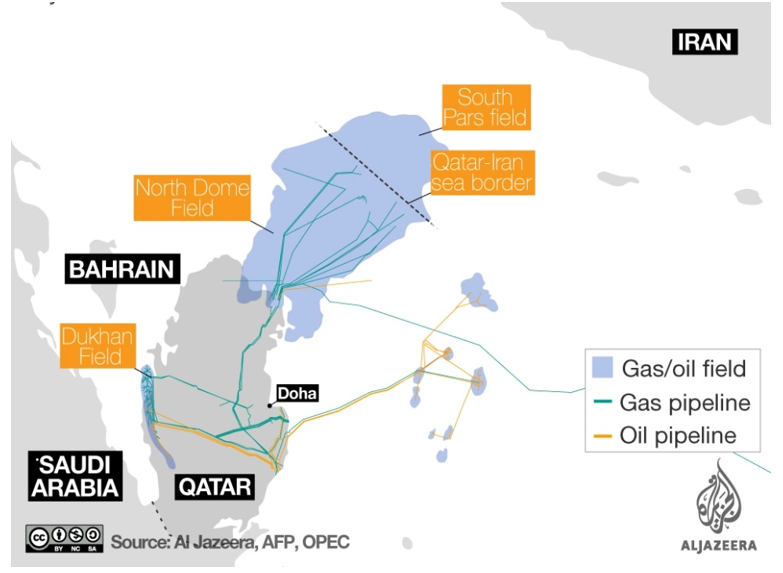
North Field Pipeline Network (Qatar) — Example of large-scale gas infrastructure that could be candidates for repurposing.
The Growing Tension
Economic Pressure:Decommissioning costs are skyrocketing, while repurposing offers huge savings and potential new revenue streams.
Regulatory Pressure:
Governments (especially in the UK and EU) are pushing operators to evaluate repurposing options before approving full decommissioning.
Technical & Safety Concerns: Not all pipelines are suitable. Issues include:
- Material compatibility (especially with hydrogen)
- Residual hydrocarbons and cleaning requirements
- Integrity assessment of aging assets
- Higher operating pressures and different flow characteristics
Stakeholder Conflict: Environmental groups often push for complete removal, while industry and governments see repurposing as a pragmatic bridge to net-zero.


Real-World Examples
- UK North Sea: The NSTA actively promotes repurposing pipelines for CCUS and hydrogen. Studies show over 100 pipelines could be suitable.
- Gulf of Mexico: Operators are evaluating repurposing options for CO₂ transport from industrial sources.
- Europe: Multiple projects are exploring converting existing gas networks for hydrogen blending.
Implications for Pipeline Professionals
This tension creates exciting opportunities for:
- Integrity assessment specialists
- Materials and corrosion experts
- Flow assurance engineers
- Digital twin and AI monitoring professionals
Projects that successfully repurpose pipelines will require deep technical expertise to ensure safety and long-term reliability.
The Way Forward
The industry is moving toward a case-by-case evaluation model:
- Detailed integrity assessment
- Feasibility study for repurposing (CO₂, hydrogen, or other uses)
- Cost-benefit analysis vs. full decommissioning
- Regulatory approval
Conclusion
The debate between decommissioning and repurposing subsea pipelines is one of the most important in the energy transition. While full removal remains necessary in some cases, repurposing offers a compelling economic and environmental pathway — especially for CCUS and hydrogen projects.Operators who master this balance will not only reduce costs but also position themselves as leaders in the low-carbon future. For pipeline engineers and integrity professionals, this is a time of significant opportunity.
The question is no longer just “how do we safely remove old pipelines?” but “how can we smartly reuse them to build tomorrow’s energy infrastructure?”
General Recommendation
“Recommended Reading: Offshore Pipelines by Boyun Guo Store ID offshore1914-20 — A must-have book for anyone involved in subsea pipeline design, installation, and integrity management.”