Written by Oko
Founder, Offshore Pipeline Insight
June 16, 2026
Seabed mining, also known as deep-sea mining, is emerging as a major frontier in the global race for critical minerals. As demand for metals like nickel, cobalt, manganese, and copper continues to rise due to the energy transition and technology sector, attention has turned to the mineral-rich deposits lying on the ocean floor.
In the United States, the Department of the Interior, through its Bureau of Ocean Energy Management (BOEM), plays the central role in regulating and advancing seabed mining activities within U.S. federal waters.
What is Seabed Mining?
Seabed mining involves the extraction of mineral resources from the ocean floor. The most discussed deposits are polymetallic nodules — potato-sized rocks rich in valuable metals that lie on the abyssal plains of the deep ocean.These nodules contain high concentrations of metals essential for batteries, electric vehicles, wind turbines, and defense technologies.
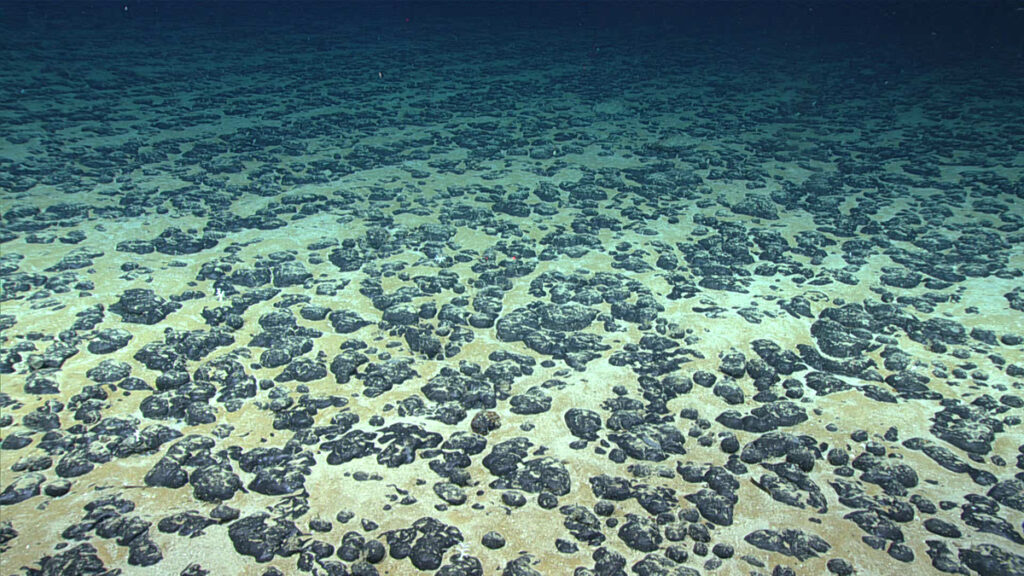
Polymetallic nodules scattered across the deep seabed — a primary target for future seabed mining operations.
The Role of the U.S. Department of the InteriorThe Department of the Interior (DOI) oversees seabed mineral activities on the U.S. Outer Continental Shelf (OCS)through BOEM. BOEM’s responsibilities include:
- Evaluating mineral resources on the federal seabed
- Issuing prospecting permits
- Conducting lease sales for exploration and development
- Ensuring environmental reviews and regulatory compliance
Unlike oil and gas, which have been heavily developed on the OCS for decades, commercial seabed mining for critical minerals is still in its early stages in the United States.
Major Policy Push (2025–2026)In April 2025, President Trump signed Executive Order 14285, titled “Unleashing America’s Offshore Critical Minerals and Resources.” This order directed the Department of the Interior to:
- Accelerate permitting and leasing for seabed minerals
- Identify critical minerals available on the U.S. seabed
- Streamline regulations to support domestic mineral production
Following this directive, BOEM has moved quickly. In February 2026, the agency proposed regulatory changes to simplify the process for hard mineral exploration and leasing. It has also begun evaluating potential lease areas offshore American Samoa, the Northern Mariana Islands, Alaska, and Virginia.
Seabed Mining Equipment and Technology
Modern seabed mining relies on advanced underwater equipment designed to operate in extreme depths (often 4,000–6,000 meters).Key equipment includes:
- Nodule Collection Vehicles: Tracked or wheeled machines that crawl along the seabed and collect nodules.
- Riser and Lift Systems: Vertical pipes that transport collected nodules from the seabed to a surface vessel.
- Support Vessels: Large ships that process and store the minerals.
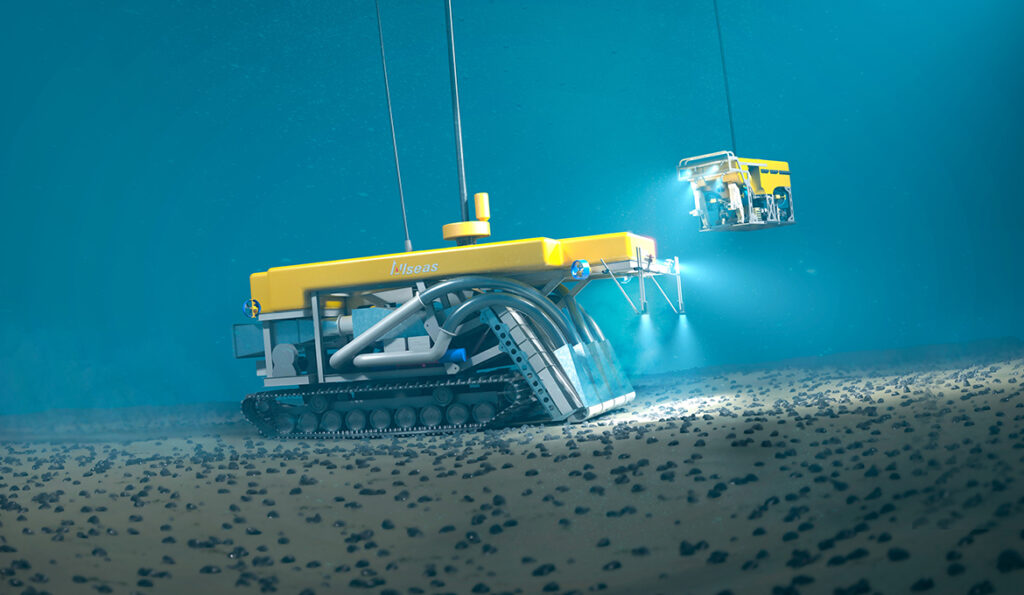
Deep-sea nodule collector vehicle operating on the ocean floor.
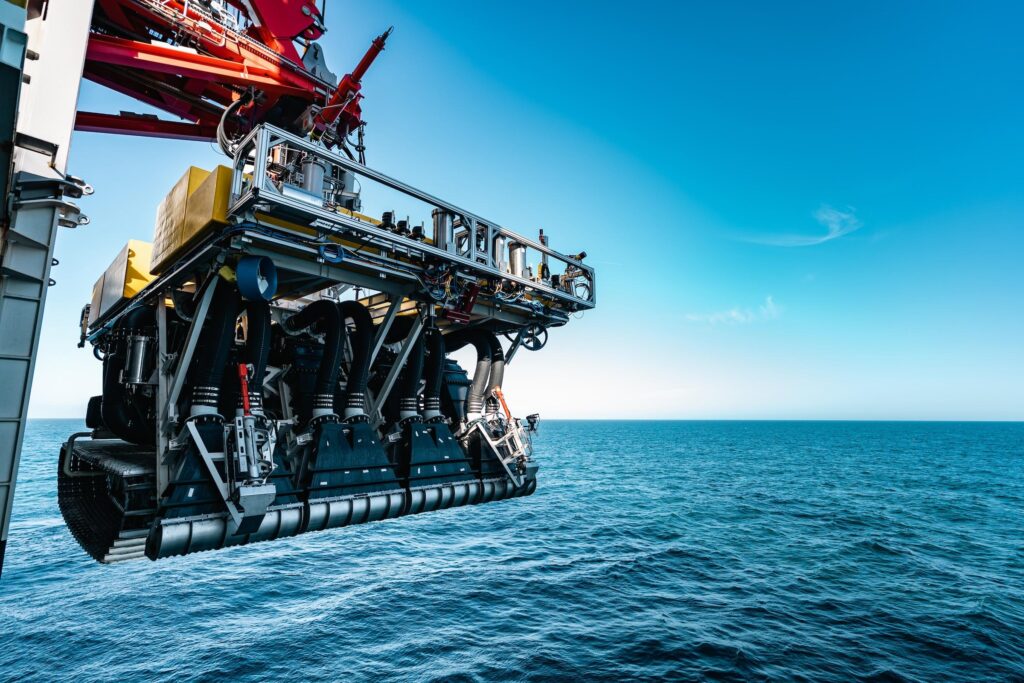
Advanced nodule collection system being deployed from a support vessel
These systems are highly engineered to minimize sediment disturbance while efficiently collecting mineral resources.
Potential Benefits of Seabed Mining
Proponents argue that seabed mining offers several advantages:
- Access to high-grade mineral deposits with lower waste compared to land mining
- Reduced geopolitical risk by developing domestic or allied sources
- Support for clean energy technologies and national security
- Potential economic opportunities for U.S. territories in the Pacific
Challenges and Concerns
Despite growing interest, seabed mining faces significant hurdles:
- Environmental Impact: Concerns about damage to deep-sea ecosystems and biodiversity
- Regulatory Uncertainty: The U.S. has not joined the UN Convention on the Law of the Sea (UNCLOS), creating complexity in international waters
- Technical Risks: Operating equipment reliably at extreme depths remains challenging
- Public and Stakeholder Opposition: Environmental groups and some Pacific island communities have raised strong concerns
Current Status and Outlook
As of mid-2026, the United States is actively positioning itself to become a player in seabed mining. BOEM continues to advance regulatory reforms and area identification processes, while companies are preparing for potential future lease sales.However, commercial production on the U.S. Outer Continental Shelf is still several years away. The coming months and years will be critical as regulations are finalized and environmental reviews take place.
ConclusionSeabed mining represents both a significant opportunity and a major challenge for the United States. Through the Department of the Interior and BOEM, the U.S. is taking concrete steps to responsibly develop its offshore mineral resources. Whether this emerging industry can balance economic needs with environmental protection will largely depend on how regulations evolve and how technology advances in the years ahead.
Related Articles on Offshore Pipeline Insight:
- Pipeline Integrity Management in Offshore & Subsea Environments
- Decommissioning vs Repurposing of Subsea Pipelines
- Digital Transformation in Subsea Pipeline Operations
<p>If you're interested in this product, you can check it out here: <a href="https://amzn.to/44a0w4T" target="_blank" rel="noopener">View on Amazon</a>.</p>