By Oko Immanuel, M.Eng | Offshore Pipeline Insight | June 2026
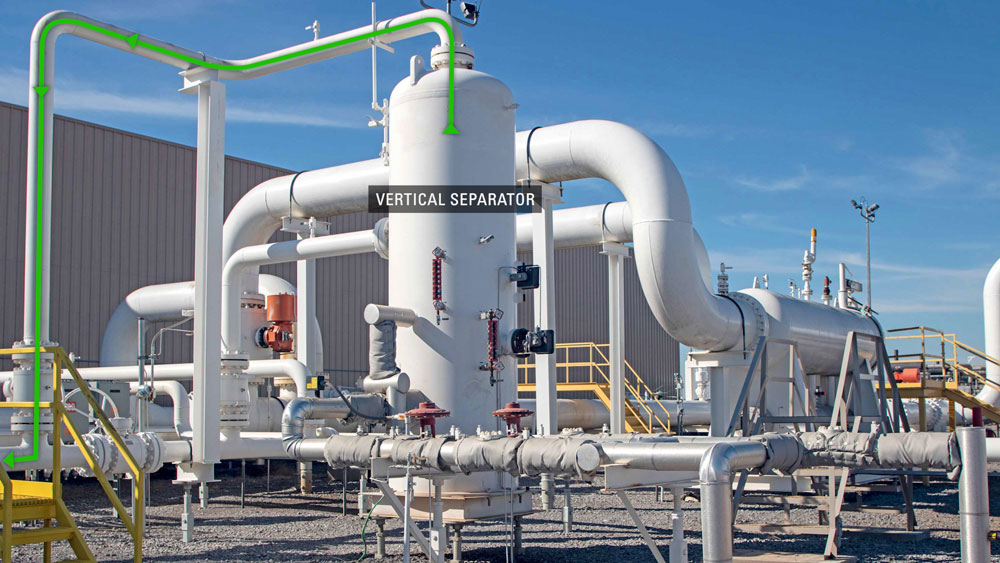
Compressor stations are the backbone of natural gas transportation. Without them, natural gas could not efficiently travel hundreds or even thousands of miles through pipelines from production sites to processing facilities, storage hubs, and end users.
These facilities play a critical role in maintaining pressure, ensuring reliable delivery, and supporting the evolving energy landscape — including the growing focus on energy transition and decarbonization.
What is a Compressor Station?
A compressor station is an industrial facility located along a pipeline route that re-pressurizes natural gas. As gas moves through pipelines, friction causes pressure to drop. Compressor stations boost this pressure so the gas can continue flowing efficiently to its destination.These stations are typically spaced every 40 to 100 miles along major transmission pipelines, depending on factors such as pipeline diameter, terrain, and operating pressure.
How Compressor Stations Work
When natural gas enters a compressor station, it goes through several important stages:
- Filtration and Separation — Solids, liquids, and impurities are removed from the gas stream.
- Compression — Powerful compressors increase the gas pressure.
- Cooling — The compression process generates heat, so the gas is cooled before returning to the pipeline.
- Metering and Control — Flow rates and pressure are carefully monitored and controlled for safe and efficient operation.
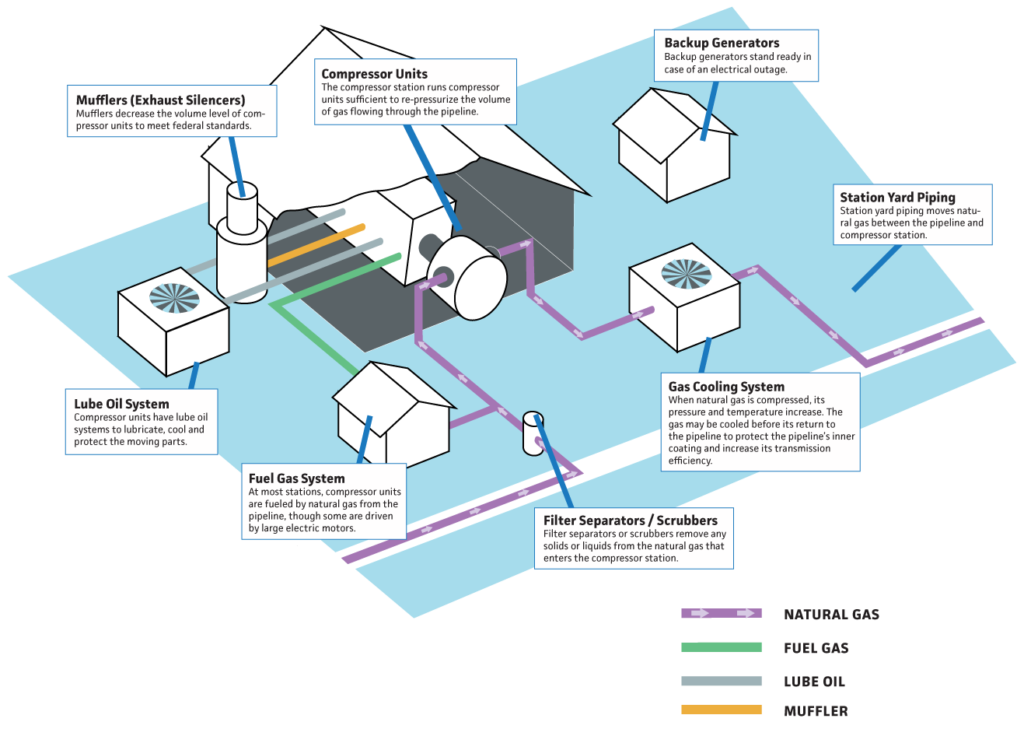
Caption: Interior of a compressor station showing large compressor units and associated piping systems.
Types of Compressors Used in Pipeline Stations
| Compressor Type | Best Suited For | Advantages | Limitations |
|---|---|---|---|
| Centrifugal | High-volume, long-distance pipelines | High efficiency, lower maintenance | Less flexible with varying flow rates |
| Reciprocating | Smaller stations or variable flows | Good performance across pressure ranges | Higher maintenance requirements |
| Screw / Axial | Specialized or compact applications | Compact design | Limited use in large-scale projects |
Why Compressor Stations Are Critical
Compressor stations are essential for several reasons:
- Maintain Efficient Flow: They ensure natural gas reaches its destination without major pressure loss.
- Support Energy Security: Reliable compression helps maintain consistent supply to power plants, industries, and residential users.
- Enable Long-Distance Transport: Without compression, pipelines would need to be significantly larger and more expensive.
- Facilitate Energy Transition: Modern compressor stations are increasingly being adapted to support hydrogen blending, carbon capture, and other low-carbon initiatives.
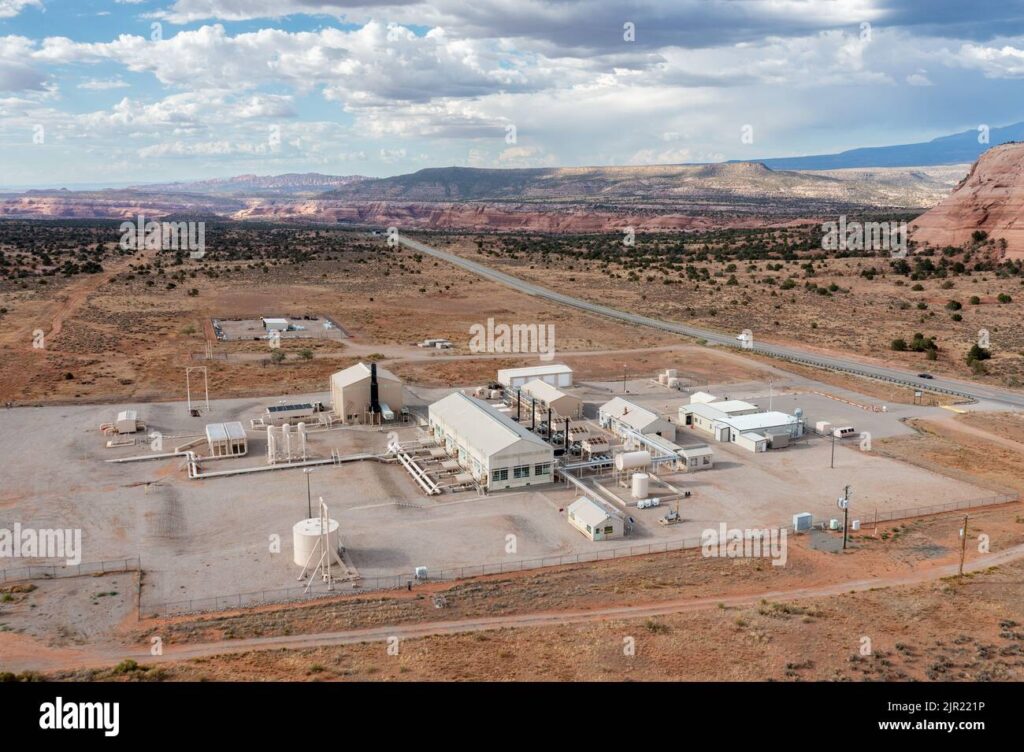
Caption: Aerial view of a large natural gas compressor station in a remote location.
Safety and Environmental Considerations
Compressor stations operate under high pressure and handle flammable gases, so safety is a top priority. Modern stations typically include:
- Advanced leak detection and monitoring systems
- Emergency shutdown systems
- Noise reduction equipment
- Emission control technologies to reduce methane releases
The industry is also moving toward electric-driven compressors and better predictive maintenance using IoT and data analytics to improve both safety and environmental performance.
The Future of Compressor Stations
As the energy sector evolves, compressor stations are adapting to new demands:
- Integration with renewable power sources for electric-driven units
- Design modifications to handle hydrogen and CO₂ transportation
- Greater use of digital monitoring and AI for optimization and maintenance
- Focus on reducing emissions to meet stricter environmental regulations
Relevance to Pipeline Professionals
For field engineers, pipeline operators, and maintenance teams, compressor stations represent some of the most critical and technically demanding assets in the pipeline network. Understanding how these stations function — from compression mechanics to safety systems and emissions control — is increasingly important as the industry shifts toward cleaner energy solutions.Professionals with experience in high-pressure systems, rotating equipment, safety compliance, and field operations are well-positioned to contribute to both traditional natural gas infrastructure and emerging energy transition projects.
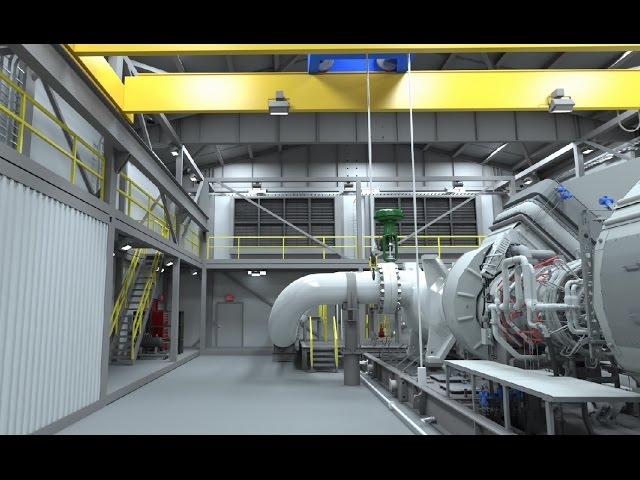
Caption: Large gas turbine-driven compressor unit inside a modern compressor station.
Conclusion
Compressor stations are vital infrastructure that make long-distance natural gas transportation possible. As the world moves toward a lower-carbon future, these facilities will continue to play a central role — not only in traditional energy systems but also in supporting new energy carriers like hydrogen and carbon dioxide.
For those working in the pipeline and energy sectors, compressor stations represent both a technical challenge and a significant opportunity in the ongoing energy transition.