By Oko Immanuel, M.Eng | Offshore Pipeline Insight | July 2026
As the world pushes toward decarbonization, one of the most practical and discussed solutions in the energy sector is hydrogen blending — mixing hydrogen into existing natural gas pipelines. This approach allows countries and companies to reduce carbon emissions without immediately replacing their entire gas infrastructure.
In 2026, hydrogen blending has moved from pilot projects to serious commercial and regulatory discussions, especially in North America and Europe. For pipeline operators, field engineers, and infrastructure professionals, this trend presents both significant opportunities and complex technical challenges.
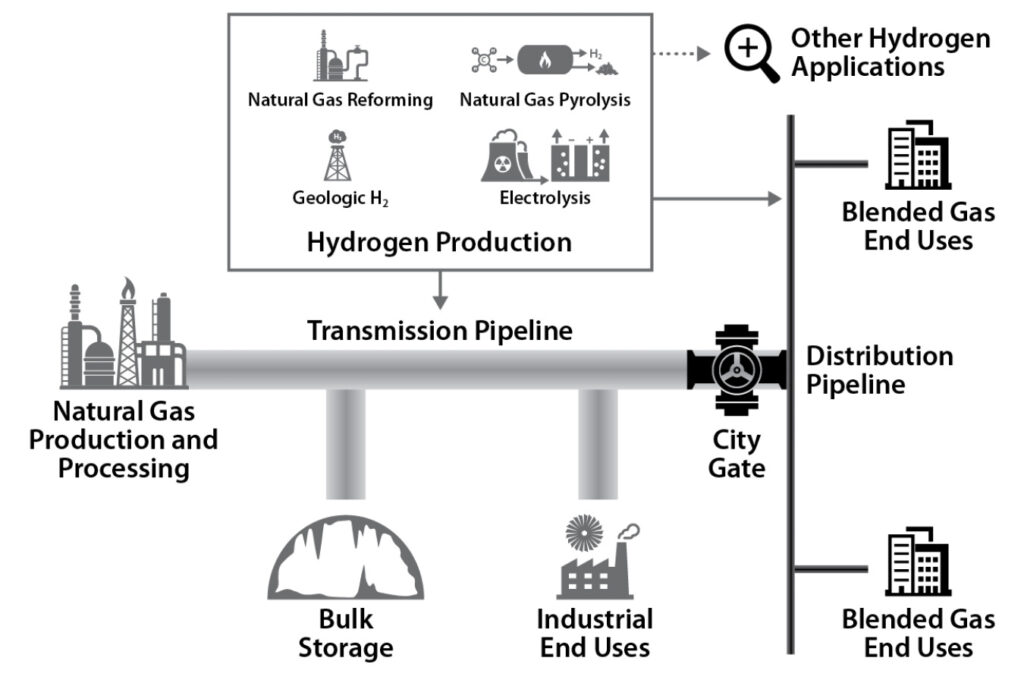
Caption: Diagram showing how hydrogen can be blended into existing natural gas transmission and distribution pipelines.
What is Hydrogen Blending?Hydrogen blending
Refers to mixing clean hydrogen (produced from renewables or with carbon capture) into natural gas pipelines. The blended gas is then delivered to industrial users, power plants, and eventually residential and commercial customers.
Typical blending levels currently range from 5% to 20% by volume, though some projects are testing higher percentages. The goal is to gradually decarbonize the gas grid while leveraging billions of dollars of existing pipeline infrastructure.
Why Hydrogen Blending Is Gaining Momentum in 2026
Several factors are driving interest in hydrogen blending right now:
- Decarbonization pressure: Governments and industries need faster ways to cut emissions from hard-to-electrify sectors.
- Utilizing existing infrastructure: Building new hydrogen pipelines is extremely expensive. Blending allows operators to use current natural gas networks.
- Growing hydrogen production: More green and blue hydrogen projects are coming online, creating supply for blending.
- Policy support: Several countries (including the U.S., UK, Germany, and Australia) are actively studying or piloting hydrogen blending programs.
- Energy security: Blending offers a way to reduce reliance on imported natural gas while building domestic hydrogen capacity.

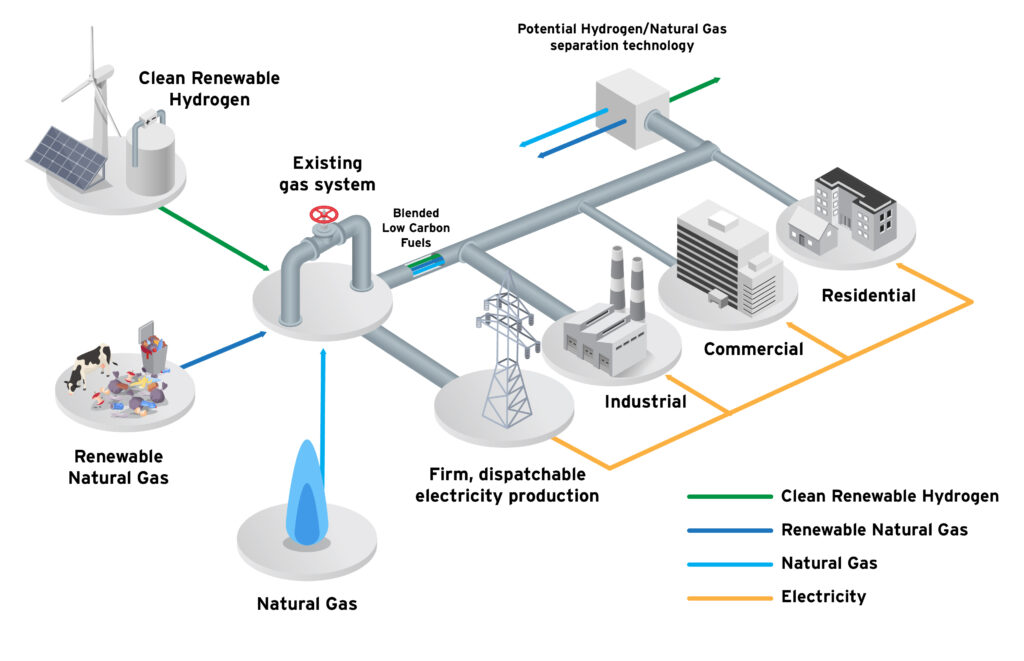
Caption: Illustration of how clean hydrogen can be integrated into existing natural gas systems for residential, commercial, and industrial use.
Technical Challenges of Hydrogen Blending
While promising, blending hydrogen into natural gas pipelines is not straightforward. Several technical issues must be addressed:
| Challenge | Description | Impact on Pipelines | Current Solutions Being Explored |
|---|---|---|---|
| Hydrogen Embrittlement | Hydrogen can make steel pipelines brittle over time | Risk of cracking and leaks | Material testing, new steel grades |
| Leakage | Hydrogen molecules are smaller than methane | Higher leak rates than natural gas | Improved seals, better monitoring |
| Compressor Compatibility | Existing compressors may not handle hydrogen blends efficiently | Reduced efficiency and higher maintenance | Upgrades or new compressor designs |
| Measurement & Billing | Different energy content of hydrogen vs natural gas | Billing accuracy issues | New metering technologies |
| End-User Equipment | Some industrial and residential equipment may need modifications | Safety and performance concerns | Equipment certification programs |
| Safety Standards | Current pipeline codes were not designed for hydrogen | Regulatory gaps | Updating codes and standards |
These challenges explain why most blending projects today are limited to lower percentages (5–15%) while research continues on higher blends.
Current Projects and Pilots (2026 Status)
Several notable hydrogen blending projects are active or in advanced planning stages:
- United States: Multiple utilities are running pilot programs, particularly in California and the Northeast. The U.S. Department of Energy’s HyBlend initiative is funding research on materials compatibility.
- Europe: Countries like Germany, the Netherlands, and the UK have launched several blending trials, with some targeting up to 20% hydrogen.
- Australia: Several projects are testing hydrogen blending in distribution networks.
- Canada: Early-stage projects exploring blending in transmission pipelines.
These projects are providing valuable real-world data on safety, materials performance, and operational impacts.
Opportunities for Pipeline Professionals
The rise of hydrogen blending creates new work and career opportunities in the pipeline sector:
- Pipeline integrity assessments — Evaluating existing lines for hydrogen compatibility.
- Materials engineering — Selecting and testing new pipe materials and coatings.
- Monitoring and leak detection — Deploying advanced sensors and AI-based systems.
- Compressor station upgrades — Modifying or replacing equipment for hydrogen service.
- Regulatory and safety compliance — Helping companies navigate new codes and standards.
- Project development — Planning and executing blending conversion projects.
Field engineers and technicians with experience in both traditional pipelines and emerging low-carbon technologies will be in high demand.
The Path Forward: What Needs to Happen
For hydrogen blending to scale successfully, several things must happen:
- Updated regulations and standards — Pipeline codes need revision to safely accommodate hydrogen.
- More real-world testing — Larger-scale demonstration projects are needed.
- Investment in R&D — Better understanding of long-term material behavior.
- Clear policy signals — Governments must provide long-term certainty to encourage investment.
- Collaboration across the value chain — Producers, pipeline operators, and end users must work together.
Risks and Criticisms
Not everyone supports hydrogen blending. Critics argue that:
- It may delay the transition to fully renewable systems.
- It could lock in fossil gas infrastructure for longer than necessary.
- The emissions reduction from low-percentage blends may be relatively small compared to the effort required.
These debates are healthy and will likely shape how aggressively blending is pursued in different regions.
Conclusion
Hydrogen blending in natural gas pipelines represents one of the most practical near-term strategies for decarbonizing the gas grid. While technical and regulatory challenges remain, progress in 2025 and 2026 shows that blending is moving from theory to real-world application.
For professionals in the onshore pipeline and energy infrastructure sector, this trend offers both challenges and opportunities. Those who develop expertise in hydrogen compatibility, pipeline integrity for new gases, and low-carbon infrastructure will be well-positioned for the future.
As the energy transition accelerates, the question is no longer if hydrogen will play a role in our gas networks — but how fast and how safely we can make it happen
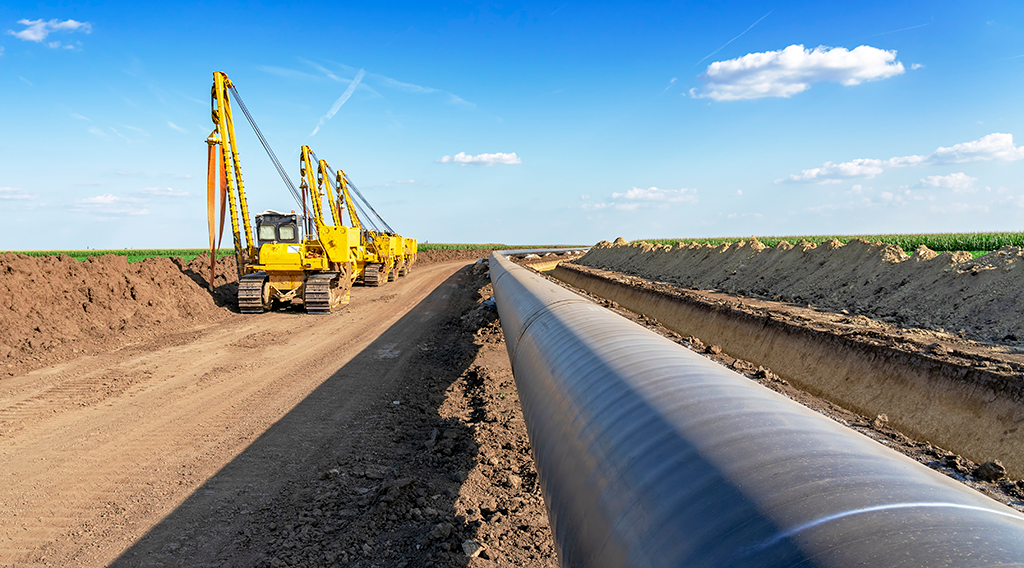
Caption: Onshore pipeline construction — existing networks are being evaluated for future hydrogen service.