By Oko, M.Eng | Offshore Pipeline Insight | July 2026
Offshore pipelines form the critical link between subsea wells, production platforms, and onshore facilities. When these pipelines corrode, the consequences can extend far beyond operational downtime or repair costs. Corrosion-related failures pose significant environmental risks that can affect marine ecosystems, coastal communities, and long-term ocean health.
This article examines the primary environmental risks associated with corroded offshore drilling and production pipelines, the mechanisms that drive these risks, and why proactive integrity management remains essential.
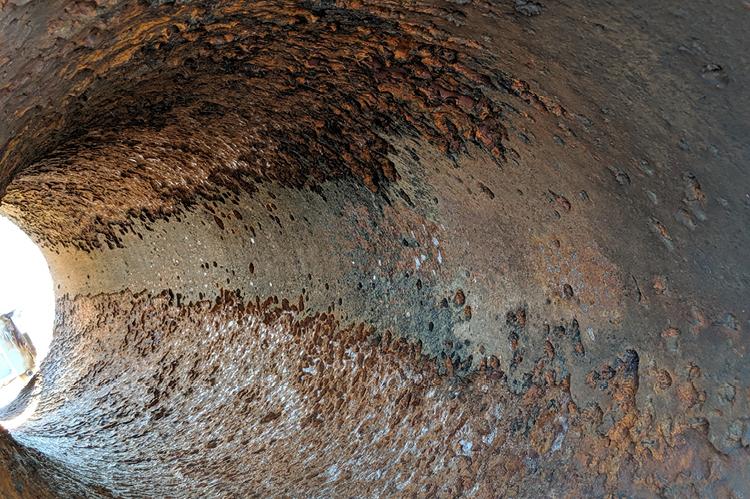
Caption: Internal corrosion damage inside a pipeline — a common precursor to leaks in offshore systems.
Understanding Corrosion in Offshore Pipelines
Offshore pipelines operate in one of the harshest environments on Earth. Seawater, high pressures, varying temperatures, and the presence of corrosive fluids (CO₂, H₂S, produced water, and hydrocarbons) create multiple corrosion threats:
- External corrosion caused by seawater and coating damage
- Internal corrosion driven by water, acid gases, bacteria (MIC – microbiologically influenced corrosion), and flow conditions
- Localized corrosion such as pitting, crevice corrosion, and preferential weld attack
- Stress corrosion cracking and fatigue-related degradation
When corrosion reduces wall thickness or creates through-wall defects, the pipeline can leak or rupture, releasing hydrocarbons or other fluids into the marine environment.
Primary Environmental Risks
1. Hydrocarbon Releases and Oil Spills
The most visible and damaging consequence of pipeline corrosion is the release of crude oil or condensate into the ocean. Even relatively small, chronic leaks can have cumulative effects, while larger ruptures can create significant pollution events.Environmental impacts include:
- Coating of marine organisms, birds, and mammals with oil
- Toxicity to fish, larvae, and plankton
- Contamination of sediments and the water column
- Long-term persistence of oil residues in sensitive habitats
Chronic low-volume leaks from corroded sections are particularly problematic because they may go undetected for extended periods, allowing continuous pollution.
2. Damage to Marine Ecosystems and Biodiversity
Corroded pipeline leaks can severely affect benthic (seabed) communities, coral reefs, seagrass beds, and pelagic species. Oil and chemical components disrupt feeding, reproduction, and respiratory systems of marine life.Key risks include:
- Mortality of fish, invertebrates, and marine mammals
- Disruption of food chains
- Long-term changes in community structure
- Impacts on commercially important fisheries
In deeper water, the behavior of released oil can be more complex due to pressure, temperature, and natural dispersion, sometimes creating subsurface plumes that affect a wider area.
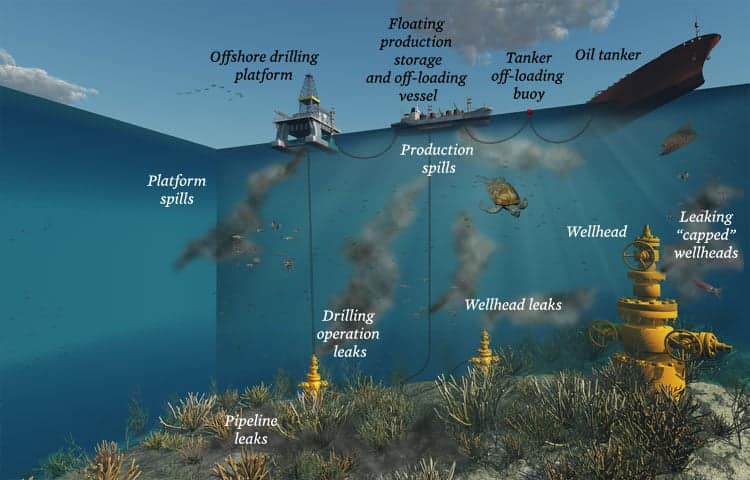
Caption: Diagram illustrating potential leak pathways from offshore platforms, pipelines, and wellheads into the marine environment.
3. Contamination of Sediments and Long-Term Pollution
Oil and other fluids released from corroded pipelines can settle into seafloor sediments. Once incorporated into the sediment, hydrocarbons can persist for years or decades, creating ongoing sources of contamination.This leads to:
- Bioaccumulation of toxins in the food chain
- Reduced habitat quality for bottom-dwelling organisms
- Challenges in remediation due to the difficulty of cleaning subsea sediments
4. Impacts on Coastal and Nearshore Environments
Although many offshore pipelines are far from shore, currents can transport oil and contaminants toward coastlines, estuaries, and sensitive coastal habitats. This creates secondary risks to:
- Beaches and tourism areas
- Mangroves and wetlands
- Coastal fisheries and aquaculture
- Human health through contaminated seafood or direct exposure
5. Release of Associated Contaminants
Beyond crude oil, pipelines may transport or contain other substances that pose environmental risks when released:
- Produced water with high salinity, heavy metals, and residual hydrocarbons
- Chemical additives (corrosion inhibitors, biocides, scale inhibitors)
- Natural gas (contributing to greenhouse gas emissions if methane is released)
- H₂S or other toxic gases in certain fields
These substances can increase the overall toxicity of a release event.
6. Greenhouse Gas Emissions
Corrosion-related leaks of natural gas pipelines or associated gas systems release methane — a potent greenhouse gas. While less visible than oil spills, methane emissions contribute to climate change and are increasingly scrutinized under environmental regulations.
Factors That Increase Environmental Risk
Several conditions elevate the environmental consequences of corroded offshore pipelines:
- Aging infrastructure with limited remaining wall thickness
- Inadequate inspection or monitoring programs
- High-pressure, high-temperature (HPHT) conditions that accelerate degradation
- Sensitive environmental locations (near reefs, marine protected areas, or high-biodiversity zones)
- Delayed detection of leaks due to deepwater conditions or limited surveillance
- Complex recovery and containment challenges in open-ocean environments
Mitigation and Risk Reduction
While the environmental risks are significant, they can be substantially reduced through robust integrity management:
- Regular internal and external inspections (ILI tools, ROV surveys, ultrasonic testing)
- Effective corrosion control (coatings, cathodic protection, chemical inhibition)
- Continuous or frequent leak detection systems
- Risk-based inspection and maintenance prioritization
- Rapid response and containment capabilities
- Design improvements for new pipelines (corrosion-resistant alloys, better coatings, dual barriers where appropriate)
Modern subsea inspection technologies, including advanced ROVs and resident autonomous systems, are improving the industry’s ability to detect corrosion and leaks earlier.
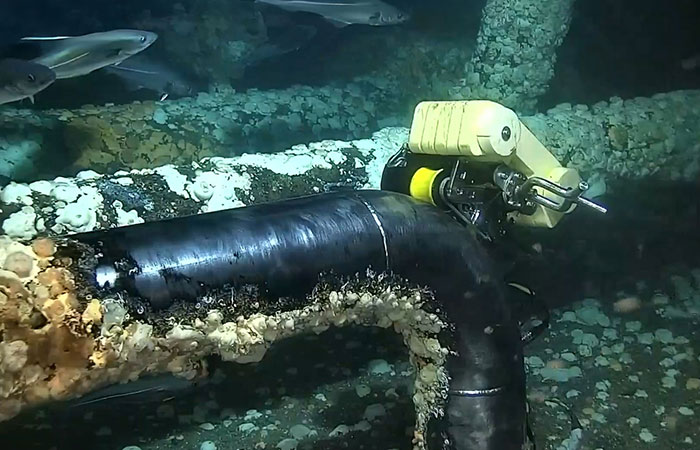
Caption: Subsea inspection tool examining a pipeline for corrosion and integrity issues.
Regulatory and Industry Context in 2026
Regulators worldwide continue to tighten requirements for offshore pipeline integrity, leak detection, and environmental protection. Operators face increasing expectations for transparency, rapid reporting of incidents, and demonstrable corrosion management programs.Environmental performance is also under greater scrutiny from investors, insurers, and the public. A single significant corrosion-related spill can result in substantial financial, reputational, and operational consequences.
Conclusion
Corroded offshore pipelines represent a serious environmental risk through hydrocarbon releases, ecosystem damage, sediment contamination, coastal impacts, and greenhouse gas emissions. The combination of harsh subsea conditions and the potential scale of releases makes corrosion management one of the most important aspects of responsible offshore operations.
For pipeline and subsea professionals, understanding these risks reinforces the critical importance of proactive inspection, corrosion control, and integrity management. Preventing failures is far more effective — and far less damaging — than responding to them after the fact.
As offshore infrastructure continues to age in many regions and new deepwater developments come online, the industry’s ability to manage corrosion will remain central to protecting both the environment and long-term operational viability.