Offshore Pipeline Insight
Onshore & Interstate Desk | September 9 2026.
A U.S. appeals court just stopped a flagship Northeast gas project. Kazakhstan is spending hundreds of millions to push more oil east. Enbridge is racing a bypass around a damaged Great Lakes line. The onshore map is moving in two directions at once: more steel where takeaway is tight, more litigation where water and land permits are thin.
From Raritan Bay to Atasu–Alashankou, September’s pipeline news is about permits, pumps and how long existing systems can keep running.
By Oko Immanuel
Founder, Offshore Pipeline Insight
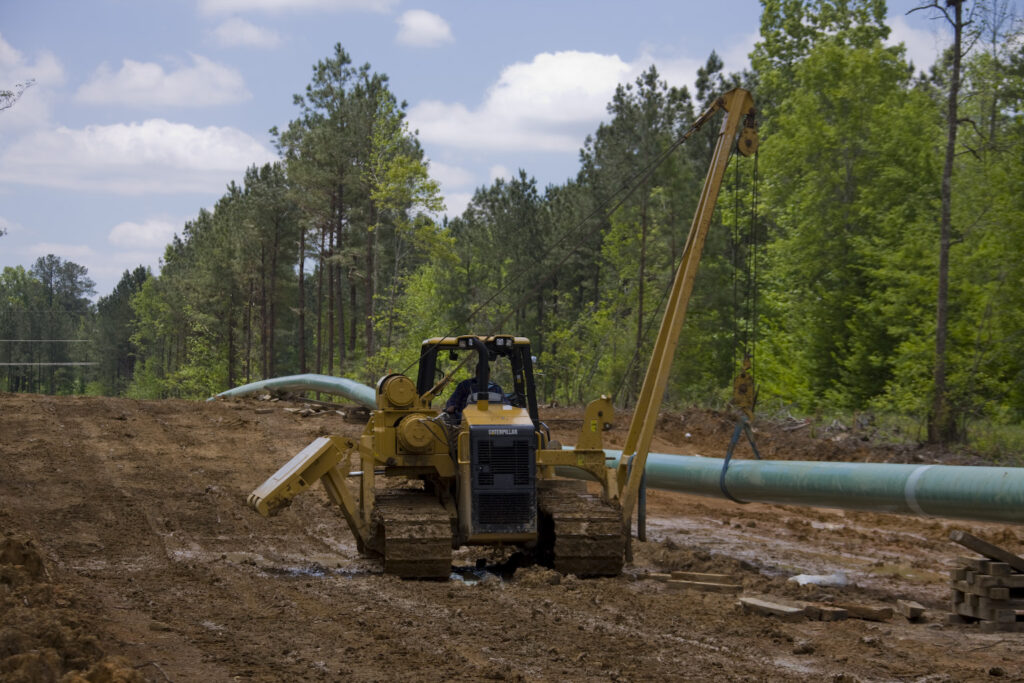
Sideboom on the right-of-way. Onshore work still lives or dies in the trench — welding, coating, lowering-in, then the permit that lets you open the hole.
The week in one lineInterstate gas in the U.S. Northeast is stuck on a water certificate. Oil in Central Asia is adding pumps. A Great Lakes trunkline is down because a truck rolled into an excavation. Texas is still building takeaway. Alaska is trying to renew a franchise early.That is the onshore story. It is not a single boom. It is capacity where politics allow it, and delay where they do not.
How a land line actually gets built
Before the court fights, the work is ordinary and physical. Survey and stake the route. Clear the right-of-way. Strip topsoil. Dig. String joints. Bend to the land. Weld. X-ray. Coat the field joint. Lower the pipe into the trench with sidebooms. Backfill. Hydrotest. Restore the ground.
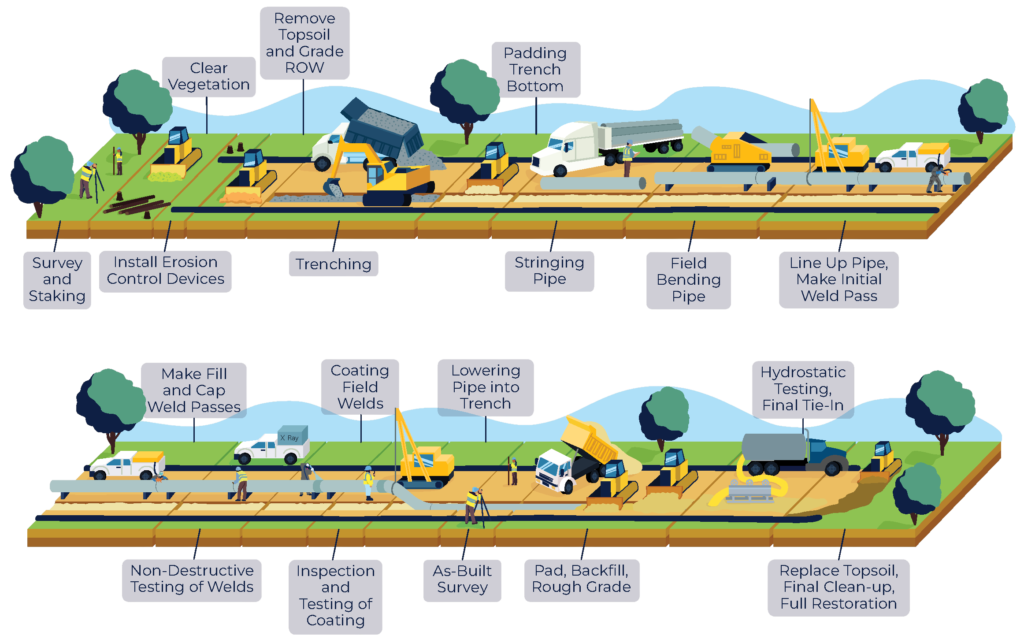
Typical onshore sequence — survey, clear, trench, string, weld, coat, lower-in, test, restore. Most interstate fights do not start at the welding shack. They start at the water crossing.Water is the hard mile. A river, a wetland or a bay can force open-cut dredging or horizontal directional drilling. HDD bores a pilot hole, reams it, and pulls the pipe under the obstacle. It avoids an open trench through the channel. It does not remove the need for a Clean Water Act review.
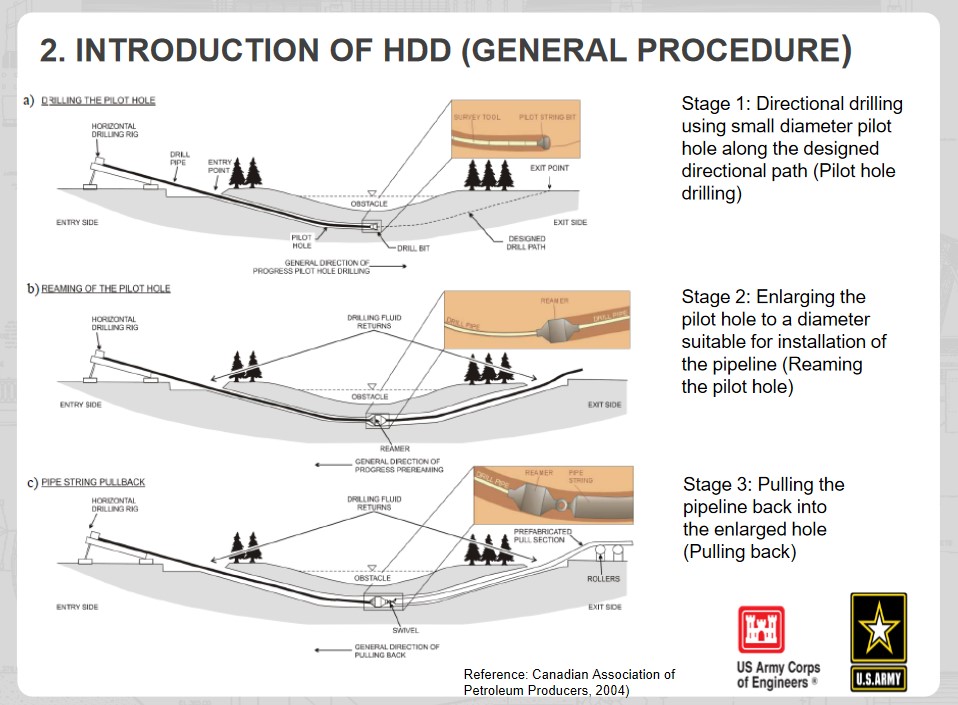
Horizontal directional drilling is how many river crossings avoid an open cut. The Northeast Supply Enhancement fight is different: the contested bay section would require dredging sediment that opponents say holds old toxins.
The lead: Transco’s NESE is paused again
A Third Circuit panel in Philadelphia has vacated New Jersey’s water-quality certification for Williams/Transco’s Northeast Supply Enhancement (NESE) project. The Pennsylvania–New Jersey–New York expansion is back in limbo. NESE is a roughly $1 billion add-on to Transco’s ~10,000-mile system. The politically heavy piece is short: about 23 miles underwater, mostly under Raritan Bay and New York Harbor, plus land sections and a compressor-station fight in New Jersey. Williams has said the line would move enough Pennsylvania gas to serve more than two million New York-area homes. Both states certified the project last November. A groundbreaking was held in New York in April.
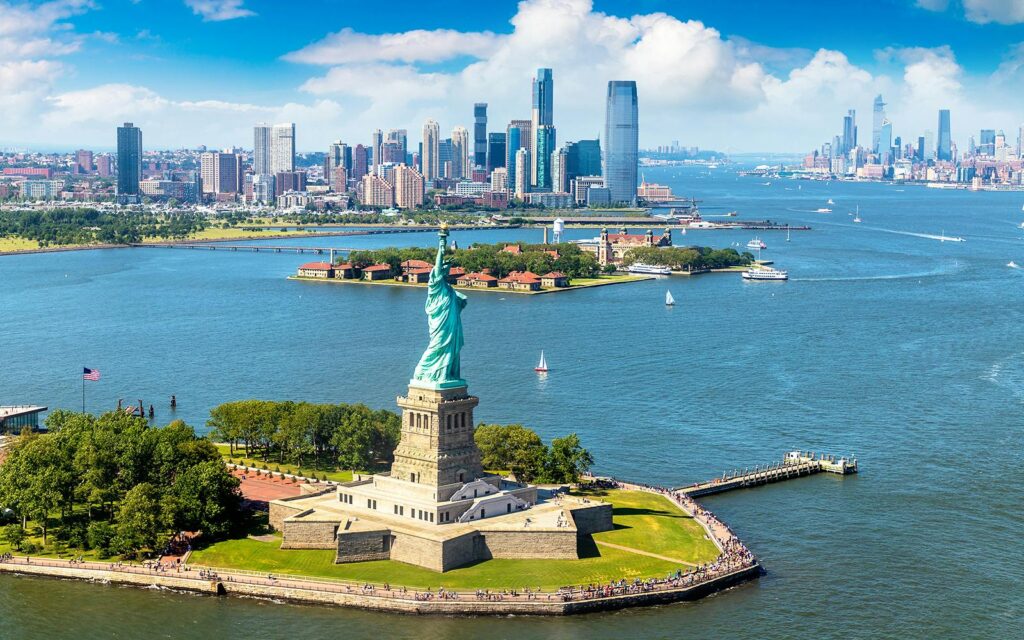
New York Harbor. NESE’s contested stretch is a short underwater extension under Raritan Bay and the harbor approaches — the heaviest miles on the system, measured in permits rather than pipe.
The court did not say a gas line can never cross the bay. It said New Jersey’s Department of Environmental Protection did not adequately justify the permit. Judges called parts of the agency’s work “arbitrary and capricious.” The weak points will be familiar to anyone who works Section 401 certifications:
The agency left monitoring and adaptive-management plans for later, without required pre-construction approval. Its contaminant review was limited to a narrow band around dredge sites. Turbidity monitoring was not clearly tied to toxic-substance monitoring. The record did not adequately show that shellfish and water-quality standards would be met if dredging resuspended arsenic, mercury, PCBs and old pesticide residues.
Environmental groups called it a win for Raritan Bay and for the rule of law. Project backers have long argued the New York market needs more firm gas. Practically, the New Jersey ruling also threatens the New York side. The crossing is one integrated system. NJDEP can try again — supplement the record, demand more analysis, or issue a new certification. Until it does, construction authority on the water is not clean.
What it means for operators: A FERC certificate is not enough. On a coastal interstate gas job, the 401 water finding is still the choke point.
Kazakhstan bets on the China corridor
KazTransOil has put a number on its eastern build-out: about $327 million over 2026–2030, mostly debt-financed, to expand two oil lines that feed the Kazakhstan–China system. Combined target after the work: 35 million tons a year. The two segments:Kenkiyak–Atyrau is the dual-direction line in western Kazakhstan, planned to rise from about 6 million to 15 million tons a year. Kenkiyak–Kumkol is the eastern hop toward Atasu–Alashankou, planned to rise from about 10 million to 20 million tons a year. Five new pump stations are in the package. Kenkiyak–Atyrau also serves domestic refineries, so this is not only an export story. It is a routing story: more oil can move west to plants or east toward China when other paths stay risky.
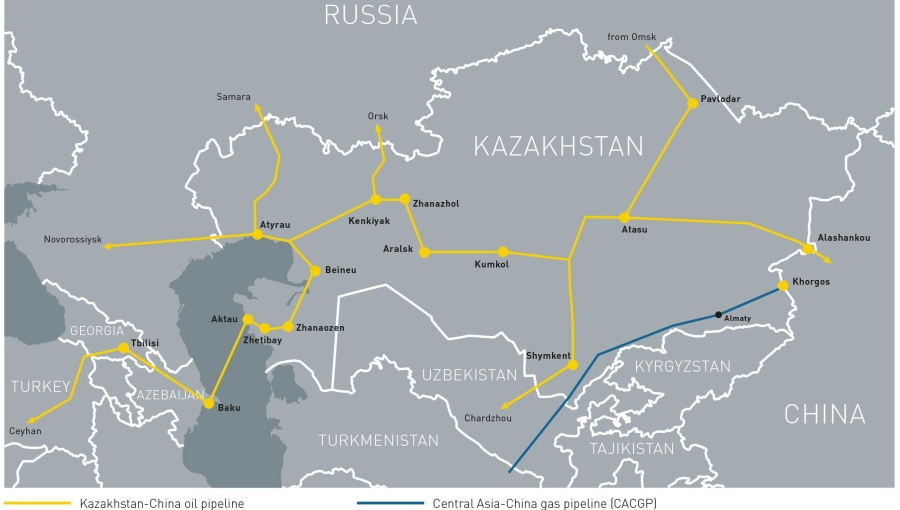
Kazakhstan’s oil and gas corridors. The new money is not a blank-sheet cross-border line. It is pumps and throughput on pipe that already points at China.
Shipments on Atasu–Alashankou and related corridors have already been rising this year as operators look for alternatives to disrupted western routes. Extra steel on an existing right-of-way is faster than a new greenfield export system. That is the midstream logic Astana is buying.
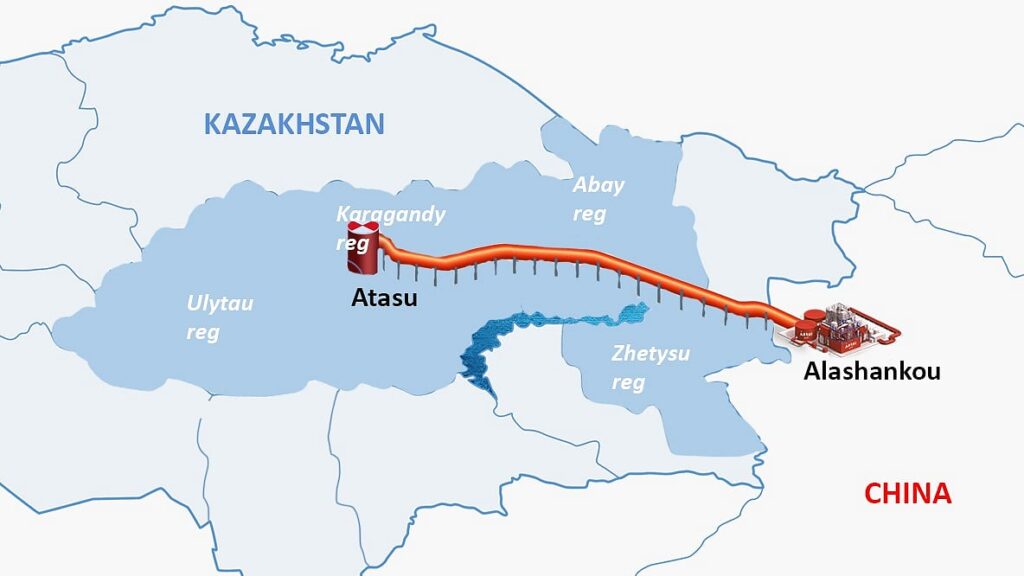
Atasu to Alashankou — the eastern hop Kazakhstan is trying to thicken. In a year of route risk, pump stations are strategy.
A long-shot map: Saudi talks and an Afghan gas networkSaudi Arabia’s Delta Energy Group has signed agreements with Afghanistan’s Ministry of Mines and Petroleum covering hydrocarbon exploration and a possible regional gas pipeline network. Trade coverage has attached a figure on the order of $10 billion if a full system is ever built.
That is not a sanctioned EPC job. It is a memorandum-stage bet on geology, security and transit politics. Treat it as a watch item. The question for this desk is whether any of it ever ties into existing Central Asian or Gulf systems — or whether it stays on paper.
Line 5: a truck, a trench, and a 1,500-foot bypassEnbridge’s Line 5 remains down after an unoccupied flatbed rolled into a valve-project excavation near Saxon, Iron County, Wisconsin, on August 25. The strike released on the order of 1.3 million gallons of natural gas liquids — mainly propane and butane — much of which vaporized. The line supplies a large share of Michigan’s propane.
Enbridge’s latest public target is a restart around September 12, later than the first windows given after the incident. Crews are building a temporary ~1,500-foot bypass so product can move while the damaged site stays isolated for investigation and cleanup. Air monitoring outside the evacuation zone has been reported as safe. A no-fly zone has stayed in place
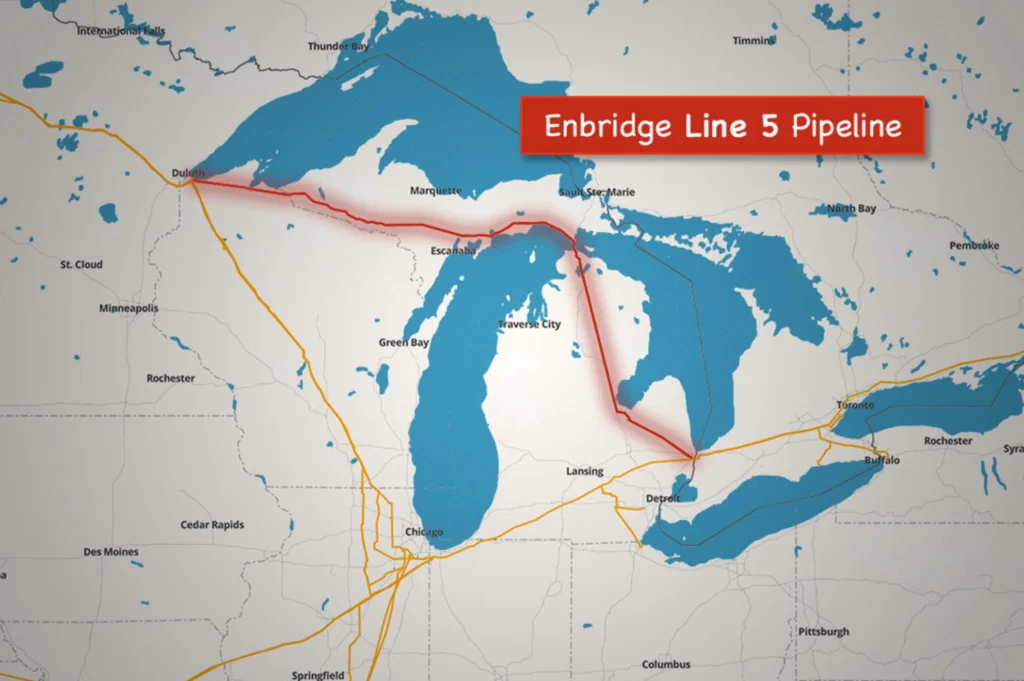
Enbridge Line 5 from Superior across the Upper Peninsula and under the Straits toward Sarnia. The August strike was in Iron County, Wisconsin. The bypass is local. The politics are Great Lakes-wide.
Line 5 was already one of the most litigated liquids systems in North America. A construction-site strike does not settle the Straits legal fight. It does show how a single excavation and a piece of rolling equipment can take a regional energy artery offline for weeks.
What it means: Integrity risk is not only corrosion. It is also how you run a live line next to an open hole.
The other U.S. story: Permian gas can leaveWhile the Northeast argues over one 23-mile crossing, Texas is adding takeaway.
Energy Transfer’s Hugh Brinson line — about 400 miles from Waha toward the Dallas and Gulf path — has been ramping after mid-year first flows. Phase 1 has been described as fully contracted, with service through late 2026 and an expansion toward about 2.2 Bcf/d in early 2027. Other Delaware and Gulf Coast pieces — compression on Double E, laterals toward Waha and Katy, Texas Connector work — belong to the same pattern. The commercial problem in the Permian is getting gas off the basin. The commercial problem in the Northeast is getting permission to lay the last miles.
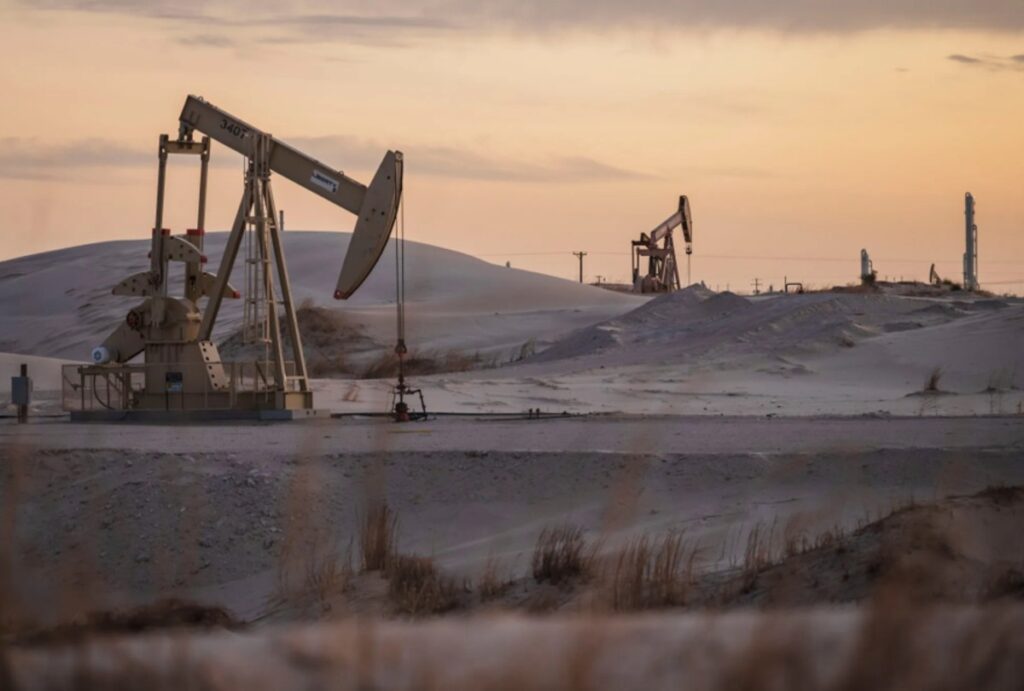
Permian production still outruns old takeaway on some days. New laterals and compression are how Waha gas reaches Katy, Carthage and the Gulf Coast.
That takeaway is not only new mainline. It is pigging facilities, emergency shutdown valves, and compressor stations that keep the line packed.
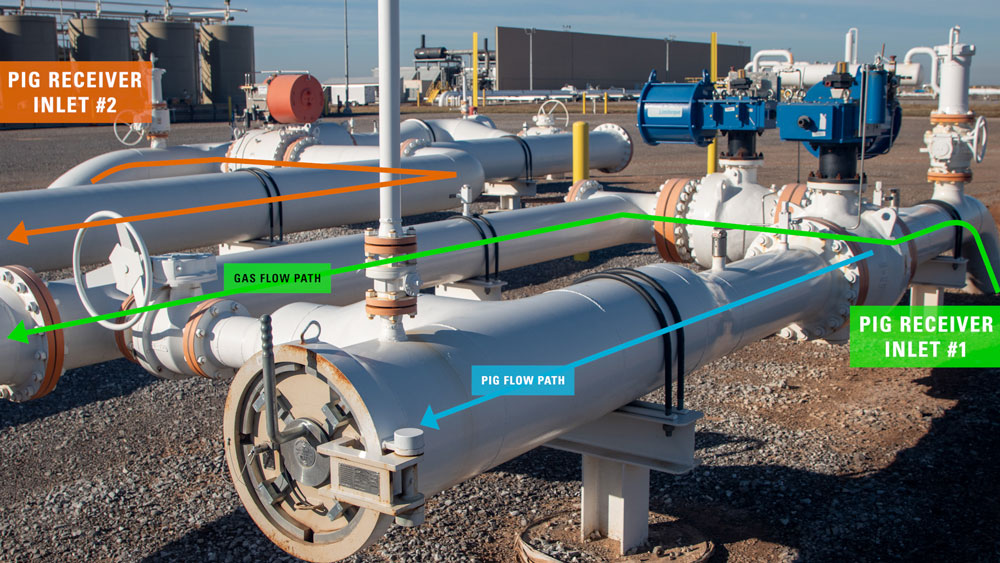
Pig receivers and mainline valves at a gas station. “More Permian takeaway” looks like this on the ground: not only new miles, but the kit that lets you inspect and isolate them.
Alaska: renew the right-of-way earlyOwners of the 800-mile Trans Alaska Pipeline System have moved to renew federal land rights more than seven years before expiry. The U.S. Interior Department has opened a formal review. The bet is simple: lock in three more decades of North Slope crude movement under a White House that wants more U.S. oil, rather than wait for a later administration.
TAPS is not a growth project. Throughput is far below design. The line still matters because there is no substitute corridor from the Slope to Valdez.
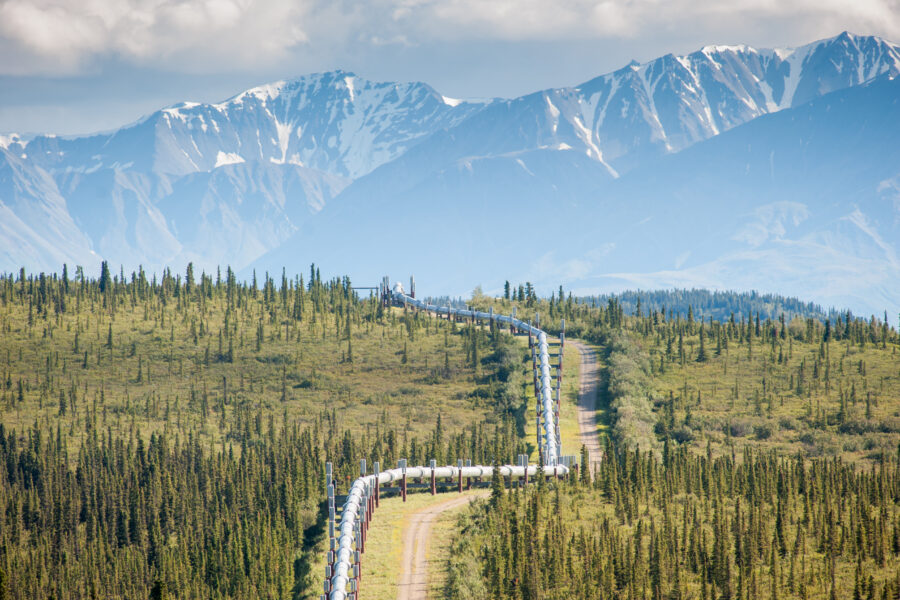
The Trans Alaska Pipeline in the Brooks Range foothills. Early right-of-way renewal is about time and title, not new diameter.TAPS beside the haul road. The system is half-empty by 1970s design standards. It is still the only large crude path from the North Slope to tidewater.