SURF, subsea, pipelines, FPSO, technical
By Oko , Founder, Offshore Pipeline Insight Sept 21 2026
A satellite well is not “just another hole.” It is a flowline, an umbilical, a riser slot and a host that already has a job. That is the North Sea model in 2026 — and the Gulf and West Africa model too.
Most press releases say “tied back to the FPSO” and stop.
The engineering is in the four letters: SURF — Subsea umbilicals, Risers and Flowlines (the “U” is umbilicals; trees and manifolds sit next door as SPS). If you work walkdowns, spreadsheets or field engineering, this is the system you will actually track.
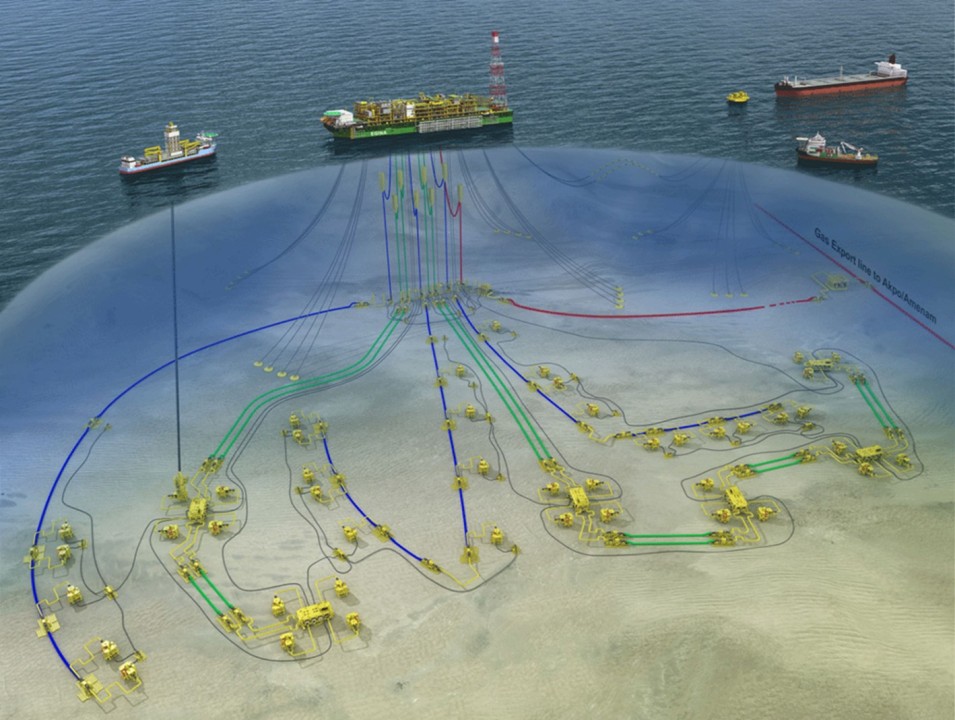
The chain, from reservoir to process inlet
- Tree sits on the wellhead. It isolates the well, takes chemical injection, and hands the stream to a jumper.
- Jumper / manifold collects one or more wells.
- Flowline carries the wellstream along the seabed to the host.
- Riser climbs from the seabed to the FPSO or platform.
- Umbilical runs parallel: hydraulics, power, fibre, methanol or MEG, scale/wax inhibitor.
- Host — Jotun-class FPSO, a TLP, a spar, or a fixed jacket — must have a spare slot, spare process capacity and a spare shutdown window.
Fail any one of those and first oil slips. The well can be perfect.
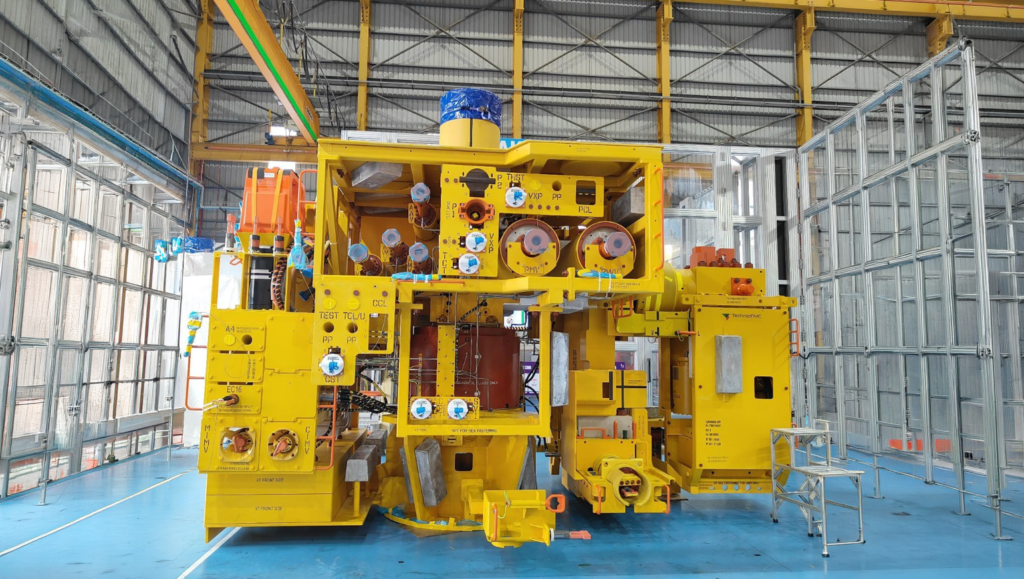
Caption: The tree is the well’s valve package. SURF starts the moment that yellow block has somewhere to send fluid.
Flowlines: rigid vs flexible
Rigid pipe (carbon steel, often with CRA clad or lined bore) is cheaper per metre on long, stable routes. It wants a pipelay vessel, a welding spread, a stinger or J-lay tower, and a design that survives buckle, walking and upheaval on a hot wellstream.
Flexible pipe (unbonded layers: carcass, pressure armour, tensile armour, polymer sheaths) is what Balder Next bought in late 2025. Flexibles tolerate curvature, FPSO motion and tight approaches. They cost more, have a finite service life, and hate poor storage, crush on the reel, and annulus flooding.
Design checks that actually matter on a tieback:
- Arrival temperature and pressure at the host — not just wellhead conditions. Long, cold flowlines drop below hydrate and wax curves.
- Turndown. Early wells flow hard. Late life they dribble. Slugging and liquid hold-up appear in the middle.
- Insulation vs active heating. Wet insulation is simpler. DEH or ETH is a project of its own.
- Crossings. Every existing line is a crossing agreement, a mattress or a rock dump, and a delay.
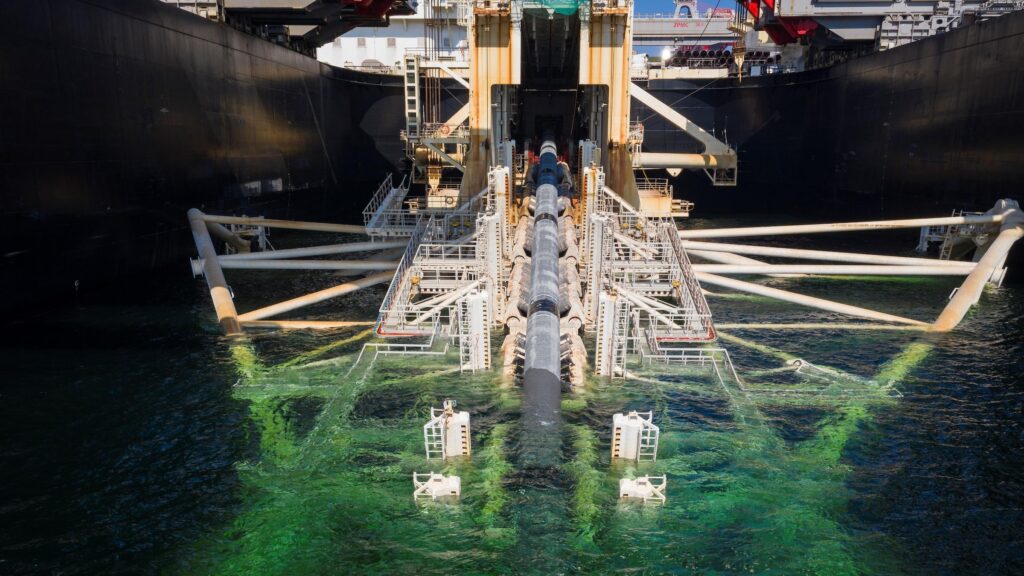
Caption: Rigid lay is a factory on a ship. Tension, sagbend strain and residual curvature are the daily numbers — not “kilometres installed.”
Risers: the hard metres
The flowline is the easy part. The riser is where the hull moves and the pipe does not want to.Common choices:
| Type | Where you see it | Watch item |
|---|---|---|
| Flexible lazy-wave / steep-wave | North Sea FPSOs | Bend stiffener, touchdown fatigue |
| Steel catenary riser (SCR) | Deepwater Gulf, West Africa | Touchdown fatigue, heave |
| SLWR (steel lazy wave) | Deeper, harsher | Buoyancy modules, installation window |
| Pull-in to turret / I-tube | Converted FPSOs | Slot availability on a live vessel |
Brownfield rule: count the empty I-tubes before you celebrate FID. A seven-well tieback that needs seven riser slots on a hull that has two left is not a SURF job. It is a turret or balcony modification — different contractor, different shutdown.
Umbilicals: the line nobody photographsIf the flowline dies, you lose production. If the umbilical dies, you often lose the well and the chemical programme.
A production umbilical typically carries:
- hydraulic supply and return for tree valves
- electrical power and signal / fibre
- methanol or MEG for hydrate control
- scale, wax, asphaltene or corrosion inhibitor cores
- sometimes a spare tube you will be glad you paid for
Spares are not waste. They are how you keep a 2027 first-oil system alive in 2035. Flatten a tube on the reel or flood an annulus and you have a replacement campaign that costs more than the spare core.
Why the host is the real constraint
Ocean Installer’s Balder Next award is SURF because Jotun already exists. Process capacity, gas compression, water handling and export already have a nameplate. The project is: can seven satellites arrive without tripping the existing kit?
Ask, in this order:
- Spare riser / I-tube / porch slots?
- Spare separator and compressor capacity at the arrival pressure you will actually get?
- Chemical storage and injection pumps for the extra wells?
- A shutdown window long enough for pull-in?
- Existing flowlines you must cross or hot-tap?
If the answer to (1) or (4) is no, the EPCI date on the SURF contract is fiction.
What a field engineer actually tracksIf you are on Excel for progress, these are the lines that matter — not “percent complete” as a single number.
- tree FAT / SIT dates vs vessel mobilisation
- flexible manufacture and storage condition (annulus monitoring)
- lay sequence vs crossing permits
- metocean window vs pull-in
- as-built KP vs design KP (the flowline that is 180 m long on the drawing and 210 m in the water)
- leak-test and dewatering packers
- punchlist that blocks first hydrocarbons, not the punchlist that blocks the party
Same discipline as onshore pipeline: joints, welds, tests, landfall — except the “right-of-way” is a live FPSO and a weather window.
Bottom line
A 2026 tieback is a pipeline and controls project hung on an old hull. Trees come from OneSubsea or TechnipFMC. SURF comes from Ocean Installer, Subsea7, TechnipFMC or Allseas. Drilling comes later or in parallel. If you only read “seven wells, first oil 2027,” you have read the press release. The work is diameter, insulation, riser slot, umbilical spare and a crossing list.