
Steel pipe is a straight spine. Flexible pipe is a stack of layers on a reel. They fail in different ways. Pick the wrong one and you pay for it in mid-life, not at FID.
This is the sister piece to SURF and hydrates. Same audience: engineers get the failure list. Everyone else gets the picture.
Two products, two jobs
Rigid pipe is welded steel. Carbon steel, often with a corrosion-resistant liner or clad bore. It is laid in joints from a barge or ship. Cheap per kilometre on a long, quiet route. It hates sharp bends and a dancing FPSO.
Flexible pipe (unbonded) is a sandwich: inner carcass, plastic pressure sheath, steel armour wires, outer plastic sheath. It lives on a reel. It can curve around a turret and follow hull motion. It costs more, lasts a finite time, and hides damage between layers.
House analogy:rigid is copper plumbing in the wall. Flexible is a reinforced garden hose. The hose turns corners. The copper lasts if nobody kinks it and the water is not sour.Balder Next bought flexibles for the approach to Jotun. Export lines across a basin are usually rigid. Both can leak. They rarely leak for the same reason.
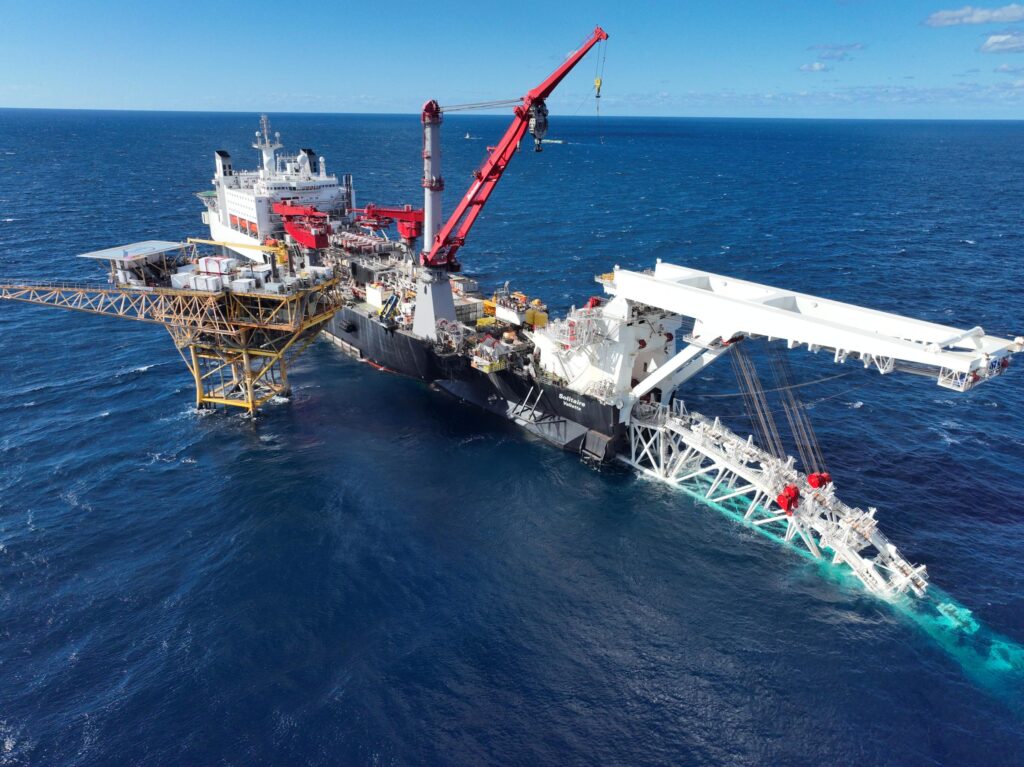
Caption: Rigid pipe leaves the ship over a stinger. Failure here is weld, buckle, or too much sag in the water.
How flexible pipe actually fails
Industry’s Sureflex joint-industry work is the honest ledger. Hundreds of events. Most do not empty the pipe. Some do. The pattern is clear: the outer plastic skin gets hurt, seawater sits in the armour space (the annulus), then the steel wires start dying. That family sheath damage / flooded annulus is the biggest slice of the damage-and-failure list, about four in ten recorded events.
Plain list, in the order owners actually meet them:
1. Cut outer sheath → wet annulus
ROV bump, trawl board, poor handling on the reel, a scrape at the end fitting. Seawater gets between the layers. On a static flowline this is ugly. On a riser that bends every wave, wet wires fatigue and rust. That is the slow killer.
2. Armour wires break
Once the annulus is wet, oxygen and flexing eat the tensile wires. You do not see it from the outside until the pipe grows a belly or the annulus vent gas changes.
3. Birdcaging
The armour wires buckle outward like a birdcage. Common where the pipe is pushed in compression — deepwater touchdown, a bad installation, slugging. Damaged anti-buckling tape makes it worse.
4. Collapse (carcass / pressure layer)
External sea pressure wins, especially if the annulus is already wet (“wet collapse”). A vacuum on shutdown can help it along. Bending makes collapse easier.
5. End-fitting leak
The factory joint between pipe and connector. Ancillary kit (bend stiffeners, clamps) shows up more and more in the incident list. The pipe can be fine. The furniture fails.
6. Internal sheath cracks or micro-leaks
Age, heat, chemicals. Product gets into the annulus from the inside instead of the sea from the outside. Same wet-wire problem.Flexibles also have a clock. Design life is often 20–25 years. Storage on the reel in the sun, before first oil, already spends some of that life.
How rigid pipe actually fails
Rigid pipe fails like every other steel line — plus the sea.
Corrosion, inside and out. Sour fluids, CO₂, bad inhibition, coating holidays, CP that does not reach a buried stretch.
Upheaval buckle. A hot buried line wants to grow. If the cover is light, it bows out of the trench like a snake. That can wrinkle or crack a field joint.
Walking. A sloping, cycling line creeps downhill a few millimetres per shutdown. Over years the end fitting walks off the design location.
Lay buckle / ovality.Too much sag or overbend while the ship is laying. A dent you live with for 30 years.
Weld and fatigue. The girth weld is the weak photograph. Risers and spanning pipe see millions of cycles.
Third parties. Anchors, trawl gear, dropped containers. Rigid pipe does not shrug these off; it dents.
Hydrate or wax blockage. Not a hole in the steel — a plug in the bore. Same flow-assurance story as the last article.
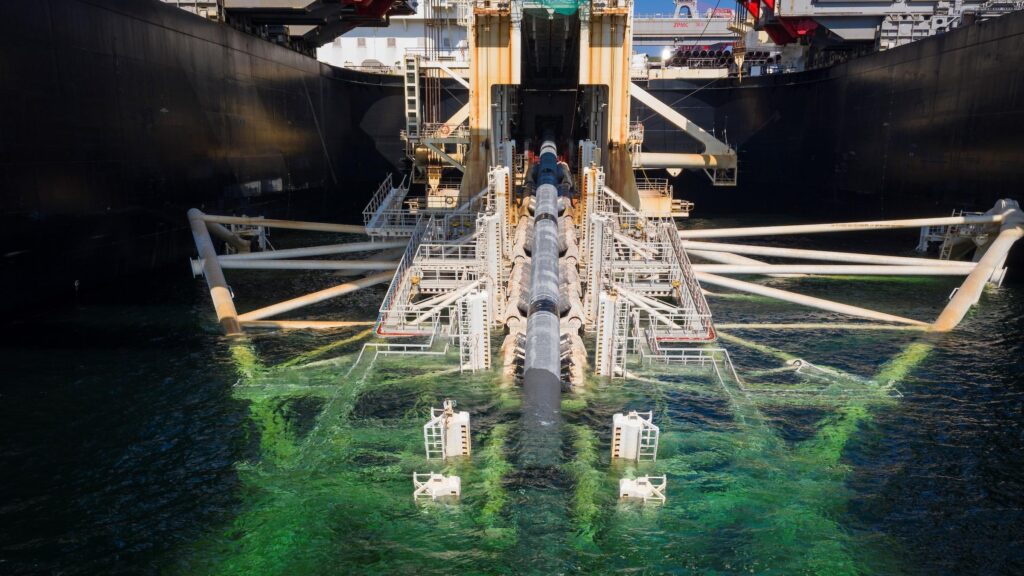
Caption: Rigid lay is welding and tension. The pipe that leaves this ramp must not buckle in the sagbend or wrinkle when it gets hot in service.
Side by side
| Rigid steel | Flexible | |
|---|---|---|
| Best at | Long export, stable seabed, high pressure | FPSO approach, tight curves, short infield |
| Inspect | ILI pigs, ROV on the coating | Harder — layers hide; annulus vent and fibre help |
| Typical mid-life pain | Corrosion, buckle, walking, weld fatigue | Flooded annulus, wire fatigue, birdcage, end fitting |
| Repair | Clamp, spool, cut-out | Often a new section; limited patching of sheath |
| Life | 30–50 years if looked after | Design life is shorter; watch the clock |
| Install | Lay vessel, welding spread | Reel ship, careful storage |
Rule of thumb: use flexible where the hull moves or the route turns. Use rigid where the route is long and straight. Do not buy flexible only because the press release likes the word “SURF.”
When the choice is the failure
Failures start in the meeting room:
- Flexible on a 40 km straight export because “we have a reel ship.” You will pay twice and still baby the annulus.
- Rigid risers onto a converted FPSO with no slot and violent heave. The steel will fatigue at the touchdown.
- Flexible stored hot on a reel for two summers before installation. The plastic ages before first oil.
- Rigid line left proud of the seabed with no rock dump. The first trawler writes the incident report.
Ocean Installer’s Balder-class jobs use flexibles for a reason: Jotun moves. A trunkline to shore does not.
What to put on the spreadsheet
Flexible
- annulus vent rate (step-change = water in the wires)
- sheath ROV survey after every campaign
- end-fitting and bend-stiffener condition
- years on the reel vs years in the water
- spare section in the yard
Rigid
- CP readings and coating holidays
- as-laid vs as-designed KP
- burial depth vs upheaval check
- walking from survey to survey
- weld NDT and span list
If you only log “kilometres installed,” you will be surprised in year seven.
Bottom line
Rigid pipe fails like a pipeline: rust, buckle, weld, anchor.
Flexible pipe fails like a machine: skin cut, wet wires, birdcage, end fitting.Neither is “safer.” Each is safe in the job it was built for. The expensive failure is using a hose as a trunkline, or a steel bar as a dance partner for an FPSO.Read with:
SURF explained · Hydrates and MEG/methanol.