By Oko Immanuel
Published: February 20, 2026
High-Pressure High-Temperature (HPHT) subsea pipelines (>10,000 psi / 150°C) drive deepwater developments in the Gulf of Mexico, North Sea, West Africa, and Guyana. In 2026, HPHT subsea pipeline challenges intensify due to longer tiebacks, sour service, energy transition demands, and economic pressures.Drawing from OTC 2026 and SPT Congress insights, here are the main hurdles and emerging fixes for engineers.
1. Thermal Buckling and Pipeline Walking: Thermal expansion creates compressive forces, causing lateral buckling or axial walking on uneven seabeds risking fatigue or rupture.
- 2026 factors: Probabilistic FEA shows rogue buckles persist despite triggers; steeper escarpments and pockmarks complicate routing.
- Solutions: Engineered buckling via sleepers, buoyancy modules, snake-lay, or zigzag routing with initiators. Use stochastic modeling for friction variability (0.25–0.75 range).
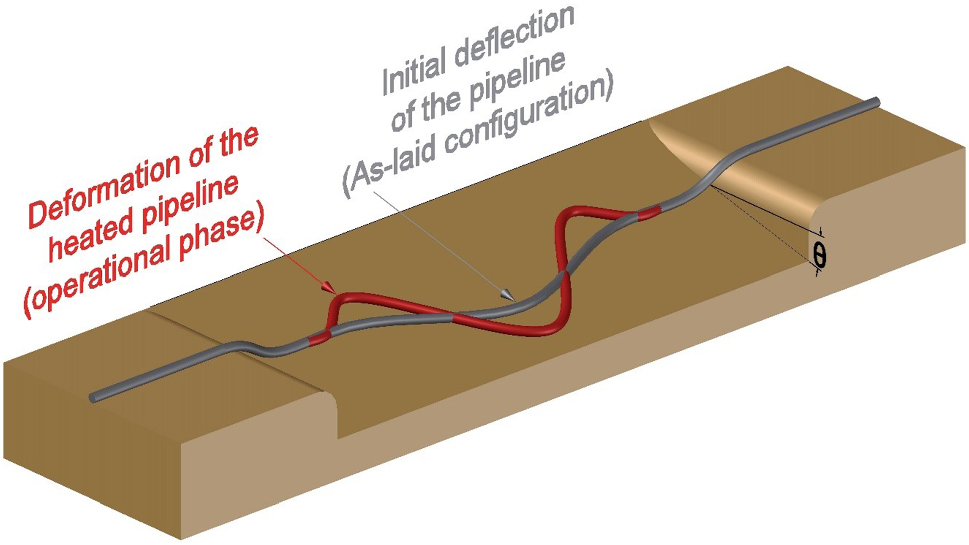
(Above: HPHT pipeline lateral buckling on sloping seabed—initial as-laid vs. heated operational deformation.)Practical tip: Integrate early seabed surveys and global FEA in FEED to predict and control buckles.
2. Material Degradation and CorrosionSour gas (H₂S/CO₂) accelerates cracking and embrittlement; aging risers face new pressure profiles.
- 2026 issues: CCUS/hydrogen compatibility adds challenges; flexible pipe SCC in pre-salt fields.
- Solutions: Corrosion-resistant alloys (CRAs like Inconel 625), clad/lined pipes, nano-coatings. Full-scale qualification testing per API/ISO
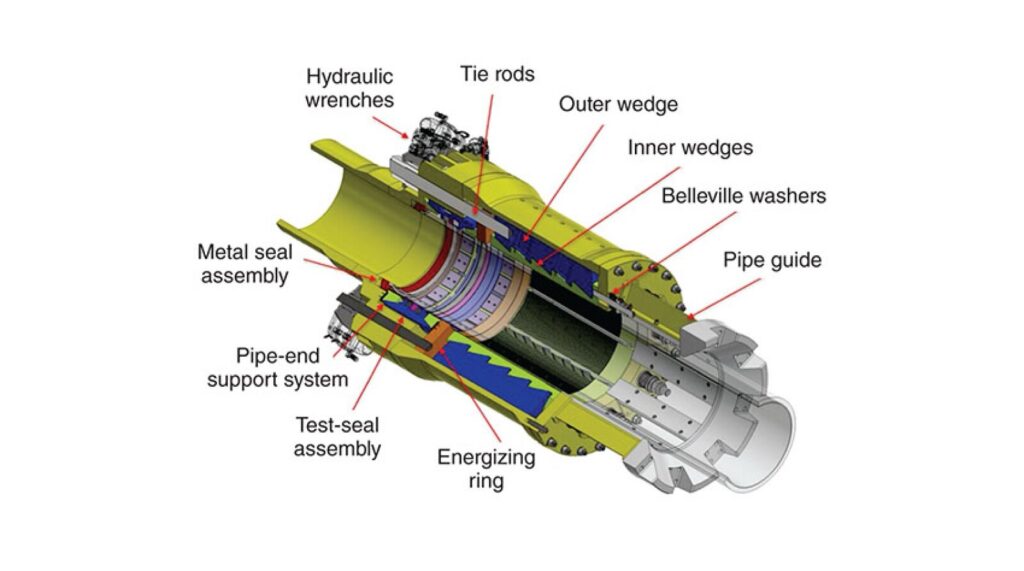
(Above: CRA clad pipeline connector system for repair in HPHT environments.)Tip: Balance upfront CRA costs with reduced intervention in remote setups.
3. Installation and Fabrication ChallengesInduction heating for field joints and supply chain delays hinder deepwater lays.
- 2026 highlights: OTC covers Subsea 7 induction tech; annulus line interactions in open-water risers increase HSE risks.
- Solutions: Hybrid mechanical joints, diverless repairs, HIPPS systems. Real-time monitoring during installation.
(Above: CRA clad pipeline connector system for repair in HPHT environments.)
Tip: Balance upfront CRA costs with reduced intervention in remote setups.
3. Installation and Fabrication Challenges :Induction heating for field joints and supply chain delays hinder deepwater lays.
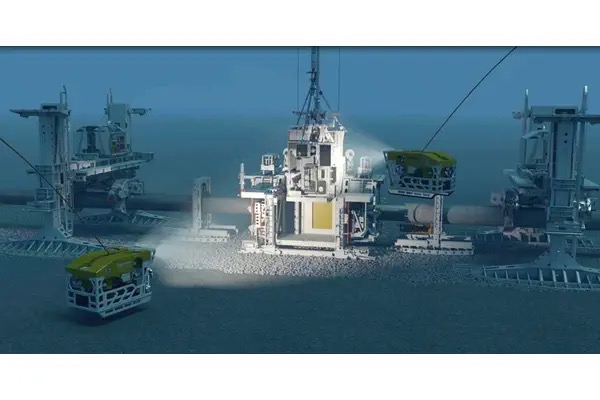
(Above: Diverless subsea pipeline repair setup in deepwater.)
4. Flow Assurance and IntegrityWax, hydrates, and slugging worsen with cooldowns; late-life low flows complicate pigging.
- Solutions: Direct electrical heating (DEH), pipe-in-pipe insulation, hybrid physics/data-driven monitoring, digital twins for prediction.
5. Decarbonization PressuresAdapting for CO₂/hydrogen transport amid softer oil demand (~$50s/bbl possible in 2026).
- Solutions: Buffer storage, lower-strength steels/inhibitors, CCUS qualifications for existing lines.
Quick Tips for 2026 HPHT Projects
- Prioritize probabilistic methods and surveys to cut uncertainties.
- Qualify materials rigorously; opt for controlled buckling over avoidance.
- Deploy digital twins for real-time integrity/flow assurance.
- Track OTC/SPT for tech qualifications (e.g., Anchor 20K systems).
HPHT remains vital for energy security smarter designs bridge academia and practice.
What’s your biggest HPHT challenge right now? Comment below!