
By Oko Immanuel, M.Eng in Subsea Engineering.
Published: February 20, 2026
Tullow Oil, a leading independent oil and gas exploration and production company, announced today (February 20, 2026) that it has successfully refinanced a significant portion of its debt and extended key agreements for its offshore operations in Ghana. The moves provide greater financial flexibility and operational certainty in one of West Africa’s most important producing basins.
Key Details of the Announcement
- Debt Refinancing: Tullow has refinanced approximately $1.8 billion of its existing facilities, including the extension of its Reserve Based Lending (RBL) facility and other credit lines. The new structure includes improved terms, extended maturities (some out to 2030+), and reduced borrowing costs in the current high-interest environment.
- Ghana Offshore Extensions: Tullow secured extensions and amendments to its Production Sharing Agreements (PSAs) and joint operating agreements for the Jubilee and TEN (Tweneboa, Enyenra, Ntomme) fields offshore Ghana. These extensions provide long-term clarity for continued production, infill drilling, and potential future developments in the fields.
- Context: The Jubilee field (operated by Tullow with partners Kosmos Energy, GNPC, and others) remains one of Ghana’s flagship producers (~100,000 bopd gross), while TEN continues to contribute meaningful volumes. These assets are critical to Tullow’s cash flow and West Africa’s energy supply.
The refinancing and extensions come amid a supportive oil price environment (Brent ~$72/barrel) and Tullow’s ongoing efforts to strengthen its balance sheet after years of debt reduction and asset optimization.
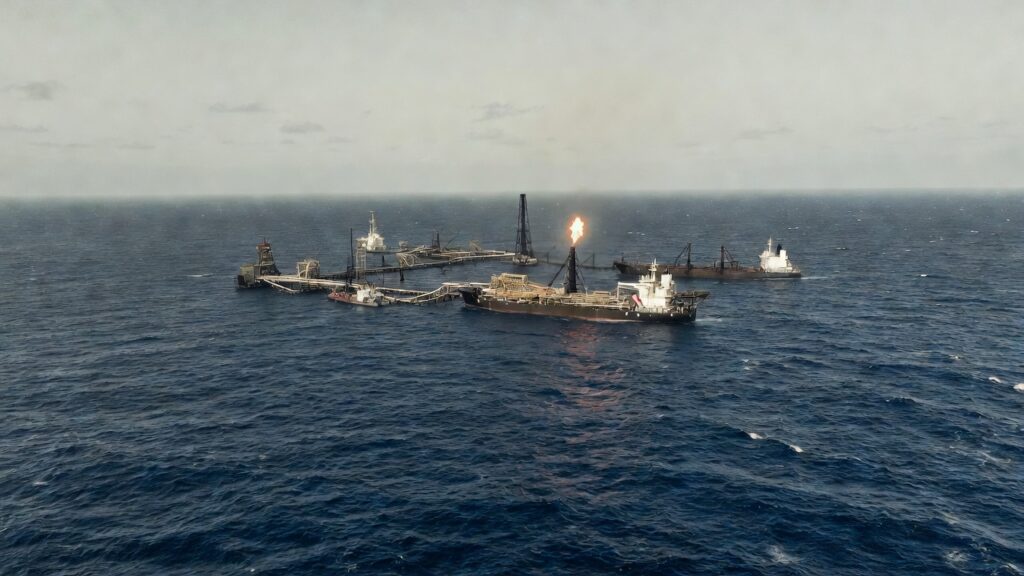
(Image of the Jubilee field offshore Ghana, showing FPSO Kwame Nkrumah and associated subsea infrastructure in the deepwater Atlantic.)

Implications for Offshore and Subsea Projects in West Africa
This news is a positive signal for stability and continued investment in Ghana’s offshore sector:
- Financial breathing room: Lower debt costs and extended maturities free up cash for infill drilling, subsea tiebacks, and potential HPHT exploration in deeper waters around the Tano Basin.
- Subsea integrity focus: Long-term field life extensions increase the emphasis on robust integrity management cathodic protection maintenance, ILI campaigns, digital twins for fatigue/corrosion monitoring, and flow assurance strategies to manage aging infrastructure.
- Regional confidence: Ghana’s stable regulatory environment and successful extensions contrast with volatility elsewhere in West Africa, potentially attracting more partner investment and supporting local content growth in subsea hardware, pipelay, and engineering services.
- HPHT relevance: While Jubilee and TEN are not extreme HPHT, Tullow’s renewed financial strength could enable future high-pressure/high-temperature prospects in adjacent blocks, where advanced materials, controlled buckling, and insulation become critical.
Tullow’s moves demonstrate prudent capital management in a volatile commodity cycle ensuring that key producing assets like Jubilee and TEN can continue delivering reliably for years to come.For subsea engineers and offshore professionals, this is a reminder that strong operator balance sheets support long-term integrity planning, flow assurance optimization, and the potential for new deepwater developments in established basins.
What do you think will we see more infill drilling or subsea tiebacks in Ghana in the next 2–3 years? Share your insights in the comments let’s discuss integrity strategies and flow assurance challenges in mature fields!
Share on LinkedIn or X for offshore and West Africa energy pros.
Subscribe for HPHT series updates, flow assurance tips, integrity management insights, and weekly energy news roundups.