By Oko Immanuel
Founder & Owner, Offshore Pipeline Insight
Texas A&M Subsea Engineering Alumnus | Former Roughneck
As we wrap up February 2026, the offshore energy sector faces a pivotal shift: maturing fields in high-pressure, high-temperature (HPHT) environments are driving a surge in decommissioning activities. With global oil supply gluts pushing prices into the $50s and operators delaying final investment decisions (FIDs) on new projects, the focus turns to safely retiring aging infrastructure. HPHT pipelines—operating at pressures over 10,000 psi and temperatures exceeding 300°F present unique challenges, from accelerated corrosion to complex barrier systems. Drawing from my roughneck days on Gulf of Mexico rigs and Texas A&M’s rigorous subsea engineering curriculum (shoutout to the Offshore Technology Research Center’s HPHT testing innovations), this article breaks down the essentials: processes, hurdles, technologies, and forward-looking trends for subsea pros navigating this critical phase.
What is Offshore Pipeline Decommissioning?Decommissioning involves the safe removal, abandonment, or repurposing of offshore pipelines at the end of their productive life—typically after 20–40 years. In HPHT settings, common in deepwater basins like the Gulf of Mexico, North Sea, and emerging Asia-Pacific hubs, this means addressing extreme conditions that stress materials and systems. The goal? Prevent environmental leaks, ensure safety, and minimize costs while complying with regulations.
Key drivers in 2026 include:
- Maturing Assets: Many HPHT fields from the 1990s–2000s are depleting, with oversupply gluts accelerating shutdowns.
- Energy Transition: Pipelines may be repurposed for CO₂ transport in CCUS projects, but if not, full decommissioning is required.
- Regulatory Push: Bodies like BSEE (US) and the UK Oil and Gas Authority emphasize lifecycle planning, including early abandonment funds.
Without proper decommissioning, idle pipelines risk structural failure, pollution, and safety hazards—think corroded lines in harsh HPHT conditions leading to uncontrolled releases.
HPHT-Specific Challenges in Decommissioning:
HPHT environments amplify decommissioning complexities:
Material Degradation: High temperatures accelerate corrosion and fatigue; conventional steels may fail faster, complicating plug and abandonment (P&A). Research shows Portland cement barriers degrade under HPHT and corrosive fluids, risking long-term leaks.
Pressure and Containment: Barriers must withstand residual pressures without single-point failures. BSEE mandates primary/secondary systems to prevent loss of containment.
Operational Risks: Deepwater access, uncertain subsurface data, and high costs (up to $100 million per project) lead to delays. Supply chain constraints and rising expenses are pushing North Sea “dash to decom” timelines out to the 2060s.
Environmental Impacts: HPHT wells demand enhanced monitoring to avoid thermal effects on ecosystems during removal.
These issues demand innovative solutions, like advanced metallurgy and rigless P&A to cut emissions and costs in offshore settings.
Key Processes and Technologies : Decommissioning follows a structured approach, adapted for HPHT:
- Planning and Assessment: Evaluate pipeline integrity using digital twins, fiber-optic monitoring, and 4D seismic. Identify repurposing potential (e.g., for hydrogen or CO₂).
- Isolation and P&A: Install barriers to seal the pipeline. In HPHT, use alternative materials like geopolymers or bismuth alloys that resist degradation. Rigless methods reduce costs by 30–50%.
- Removal or Abandonment: Options include full removal (cut and lift), partial burial, or leave-in-place with rock dumping. HPHT lines often require specialized cutting tools to handle high-strength materials.
- Waste Management and Site Clearance: Transport materials onshore for recycling; ensure seabed restoration.
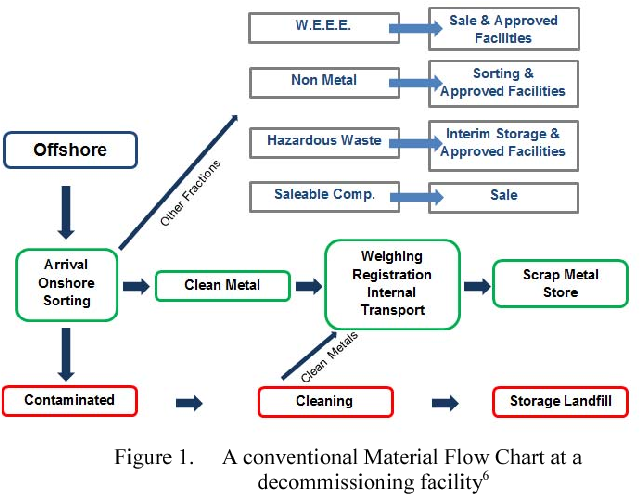
A conventional material flow chart for decommissioning facilities, illustrating the sorting, cleaning, and disposal process—critical for handling HPHT-contaminated pipelines safely onshore.Technologies advancing in 2026: AI-driven predictive modeling for barrier longevity, and hybrid vessels for efficient deepwater ops.
Regulatory and Environmental Considerations:
Regulations emphasize sustainability:
- US OCS (BSEE): Updated HPHT rules require robust barrier testing and no single-point failures.
- North Sea: Focus on multi-criteria decisions for pipeline fate, balancing costs and environment.
- Global Trends: Incentives for marginal HPHT fields, but stricter decommissioning funds to avoid orphan wells.
Environmentally, aim for zero-leak abandonment; monitor for decades post-decom.
Real-World Examples and Case Studies
- Brent Field (North Sea): A benchmark for multi-criteria decommissioning, addressing HPHT-like challenges in pipeline removal.
- Gulf of Mexico: Idle HPHT structures pose pollution risks if delayed; recent BSEE approvals highlight rigless P&A success.
- Sleipner (Norway): While active, its HPHT tech informs decommissioning planning for similar fields.
2026 Trends and OutlookExpect steady growth: Decom spend could hit $58 billion in the North Sea alone through 2060, despite delays from supply chains and low prices. Trends include:
- Rigless Innovations: Cutting time/costs in HPHT.
- Circular Economy: Recycling 90%+ of materials, tying into offshore wind repowering.
- Digital Tools: AI for risk assessment in uncertain subsurfaces.
Key Takeaways for Subsea and Pipeline Professionals:
HPHT decommissioning demands precision: Prioritize barrier integrity, leverage Texas A&M-style innovations in materials testing, and plan early to avoid cost overruns. From roughneck grit to advanced subsea engineering, this phase is about turning endings into sustainable opportunities—whether repurposing for CCUS or restoring seabeds.
What do you think? Have you tackled HPHT decom challenges in the field, or see repurposing as the future? Comment below with your experiences,
questions on barrier tech, or regulatory hurdles share this article to fuel the discussion!
Stay tuned to Offshore Pipeline Insight for more on HPHT integrity, subsea trends, and energy transition strategies.
Gig ’em, Aggies!#OffshoreDecommissioning #HPHTPipelines #SubseaIntegrity #EnergyTransition #PipelineDecom #GigEm #AggieEngineers