By Oko Immanuel
Founder & Owner, Offshore Pipeline Insight
Texas A&M Subsea Engineering Alumnus | Former Roughneck
As of February 27, 2026, offshore subsea pipelines are evolving from hydrocarbon lifelines into versatile enablers of the energy transition. While natural gas and oil tiebacks sustain demand in deepwater basins, the major shift involves repurposing infrastructure for dense-phase CO₂ (CCUS), hydrogen transport, and hybrid integration with offshore wind. AI is transforming operations through predictive integrity, autonomous inspections, and digital twins delivering 15–30% efficiency gains and safer performance in HPHT environments.
Revenue Outlook: Steady Growth to 2035Market projections show resilience despite short-term softness in oil prices and FID delays:
- 2026: ~USD 16–17 billion (e.g., ~USD 16.98 billion per industry estimates).
- By 2030: USD 21–24 billion (CAGR ~4.8–5.8%).
- By 2035: USD 24–31 billion (some broader subsea views reach ~USD 30+ billion at 7% CAGR).
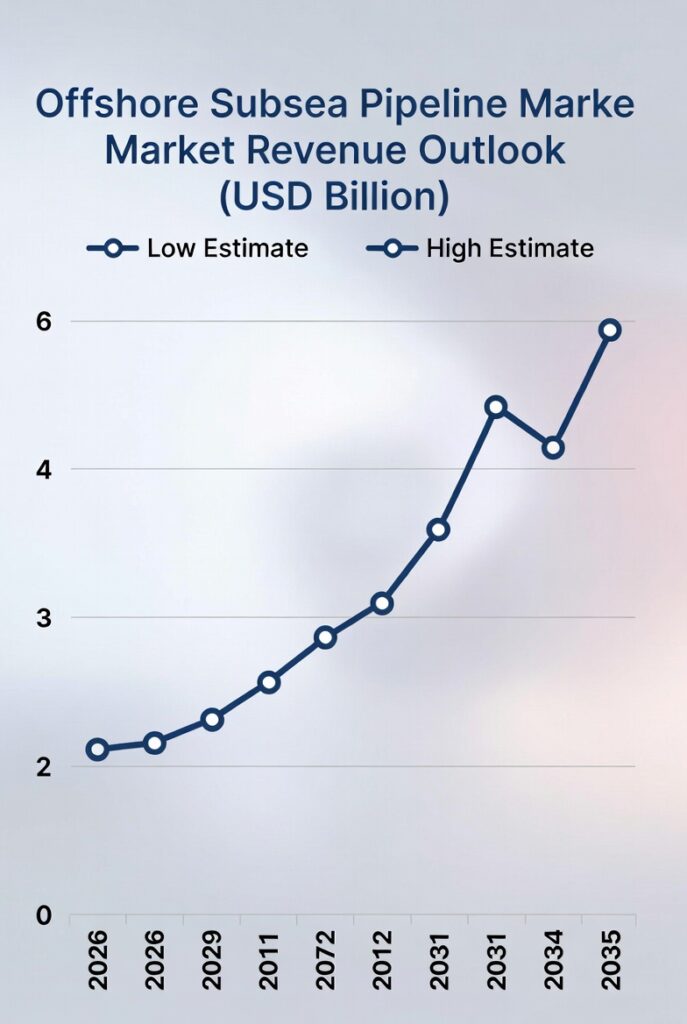
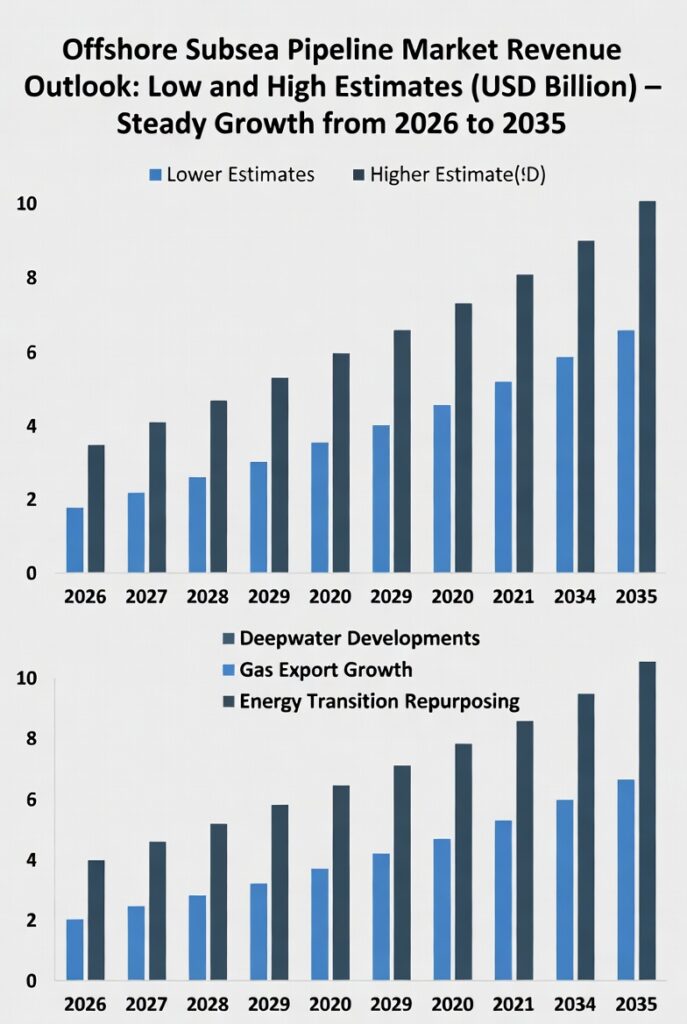
Drivers include deepwater gas projects (Middle East/North America), LNG exports, CCUS/hydrogen repurposing, and digital upgrades. Transition synergies and Asia-Pacific growth provide upside, with EPC, integrity services, and repurposing generating reliable revenue.
Key Trends to 2035
- Energy Transition & Repurposing
Subsea lines increasingly carry CO₂ for offshore storage (e.g., North Sea/Gulf hubs) and hydrogen from offshore electrolysis/wind-powered platforms. Hybrid systems link wind farms to grids or produce green hydrogen/ammonia, sharing infrastructure for cost efficiency. - Deepwater/HPHT Expansion & Life Extension
Ultra-deep tiebacks and HPHT systems drive new gas lines, while aging assets focus on life extension with advanced materials and smart monitoring preparing for decommissioning or transition reuse. - AI & Digital Transformation
AI powers:- Predictive corrosion/leak models from sensor data.
- Digital twins for HPHT simulation and decommissioning planning.
- AI-enhanced AUVs for autonomous tracking and anomaly detection.
- Edge computing for real-time remote decisions.
These reduce downtime, emissions, and risks in deepwater ops.
- Sustainability & Resilience
Low-emission designs, stricter regulations (e.g., BSEE HPHT), and circular practices dominate. Offshore wind creates cable/pipeline synergies, while CCUS scales to gigatons of storage.
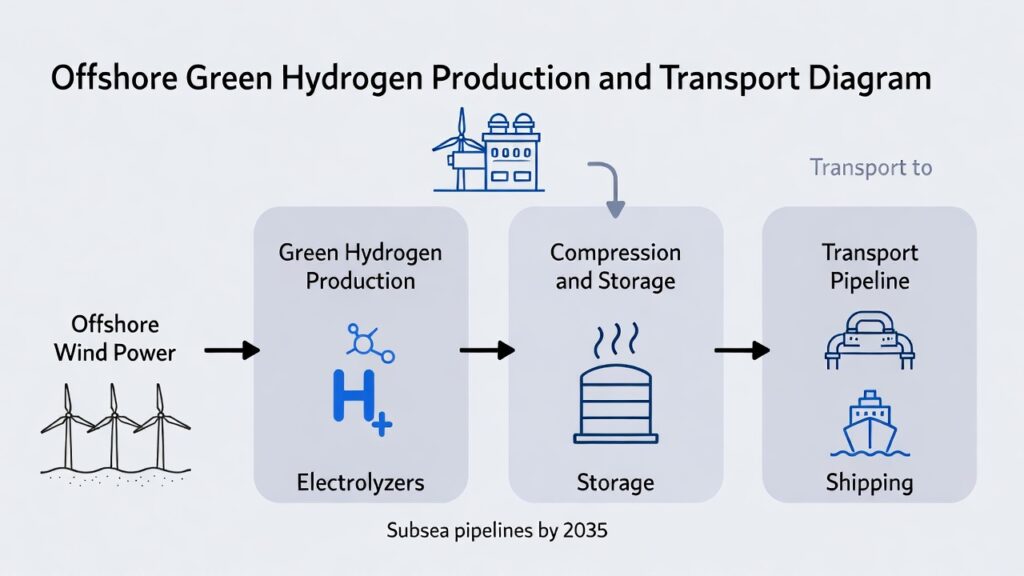
Here’s a conceptual illustration of offshore green hydrogen production and transport pathways (including pipelines), highlighting future integration with renewables and subsea infrastructure:
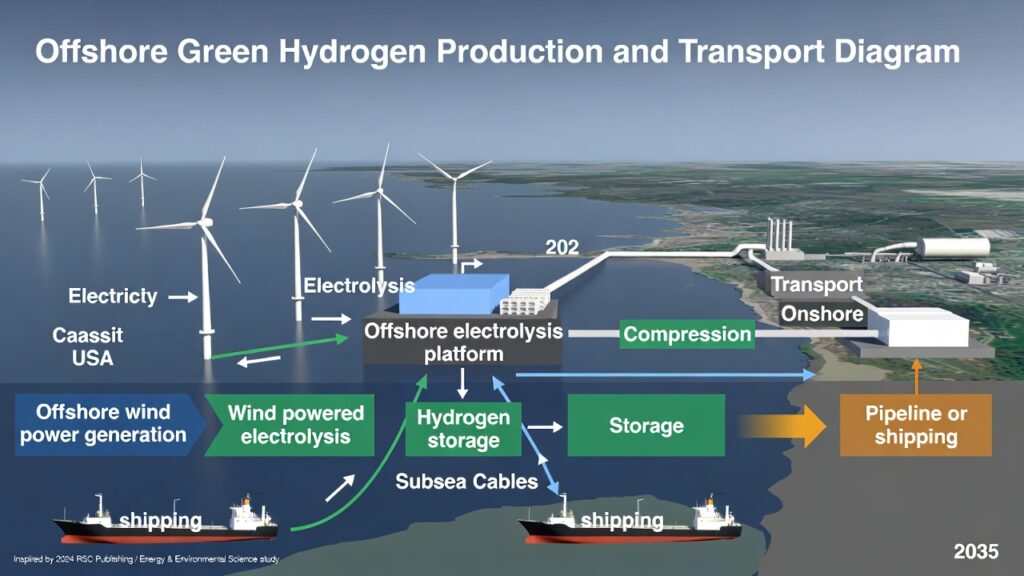
Diagram showing offshore wind-powered electrolysis, compression, storage, and pipeline/shipping options for green hydrogen—illustrating transition synergies for subsea pipelines to 2035. Source: RSC Publishing / Energy & Environmental Science (2024 study on coastal USA decarbonization).
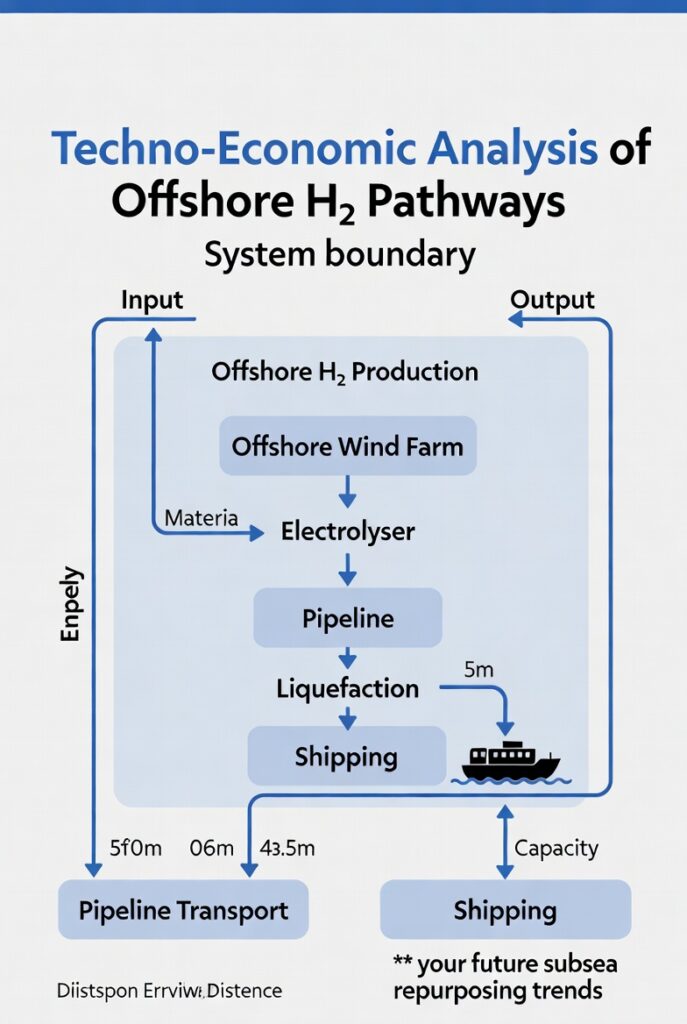
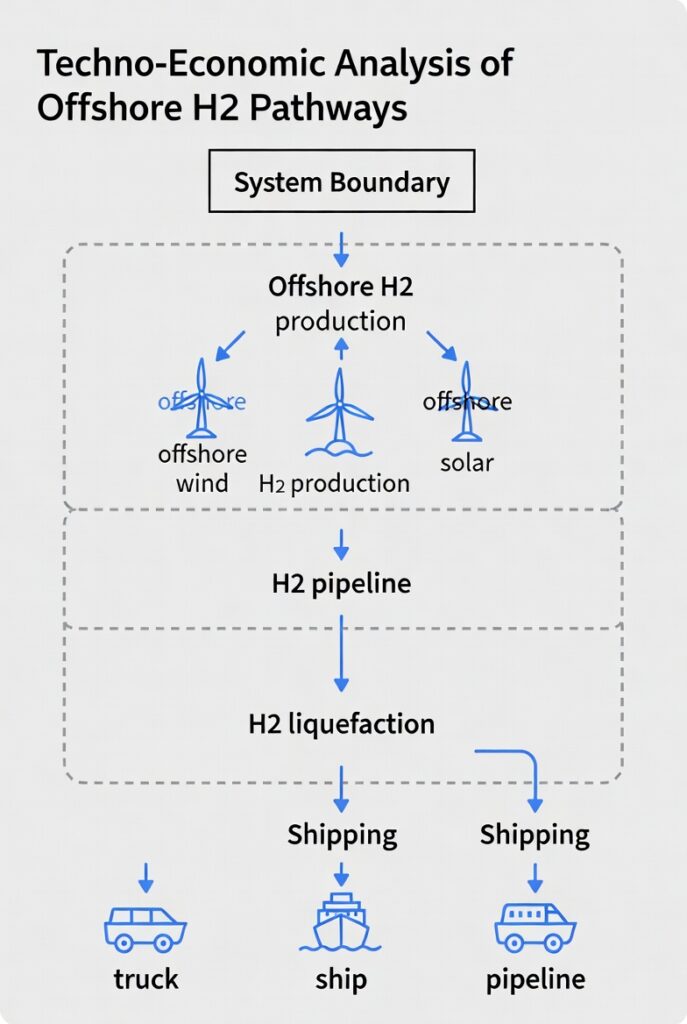
Another view of the full lifecycle and delivery pathways:Techno-Economic Analysis of Offshore H2 Pathways
Detailed system boundary for offshore H2 production, including pipelines, liquefaction, and shipping—key for future subsea repurposing trends. Source: RSC Publishing.
Key Takeaways for Subsea Professional
To 2035, subsea pipelines become transition-ready networks—generating USD 24–31 billion in market value while AI enables smarter, safer ops. HPHT expertise extends to CO₂/hydrogen integrity and hybrid systems.
From roughneck grit to Texas A&M innovation, success lies in blending proven skills with digital and low-carbon advancements.
What do you think? Will hydrogen repurposing or AI predictive tools reshape your projects most by 2035?
Comment below with experiences, questions, or revenue insights share to fuel the conversation!
Stay ahead with Offshore Pipeline Insight—practical HPHT, subsea integrity, AI, and transition strategies.
Gig ’em, Aggies!#SubseaPipelines #OffshoreTrends #AIinEnergy #CCUS #HydrogenPipelines #EnergyTransition #GigEm #AggieEngineers