March 1, 2026
By Oko Immanuel
Founder & Owner, Offshore Pipeline Insight
M.Eng in Subsea Engineering | Former Roughneck | Texas A&M Alumnus.
The oil and gas industry is quietly powering a major energy transition breakthrough: geothermal drilling. Techniques, tools, and expertise developed for shale fracking, deepwater exploration, and HPHT environments are now being directly applied to Enhanced Geothermal Systems (EGS) unlocking vast, base load renewable energy from hot dry rock almost anywhere on Earth.In 2026, this crossover is no longer theoretical it’s delivering commercial-scale projects, cost reductions, and new career paths for subsea and drilling professionals. Here’s what’s happening, why it matters to pipeline engineers, and the key technologies transferring over.
Why the Crossover is Happening NowGeothermal energy has long been limited to naturally hot, permeable sites (e.g., Iceland, Indonesia). EGS changes that by:
- Drilling deep (4–10 km) into hot, dry rock.
- Creating artificial reservoirs via hydraulic fracturing.
- Circulating water to extract heat for power generation.
O&G innovations make this scalable and economic:
- Horizontal drilling and fracking from shale boom → create large heat-exchange surfaces.
- Advanced bits, mud systems, and real-time monitoring from deepwater/HPHT → handle extreme temperatures and hard rock.
- Subsurface modeling and digital twins → optimize reservoir performance and reduce risk.
Major milestones in 2026:
- Fervo Energy’s Cape Station (Utah) delivers 100 MW, scaling to 500 MW by 2028 using horizontal wells and fiber-optic monitoring.
- Utah FORGE project demonstrates drilling rates doubling or tripling (15–30 m/h vs. traditional 8 m/h).
- SLB, Halliburton, and others launch geothermal divisions, bringing O&G rigs and completions expertise.
Core Technologies Transferring from Oil & Gas
- Directional & Horizontal Drilling
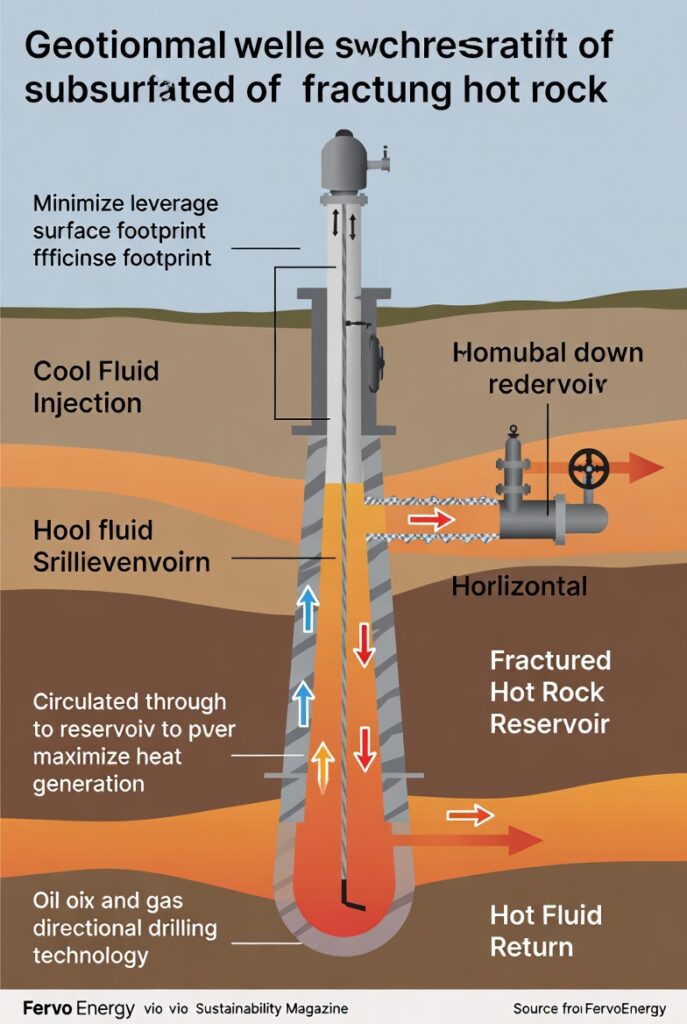
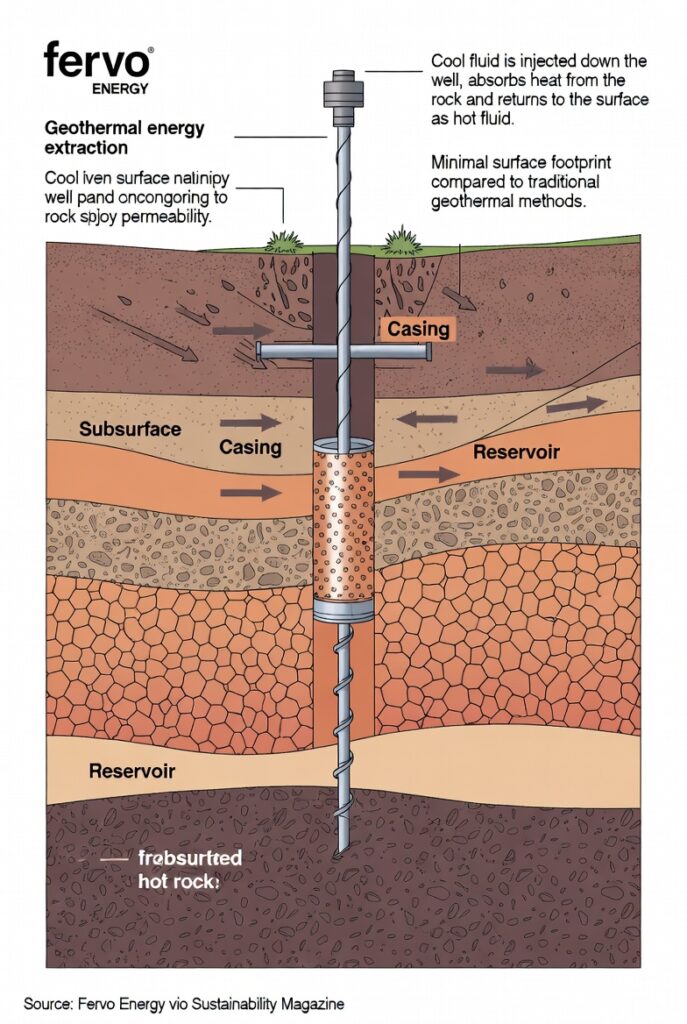
O&G’s MWD/LWD and rotary steerable systems allow long horizontal laterals (5,000+ ft) in geothermal reservoirs maximizing heat contact from a single pad and slashing surface footprint. Fervo Energy Geothermal Well Schematic – Horizontal Drilling & Heat Extraction
Fervo’s system: Cool fluid injected, heated in fractured reservoir, hot fluid returned to surface for power generation. Horizontal laterals maximize heat exchange. Source: Fervo Energy / Sustainability Magazine.
2.Hydraulic Fracturing (Fracking)
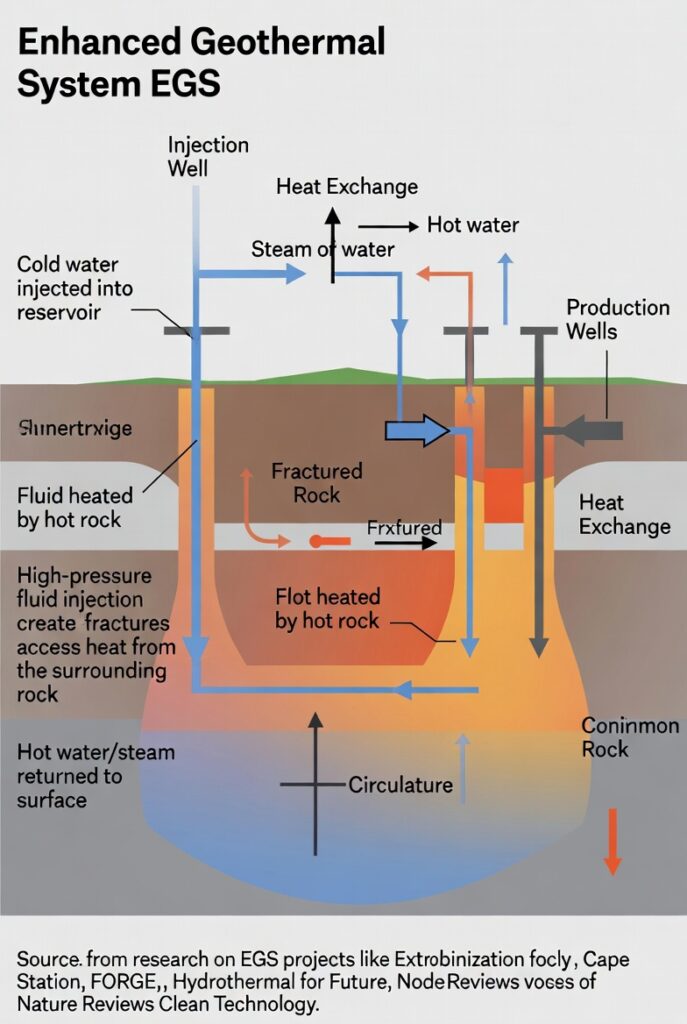
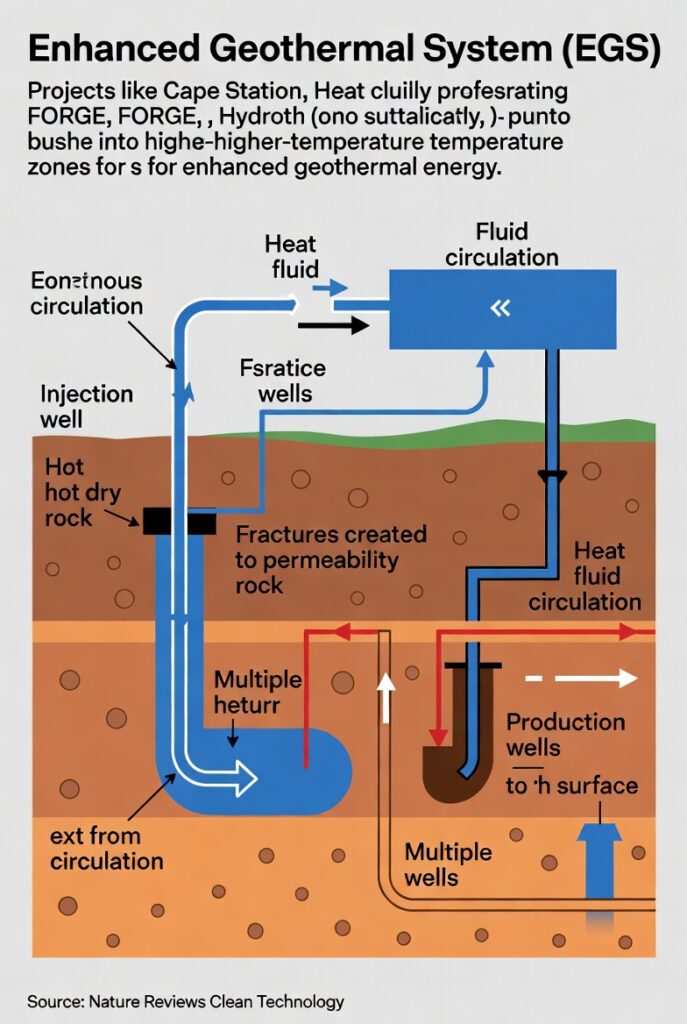
Proven shale fracking techniques create permeable pathways in impermeable hot rock the key to scalable EGS. Fluid circulation loops extract heat continuously.Enhanced Geothermal System (EGS) Schematic – Fracturing & Fluid Circulation
EGS cross-section: Injection well fractures hot dry rock, production wells return heated fluid. Projects like Cape Station, FORGE, and Hydroth push into higher-temperature zones. Source: Nature Reviews Clean Technology.
3.Fiber-Optic Sensing & Real-Time Monitoring
Distributed fiber-optic cables (DTS/DAS) from O&G provide continuous temperature, flow, and seismic data — essential for geothermal integrity and performance optimization.
Digital Twins & AI Optimization
O&G’s predictive analytics and agentic AI simulate geothermal reservoirs, optimize fracking, and predict thermal breakthrough reducing non-productive time.
Well Design & Completions
HPHT metallurgy, thermal expansion management, and artificial lift from O&G adapt to 200–450°C geothermal conditions.
Offshore Geothermal PotentialWhile most activity is onshore, offshore geothermal (sub-seabed heat extraction) could use subsea tiebacks, manifolds, insulated pipelines, and flow assurance techniques — opening crossover roles for subsea engineers.
What This Means for Subsea & Pipeline Professionals
- New applications: HPHT materials, flow assurance, and monitoring expertise transfer directly to geothermal export lines.
- Career opportunities: Drilling engineers, completions specialists, and integrity pros find crossover roles in geothermal startups and O&G majors pivoting.
- Watch in 2026: More O&G companies announcing geothermal pilots, drilling rates continuing to rise, and policy support accelerating.
The geothermal boom is powered by oil & gas innovation a win for energy transition and a new frontier for our skills.What do you think? Have you worked on geothermal-related projects, or see subsea skills playing a role in offshore geothermal? Comment below with your insights or questions share this post to spark discussion!
Stay tuned to Offshore Pipeline Insight for more on HPHT, subsea integrity, energy transition, and emerging crossovers. Gig ’em!#GeothermalEnergy #DrillingCrossover #OilAndGas #Subsea #EnergyTransition #GigEm #AggieEngineers