By Oko Immanuel
Founder & Owner, Offshore Pipeline Insight
M.Eng in Subsea Engineering | Former Roughneck | Texas A&M Alumnus
March 04, 2026
In offshore oil and gas, subsea structures form the critical foundation and protective framework for production equipment on the seabed. These engineered underwater structures support, align, protect, and stabilize components like wellheads, Christmas trees, manifolds, jumpers, and flowline terminations in harsh deepwater environments. Without robust subsea structures, equipment could shift, suffer impact damage from fishing gear/anchors/debris, or fail under currents, soil instability, or fatigue.Subsea structures are essential in clustered developments, satellite tie-backs, and HPHT fields, ensuring long-term integrity and enabling reliable hydrocarbon recovery.
Why Subsea Structures Matter
- Stability: Anchor equipment to uneven or soft seabeds (e.g., clay, sand) against lateral/vertical loads.
- Protection: Shield vulnerable components from dropped objects, trawl nets, or accidental impacts.
- Alignment & Installation: Provide precise positioning for jumpers, connectors, and ROV operations.
- Modularity: Allow phased field development and easier interventions.
Key Types of Subsea Structures
- Templates
Large, rigid steel frames that hold multiple well slots (typically 4–12 wells) in a clustered layout. Templates include guideposts for drilling/completion, mud mats for soft soils, and protection elements. They serve as the “foundation” for the entire manifold system and wells.
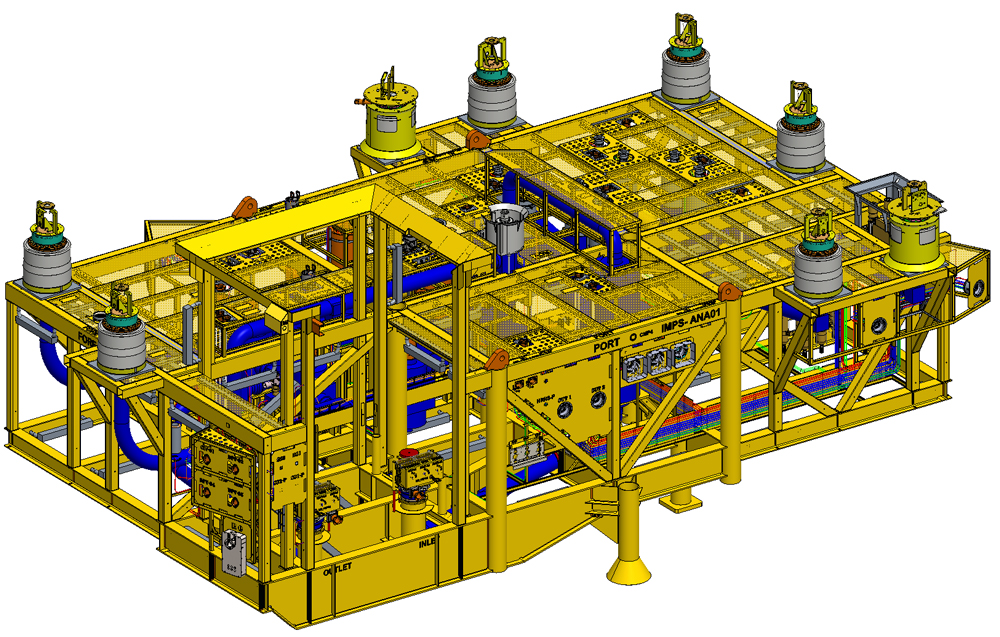
(Example: Multi-slot template with manifold integration – shows structural framing, well bays, and protection elements.)
2.Manifold Structures / Protection Frames
Manifolds (which collect/distribute fluids) are housed within dedicated protection structures or frames. These include full enclosures, covers, or open frames with impact-resistant beams to safeguard valves, piping, and connections.
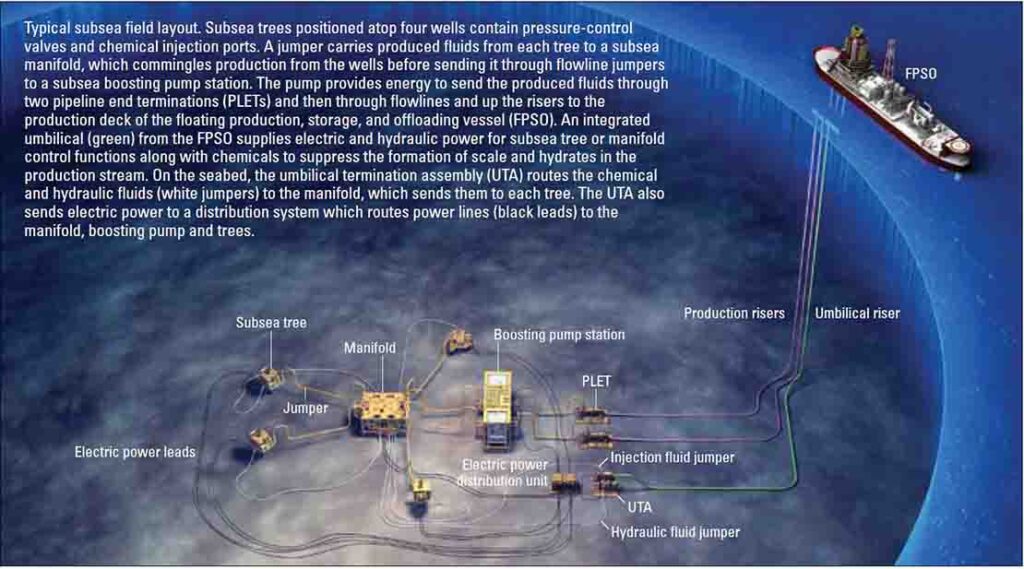
(Detailed subsea field layout highlighting manifold, trees, PLETs, jumpers, and supporting structures in a typical clustered setup.)
3.Pipeline End Terminations (PLETs) and Foundations
PLETs terminate flowlines/pipelines and connect to jumpers. They sit on dedicated foundations like mud mats or suction piles for stability.
4.Suction Caissons / Suction Anchors
Cylindrical steel foundations installed by creating negative pressure (suction) to “pull” them into the seabed. Ideal for soft soils in deep water; provide high holding capacity for anchoring manifolds, templates, or PLETs.
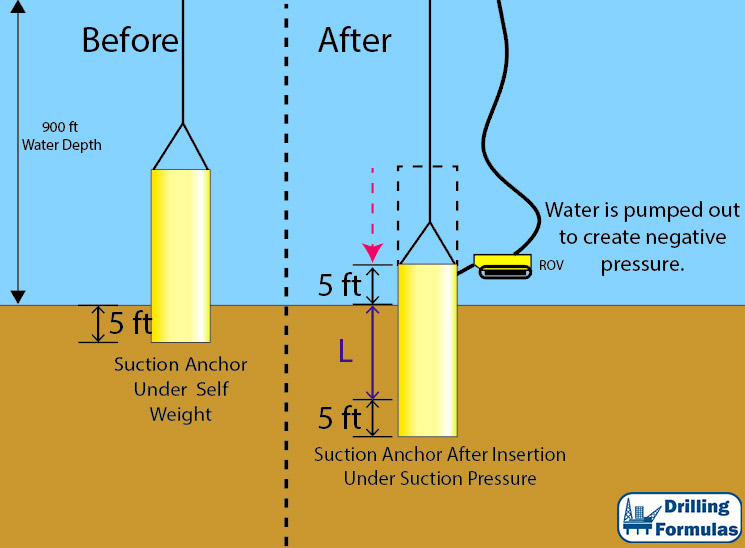
(Suction anchor installation process: Before and after suction – demonstrates penetration under self-weight and applied suction.)
5.Protection Structures / Covers
Standalone cages, domes, or frames over individual trees, jumpers, or manifolds in high-risk areas (e.g., fishing zones). Often modular for easy ROV access.
6.Gravity Bases or Skid Foundations
Heavy concrete/steel bases for stable support in firm soils or where suction isn’t feasible.
Typical Integration in Field ArchitectureIn a clustered subsea field:
- Template anchors multiple wells.
- Manifold structure sits centrally, protected by its frame.
- Jumpers connect trees to manifold.
- Flowlines run to PLETs on foundations.
- Suction caissons anchor the heavier elements.
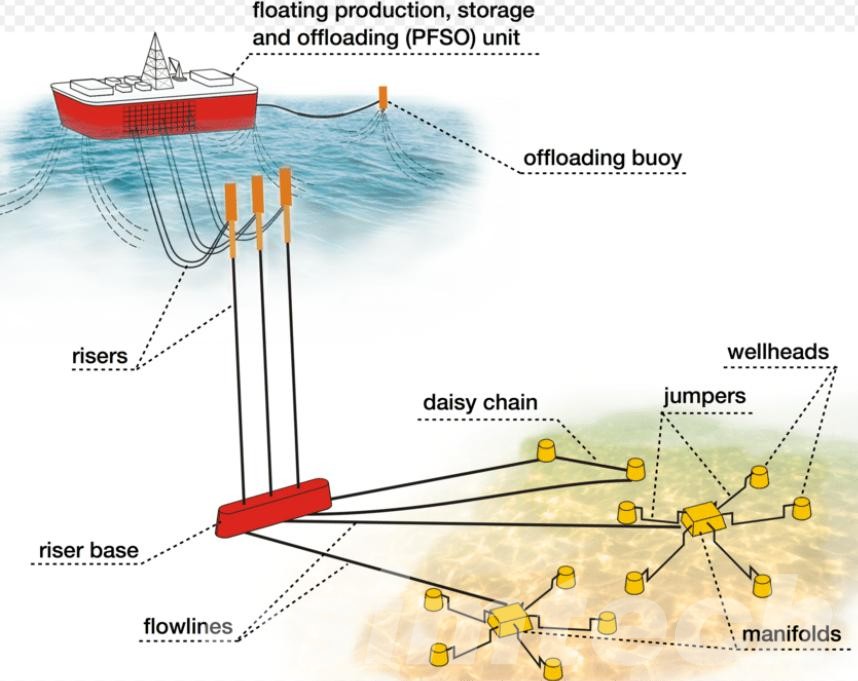
(Overview of a standalone subsea production system – illustrates templates, manifolds, flowlines, and risers tied back to an FPSO.)
Design Considerations (2026 Perspective)
- Soil Interaction: Geotechnical analysis for suction penetration, bearing capacity, and cyclic loading.
- Materials: High-strength steel with corrosion allowances/coatings for seawater exposure.
- Installation: Deployed via heavy-lift vessels or lowered on drillpipe; ROV-assisted for final positioning.
- Integrity Management: Regular ROV inspections for fatigue, scour, or marine growth; digital twins for monitoring.
- Trends: Modular, standardized designs to reduce costs; hybrid structures for CCUS repurposing; enhanced protection in congested fields.
Subsea structures are the unsung heroes engineered for extreme durability while enabling cost-effective, safe production in the world’s toughest offshore environments.
For practical checklists on subsea structure integrity assessment, HPHT considerations, or installation best practices, head over to Offshore Pipeline Insight.