By Oko Immanuel
Petroleum/Subsea Engineer | Founder, Offshore Pipeline Insight | Texas A&M Alumnus
March 10, 2026
The Las Flores Pipeline System part of Sable Offshore Corp.’s Santa Ynez Unit (SYU) offshore California has been a flashpoint since the 2015 Refugio Oil Spill, when a corroded onshore segment ruptured, spilling ~140,000 gallons of crude into the Pacific near Refugio State Beach. Operations halted, platforms idled, and the system entered a decade-long limbo under a federal consent decree requiring rigorous repairs, inspections, and approvals.
Fast-forward to 2026: Sable (NYSE: SOC) has aggressively pursued restart, restarting limited production in May 2025 (flowing oil to onshore storage at Las Flores Canyon) but facing repeated roadblocks on full commercial transport via the onshore Las Flores pipelines (Lines CA-324 and CA-325). Here’s the current status, key legal/regulatory battles, and what it means for pipeline integrity and offshore restart in California’s challenging environment.
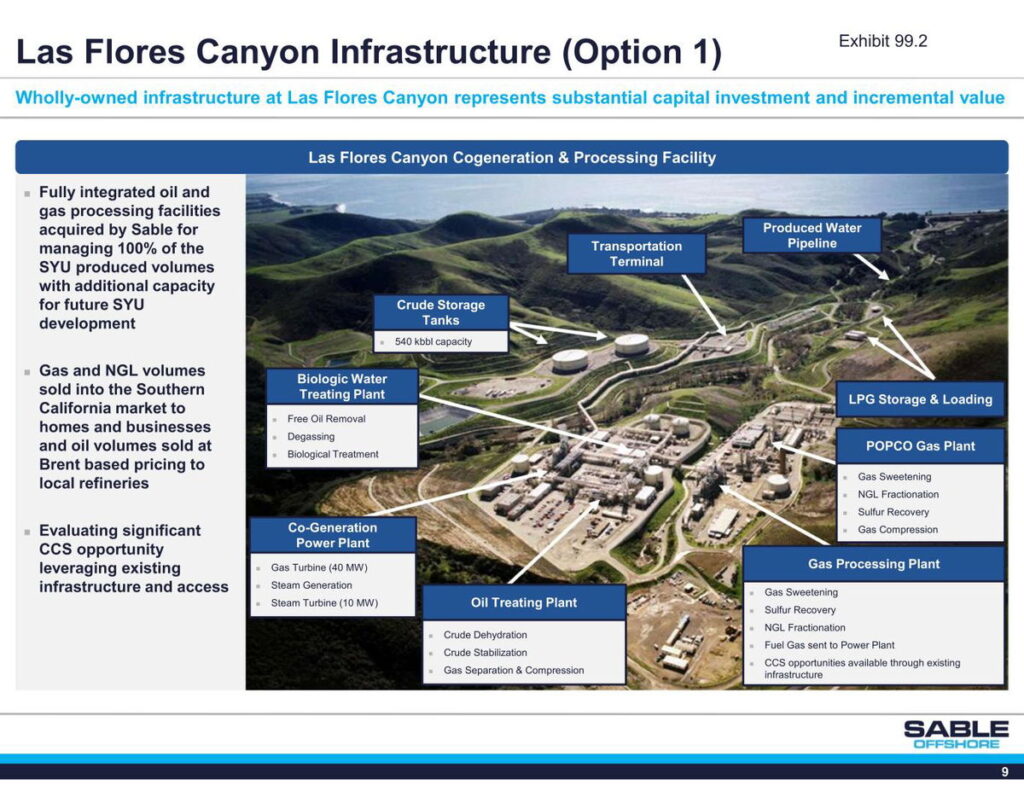
Las Flores Canyon onshore infrastructure diagram (from Sable investor materials) Aerial/annotated view of the processing plant, storage tanks, cogeneration, gas treating (POPCO), and pipeline connections highlights the onshore side central to the restart saga.
Timeline of Key Developments (2025–2026)
- May 2025: Sable restarts production from one SYU platform (Harmony), completing anomaly repairs on the onshore pipeline per the consent decree. Oil flows to storage tanks no commercial sales yet.
- July 2025: Santa Barbara Superior Court issues a preliminary injunction (upheld in February 2026) blocking restart until full state approvals (including from the Office of the State Fire Marshal—OSFM) are secured. Environmental groups (Center for Biological Diversity, Wishtoyo Foundation) successfully argue ongoing risks from the 2015 spill history.
- December 2025: Federal Pipeline and Hazardous Materials Safety Administration (PHMSA) asserts oversight, classifying segments as “interstate” under the Pipeline Safety Act. PHMSA grants emergency special permits/waivers for restart, bypassing some state requirements amid the Trump administration’s “National Energy Emergency” push.
- February 2026: Santa Barbara Judge Donna Geck tentatively (then fully) upholds the injunction federal intervention doesn’t override state authority or the consent decree’s waiver needs. Sable admits onshore lines remain offline; oil stays in storage.
- March 2026 (Latest): U.S. Department of Justice Office of Legal Counsel issues an opinion: Presidential orders under the Defense Production Act (DPA) could preempt conflicting California laws, potentially forcing restart for “critical energy resources.” Sable stock surges on the news, but California pushes back (suing over federal overreach), and no immediate restart occurs.
Engineering & Integrity Implications
The Las Flores system (onshore segments critical for export) involves aging infrastructure repaired post-2015 (corrosion anomalies fixed, integrity testing completed per PHMSA/Consent Decree). Key challenges:
- Corrosion & Fatigue: The 2015 rupture stemmed from longitudinal seam weld corrosion restart demands ongoing ILI (in-line inspection), cathodic protection, and pressure management in a seismically active/coastal zone.
- HPHT & Materials: SYU’s deepwater origins (platforms in 300–1,000 ft water) tie into subsea flowlines/risers—integrity lessons mirror HPHT/deepwater trends we cover (fatigue monitoring, materials selection).
- Repurposing/Transition Angle: If restart succeeds, it could extend life of existing assets amid energy security debates but environmental opposition highlights risks of legacy pipelines in transition eras.
Regulatory & Political Tension
This case spotlights federal vs. state authority clashes:
- Trump admin/PHMSA/DOJ leverage DPA and “energy emergency” to preempt state blocks.
- California (AG, OSFM, Coastal Commission, courts) insists on local oversight per consent decree and spill history.
- No full commercial restart yet oil stored onshore; Sable explores alternatives (e.g., offshore storage/treating vessels for direct export, potentially bypassing Las Flores).
Outlook for 2026
- Short-Term: Injunction holds; no onshore restart without state waiver or federal override (DPA invocation possible but untested/unprecedented here).
- Long-Term: Success hinges on legal outcomes DOJ opinion opens a path, but California lawsuits could drag into appeals. Pipeline pros watch for integrity precedents (waivers, emergency permits) and transition impacts (repurposing idle assets?).
- Broader Lesson: Legacy offshore/onshore systems face layered scrutiny integrity programs, regulatory navigation, and stakeholder engagement are non-negotiable.
Sable’s saga underscores 2026 realities: Energy security pushes meet environmental/regulatory hurdles. For engineers: Robust integrity management remains key, regardless of jurisdiction.
What are your thoughts on federal preemption in pipeline restarts?
Drop a comment or email oko@offshorepipelineinsight.com.
Subscribe for weekly roundups + free checklists
Oko
One Response
Hi i am kavin, its my first time to commenting anywhere, when i read this
piece of writing i thought i could also create comment due
to this sensible paragraph.