Published in the Federal Register on January 14, 2026, the rule amends 49 CFR Part 192 to introduce an integrity management (IM) alternative for gas transmission pipelines that experience class location changes due to population growth (e.g., from Class 1 or 2 to Class 3).
Previous requirements were rigid:
Operators had to either reduce pressure to meet the new class location hoop stress limit, re-test the pipeline hydrostatically, or replace the segment entirely. These options were time-consuming, expensive (often millions of dollars), and disruptive to operations.
The new alternative (effective March 16, 2026) allows eligible operators to maintain Maximum Allowable Operating Pressure (MAOP) without those drastic steps — provided they implement enhanced integrity management practices.
Eligibility criteria
- Segment operating at ≤72% SMYS (specified minimum yield strength)
- Pipeline must be capable of in-line inspection (ILI)
- Traceable, verifiable, and complete (TVC) material records per §192.607
- No known manufacturing defects or significant corrosion history
Enhanced IM requirements
- Comprehensive integrity assessments and anomaly remediation
- Pressure testing (if not previously completed)
- Installation of rupture mitigation valves
- Upgrades to cathodic protection and coating systems
- Depth-of-cover verification
- Ongoing monitoring, data integration, and program evaluation
Compliance timeline
Operators must complete all requirements by March 16, 2028, or within 24 months of the class location change (whichever is later).
Why this matters
This rule reduces unnecessary physical interventions while maintaining (or improving) safety. It prioritizes data-driven integrity more ILI runs, better cathodic protection, and digital tools over blanket replacement. For legacy lines in expanding communities, it saves millions and keeps gas flowing reliably.
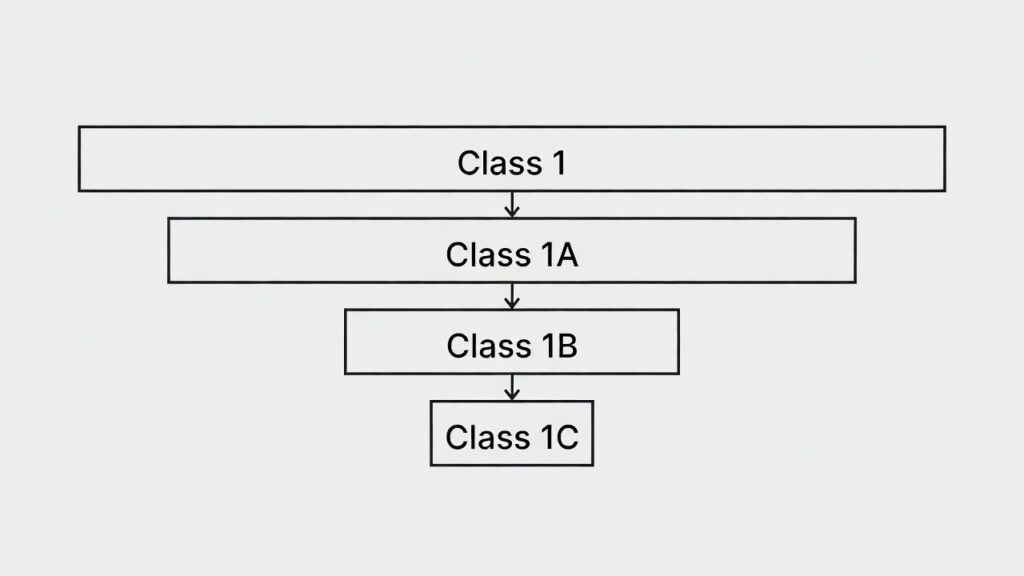
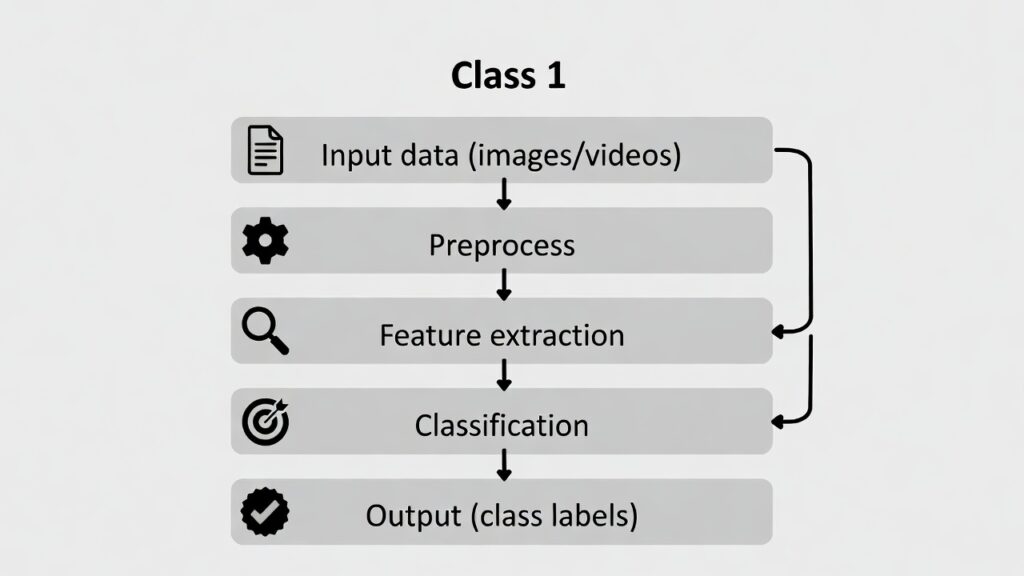
Figure 1: PHMSA Pipeline Class Location Overview
diagram: Horizontal bars or flowchart showing Class 1 (≤10 buildings per mile), Class 2 (11–45 buildings), Class 3 (≥46 buildings), and the new IM alternative path for eligible segments. Color-coded risk levels and requirements.]
CCS Projects Momentum in 2026 – Building the Infrastructure
Carbon capture and storage (CCS) is transitioning from pilot to commercial scale. The PHMSA rule’s flexibility supports repurposing existing pipelines for CO₂ service, accelerating CCS deployment.
Key active CCS pipeline projects (US focus, March 2026)
- Kinder Morgan CO₂ — Expanding CO₂ pipeline network in the Permian Basin for enhanced oil recovery (EOR) and sequestration. Multiple laterals under construction.
- Tallgrass Energy — Developing CCS pipeline from industrial Midwest sources to storage in North Dakota. Front-end engineering design (FEED) complete.
- Summit Carbon Solutions — Midwest carbon capture pipeline (Iowa, Nebraska, North Dakota) — one of the largest planned CO₂ systems in the US. Permitting ongoing.
- Gulf Coast hubs (Louisiana/Texas) — Multiple projects (ExxonMobil, Occidental, others) using existing pipeline rights-of-way for CO₂ transport to offshore storage.
Technical highlights
- Repurposing legacy oil/gas pipelines (requires integrity assessment per PHMSA Part 195 updates)
- New dedicated CO₂ lines using high-strength steel (X60/X70) with corrosion-resistant coatings
- Operating pressure: typically 1,500–2,200 psi, supercritical phase transport
- Integrity focus: Baseline ILI runs, cathodic protection, crack arrestors, real-time monitoring
Figure 2: US CCS Projects Map (March 2026)
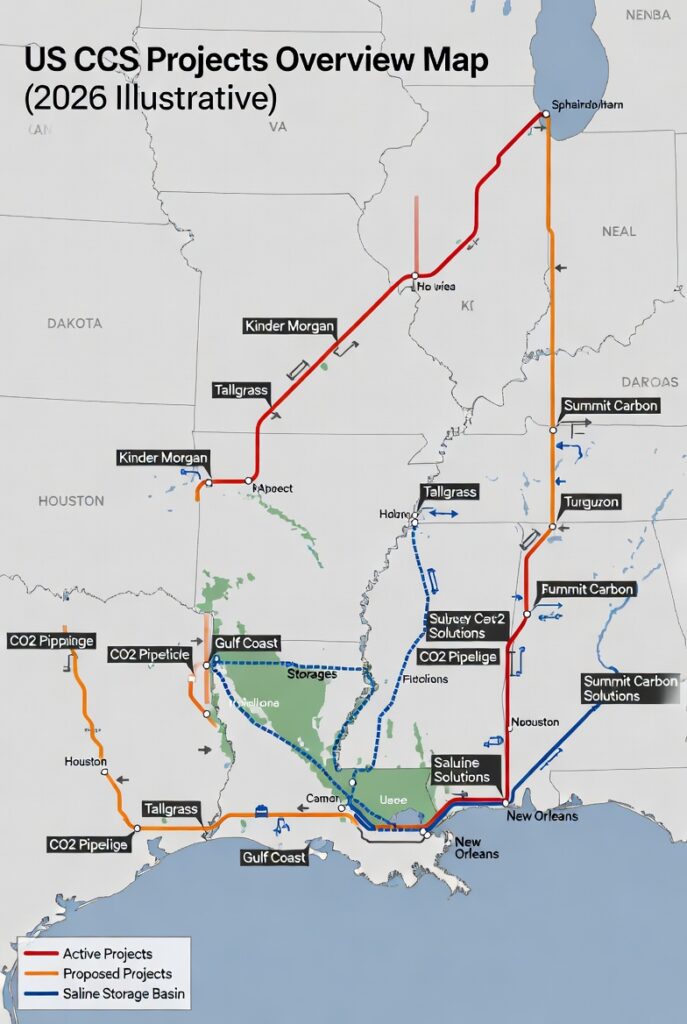
Map: US map with pins for Kinder Morgan (Permian), Tallgrass (Midwest), Summit (Iowa/Nebraska/North Dakota), and Gulf Coast hubs. Color-coded lines showing existing and planned CO₂ pipeline routes.]
Job Roundup – CCS, Pipeline Integrity & Related Roles (March 2026)
The PHMSA rule and CCS growth are driving demand for pipeline engineers, integrity specialists, and subsea pros.
Here are 8 current openings (sourced from Rigzone, LinkedIn, Indeed, company sites):
- Pipeline Integrity Engineer – CCS Focus
- Company: Kinder Morgan
- Location: Houston, TX
- Salary: $110k–$150k
- Apply: https://www.kindermorgan.com/Careers
- CO₂ Pipeline Design Engineer
- Company: Tallgrass Energy
- Location: Lakewood, CO (hybrid)
- Salary: $120k–$160k
- Apply: https://www.tallgrassenergy.com/careers
- Subsea Integrity Engineer
- Company: SLB OneSubsea
- Location: Houston, TX or Stavanger, Norway
- Salary: $130k–$180k
- Apply: https://careers.slb.com/
- CCS Project Manager
- Company: Summit Carbon Solutions
- Location: Des Moines, IA (hybrid)
- Salary: $140k–$190k
- Apply: https://www.summitcarbon.com/careers
- Pipeline Engineer – Repurposing
- Company: ExxonMobil
- Location: Houston, TX
- Salary: $125k–$175k
- Apply: https://jobs.exxonmobil.com/
- Subsea Materials Engineer
- Company: TechnipFMC
- Location: Houston, TX
- Salary: $120k–$170k
- Apply: https://www.technipfmc.com/en/careers
- Integrity Specialist – Offshore
- Company: Oceaneering
- Location: Houston, TX
- Salary: $100k–$140k
- Apply: https://www.oceaneering.com/careers
- Entry-Level Pipeline Engineer
- Company: Wood PLC
- Location: Houston, TX
- Salary: $80k–$110k
- Apply: https://careers.woodplc.com/
These roles highlight demand for pipeline integrity, HPHT materials, and CCS experience perfect timing with the new PHMSA rule and CCS pipeline growth.
Which update excites you most the Class Location IM alternative, CCS pipeline expansion, or
the job opportunities?
Comment below or
email : oko@offshorepipelineinsight.com.
Subscribe for weekly roundups + free integrity checklists!
Oko