By Oko Immanuel, M.Eng – Founder, Offshore Pipeline Insight
March 23, 2026
In 2026, the explosive growth of AI is creating an entirely new class of energy demand: industrial-scale, 24/7 reliable power for data centers. Big tech companies — Meta, Microsoft, Amazon, and others — are rapidly becoming some of the largest new consumers of natural gas in the United States, especially in gas-rich regions like the Permian Basin.
This trend is reshaping offshore and onshore gas infrastructure, pipeline networks, and subsea tiebacks as operators race to meet the surge.Why AI Data Centers Need Massive, Uninterrupted Natural Gas PowerAI training and inference clusters (NVIDIA DGX, Google TPU pods, etc.) consume hundreds of megawatts per campus — some projected to reach 1–5 GW in the late 2020s.Key requirements:
- Zero downtime : AI workloads cannot tolerate brownouts or interruptions.
- High power density 50–100 MW per building, with rapid ramp-up.
- Scalability : New clusters added every few months.
Wind and solar are intermittent; battery storage at GW scale is still too expensive. Natural gas-fired combined-cycle plants offer:
- Instant ramping (minutes).
- High efficiency (60%+).
- Reliable baseload to back up renewables.
This makes gas the de facto backbone for AI power in 2026.
Big Tech as Major Natural Gas Buyers – Permian Basin Focus
Meta, Microsoft, and Amazon are signing long-term gas supply deals and building or contracting dedicated power plants.
- Microsoft : Multiple deals for gas-fired power + exploring small modular reactors (SMRs), but gas remains the near-term bridge for data-center campuses.
- Meta : Investing in gas plants and pipelines to support AI expansion in Texas.
- Amazon : Similar strategy in Virginia and Midwest, plus Gulf Coast proximity for Permian gas.
Permian Basin hotspot:
- Abundant, low-cost gas.
- Proximity to Texas data-center hubs (Dallas-Fort Worth, Austin).
- Existing pipelines + new gathering systems feed directly to power plants.
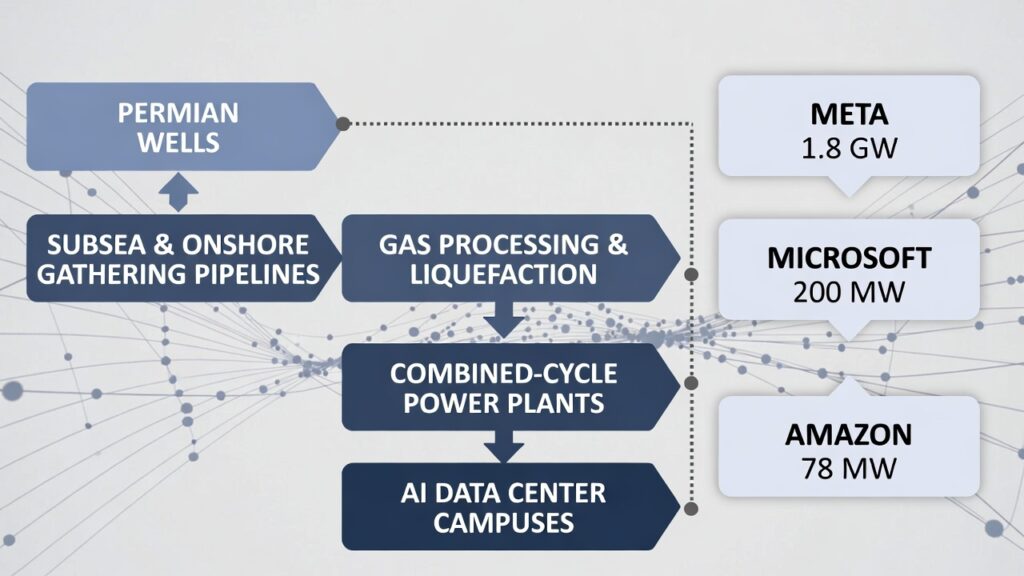
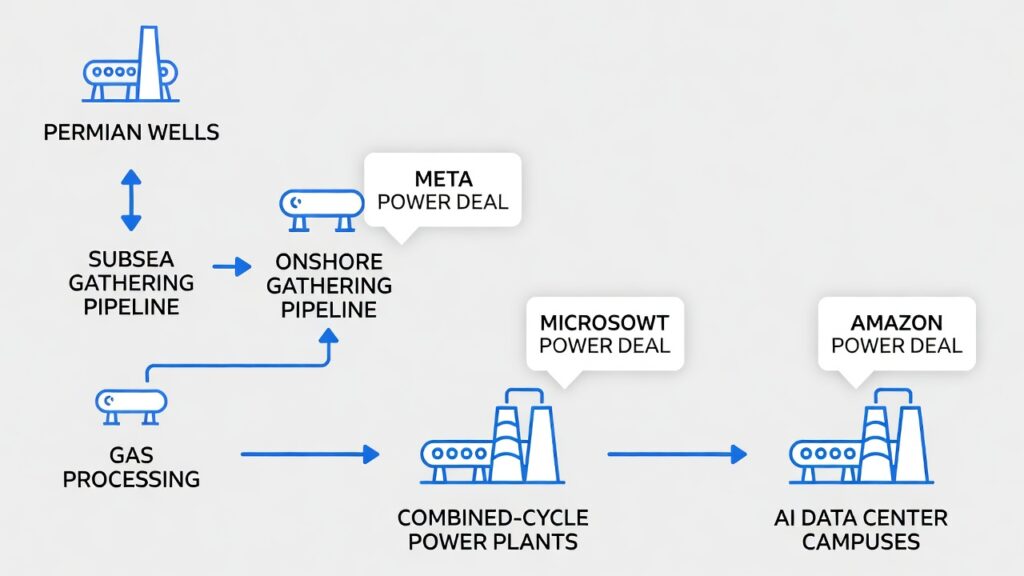
Figure 1: AI Data Center Power Demand & Permian Gas Supply Chain
( image: Flow diagram showing Permian wells → subsea/onshore gathering pipelines → gas processing → combined-cycle power plants → AI data center campuses, with callouts for Meta/Microsoft/Amazon power deals.)
Offshore & Subsea Implications
The AI-driven gas demand is indirectly boosting offshore production:
- GoM deepwater : Fields like Anchor, Kaskida, Shenandoah supply Permian via pipelines.
- Subsea tiebacks : HPHT flow lines, manifolds, and boosting systems ensure reliable feed-gas.
- Pipeline infrastructure : New gathering lines and onshore compression to handle increased volumes.
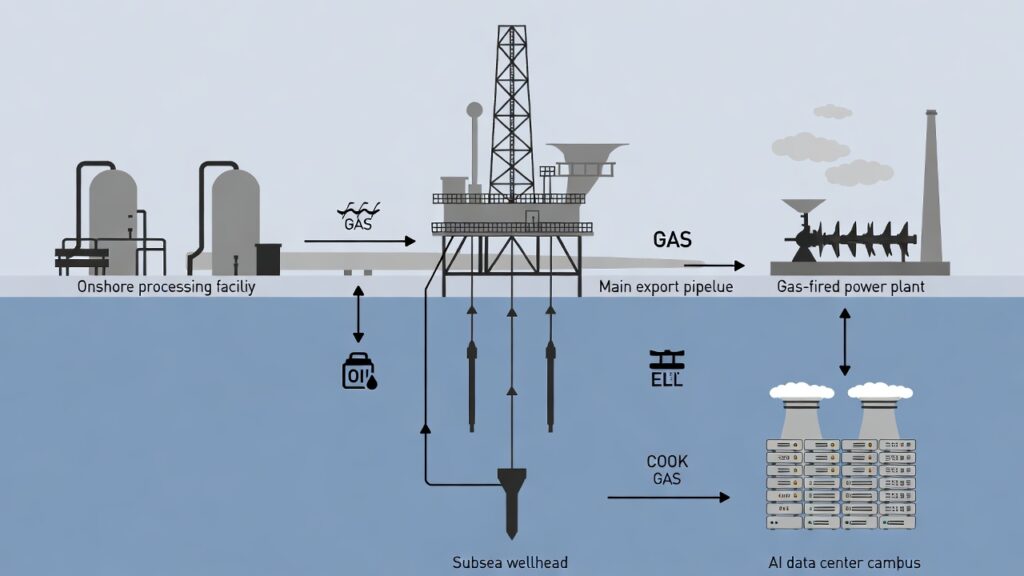
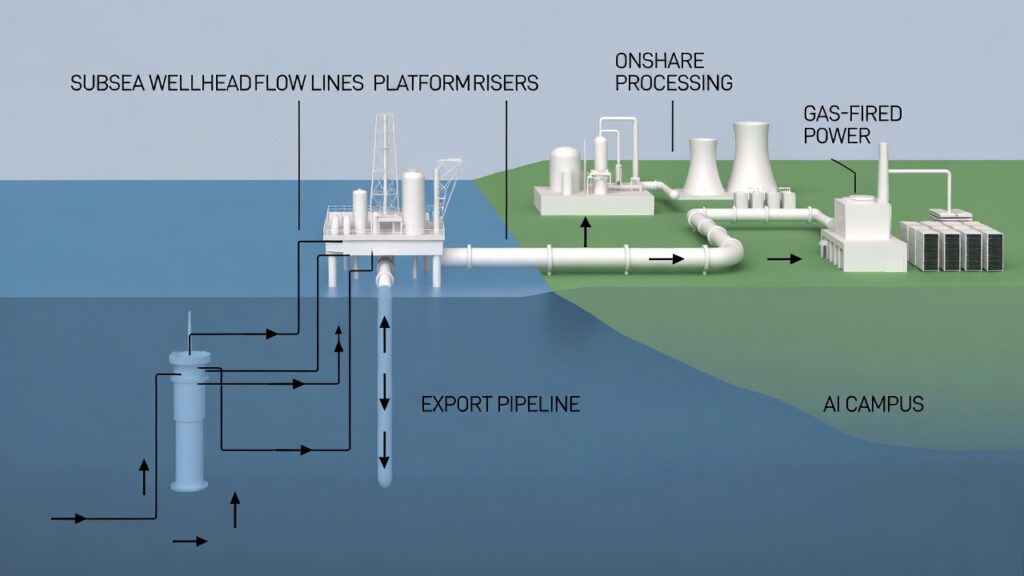
Figure 2: Offshore Gas to AI Data Centers – Simplified Flow
( image: Schematic from subsea wellhead → flow lines → risers → platform → export pipeline → onshore processing → gas-fired power → AI campus.)
The Bottom Line for 2026
Big tech (Meta, Microsoft, Amazon) is becoming a major natural gas consumer to power AI data centers 24/7 especially in the Permian Basin where gas is cheap and abundant. This trend is driving demand for reliable upstream production, subsea tiebacks, and pipeline capacity from offshore fields.Engineers and energy pros: How is AI power demand affecting your offshore or gas work more Permian gathering lines, GoM tiebacks, or gas-to-power projects?
Share in the comments or on LinkedIn.AI is rewriting the energy map — and natural gas is at the center.
Oko Immanuel
Subsea Engineering Specialist | Offshore Pipeline Insight