By Oko Immanuel, M.Eng – Founder, Offshore Pipeline Insight
March 23, 2026
AI data centers are driving an unprecedented surge in reliable 24/7 natural gas demand. Meta, Microsoft, Amazon, and especially Google are becoming major gas consumers, particularly in the Permian Basin. Offshore subsea tiebacks from the Gulf of Mexico (GoM) are quietly supplying much of this gas through HPHT flowlines, manifolds, and boosting systems.
This article deepens the offshore subsea tieback details, highlights Google’s specific strategy, and includes additional technical diagrams.
1. Why AI Needs Constant Natural Gas Power
Modern AI clusters consume hundreds of megawatts per campus, with some projected to reach 1–5 GW. Intermittent renewables cannot meet the uptime requirement, making natural gas the dis-patchable backbone.
2. Big Tech Gas Consumption Overview
- Meta, Microsoft, Amazon : Long-term gas supply deals and dedicated combined-cycle plants in Texas and the Midwest.
- Permian focus : Low-cost gas + proximity to data-center hubs.
3. Google’s AI Data Center Gas Use in 2026
Google is one of the most aggressive big-tech gas buyers:
- Signed multi-year deals for hundreds of megawatts of gas-fired power in Texas (Permian-sourced).
- Partnering with utilities for new combined-cycle plants near data centers.
- Targeting carbon-free 24/7 power by 2030, using gas + CCS as the bridge.
- Scale: Google’s global data-center power demand is projected to exceed 10 GW by 2030, with a large portion met by Permian gas via subsea/onshore pipelines.
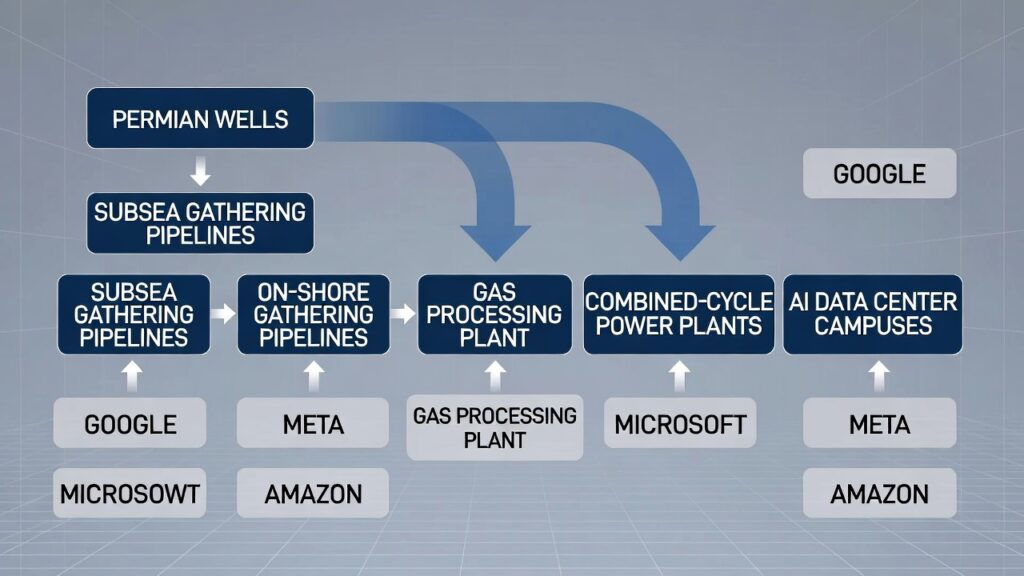
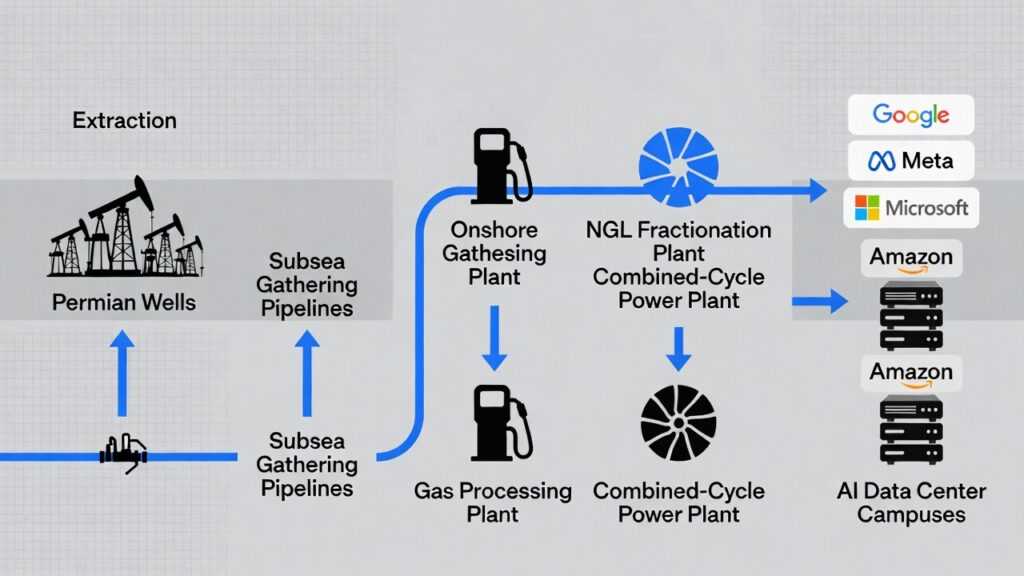
Figure 1: AI Data Center Power Demand & Permian Gas Supply Chain
( image: Flow diagram showing Permian wells → subsea/onshore gathering pipelines → gas processing → combined-cycle power plants → AI data center campuses, with callouts for Google, Meta, Microsoft, and Amazon power deals.)
4. Offshore Subsea Tieback Details – The Critical Link
The gas powering AI data centers often originates from deepwater GoM fields via sophisticated subsea tiebacks:
- HPHT flow lines & risers : Rated 15K–20K psi and high temperatures; CRA-lined or pipe-in-pipe (PIP) for corrosion and thermal insulation.
- Manifolds & trees : Cluster manifolds connect multiple wells; 10–20 km tiebacks common, with some reaching 100+ km.
- Subsea boosting/compression — Compact seabed compressors (10–20 MW) maintain pressure over long distances (e.g., Anchor, Kaskida, Shenandoah fields).
- Monitoring : Fiber-optic DTS/DAS along flow lines for real-time leak detection and integrity; digital twins model pressure, temperature, and plume behavior.
- Key GoM examples feeding Permian gas networks:
- Anchor (15K HPHT) Subsea tieback to processing facilities.
- Kaskida & Shenandoah Long-distance export lines.
- Future tie-ins — New manifolds and boosting for increased volumes.
These tiebacks ensure reliable, high-volume gas delivery from ultra-deep reservoirs to onshore power plants.
Figure 2: Offshore Gas to AI Data Centers – Simplified Flow
( image: Schematic from subsea wellhead → flow lines → risers → platform → export pipeline → onshore processing → gas-fired power → AI campus, with detailed callouts for HPHT components and boosting.)
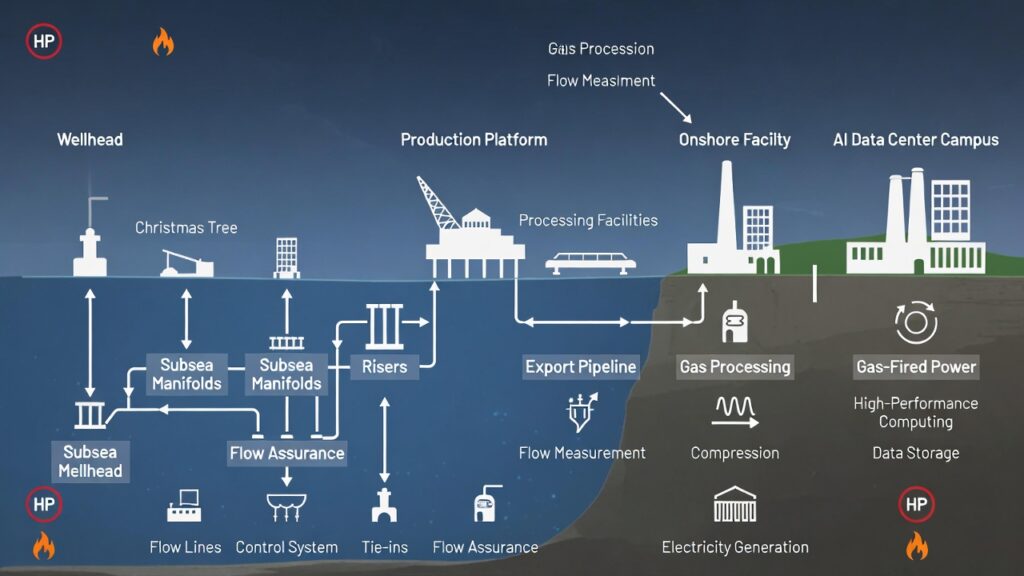
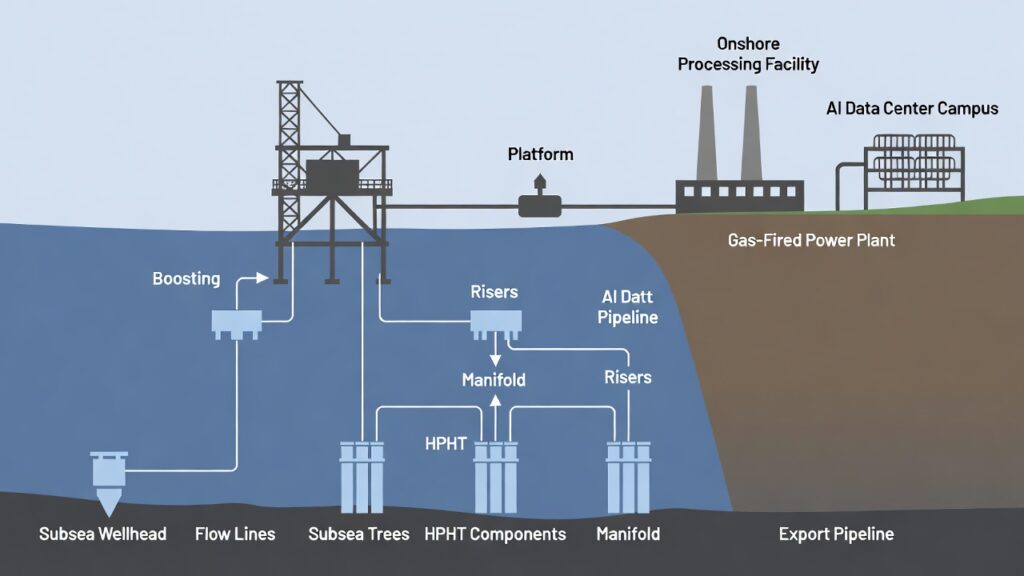
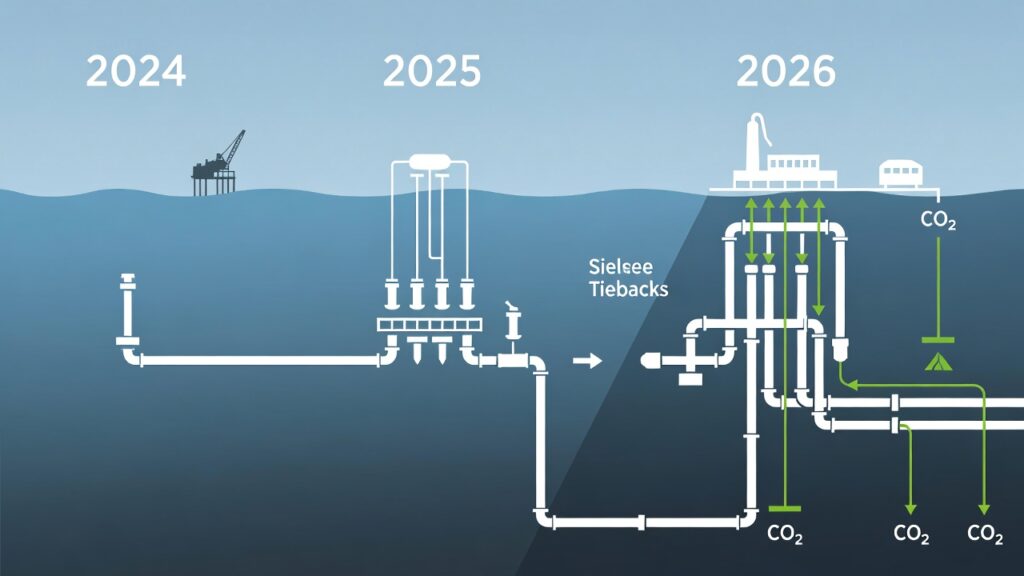
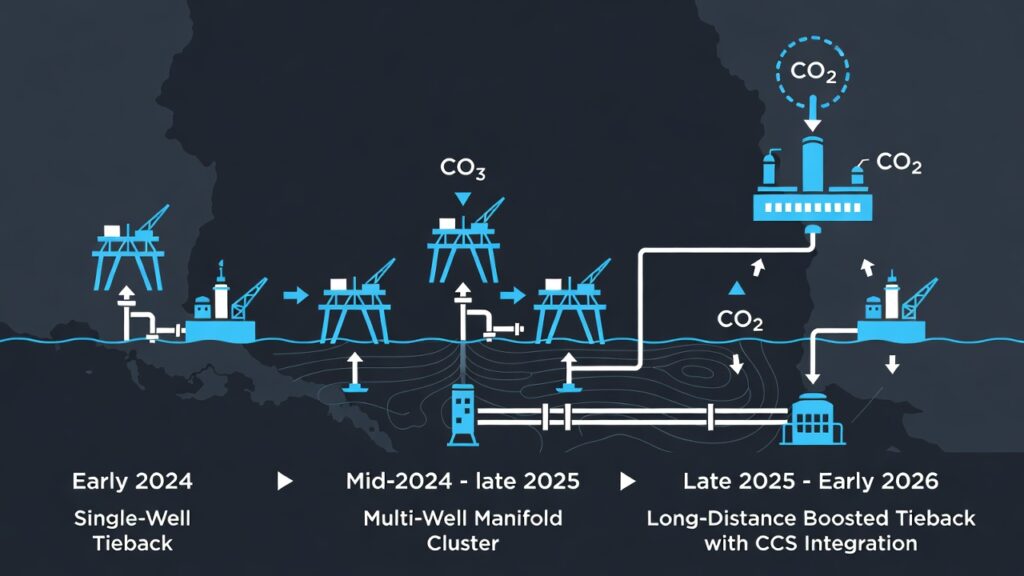
Figure 3: Subsea Tieback Evolution in GoM (2024–2026)
( image: Timeline/schematic showing early single-well tiebacks → current multi-manifold clusters → future long-distance boosted tiebacks with CCS integration.)
Bottom Line
Big tech (especially Google) is driving massive natural gas demand for AI data centers. Offshore subsea tiebacks with HPHT flow lines, manifolds, boosting, and fiber-optic monitoring are the hidden backbone delivering this gas from GoM deepwater fields to Permian power plants.Engineers: How is the AI gas surge affecting your subsea tieback or HPHT work?
Share in the comments or on LinkedIn. Subsea is powering the AI revolution.
Oko Immanuel
Subsea Engineering Specialist | Offshore Pipeline Insight