By Oko
Founder, Offshore Pipeline Insight
March 15, 2026
Autonomous operations represent the next frontier in offshore drilling, shifting from human-centric rig control to intelligent, semi- or fully autonomous systems that sense, reason, decide, and act with minimal intervention. In 2026, with ultra-deepwater rig utilization at 91–94%, day rates exceeding $400,000, and non-productive time (NPT) + invisible lost time (ILT) still costing operators millions per well, autonomous technologies deliver measurable gains in efficiency, safety, and cost control.
This blog explores how autonomous operations drive ecosystem efficiencies, support real-time decisions, enhance analytical actions, and significantly reduce NPT & ILT, with visuals to illustrate key concepts.
1. Driving Efficiencies Across the Drilling EcosystemAutonomous systems optimize the entire drilling ecosystem—rig, downhole tools, surface equipment, supply chain, and personnel—through closed-loop control and predictive orchestration.
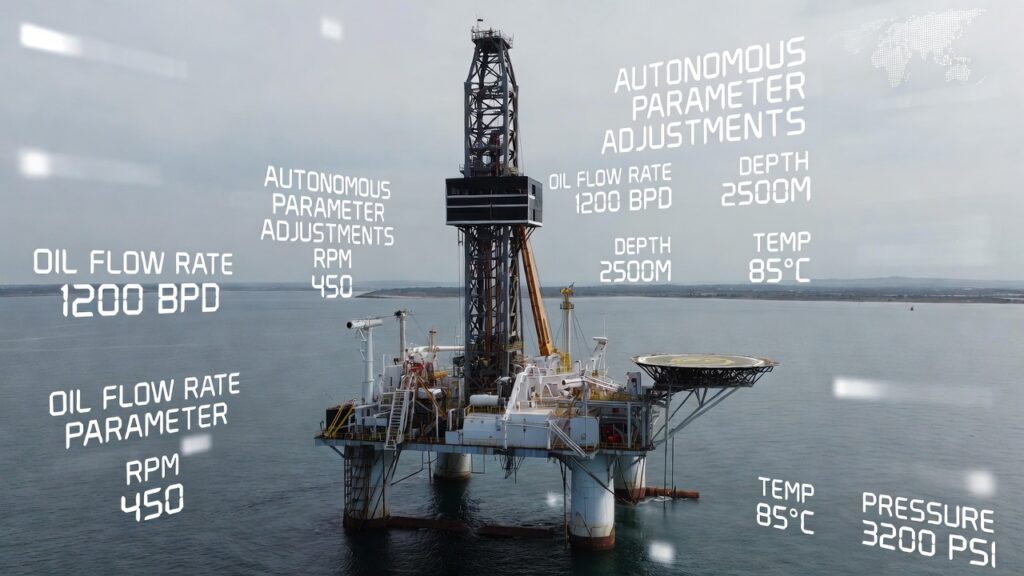
- Real-time adjustment of drilling parameters (WOB, RPM, flow rate, mud properties) based on live formation feedback.
- Automated pipe handling, BHA changes, and connections to reduce flat time.
- Predictive scheduling of vessel movements and logistics to avoid delays.
Operators report 15–30% overall time savings on complex wells when autonomous control is implemented.
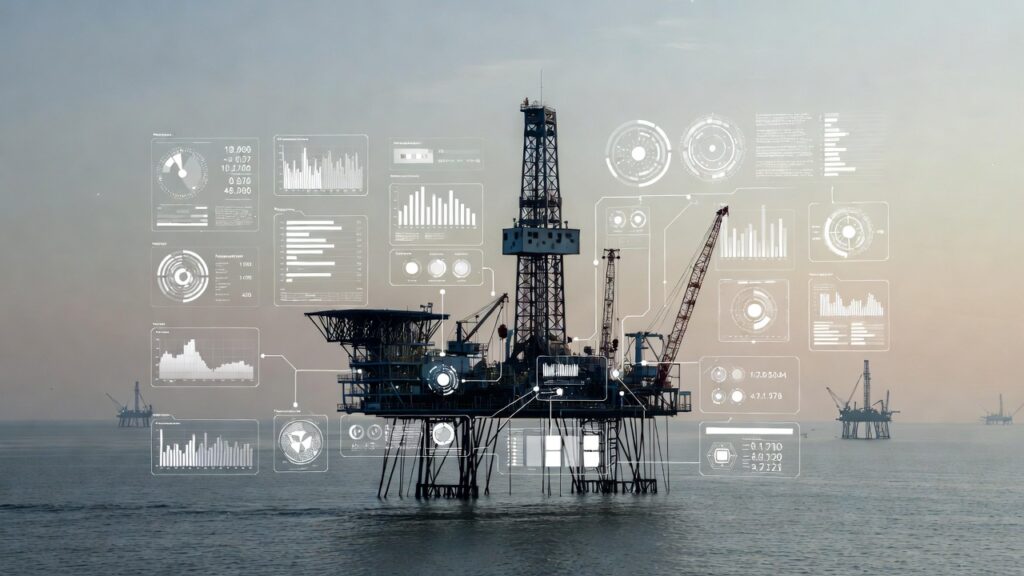
Visual: Offshore drilling rig with digital overlay showing autonomous parameter adjustments across the ecosystem.
2. Supporting Real-Time Decisions
Autonomous systems enable split-second, data-driven decisions that humans cannot match in speed or consistency.
- Closed-loop drilling: Sensors feed data to edge AI that automatically corrects trajectory, mitigates kicks, or avoids stuck pipe.
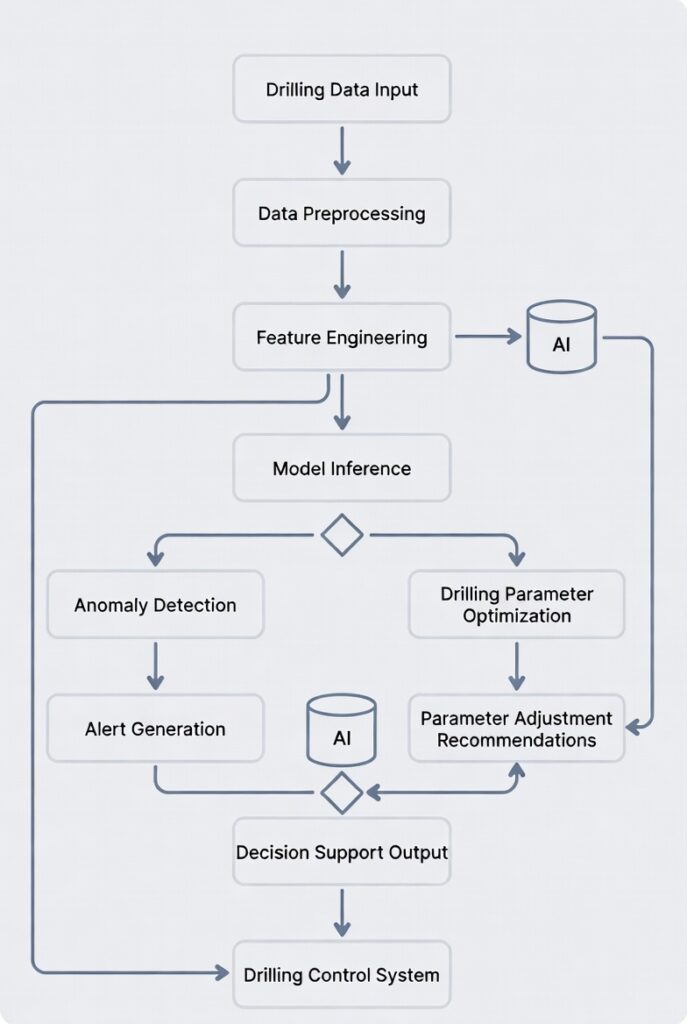
- Anomaly detection: Machine learning flags deviations (e.g., torque spikes, pressure anomalies) and initiates corrective actions (e.g., reduce ROP, adjust mud weight).
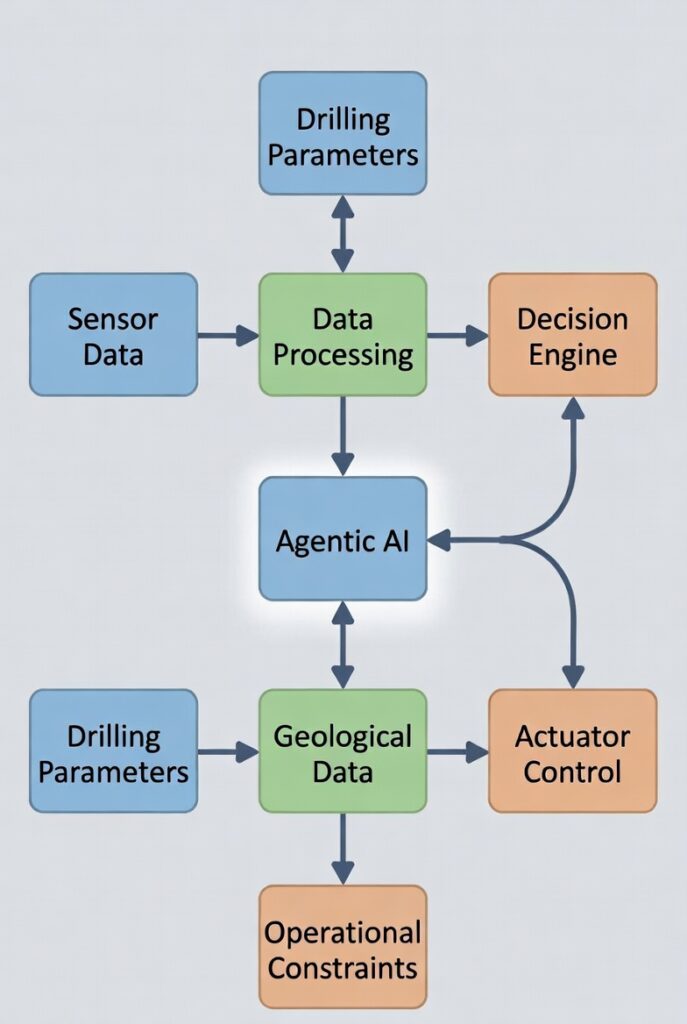
- Multi-agent orchestration: Specialized AI agents coordinate between drilling, geosteering, and mud logging for seamless real-time execution.
This capability is especially valuable in HPHT and deepwater, where reaction windows are narrow.
Visual: Diagram illustrating agentic AI workflow in real-time drilling decisions.
3. Enhancing Analytical Actions
Autonomous operations move beyond reactive control to proactive, analytical intelligence.
- Predictive modeling: Digital twins simulate thousands of scenarios in parallel to recommend optimal bit, BHA, and fluid selections.
- Pattern recognition: AI identifies subtle formation changes (e.g., pressure ramps, lithology shifts) and adjusts plans proactively.
- Learning from offset wells: Systems ingest historical data to improve performance on subsequent wells, reducing learning curve time.
Analytical actions reduce uncertainty and increase first-pass success rates in complex reservoirs.
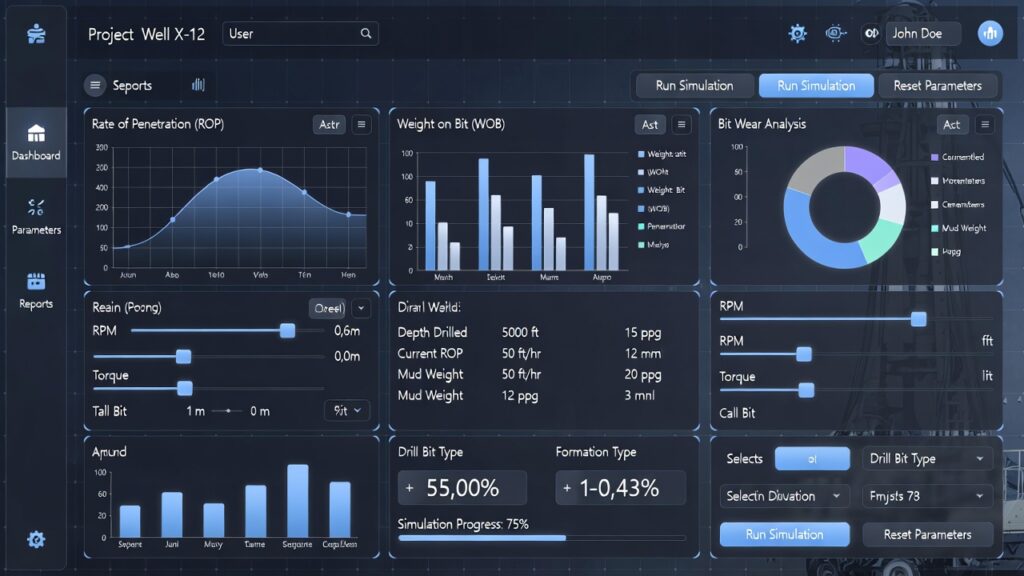
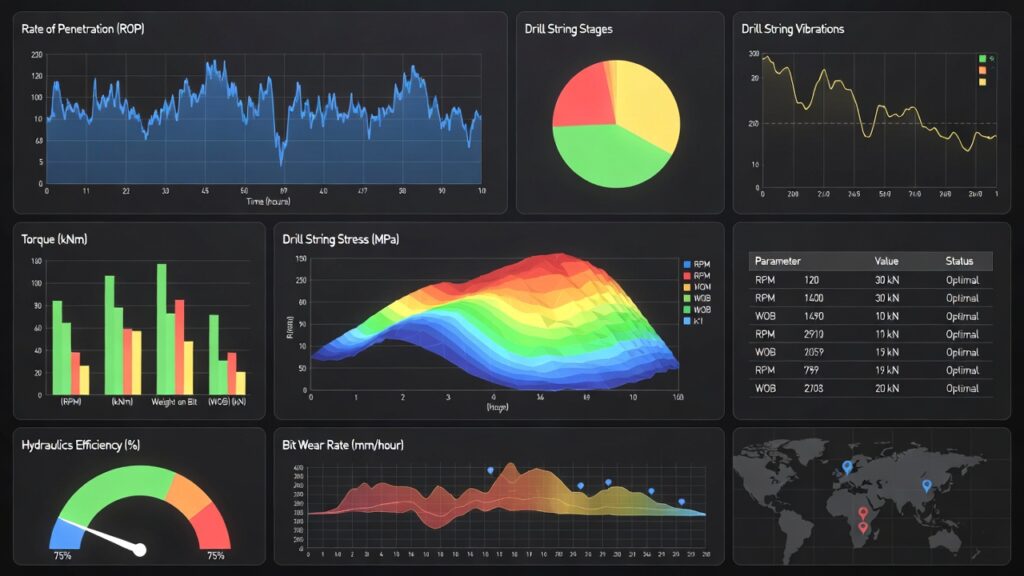
Visual: Digital twin dashboard showing analytical simulation of drilling scenarios and parameter optimization.
4. Reducing NPT & ILTNon-productive time (NPT) and invisible lost time (ILT) remain the largest controllable costs in drilling. Autonomous systems attack both directly:
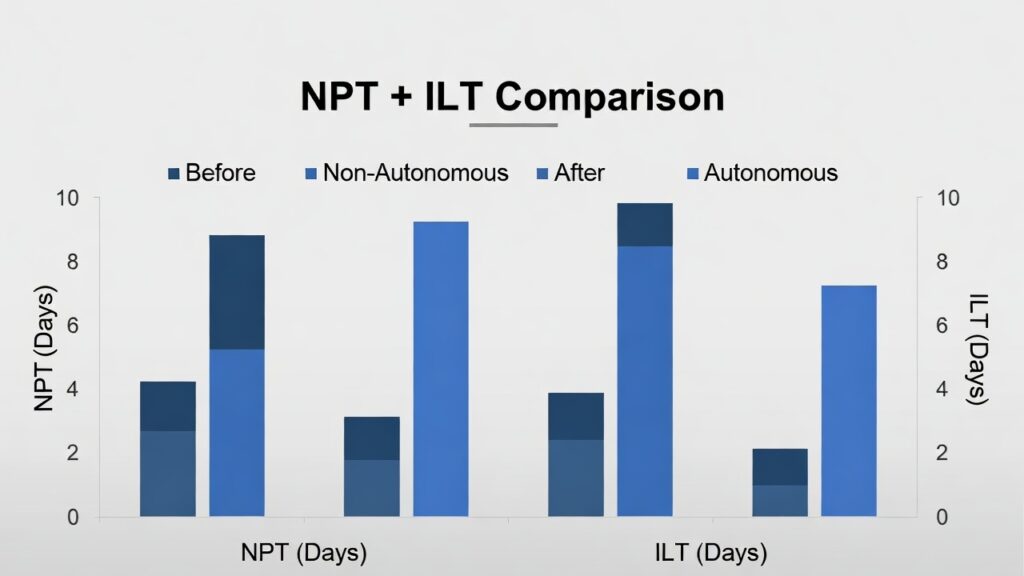
- NPT Reduction: Automated early kick detection, automated connections, and robotic inspections cut flat time by 20–40%.
- ILT Reduction: Predictive maintenance prevents tool failures; optimized trajectories minimize tortuosity and reaming; real-time geosteering reduces sidetracks.
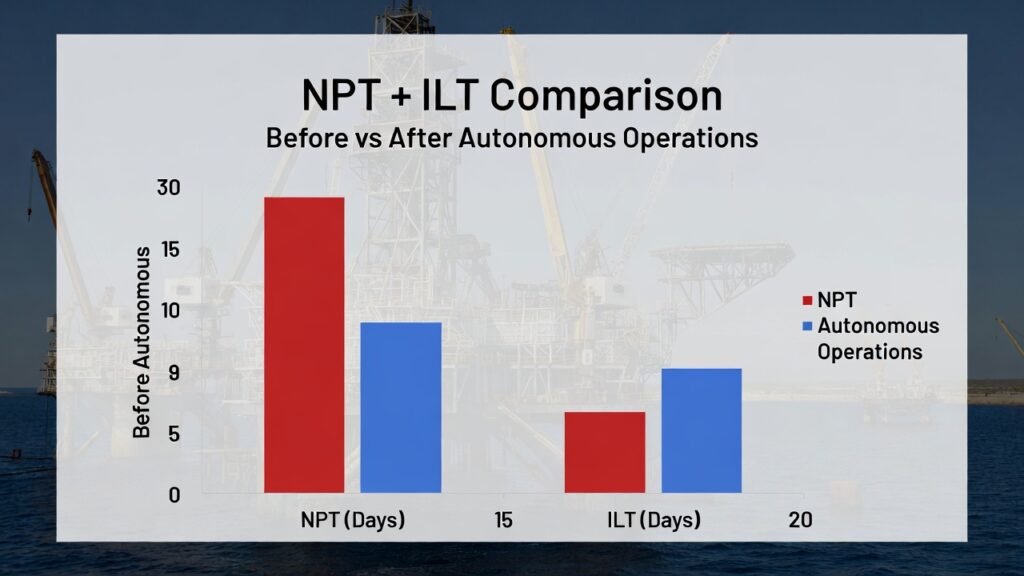
- Combined impact: Industry pilots show 25–50% reduction in total lost time on autonomous-enabled wells.
Visual: Bar chart comparing NPT + ILT before and after autonomous operations implementation on offshore wells.
Case Study Snapshot: North Sea Autonomous Drilling Pilots (2025–2026)Operators (e.g., Equinor, TotalEnergies) deployed closed-loop autonomous drilling on select North Sea wells:
- 30–45% NPT reduction observed.
- Real-time AI decisions prevented 2–3 kicks per well.
- ILT from poor trajectory control reduced by ~35% via predictive geosteering.
These results are driving broader adoption in 2026 as confidence grows.
Conclusion: The Autonomous Future Is Here
Autonomous operations in 2026 are no longer experimental—they are delivering tangible value by driving ecosystem efficiencies, enabling real-time decisions, enhancing analytical analytical actions, and slashing NPT & ILT. Operators embracing these technologies gain a competitive edge in high-cost, high-risk environments.For drilling professionals:
Which aspect of autonomous operations is delivering the biggest impact on your rigs?
Share your experiences below!