March 3, 2026By Oko Immanuel
Founder & Owner, Offshore Pipeline Insight
M.Eng in Subsea Engineering | Former Roughneck | Texas A&M Alumnus.
In high-pressure, high-temperature (HPHT) wells (>10,000 psi, >300°F), flow assurance challenges like scale, corrosion, hydrates, and asphaltenes can severely impact production. Downhole chemical injection addresses these issues at the source, delivering inhibitors, demulsifiers, or biocides directly into the reservoir or wellbore. This optimizes dosage, reduces topside requirements, and extends asset life in deepwater tiebacks.
Challenges in HPHT Flow Assurance
- Scale & Asphaltenes: High temperatures precipitate minerals and organics, restricting tubing and near-wellbore permeability.
- Corrosion: CO₂/H₂S accelerate pitting; downhole conditions demand resistant alloys and precise inhibition.
- Hydrates: Pressure/temperature shifts form plugs in the production string.
- Limited Access: Deepwater/HPHT restricts intervention; injection systems must be reliable and remotely controllable.
Downhole Injection Methods
- Capillary Tubing Systems
Small-diameter (0.25–0.5 in) tubing strapped to production string for continuous injection at the reservoir face. Ideal for scale inhibitors. - Gas Lift Mandrels
Side-pocket mandrels in gas lift strings allow chemical delivery alongside lift gas. Common for corrosion control in mature wells. - Downhole Safety Valves (DHSV) with Injection
Integrated valves enable simultaneous safety and chemical functions. - Chemical Injection Valves (CIV)
One-way valves at tubing hanger or packer for targeted delivery.
In 2026, AI-optimized dosing (real-time reservoir data integration) reduces chemical use by 20–30%.
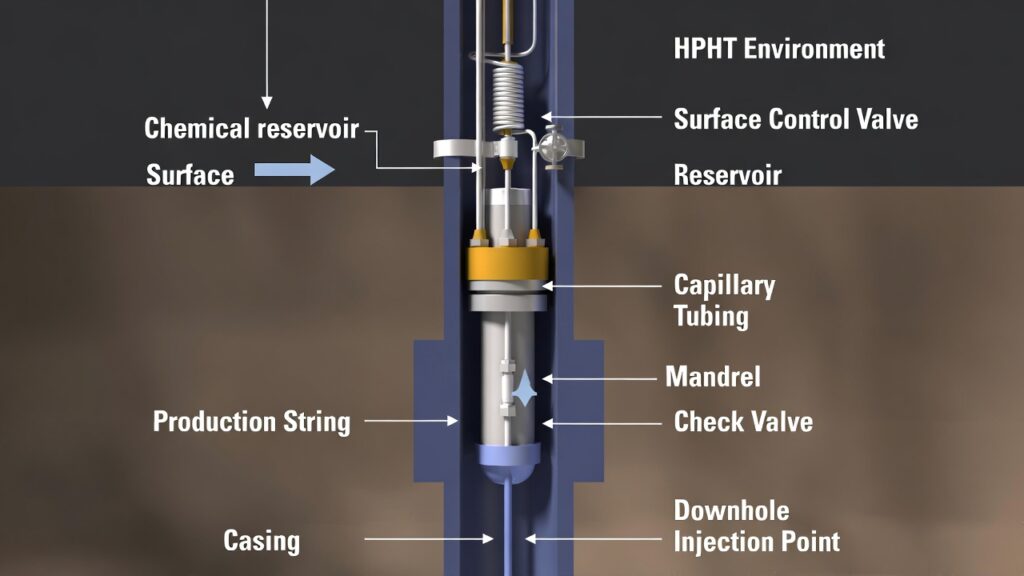
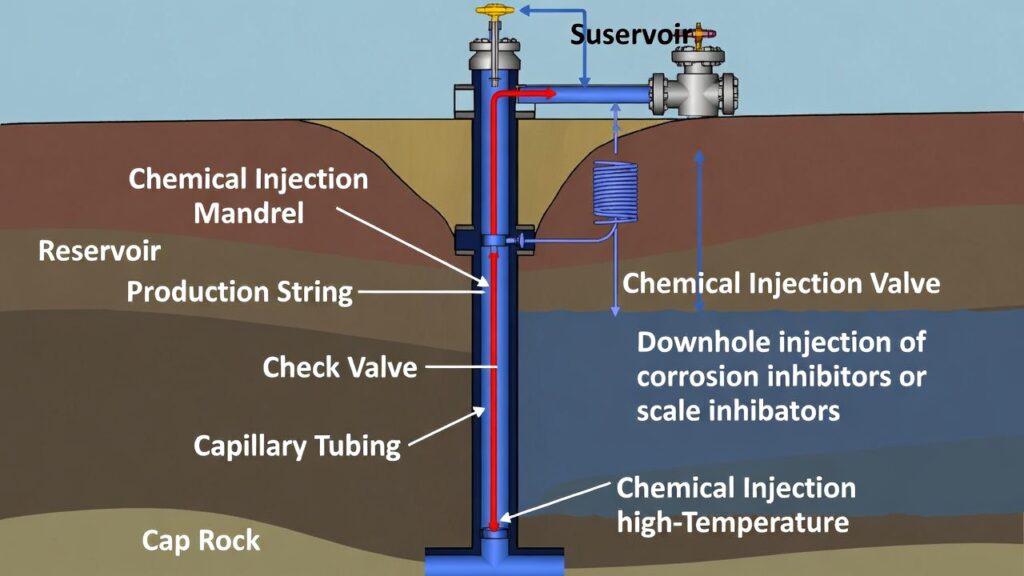
Diagram: Downhole Chemical Injection System in HPHT Well
Downhole Chemical Injection Schematic
Capillary tubing strapped to production string for downhole injection of inhibitors at the reservoir. Shows mandrel, check valve, and surface control. Source: SLB Well Intervention (adapted).
Optimization Best Practices
- Material Selection: Alloy 718 or 825 for tubing in corrosive HPHT.
- Monitoring: Fiber-optic DTS for injection rate verification.
- Simulation: Reservoir models predict chemical distribution.
- Regulations: Comply with API RP 14C and NORSOK for system design.
Downhole injection is a game-changer for HPHT flow assurance enabling proactive optimization from the reservoir.
What downhole injection challenges have you faced?
Comment below — share this post!
Stay tuned for more HPHT, subsea integrity, and flow assurance insights. Gig ’em!
#DownholeInjection #HPHTWells #FlowAssurance #SubseaEngineering #OffshoreEnergy #GigEm #AggieEngineers