Oko Immanuel
Petroleum / Subsea Engineer
Founder, Offshore Pipeline Insight
Texas A&M Alumnus
March 08, 2026
In 2026, electrification of land drilling rigs has moved from pilot projects and ESG marketing to a core operational strategy for major shale operators and drilling contractors. Driven by rising fuel costs, stricter emissions regulations (EPA, state-level methane rules), corporate net-zero commitments, and the availability of renewable grid power in key basins, the industry is rapidly transitioning from 100% diesel-powered rigs to hybrid (diesel, battery, grid) and in select locations full grid-electric systems.
This technical article examines the power system options, grid connection requirements, CO₂ reduction potential, and engineering/integrity implications for land rigs in 2026.
1. Power System Comparison: Diesel vs Hybrid vs Full ElectricDiesel-only (legacy baseline)
- Primary power: 4–6 diesel generator sets (1,000–2,000 kW each)
- Fuel consumption: 800–1,500 gal/day (depending on rig size and activity)
- CO₂ emissions: ~200–350 metric tons CO₂ per rig per year (average)
- Pros: Proven, mobile, no grid dependency
- Cons: High fuel cost, emissions, noise, maintenance
Hybrid (diesel + battery + grid tie when available)
- Primary power: Diesel gen sets + 500 kWh–2 MWh lithium-ion battery bank, grid connection
- Operation: Batteries handle peak loads (top drive, drawworks), diesel runs baseload or charges batteries, grid supplies when tied in
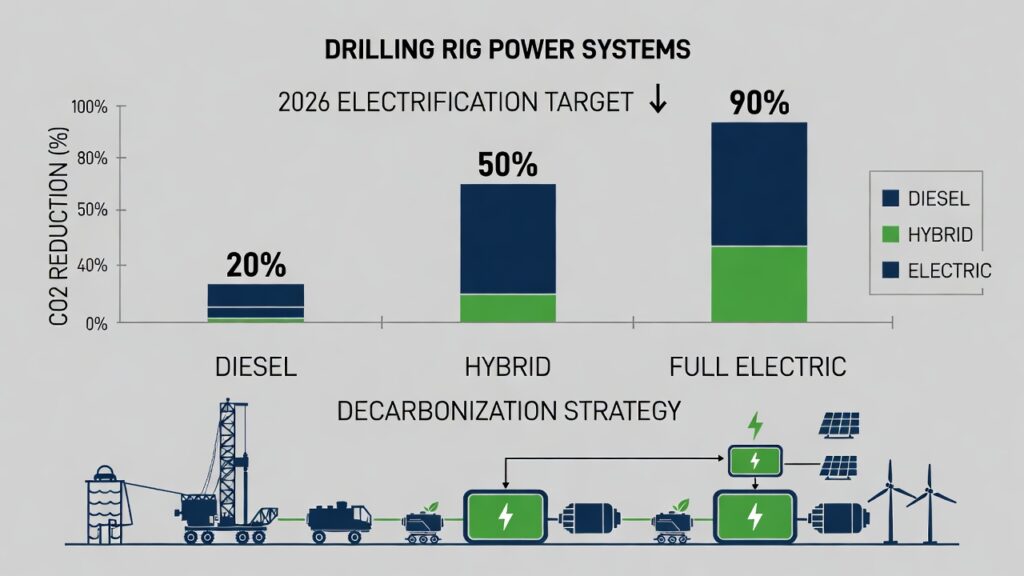
- CO₂ reduction: 40–70% vs diesel-only (peak shaving + grid power)
- Pros: Fuel savings 30–50%, lower emissions, spinning reserve, black-start capability
- Cons: Higher upfront cost, battery thermal management, weight/space on rig
Full electric / grid-tied (emerging in 2026)
- Primary power: Direct grid connection (13.8 kV or 34.5 kV) + backup diesel or battery
- CO₂ reduction: 80–95% when grid is >70% renewable/nuclear (e.g., Texas ERCOT mix)
- Pros: Lowest emissions and fuel cost, quiet operation, high reliability
- Cons: Grid availability limited, high infrastructure cost (substation, transmission line), permitting delays
This diagram compares the three power system architectures (diesel, hybrid, full electric) with typical components and energy flow:
2. CO₂ Reduction Impact by Rig Type (2026 Estimates)
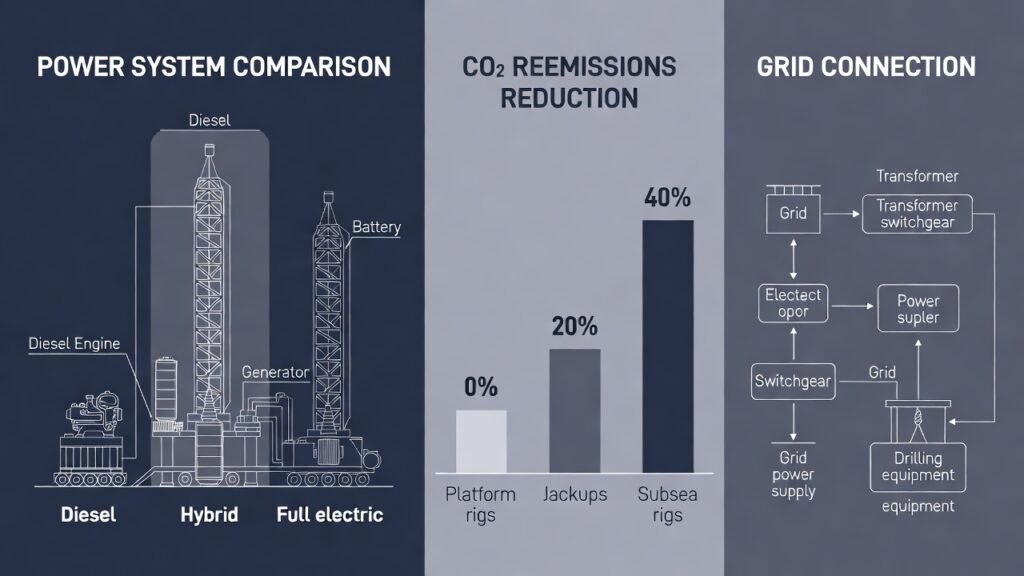
Industry benchmarks and operator reports (Pioneer, EOG, Nabors, Helmerich & Payne) show the following approximate CO₂ reductions per rig-year when electrified:
- Diesel-only: Baseline 0% reduction (~250 tCO₂e/rig-year)
- Hybrid (battery + diesel): 40–60% reduction (~100–150 tCO₂e saved)
- Grid-tied + hybrid backup: 70–90% reduction (~175–225 tCO₂e saved)
- Full grid-electric (high-renewable grid): 85–95% reduction
This bar chart visualizes CO₂ reduction potential by rig power type in 2026:
4. Engineering & Integrity Implications in 2026
- Power quality: Harmonics from variable frequency drives (VFDs) on drawworks/top drive — requires active harmonic filters.
- Cable management: Flexible high-voltage cables on walking rigs must withstand repeated bending/fatigue — similar to offshore dynamic cables.
- Battery safety: Thermal runaway risk; requires fire suppression, ventilation, and BMS (battery management system) monitoring.
- Integrity crossover: Electrification reduces diesel engine vibration → lower fatigue on rig structure/mast, but introduces new electrical insulation and grounding risks.
Closing Thoughts
Land rig electrification in 2026 is no longer optional it’s a competitive necessity. Hybrid systems deliver 40–70% CO₂ reduction today, while grid-tied rigs in renewable-rich areas (Texas, Oklahoma) achieve 80–90%. The transition brings engineering opportunities (power quality, cable fatigue, battery integration) and integrity synergies with offshore practices (dynamic cable monitoring, digital twins).
For drilling engineers and operators, 2026 is about balancing emissions goals with operational reliability and cost.
What electrification projects or challenges are you seeing in your operations?
Share in the comments!
Oko Immanuel
Petroleum / Subsea Engineer
Founder, Offshore Pipeline Insight
Texas A&M Alumnus.
March 08, 2026