By Oko Immanuel, M.Eng
Founder, Offshore Pipeline Insight
March 25, 2026
Recent escalations in the Middle East, particularly involving Iran, have triggered sharp volatility in global oil markets. Disruptions and risk premiums have pushed Brent crude well above $100–$115 per barrel in March 2026, directly driving up gasoline prices at the pump and reigniting consumer focus on energy affordability.
Brent crude oil price surge (Feb 25 – Mar 24, 2026): Oil prices remain well above pre-conflict levels, with sharp spikes tied to Middle East developments.
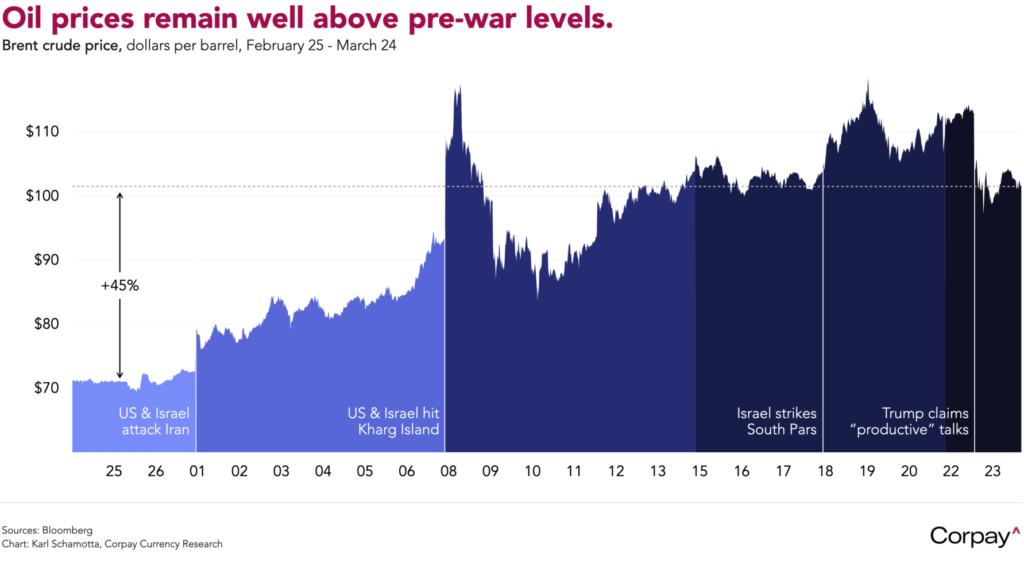
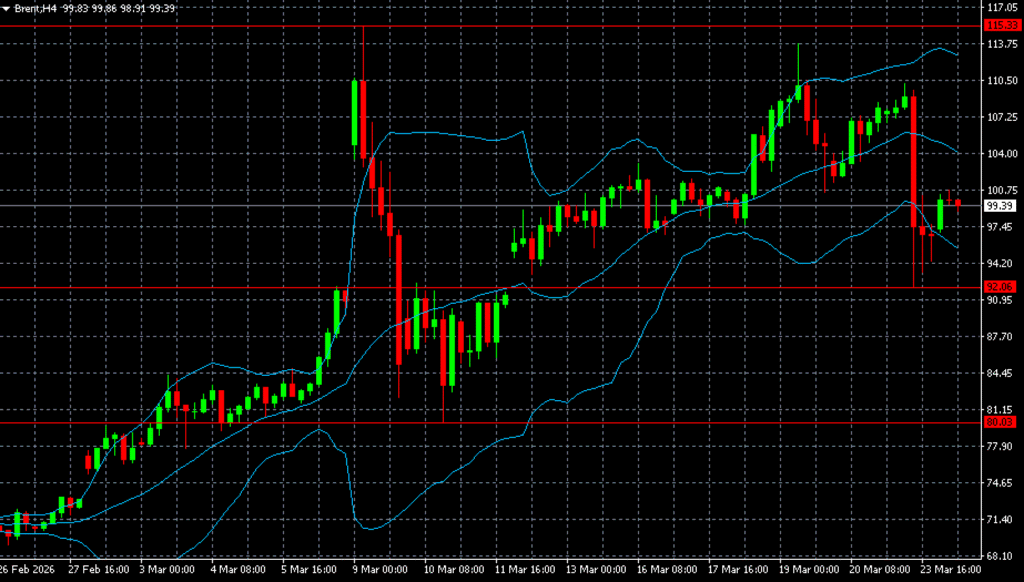
Daily Brent crude price chart (late Feb – late Mar 2026) showing the rapid climb amid geopolitical tensions.
Gasoline Price Impact on Consumers
- U.S. national average regular gasoline has risen ~27–30% since late February, reaching $3.45–$3.72 per gallon(highest in nearly three years in many areas).
- Europe: Petrol up ~7–8%, with diesel seeing even steeper increases.
These hikes translate to hundreds of extra dollars per year for the average driver, hitting hardest for those with fuel-inefficient vehicles.
The Direct Boost to EV & Hybrid Interest
High gasoline prices have historically acted as a catalyst for electrified vehicle consideration — and early 2026 data shows the pattern repeating strongly.
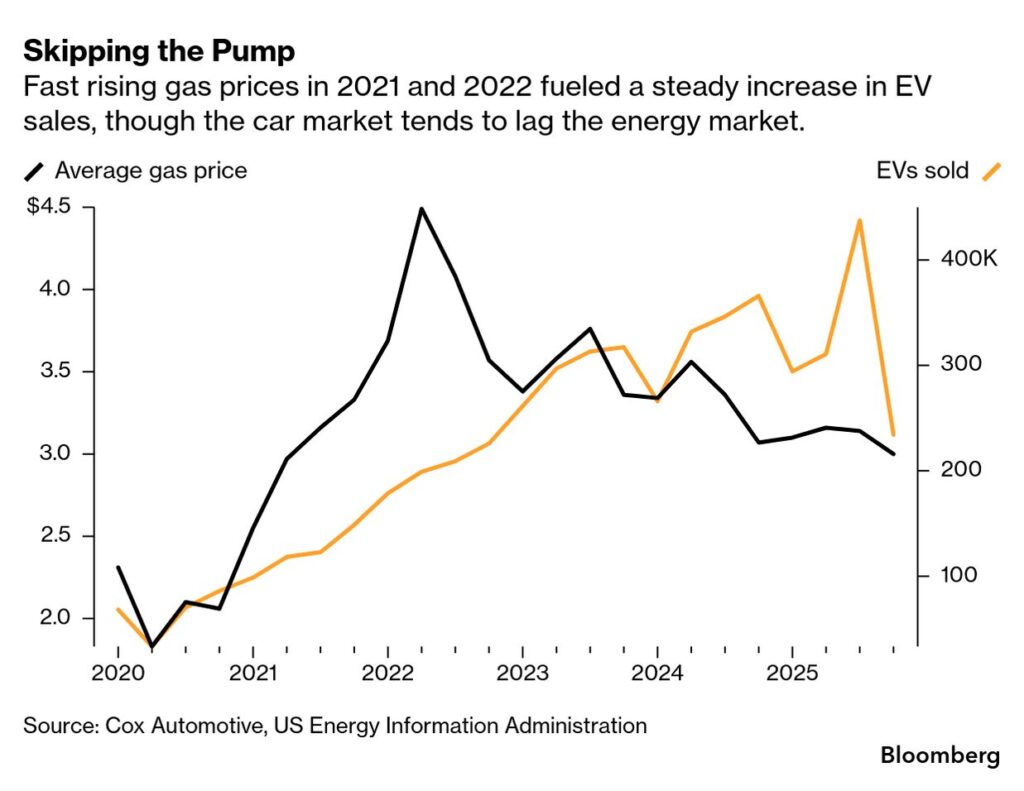
Historical correlation: Gas prices vs. EV sales (2020–2025). Fast-rising gas prices in 2021–2022 fueled steady growth in EV sales, though the broader car market tends to lag energy market shifts.
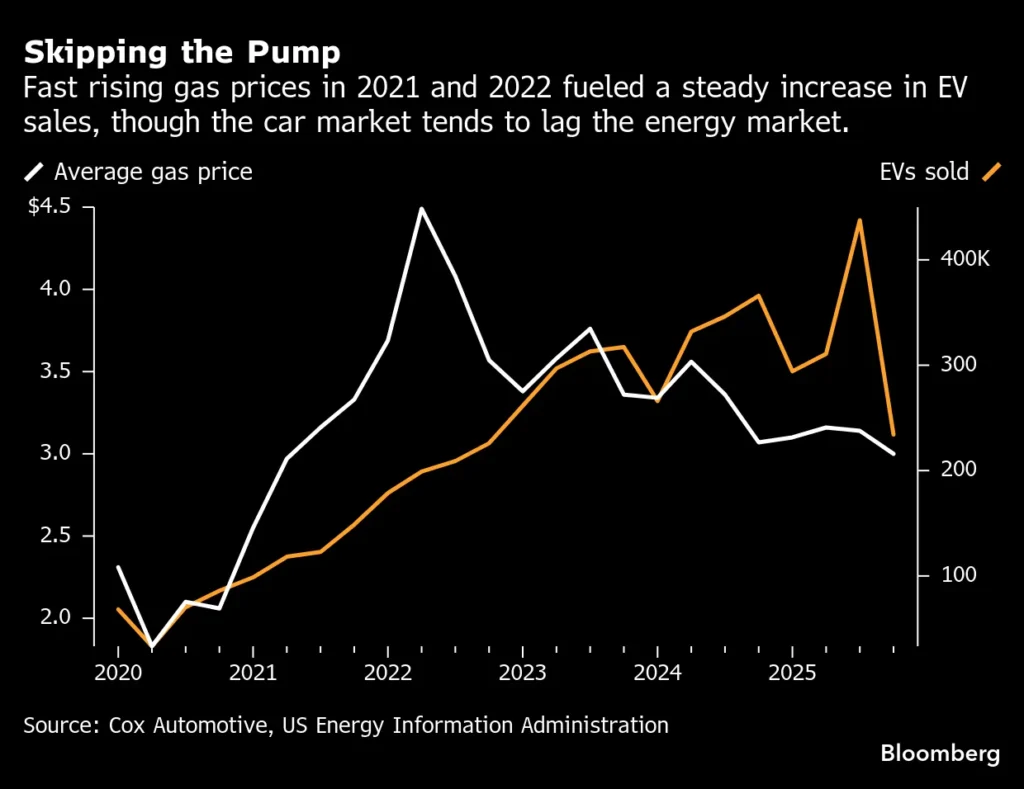
Updated view of gas prices and EV sales trends highlighting how sustained high fuel costs drive consumer shifts toward electric options.Key observations in March 2026:
- Online searches for EVs and hybrids jumped 15–20% since the conflict intensified.
- Electrified vehicle consideration rose from ~20.7% to 22.4–23.8% of all vehicle research activity (Edmunds data).
- Used EV inquiries and test-drive interest have increased noticeably, especially in regions with the sharpest pump-price rises.
While new EV sales growth has slowed in some markets due to higher upfront costs and policy changes, the current surge is clearly driving consideration and long-term interest particularly for hybrids and plug-in hybrids as immediate fuel-saving option
Geopolitical Reality Check
The Iran-related disruptions (including risks around the Strait of Hormuz, which handles ~20% of global oil and LNG) underscore a broader truth: heavy reliance on oil exposes consumers and economies to unpredictable geopolitical shocks.
This volatility strengthens the case for energy diversification:
- EVs insulate drivers from oil price swings (electricity costs are more stable and often cheaper).
- It highlights the strategic value of a balanced energy mix — including reliable natural gas for power generation and continued investment in offshore infrastructure.
Implications for the Offshore Energy Sector
As consumers lean toward EVs amid affordability pressures, the ripple effects reach subsea pipelines and offshore developments:
- Rising electricity demand will require stable natural gas supply → more need for offshore gas tiebacks, subsea compression, and flow assurance.
- Geopolitical risks may encourage diversified, resilient supply chains favoring long-term projects in stable basins like the Equatorial Margin (Namibia, Suriname, Brazil).
- Subsea technologies that support low-carbon or hybrid energy systems gain strategic importance.
Energy affordability and geopolitics are deeply linked. When gasoline prices spike due to distant conflicts, consumers feel the pain immediately and many respond by exploring EVs and hybrids as a practical hedge.Sustained high oil prices ($100+/bbl) could accelerate this shift, even if the full sales impact takes months to materialize. For the offshore sector, it reinforces the need for reliable, flexible infrastructure that supports both traditional hydrocarbons and the evolving electrified future.
What do you think, will these price surges lead to a meaningful acceleration in EV adoption in 2026, or is it mostly short-term noise?
Feel free to share your take or any specific angles you want to expand.
Stay tuned to Offshore Pipeline Insight for more on how geopolitics, energy affordability, and subsea/offshore developments intersect.
Oko Immanuel, M.Eng
Founder & Lead Analyst
Offshore Pipeline Insight
https://offshorepipelineinsight.com