By Oko Immanuel
Published: February 20, 2026
Flow assurance ensures reliable multiphase transport (oil, gas, water, solids) from reservoir to processing facilities without blockages or downtime. In HPHT subsea pipelines (>10,000 psi / 150°C), extreme conditions amplify risks—rapid cooldowns during shutdowns, high pressures promoting hydrates, and thermal gradients triggering wax/asphaltene deposition. With longer deepwater tiebacks and emerging CO₂/hydrogen blends in 2026, these issues demand smarter prevention.
From recent industry insights (OTC 2026 sessions on modeling/chemicals, AI-driven hydrate detection, and digital replicas for inter-field flowlines), here’s a breakdown of key challenges and solutions.
1. Hydrate Formation: The Silent Blockage RiskHydrates form when water + gas molecules crystallize under high pressure and low temperature (e.g., cold seawater ~4–15°C). In HPHT systems, throttling or shutdowns create ideal conditions, leading to plugs that halt production.
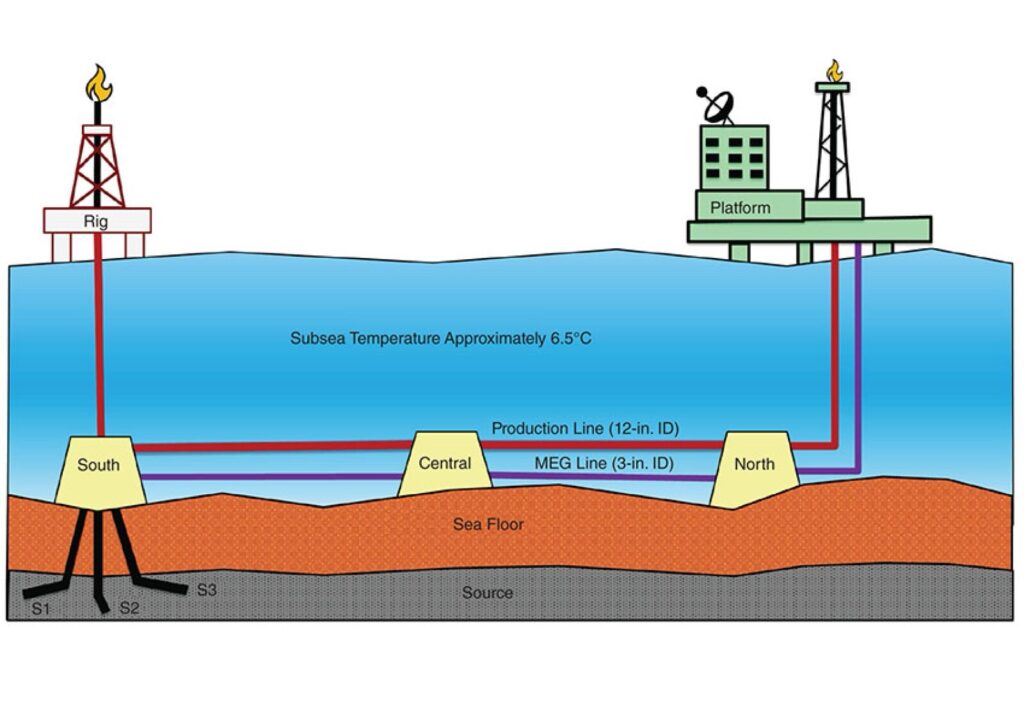
(Above: Diagram of a subsea production system with hydrate plug remediation—showing production lines, MEG injection, and cold seabed temperatures ~6.5°C.)2026 Advancements:
- AI/ML workflows for early detection/prediction (e.g., real-time telemetry processing to forecast risk before blockages).
- Kinetic inhibitors or low-dosage hydrate inhibitors (LDHIs) over traditional thermodynamic ones like MEG for cost/environmental benefits.
Practical Tips:
- Model with tools like OLGA/PIPESIM during FEED.
- Use induction properties-based design to mitigate formation (as in recent TotalEnergies approaches).
2. Wax/Paraffin Deposition: Thermal Gradient EnemyWax precipitates as temperature drops below cloud point, building layers that restrict flow—worse in long HPHT tiebacks with cooldown risks.
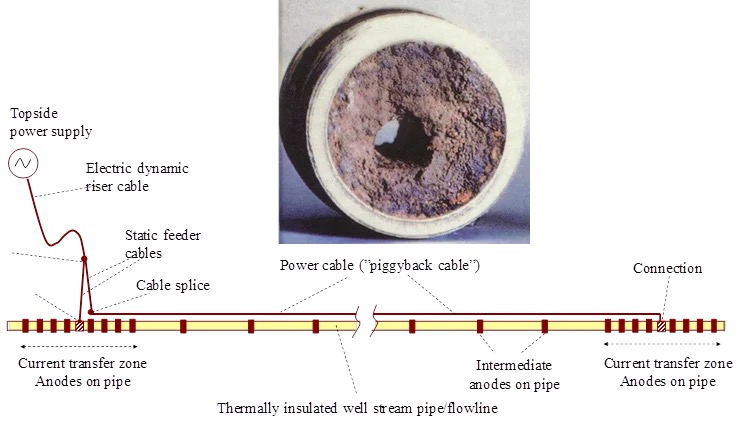
(Above: Cross-section illustration of wax deposition in an oil pipeline, showing buildup reducing inner diameter.)
Solutions:
- Chemical inhibitors (pour point depressants) + pigging programs.
- Machine learning models (e.g., for Eagle Ford-style paraffin prediction) to optimize injection and avoid interventions.
3. Asphaltene, Scale, and Slugging
Asphaltenes deposit under pressure/temperature changes; scales form from mineral precipitation; slugging causes surges in multiphase flow.
HPHT Ties: High pressures accelerate deposition; transient ops (startup/shutdown) trigger slugs.
2026 Innovations:
- Non-intrusive monitoring (AI image recognition, thermal profiling).
- Ecofriendly chemicals and optimized injection.
4. Active Heating and Insulation Strategies
To combat cooldowns in HPHT/deepwater:
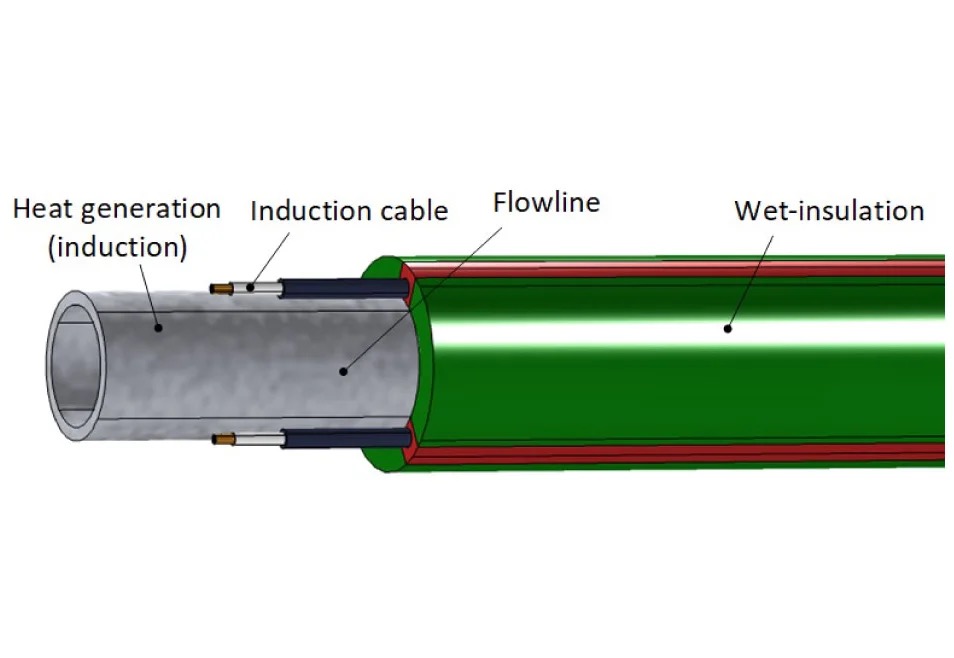
(Above: Direct Electrical Heating (DEH) system diagram—piggyback cable generates resistive heat along the flowline for continuous or spot heating.)
Key Tech:
- DEH or trace heating for wax/hydrate prevention.
- Pipe-in-pipe (PiP) with wet insulation.
- Digital twins for real-time thermal behavior simulation.
Quick Engineer Tips for 2026
- Early Modeling: Use steady-state/transient simulations (PVT data crucial) to identify risks.
- Hybrid Approaches: Combine chemicals, insulation, and AI prediction for minimal intervention.
- Energy Transition Angle: Adapt strategies for CO₂ (corrosion/hydrates) or hydrogen (embrittlement) transport.
- Monitoring: Deploy digital replicas (as in recent HPHT inter-field studies) for predictive integrity.