By Oko Immanuel, M.Eng – Founder, Offshore Pipeline Insight
March 22, 2026
Guyana’s Stabroek Block continues to drive massive offshore activity in 2026. ExxonMobil (operator, 45% stake), Hess (30%), and CNOOC (25%) are ramping production while Chevron is advancing its own deepwater portfolio in the region. Subsea infrastructure — especially HPHT-rated tiebacks, manifolds, and flow lines is the backbone enabling rapid field development and tie-ins.
Guyana Subsea Infrastructure Details (Stabroek Block)
ExxonMobil has built one of the world’s most advanced deepwater subsea networks.
- Current production: ~650,000–700,000 b/d gross (2026), targeting >1 MMb/d by late 2020s.
- Key FPSOs: Liza Destiny (Phase 1), Liza Unity (Phase 2), Prosperity (Payara), ONE GUYANA (Uaru), and upcoming FPSOs (Yellowtail, Whiptail, etc.).
- Subsea highlights:
- HPHT-rated equipment : Trees, manifolds, jumpers, and flow lines designed for high-pressure (15K–20K psi) and high-temperature conditions.
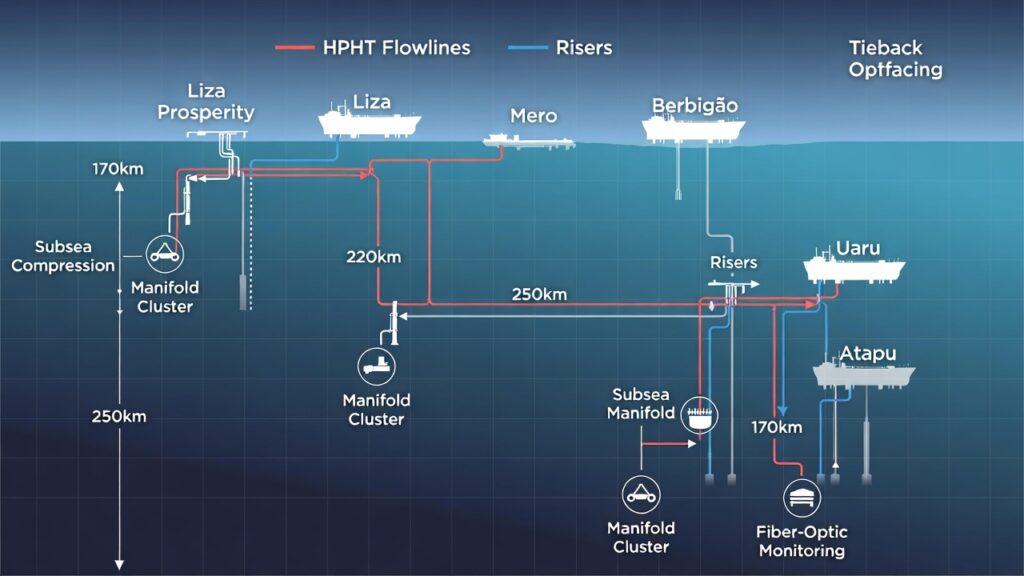
- Tieback architecture : Multiple wells per manifold cluster, with long-distance tiebacks (up to 100+ km) to FPSOs using insulated flow lines.
- Subsea boosting/compression : Early adoption of subsea pumps to maintain flow from distant wells.
- Monitoring : Fiber-optic DTS/DAS along flow lines for real-time integrity and leak detection; digital twins for production optimization.
- Export — No subsea export pipelines yet all production processed on FPSOs, then offloaded to tankers.
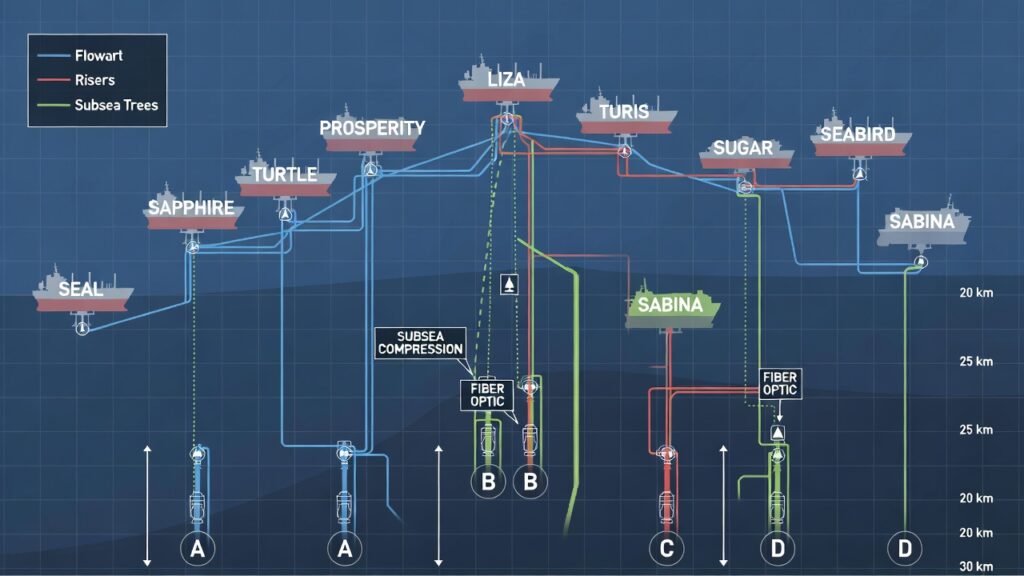
Figure 1: Stabroek Block Subsea Network Schematic
(image: Map/schematic showing FPSOs (Liza, Prosperity, Uaru, etc.), subsea manifold clusters, HPHT flow lines, risers, and tieback distances, with callouts for subsea compression and fiber-optic monitoring.)
Chevron Guyana Trends in 2026
Chevron entered Guyana via the Stabroek Block (25% stake acquired in 2023 from Hess) and is now a key player alongside ExxonMobil.
- Production contribution : Chevron’s net share is ~150,000–175,000 b/d in 2026 (growing with new FPSOs).
- Offshore tie-ins : Chevron benefits from existing subsea infrastructure (manifolds, flowlines) and contributes to future expansions.
- Subsea focus : Expertise in deepwater tiebacks (from GoM) applied to Guyana. Emphasis on HPHT flow assurance, subsea integrity monitoring, and potential subsea boosting for longer-distance tiebacks.
- Strategic moves : Chevron is leveraging Guyana production to boost cash flow while advancing CCS and low-carbon initiatives (Bayou Bend, Gorgon-style projects).
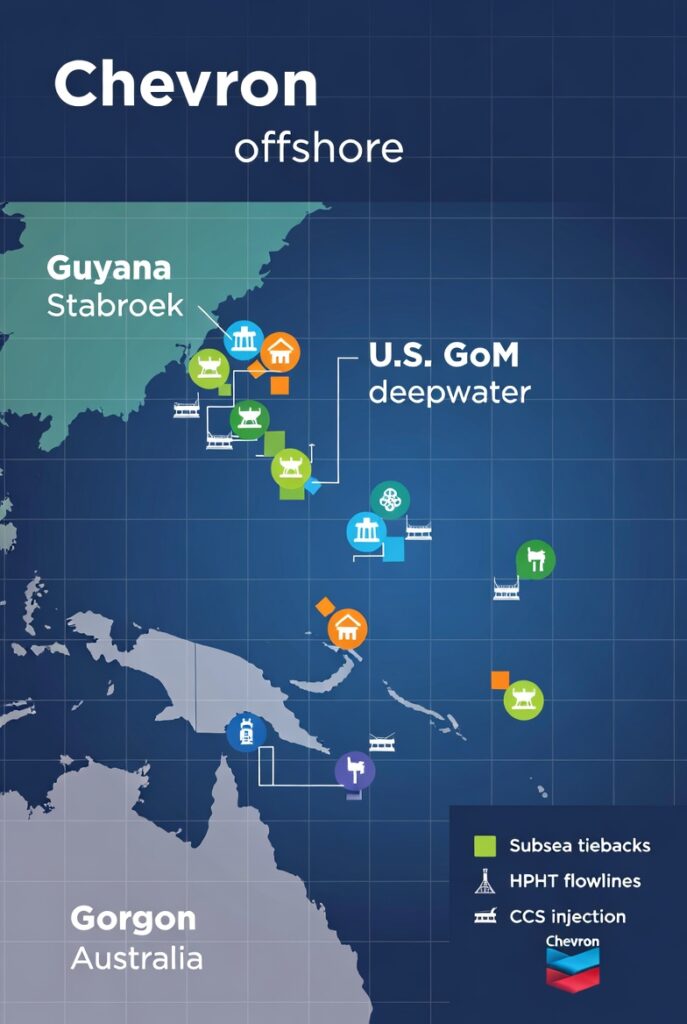
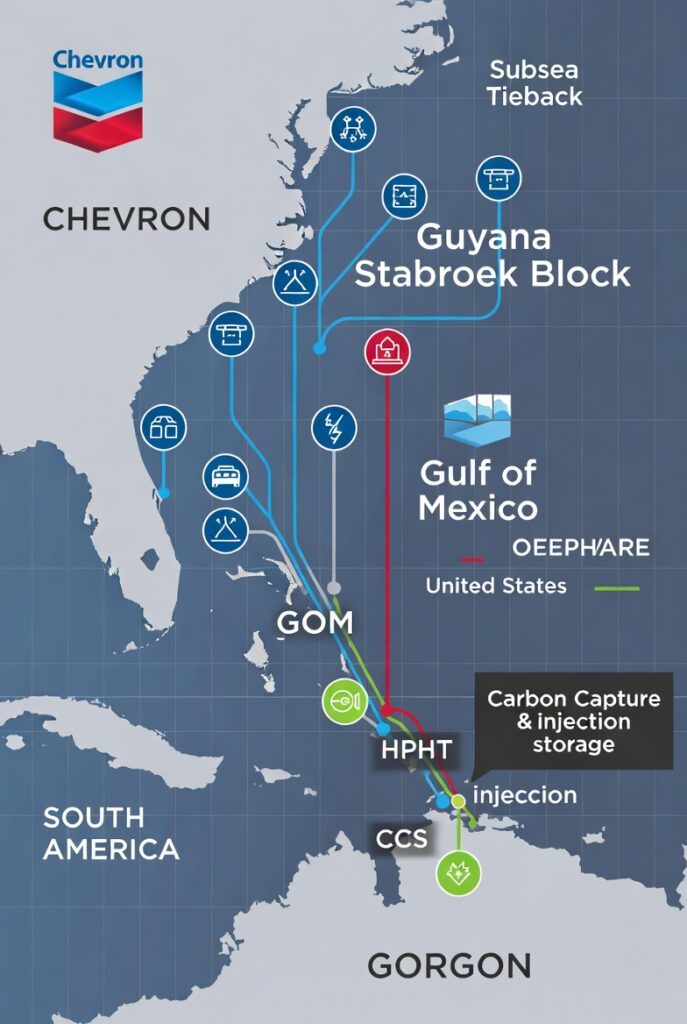
Figure 2: Chevron Guyana & Global Offshore Tie-Ins
( image: Map showing Chevron’s key offshore assets (Guyana Stabroek, U.S. GoM deepwater, Gorgon Australia), with icons for subsea tiebacks, HPHT flow lines, and CCS injection.)
More Offshore Tie-Ins in 2026Guyana’s rapid development is driving new subsea tie-in trends:
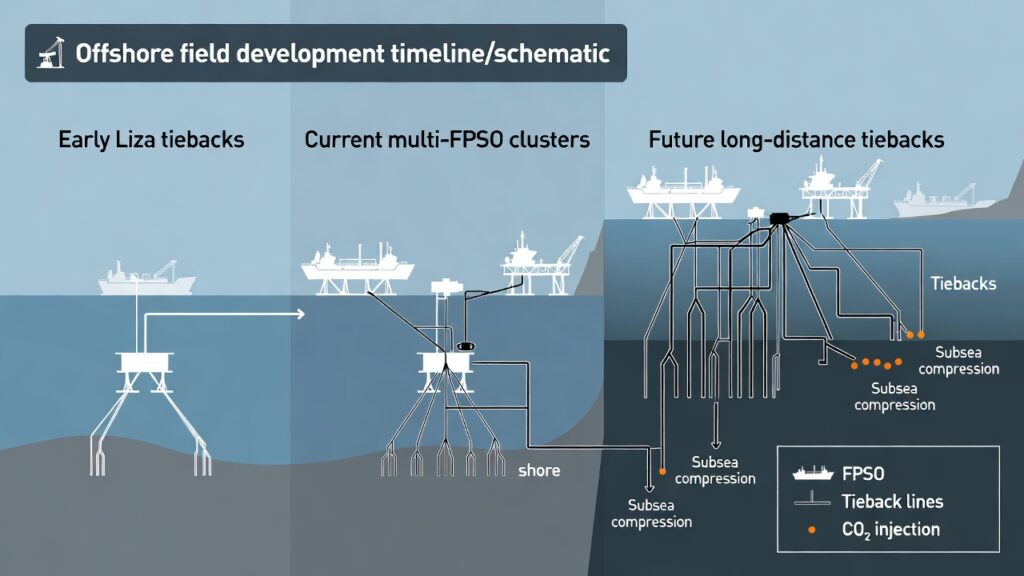
- Long-distance tiebacks : Future fields (Whiptail, Uaru extensions) will use 80–120 km insulated flow lines.
- Subsea compression : Potential deployment to sustain flow from distant reservoirs.
- CCS potential : Evaluating depleted reservoirs for CO₂ injection via subsea wells/manifolds.
- Hybrid opportunities : Floating wind pilots in Atlantic Margin could share subsea cables/power with Guyana platforms.
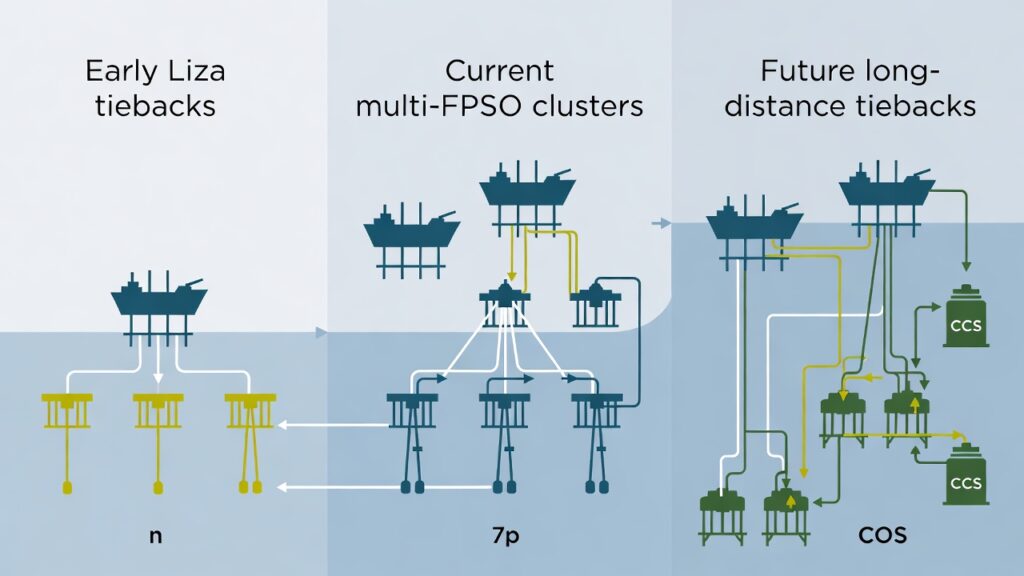
Figure 3: Guyana Offshore Tie-Back Evolution
( image: Timeline/schematic showing progression from early Liza tiebacks → current multi-FPSO clusters → future long-distance tiebacks with subsea compression and CCS.)
Bottom Line
Guyana’s Stabroek Block subsea infrastructure is a showcase of HPHT tiebacks, manifolds, flow lines, and monitoring enabling rapid production growth. Chevron is leveraging its stake for cash flow while applying GoM subsea expertise. Offshore tie-ins are evolving toward longer distances, compression, and CCS integration.Engineers: Which Guyana subsea tech stands out HPHT flow lines, subsea boosting, or fiber-optic monitoring? Comment or connect on LinkedIn.Stay sharp out there, brothers. Guyana is redefining deepwater subsea.
Oko Immanuel
Subsea Engineering Specialist | Offshore Pipeline Insight