By Oko Immanuel, M.Eng in Subsea Engineering.
Published: February 20, 2026
In a significant development for global energy trade, Indonesia has committed to importing up to $15 billion worth of US energy products primarily coal, crude oil, and natural gas as part of a new bilateral trade agreement announced this week. The deal includes a 19% tariff on certain Indonesian goods entering the US, in exchange for preferential access to American energy supplies and reduced barriers on US exports to the world’s fourth-most populous nation.
The agreement, finalized after high-level talks in early 2026, aims to strengthen economic ties, diversify Indonesia’s energy sources away from traditional suppliers (e.g., Middle East and Australia), and support the US push for energy dominance under current policy. Indonesia, one of Asia’s fastest-growing economies and a major coal exporter itself, will ramp up imports of US thermal coal, LNG, and crude to fuel its power generation, industrial growth, and domestic refining capacity.
This is a clear win for US producers: increased export volumes to Southeast Asia’s largest market could help offset softer demand elsewhere and provide a stable outlet for Gulf of Mexico, Permian, and Appalachian basin output.
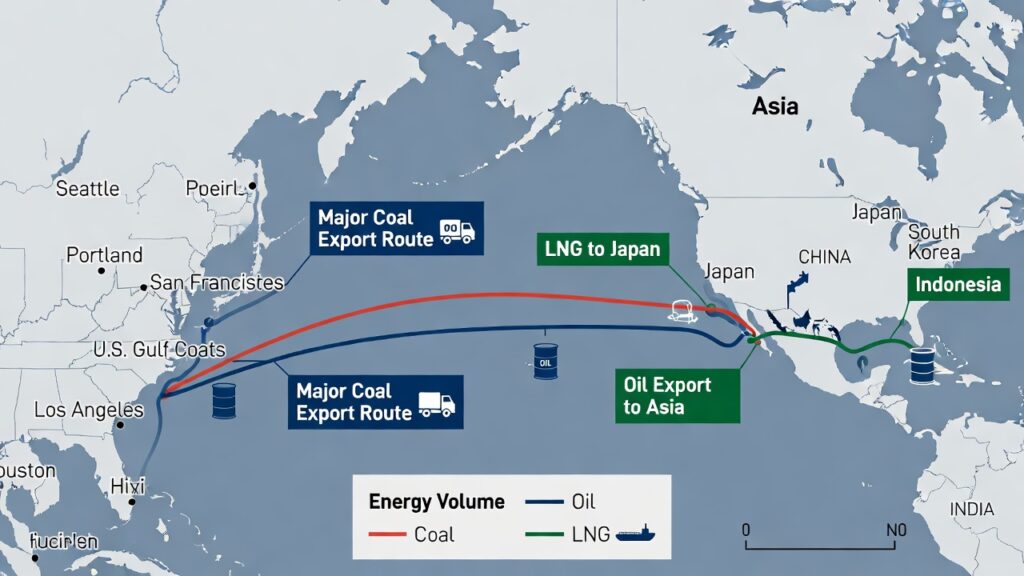
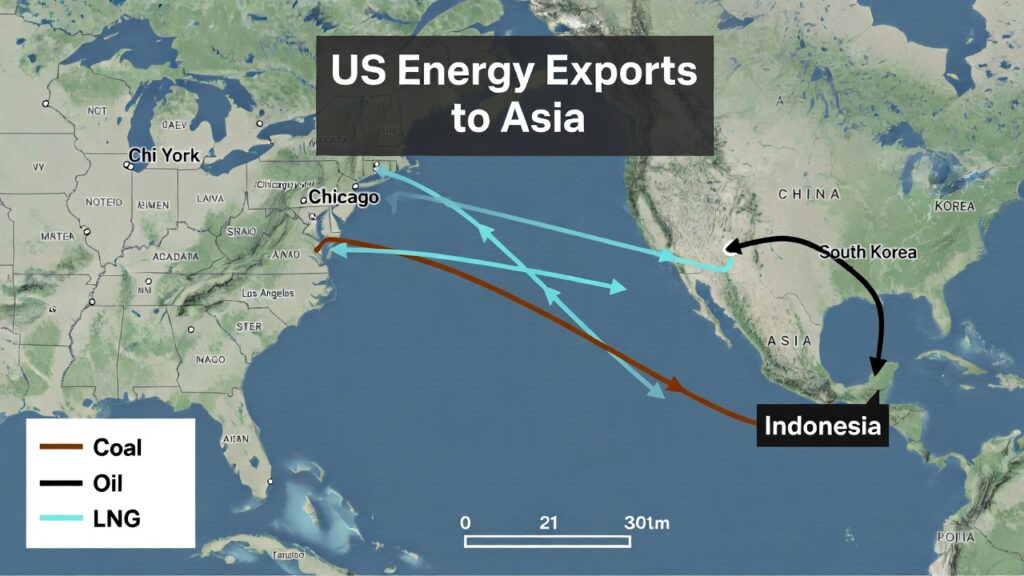
(Map highlighting US energy export routes to Asia, with Indonesia marked as a key new destination for coal, oil, and LNG shipments.)
Key Details of the Deal
- Value: Up to $15 billion in US energy imports over the initial term (exact timeframe not fully disclosed, but multi-year commitment expected).
- Products: Primarily thermal coal (for power plants), crude oil (for refining), and liquefied natural gas (LNG) to support Indonesia’s growing electricity demand and industrial needs.
- Tariff component: Indonesia accepts 19% tariffs on select exports to the US (likely textiles, electronics, palm oil derivatives), in return for easier US energy access and potential tariff relief on other goods.
- Strategic context: Aligns with US efforts to counter China’s influence in Southeast Asia and secure long-term markets for American fossil fuels amid global transition pressures.
Implications for Offshore Energy and Subsea Projects.
This trade pact has positive ripple effects for the offshore sector:
- Boost to US Gulf production: Higher export demand could accelerate deepwater developments in the Gulf of Mexico, including HPHT fields and tiebacks. More stable export outlets improve project economics and encourage FID on high-cost subsea infrastructure.
- LNG & gas export growth: Increased US LNG shipments to Indonesia support Gulf Coast liquefaction plants and associated offshore gas gathering pipelines. Flow assurance strategies (e.g., hydrate inhibitors, insulation) remain critical for reliable long-haul deliveries.
- Supply chain stability: While the deal reduces some geopolitical risk exposure for US exporters (diversifying away from Middle East volatility), it also highlights the need for resilient offshore systems robust cathodic protection, digital twins for integrity monitoring, and engineered designs that withstand market swings.
- Global demand signal: Asia’s energy hunger continues to drive upstream activity. For subsea engineers, this reinforces opportunities in gas export infrastructure, both in US waters and potential future tie-ins in Southeast Asia.
The Indonesia-US energy pact is a pragmatic reminder: even in a transitioning world, fossil fuel demand in emerging economies remains strong, creating sustained opportunities for reliable, high integrity offshore and pipeline developments.
How do you see growing US-Asia energy trade affecting offshore project pipelines in the coming years? Share your thoughts in the comments let’s discuss supply chain, flow assurance, and integrity angles!
Share on LinkedIn or X for energy trade and offshore pros. Subscribe for HPHT series updates, flow assurance insights, integrity management tips, and weekly energy news roundups.
(Next: More on US-Iran tensions or Gulf lease sale details stay tuned!)