By Oko
Founder, Offshore Pipeline Insight
March 13, 2026
The maritime industry faces a profound fuel dilemma in its race to net-zero emissions by or around 2050. Traditional fossil fuels like very low sulfur fuel oil (VLSFO) remain cheap and abundant, yet they lock in high greenhouse gas (GHG) emissions. Emerging zero or near-zero (ZNZ) fuels green ammonia, e-methanol, sustainable biofuels, and advanced variants offer true decarbonization but come with steep costs, supply constraints, infrastructure gaps, and the classic “chicken-and-egg” problem: limited demand slows production, and vice versa.
Amid regulatory pressure from the IMO’s evolving Net-Zero Framework (drafted in 2025, with adoption and full implementation timelines extending into the late 2020s and beyond), shipowners must balance short-term compliance with long-term sustainability. Efficiency gains alone fall short of deep cuts, while fuel switches demand massive investment. Enter modern wind-assisted propulsion a proven, low-risk bridge technology that revives wind power in high-tech forms to slash fuel use by 5–30% (or more on optimized routes), buying time and reducing costs while the fuel transition matures.
The Fuel Dilemma: Fossil Lock-In vs. Green Premiums Conventional marine fuels emit ~90–95 gCO₂eq/MJ well-to-wake. Achieving IMO checkpoints (20–30% reduction by 2030, 70–80% by 2040 from 2008 levels) requires a rapid shift to ZNZ options.
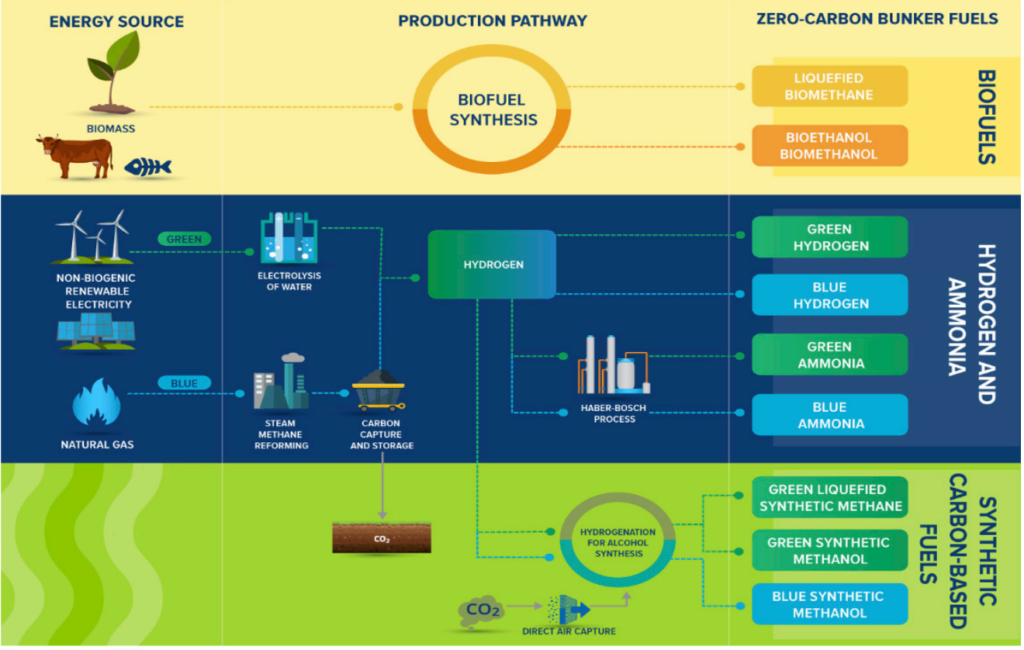
This diagram illustrates the production pathways for zero-carbon bunker fuels, from biomass to biofuels, renewable electricity to green hydrogen/ammonia/methanol, and synthetic options highlighting the shift needed to reach net-zero by 2050.Another view of the progression:
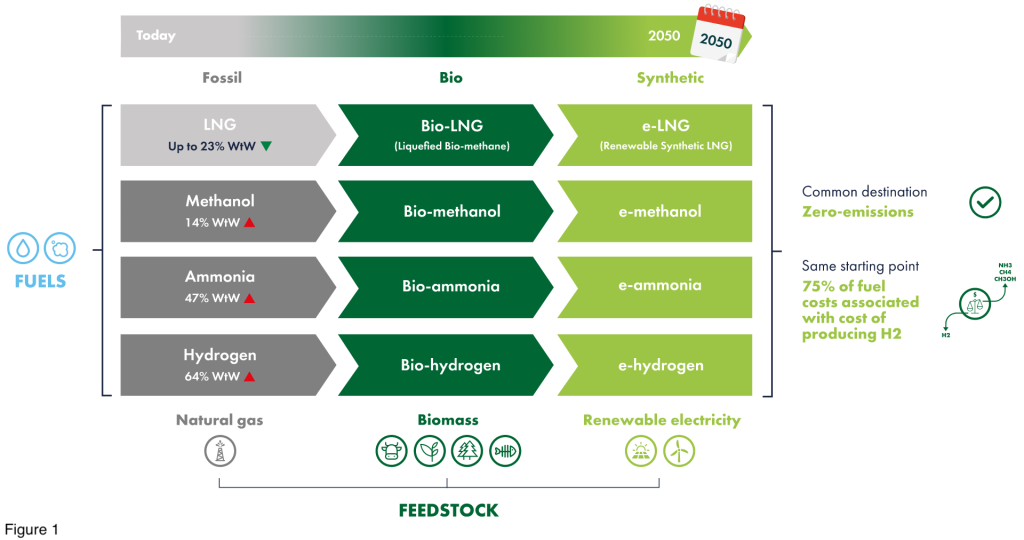
This infographic shows the fuel evolution timeline from fossil baselines (LNG, methanol, ammonia) through bio-variants to synthetic e-fuels, with green hydrogen production driving ~75% of costs and creating the major price gap.The IMO regulatory timeline underscores the urgency:
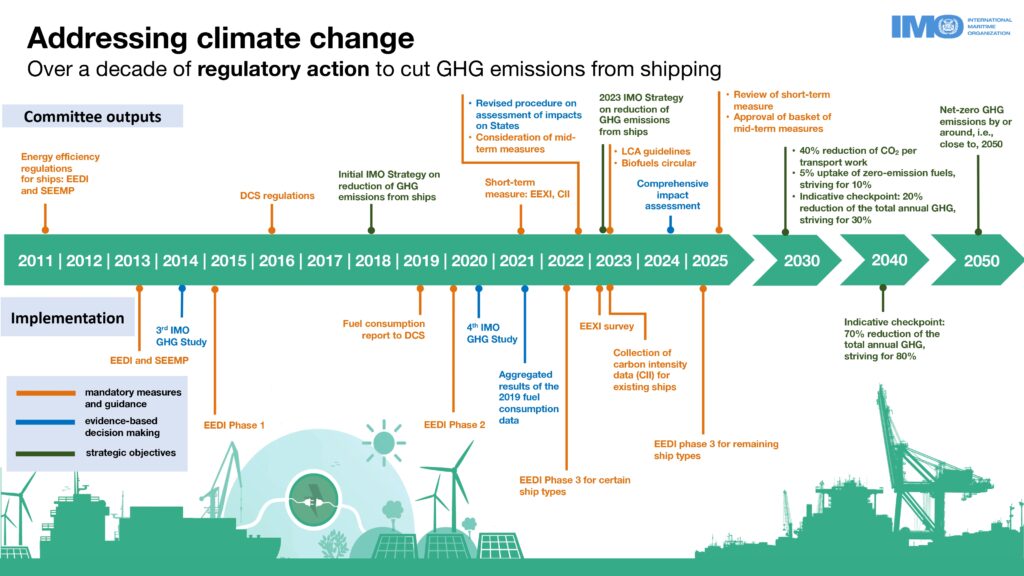
Over a decade of IMO actions leading to net-zero checkpoints by 2050, including the 2023 Strategy, mid-term measures, and progressive reductions.Key contenders today:
- Biofuels (bio-methanol, bio-LNG): Drop-in compatible, lower emissions, but feedstock limits and cross-sector competition.
- Green ammonia/e-methanol: Scalable for deep-sea, near-zero combustion (with NOx controls for ammonia), but production lags and prices high without strong incentives.
- Transitional fuels like LNG: Up to 23% well-to-wake reductions, established bunkering, dominant in newbuilds—but not long-term net-zero compliant.
The Efficiency Leap: Modern Wind-Assisted Propulsion as the Game-ChangerWind power never truly left shipping—it’s just evolved. Modern wind-assisted systems harness free, abundant wind energy to supplement engines, cutting fuel burn and emissions without replacing them entirely.Leading technologies in 2026:
- Flettner rotors (rotor sails): Tall spinning cylinders using the Magnus effect for thrust. Proven on tankers and bulkers, with savings up to 20–30% in good wind.
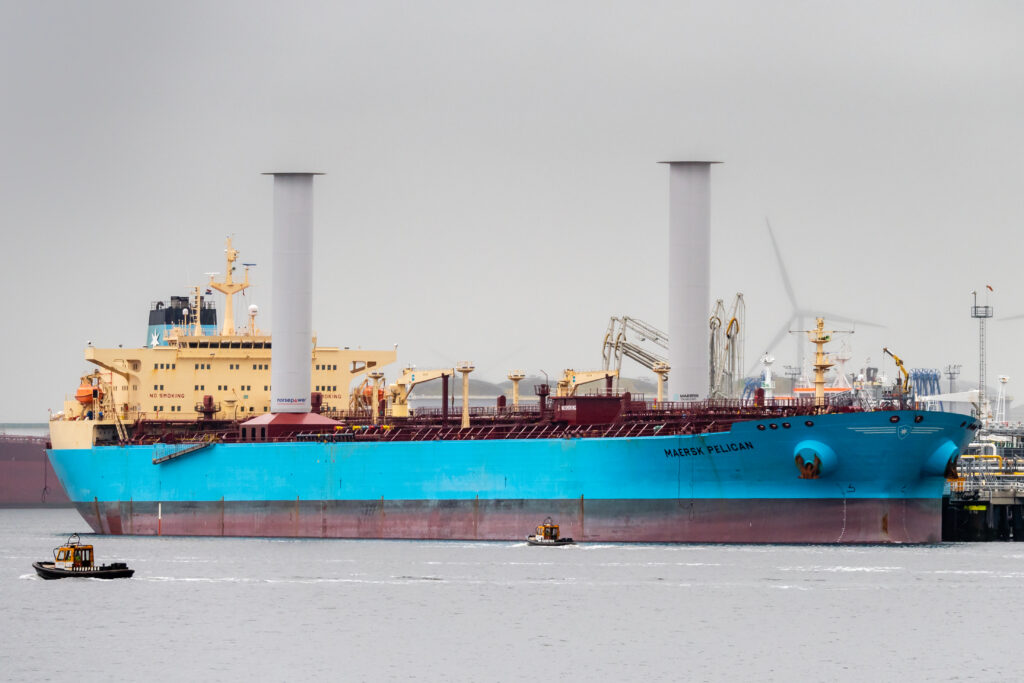
Maersk Pelican tanker equipped with Norsepower rotor sails—classic modern Flettner rotors providing auxiliary thrust.
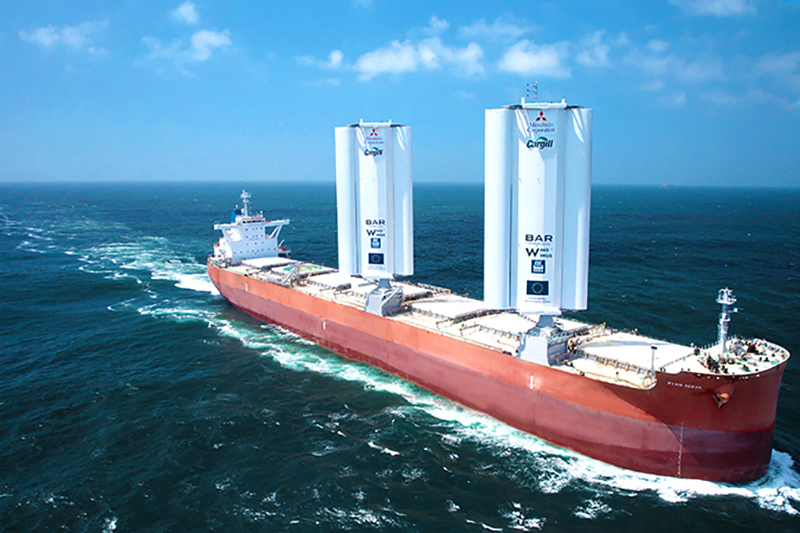
Pyxis Ocean bulker with BAR WindWings rigid wing sails in action, delivering real-world fuel savings of up to 12 tons per day on global routes.
- Rigid wing sails / WindWings: Fixed or adjustable aerofoils, automated for optimal performance.
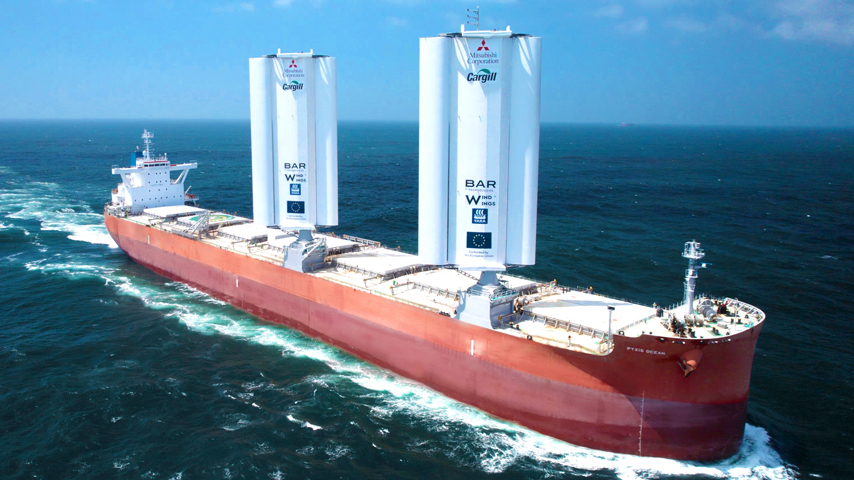
High-performance rigid wing sails on a bulker, showcasing advanced aerofoil design.
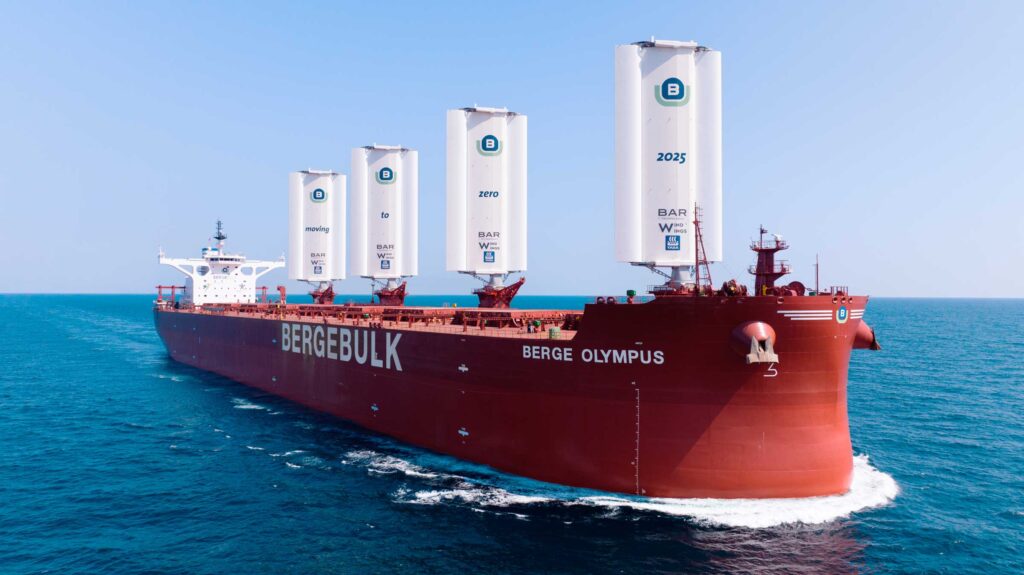
Berge Olympus with multiple WindWings among the most powerful sailing cargo setups, pushing toward zero-emission ambitions.
- Suction wings / eSails: Ventilated foils creating lift via boundary layer control.
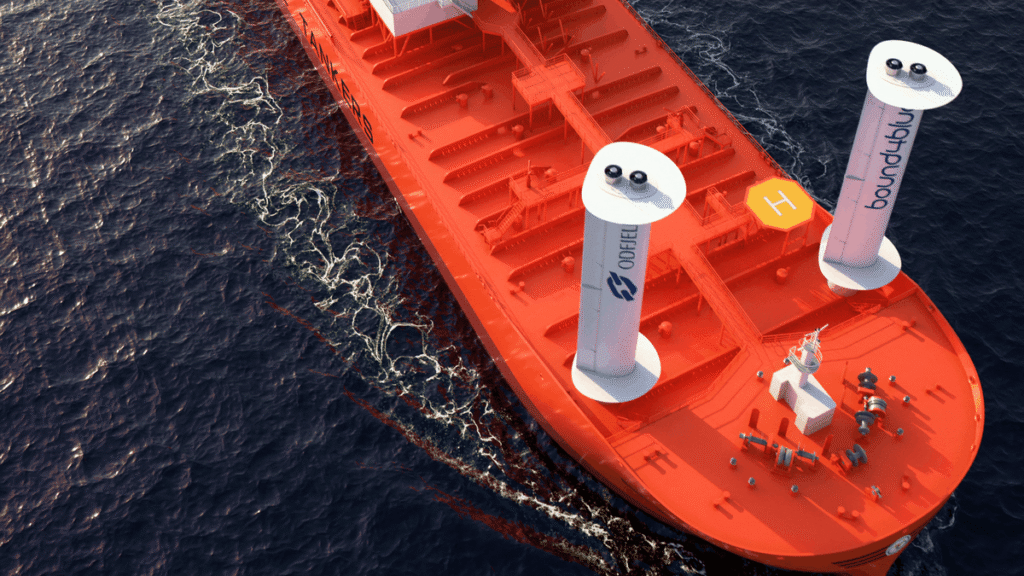
Odfjell tanker concept with suction sails innovative boundary layer control for enhanced lift and efficiency.These systems are automated, low-maintenance, and often ROI-positive within years through fuel savings (especially with rising bunker prices or carbon fees). They amplify the “double-leap”: pair wind efficiency with transitional fuels for compounded reductions, easing the burden on expensive ZNZ bunkers.
Tying It All Together: A Balanced Path to Net-Zero
The fuel dilemma won’t resolve overnight b regulatory certainty, scaled production, and equitable pricing are essential. Until then, modern wind-assisted propulsion offers an immediate, capital-efficient solution: reduce demand for any fuel (fossil or green), lower compliance costs, and de-risk the transition.For offshore pipeline and energy pros: Wind tech could influence vessel traffic patterns, bunkering hub locations, and even subsea infrastructure resilience if routes shift to wind-favorable corridors.
What are your thoughts on wind’s role in bridging the fuel gap? Drop a comment let’s keep the conversation going