March 2, 2026 By Oko Immanuel
Founder & Owner, Offshore Pipeline Insight
M.Eng in Subsea Engineering | Former Roughneck | Texas A&M Alumnus
In subsea HPHT pipelines, leak detection and pressure testing are essential for integrity assurance, preventing environmental incidents, and ensuring operational safety. As deepwater projects expand in 2026, methods like hydrostatic testing, pneumatic testing, acoustic monitoring, and fiber-optic sensing are critical to detect leaks early and verify pipeline strength. This post outlines key methods, challenges, and best practices for pipeline professionals.
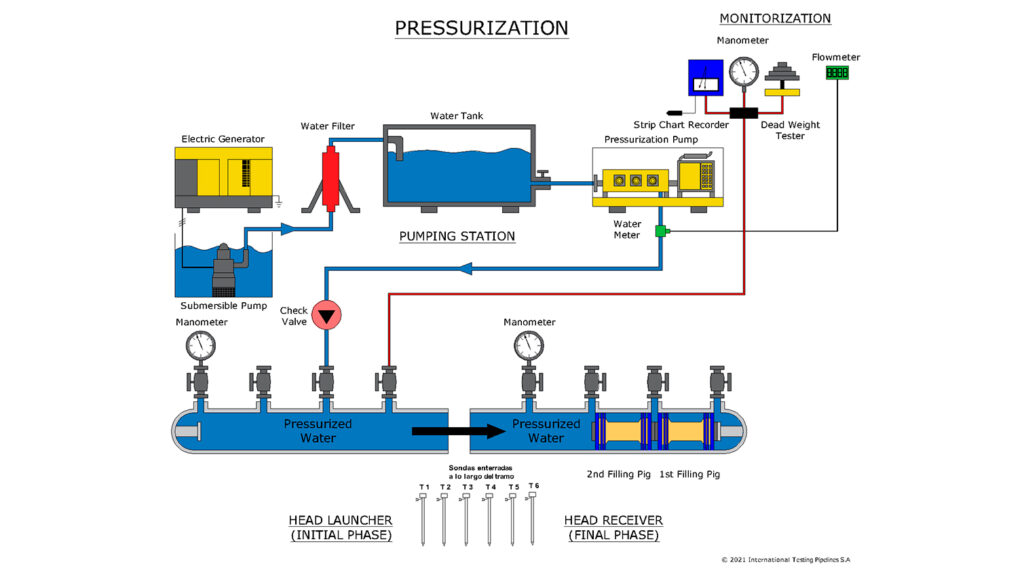
Diagram: Hydrostatic Pressure Testing Setup
Importance of Leak Detection and Pressure Testing
Leaks in subsea pipelines can result from corrosion, fatigue, or installation defects, leading to hydrocarbon releases, shutdowns, and costs exceeding $100 million. Pressure testing verifies design limits (e.g., MAOP), while detection systems enable real-time monitoring in harsh environments (>10,000 psi, >300°F).
Key Methods
- Hydrostatic Pressure Testing
Pipelines are filled with water, pressurized to 1.25–1.5× MAOP, and held for 4–8 hours to check for leaks via pressure drop. Ideal for pre-commissioning. - Pneumatic Pressure Testing
Uses inert gas (nitrogen, helium) for lower-risk testing. Faster but riskier due to energy release — limited to <5,000 psi in subsea. - Acoustic Leak Detection
Subsea sensors detect high-frequency noise from leaks. Effective for real-time monitoring in operating pipelines. - Fiber-Optic Sensing
Distributed Acoustic Sensing (DAS) or Distributed Temperature Sensing (DTS) along pipelines detect leaks via vibration or temperature changes. - Negative Pressure Wave
Monitors pressure transients for leak-induced waves fast response for long pipelines.
Challenges in HPHT Subsea
- High temperatures accelerate corrosion, complicating inhibitor delivery.
- Deepwater access limits intervention; ROV/AUVs are essential but costly.
- Environmental regulations demand low-impact testing (e.g., dye-free hydrotesting).
Best Practices in 2026
- Integrate AI for predictive analysis of pressure data.
- Use hybrid testing (hydro + acoustic) for accuracy.
- Prioritize non-intrusive methods (e.g., external sensors) for operating lines.
- Comply with API RP 1110 and ASME B31.4 standards.
H3
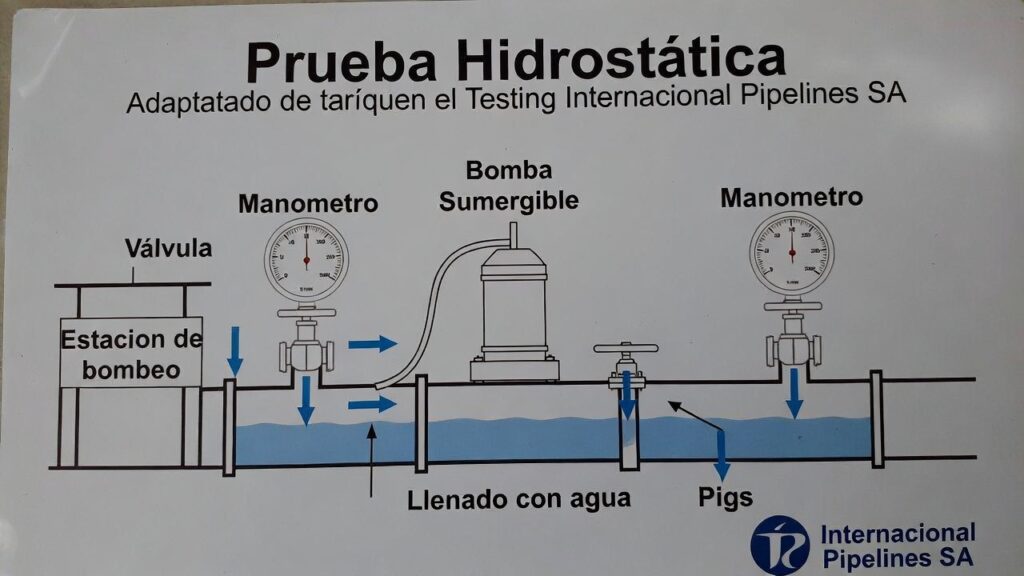
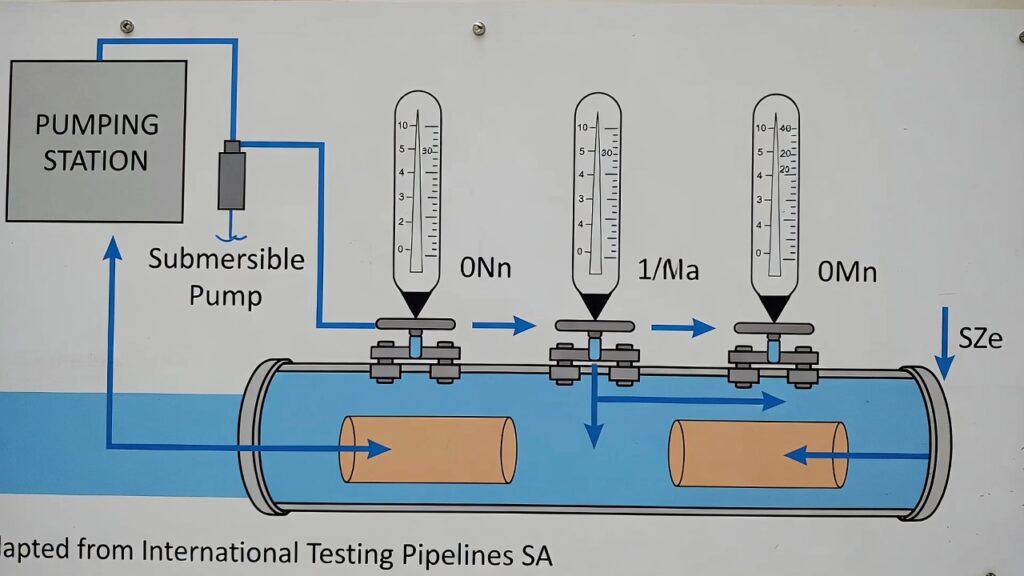
Hydrostatic pressure testing schematic: Pumping station fills the pipeline with water via submersible pump and manometers monitor pressure. Pigs ensure proper filling and pressurization. Source: International Testing Pipelines SA.
Promote your expertise: Need HPHT leak detection advice?
Contact me for consultations.
What leak challenges have you faced in subsea?
Comment below — share this post!
Stay tuned for more HPHT, subsea integrity, and transition insights.
Gig ’em!#LeakDetection #PressureTesting #SubseaPipelines #HPHT #OffshoreEnergy #GigEm #AggieEngineers