By Oko Immanuel, M.Eng – Founder, Offshore Pipeline Insight
March 21, 2026
The U.S. Gulf Coast is in the midst of one of the largest LNG export capacity expansions in history. With Europe seeking alternatives to Russian pipeline gas and Asia’s demand for cleaner energy growing rapidly, projects like Golden Pass LNG (Texas) and Plaquemines LNG (Louisiana) are among the most watched developments in 2026. These facilities are not only increasing U.S. export volumes but also driving demand for offshore feed-gas infrastructure, subsea tiebacks, and HPHT pipelines.
This article breaks down the key projects, their timelines, subsea/offshore implications, and why they’re high-interest topics right now.
1. Golden Pass LNG – Texas (18 MTPA, Startup 2026–2027)Golden Pass LNG, a joint venture between QatarEnergy (70%) and ExxonMobil (30%), is one of the most advanced U.S. Gulf Coast expansions.
- Location: Sabine Pass, Texas (near existing Sabine Pass LNG terminal).
- Capacity: 18 MTPA (3 trains, ~2.4 Bcf/d).
- Status: Construction ~90% complete (as of early 2026). First LNG expected late 2026, full ramp-up 2027.
- Offshore & subsea role:
- Feed-gas supplied via existing pipelines from offshore GoM fields (e.g., deepwater tiebacks).
- Potential for future HPHT subsea expansions as new GoM projects (Kaskida, Shenandoah South) come online.
- Subsea gathering lines and onshore processing upgrades to handle higher volumes.
Golden Pass is a flagship for Qatar’s strategy to diversify export locations and secure long-term U.S. LNG supply for Asia and Europe.
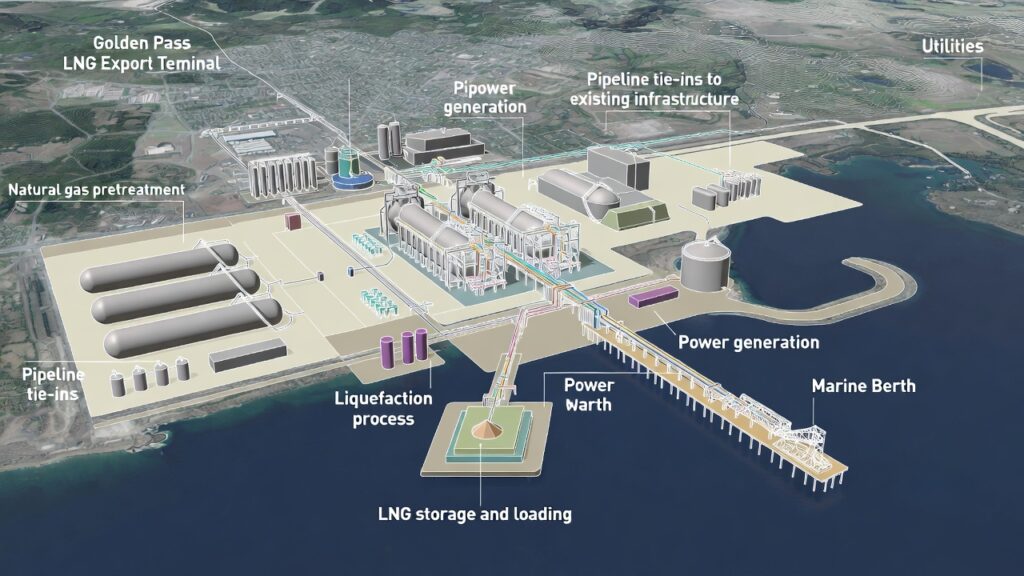
Figure 1: Golden Pass LNG Export Terminal Layout
( image: Aerial/schematic overview of Golden Pass site showing 3 liquefaction trains, storage tanks, marine berths, and pipeline tie-ins.)
2. Plaquemines LNG – Louisiana (Phase 1: 13 MTPA, Startup 2026)
Plaquemines LNG, developed by Venture Global, is one of the fastest-moving U.S. projects.
- Location: Plaquemines Parish, Louisiana (Mississippi River delta).
- Capacity: Phase 1 – 13 MTPA (20 trains using modular mid-scale tech); full build-out to 26 MTPA.
- Status: First LNG targeted mid-2026 (trains already under commissioning). Phase 1 full operations by 2027.
- Offshore & subsea role:
- Feed-gas from offshore GoM via existing pipelines (Grand Chenier, NGPL, etc.).
- High-volume export requires reliable subsea gathering and onshore compression.
- Modular design reduces topside footprint future tie-ins could leverage subsea boosting for distant fields.
Plaquemines is a model for fast-track LNG using standardized, factory-built trains a game-changer for U.S. export capacity.
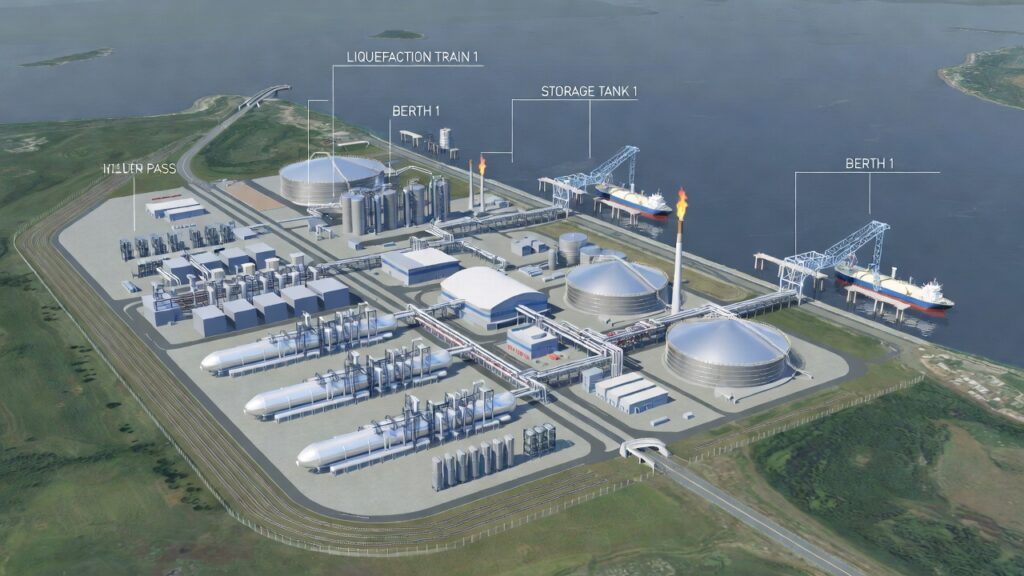
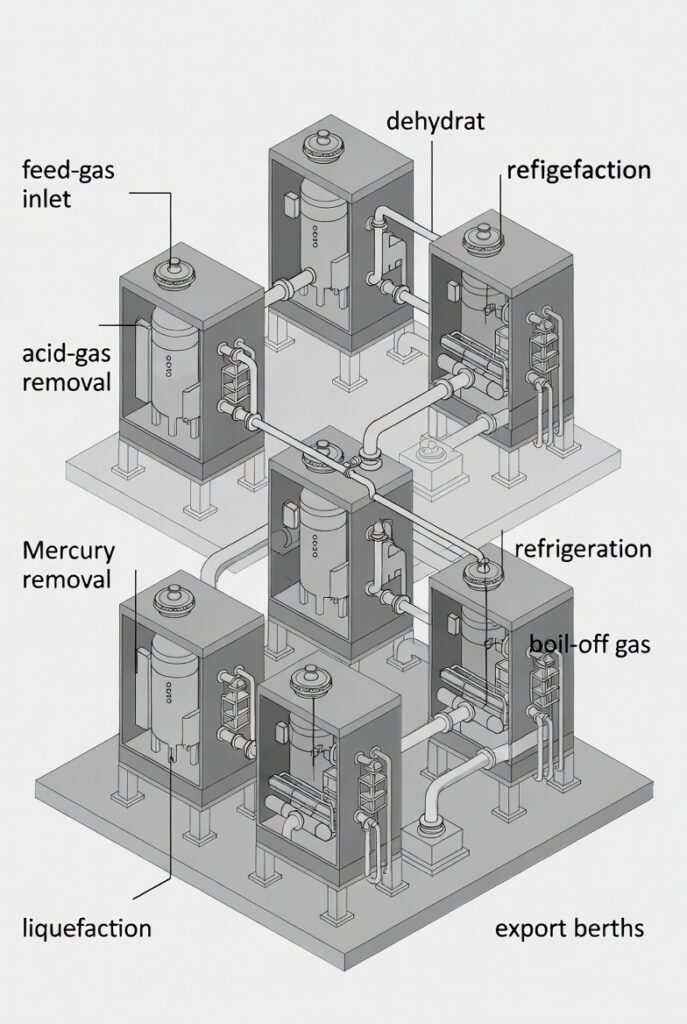
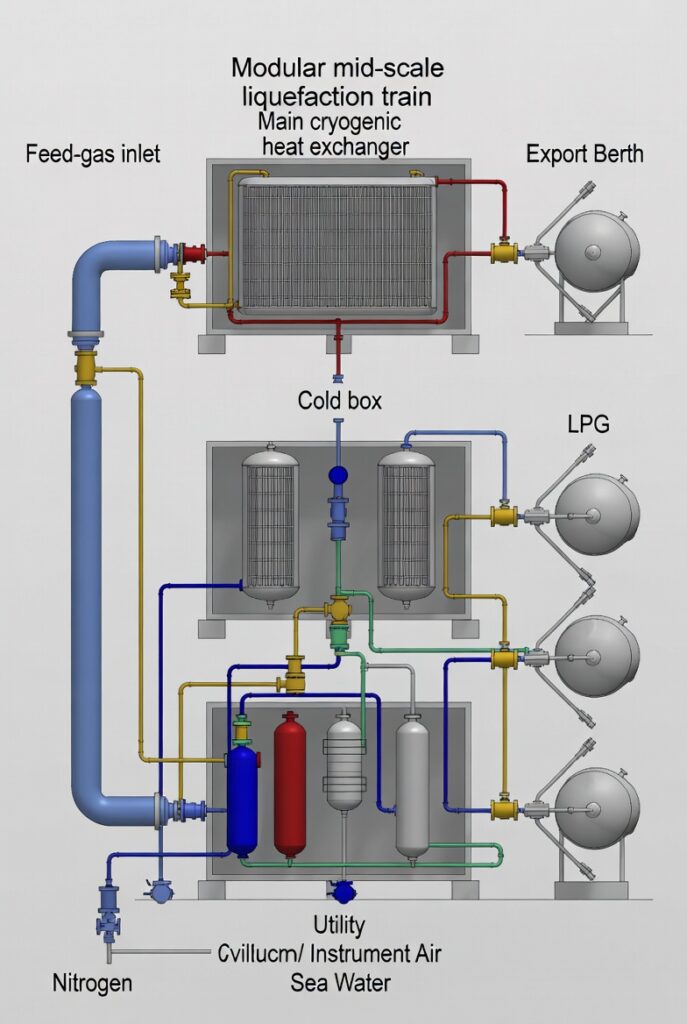
Figure 2: Plaquemines LNG Modular Train Configuration
( image: Diagram of modular mid-scale liquefaction trains, showing compact layout, feed-gas inlet, and export berths.)
3. Broader U.S. Gulf Coast LNG Wave (2026–2028)
Other major projects adding to the surge:
- Corpus Christi Stage 3 (Cheniere) – 10 MTPA, startup 2026–2027.
- Rio Grande LNG (NextDecade) – 17 MTPA Phase 1, 2027–2028.
- Port Arthur LNG (Sempra) – 13.5 MTPA Phase 1, late 2020s.
Total U.S. LNG export capacity is projected to rise from ~14 Bcf/d (2025) to 25+ Bcf/d by 2030 — making the U.S. the world’s largest LNG exporter.
4. Offshore & Subsea Infrastructure Implications
This export wave drives demand for:
- Subsea gathering & export lines : HPHT-rated flow lines and trunk pipelines from deepwater fields (Anchor, Kaskida, Shenandoah) to onshore terminals.
- Subsea boosting/compression : To maintain flow over long distances.
- Integrity & monitoring : Digital twins, fiber-optic sensing, and intelligent pigging to ensure reliability.
- Feed-gas security : Offshore platforms and subsea tiebacks become critical for stable LNG supply.
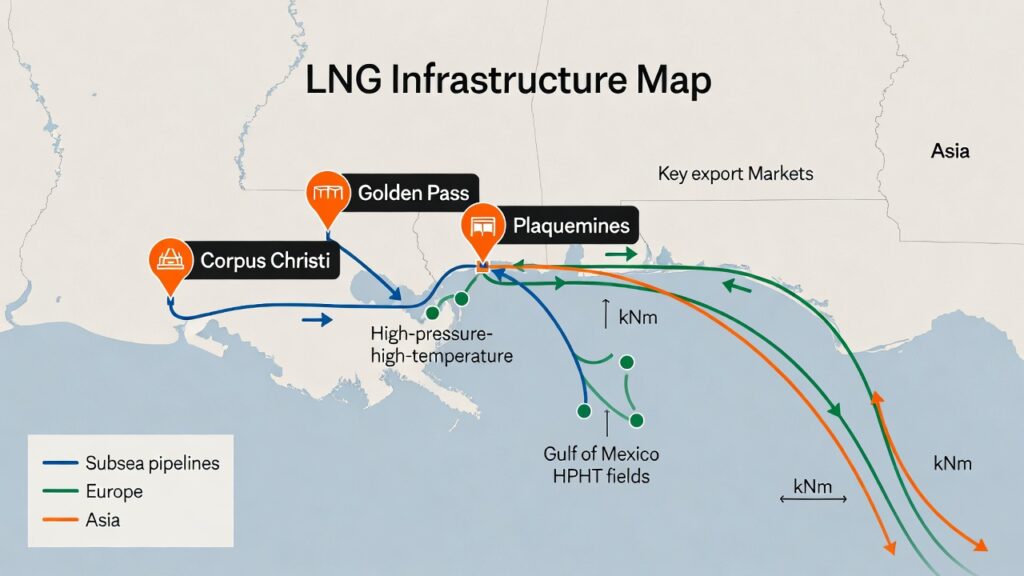
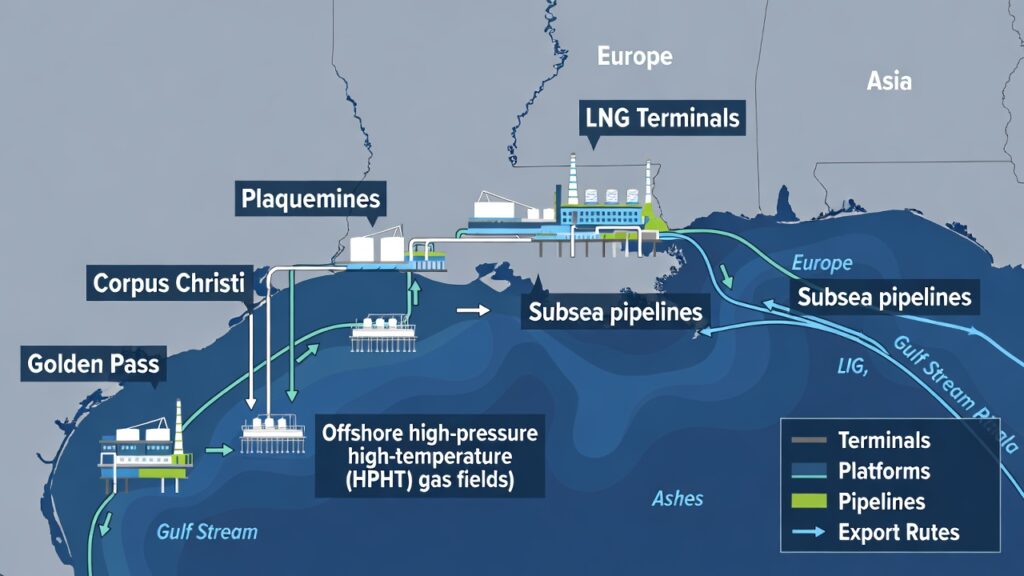
Figure 3: U.S. Gulf Coast LNG Export & Offshore Feed-Gas Network
(image: Map/schematic showing major LNG terminals (Golden Pass, Plaquemines, Corpus Christi), offshore HPHT fields, subsea pipelines, and export routes to Europe/Asia.)
The Bottom Line for 2026
Golden Pass and Plaquemines are flagship projects in the U.S. Gulf Coast LNG boom adding tens of MTPA of export capacity to meet European and Asian demand. Subsea and offshore infrastructure (HPHT flowlines, tiebacks, compression) are the hidden backbone enabling this growth.Engineers and energy pros:
How is the U.S. LNG expansion wave affecting your offshore work more pipeline capacity, subsea integrity focus, or CCS tie-ins?
Share in the comments or on LinkedIn.
The Gulf is fueling the global energy shift.
Oko Immanuel
Subsea Engineering Specialist | Offshore Pipeline Insight