Published by Oko
Founder, Offshore Pipeline Insight
May 30, 2026.
As the offshore industry navigates aging assets, energy transition demands, and volatile oil prices, maximizing subsea infrastructure efficiency, has become one of the top priorities for operators in 2026.
With thousands of kilometers of subsea pipelines and flow-lines approaching or exceeding design life, the focus has shifted from new-build CapEx to optimizing existing assets for reliability, cost control, and low-carbon readiness.
This article explores the key subsea challenges facing the industry in 2026 and provides practical, proven best practices to maximize efficiency and extend asset life.
Identifying Key Subsea Challenges in 2026
The subsea environment in 2026 presents a unique mix of legacy issues and new transition-related pressures:
- Aging Infrastructure & Integrity Risks
Many pipelines installed in the 1980s–2000s are now well beyond their original design life. Corrosion, fatigue, and coating degradation are accelerating, especially in high-pressure/high-temperature (HPHT) fields. - Repurposing for Hydrogen & CCUS
Operators are increasingly evaluating existing pipelines for hydrogen blending or dense-phase CO₂ transport. This introduces new risks such as hydrogen embrittlement, different corrosion mechanisms, and higher operating pressures. - Rising HPHT Developments
Deepwater fields are being developed at pressures up to 20,000 psi and temperatures exceeding 350°F. Traditional materials and design codes are being pushed to their limits. - Flow Assurance Complexity
Multiphase flow, hydrate formation, wax deposition, and slugging remain major challenges, particularly in long tie-backs and repurposed lines. - Digital Data Overload & Integration
Operators now collect massive amounts of sensor data, but many struggle to turn that data into actionable decisions without advanced digital twins and AI.
- Regulatory & Environmental Pressure The North Sea Transition Authority (NSTA) and similar bodies worldwide are demanding rigorous repurposing assessments before approving decommissioning, while also enforcing stricter environmental and safety standards.
- Talent Shortage & Knowledge Retention
- Experienced subsea engineers are retiring, creating a gap in institutional knowledge for complex integrity and repurposing projects.
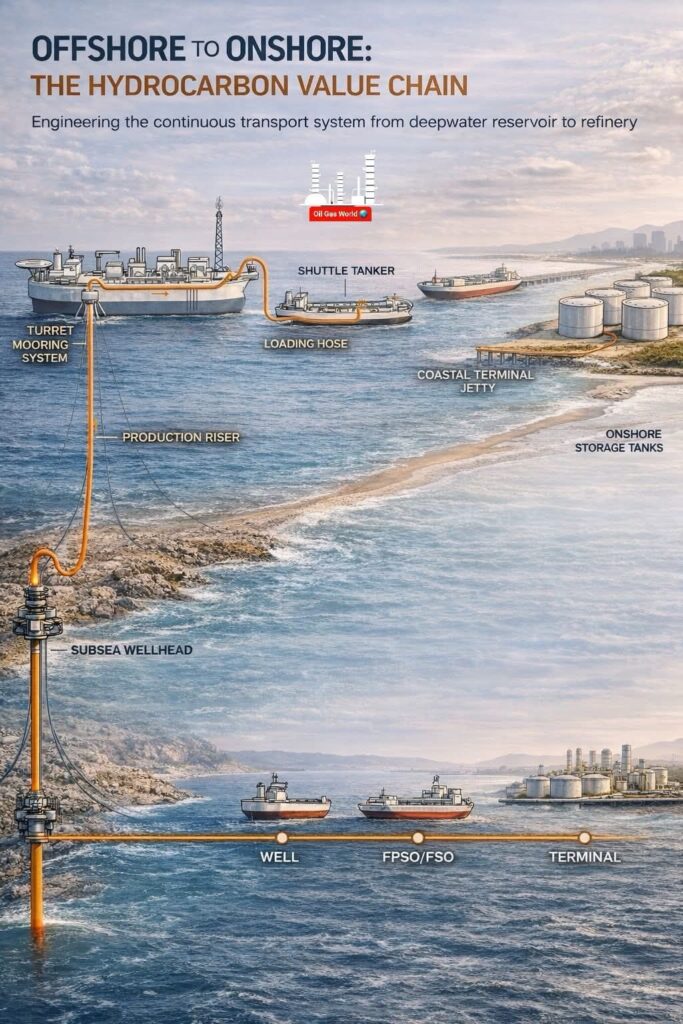
Subsea Pipeline in Deepwater
Aging infrastructure and new transition demands are driving the need for greater efficiency.
Best Practices for Maximizing Subsea Infrastructure Efficiency in 2026
Here are the most effective strategies operators are using successfully this year:
1. Deploy AI-Powered Digital Twins
Real-time digital twins that integrate sensor data, inspection records, and physics-based models allow operators to predict failures weeks or months in advance.
Leading companies report 30–70% reduction in unplanned downtime and significant savings on inspection costs.
2. Adopt Risk-Based Inspection (RBI) Strategies
Move away from time-based inspections toward data-driven, risk-prioritized programs. Digital twins and advanced analytics help focus resources on the highest-risk segments.
3. Invest in Advanced Materials & Coatings
For repurposing projects, use corrosion-resistant alloys (CRAs), internal polymer liners, or new composite repairs to mitigate hydrogen embrittlement and CO₂ corrosion.
4. Enhance Flow Assurance Management
Implement continuous monitoring with fiber-optic sensing and subsea boosting/compression to manage hydrates, wax, and slugging more effectively.
5. Strengthen Cross-Functional Collaboration
Break down silos between integrity, operations, digital, and projects teams. Early involvement of all disciplines in repurposing feasibility studies yields the best outcomes.
6. Focus on Workforce Development
Create structured training programs on hydrogen compatibility, digital tools, and risk-based integrity management to close the knowledge gap
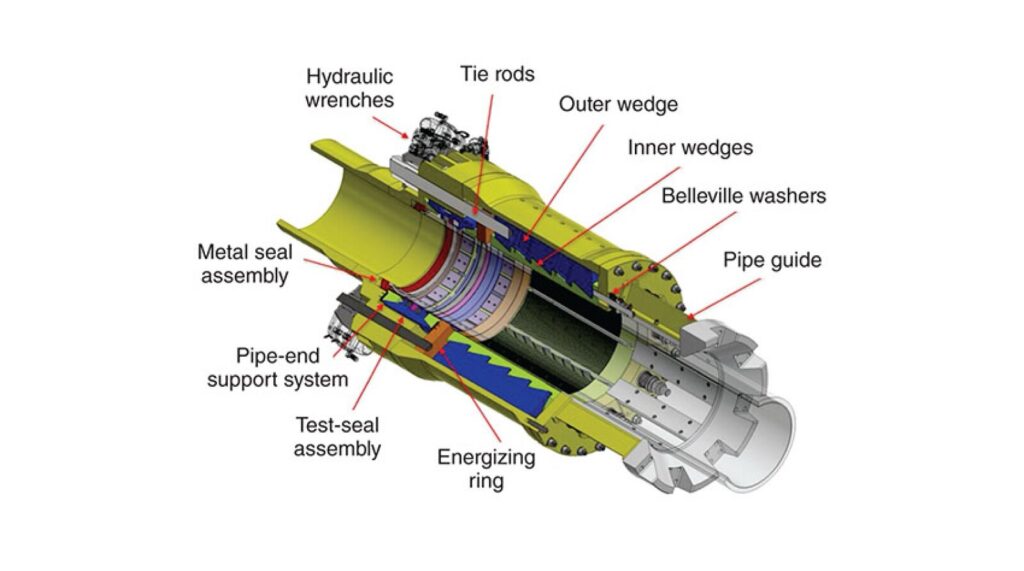
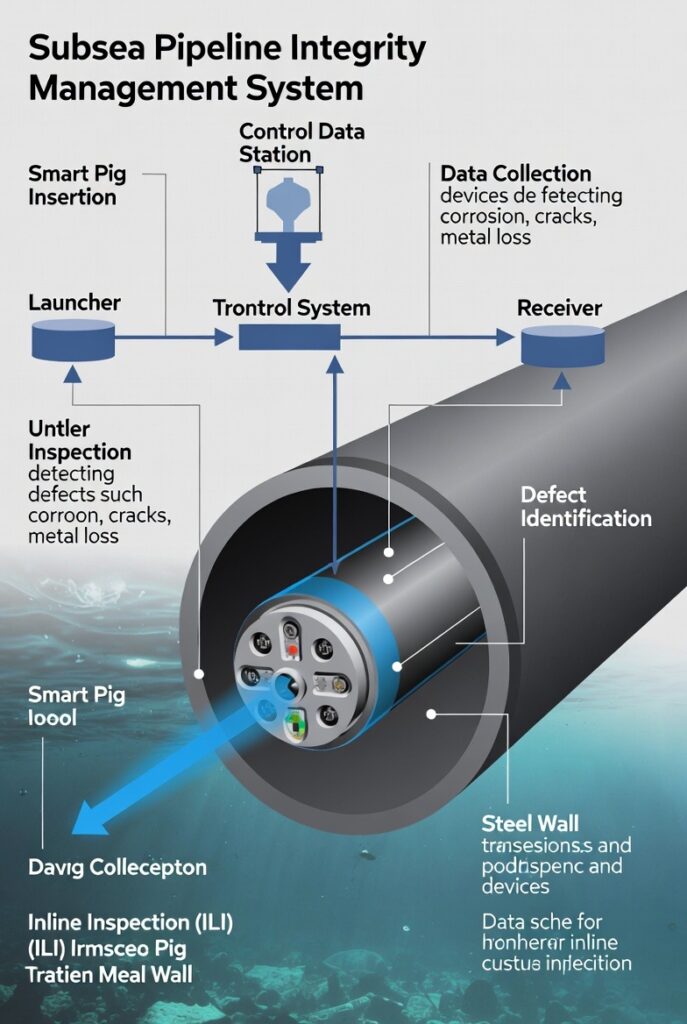
Subsea Equipment Maintenance — Proactive strategies are essential for maximizing efficiency in 2026.
Real-World Success Stories
- Several North Sea operators have achieved 40%+ reduction in high-risk findings by implementing full digital twin programs.
- Major players in the Gulf of Mexico are successfully repurposing gas pipelines for CO₂ transport after rigorous integrity assessments and material upgrades.
Conclusion & Recommendations for 2026
Maximizing subsea infrastructure efficiency in 2026 requires a balanced approach: addressing legacy integrity challenges while preparing assets for the energy transition.
Key Recommendations:
- Start with a comprehensive baseline integrity assessment of high-value or high-risk assets.
- Prioritize digital twin deployment on critical pipelines.
- Evaluate repurposing feasibility early — before committing to costly decommissioning.
- Invest in your people as much as your technology.
Operators who treat subsea infrastructure as a strategic asset rather than a cost center will gain a significant competitive advantage in the coming years.The industry is not just maintaining pipelines — it is redefining how they contribute to a lower-carbon future.
“For professionals working on high-pressure projects, I highly recommend Pipeline Rules of Thumb Handbook (https://amzn.to/4u7edfH) — one of the most practical references used in the industry.”