April 1 , 2026 — While oil production in the Gulf of Mexico hovers near record plateaus, natural gas is enjoying a noticeably brighter outlook in 2026. The driver? Explosive growth in electricity demand from AI data centers, which require always-on, dispatchable power that intermittent wind and solar simply cannot reliably deliver.
Hyperscalers (Meta, Google, Microsoft, Amazon, and others) are turning to natural gas-fired generation both grid-connected and on-site as the practical bridge fuel. This shift is creating strong tailwinds for U.S. natural gas production, midstream infrastructure, and LNG exports, with direct implications for offshore pipeline professionals working on subsea tie-backs, flow assurance, and feed-gas systems.
Why Natural Gas is the Go-To Fuel for AI Data Centers
AI training and inference workloads are extremely power-intensive and
- Rapid ramp-up and dispatchability.
- High capacity factors (often 80–90%+).
- Existing pipeline infrastructure that can be expanded faster than new nuclear or long-distance HVDC lines.
Recent examples include:
- Energy Transfer’s 20-year agreement to supply firm gas transportation to Meta’s massive Hyperion data center project in Louisiana.
- Multiple hyperscalers funding or contracting dedicated natural gas power plants alongside new facilities.
- Industry forecasts showing data centers potentially adding 2–6+ Bcf/d of gas demand by 2030, with meaningful ramp-up already visible in 2026.
This “gas gold rush” is playing out nationwide but is especially pronounced near Gulf Coast LNG hubs and major power markets.
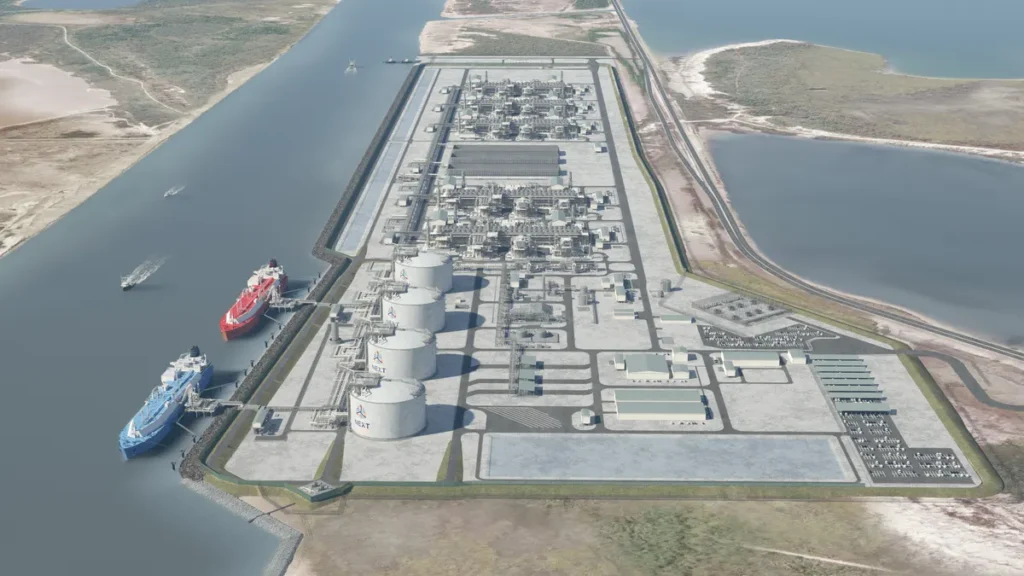
Rio Grande LNG terminal in Texas one of the key beneficiaries of increased domestic gas demand and export growth fueled by AI power needs.
U.S. LNG Export Capacity on Track for Strong Growth in 2026
U.S. LNG export capacity continues its rapid expansion, supporting both domestic power demand and global markets:
- Existing terminals are operating near full capacity (~14–15 Bcf/d range in early 2026).
- New capacity additions in 2026 include contributions from Plaquemines Phase 2, Golden Pass Train 1, Corpus Christi Stage 3 ramp-up, and others.
- Analysts and EIA projections point to U.S. LNG export capacity approaching or exceeding 16 Bcf/d by the end of 2026, with further growth into 2027–2028 pushing toward 20+ Bcf/d as more trains come online.
This expansion relies heavily on associated and non-associated gas from the Gulf of Mexico, Permian, Haynesville, and Appalachia much of it delivered via gathering systems, onshore pipelines, and ultimately supported by offshore infrastructure.
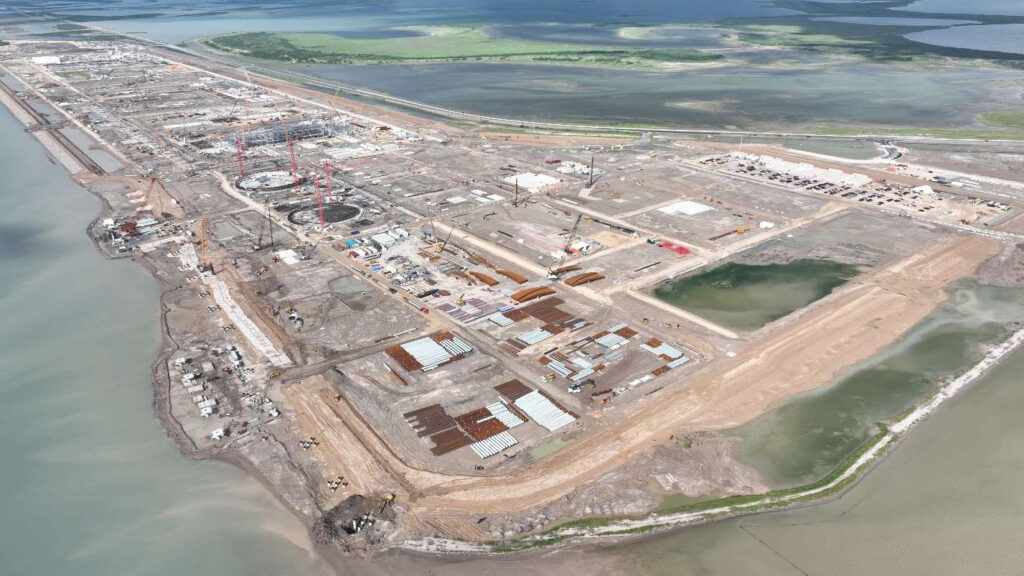
Ongoing construction activity at major LNG terminals like Rio Grande — steel, piping, and liquefaction systems advancing to meet rising export and domestic gas needs.
Pipeline & Subsea Engineering Implications
The brighter natural gas outlook translates into tangible opportunities for offshore pipeline and subsea professionals:
1. Increased Feed-Gas Pipeline Demand
LNG terminals (Rio Grande, Port Arthur, Golden Pass, Plaquemines, etc.) require reliable, high-volume dry gas supply. This drives:
- Large-diameter onshore gathering and header pipelines (e.g., Rio Bravo system supporting Rio Grande LNG).
- Compression upgrades and new laterals.
- Flow assurance focus on minimal pressure drop, internal coatings, pigging, and real-time monitoring.
2. Gulf of Mexico Tie-Back and Export Pipeline Activity
With policy support and capital redirection (as seen in the “Offshore Swap”), operators are accelerating gas-rich developments and tie-backs:
- More subsea tie-backs to existing platforms or new FPUs, delivering wet or dry gas streams.
- HPHT flowlines handling higher GOR fluids from deep reservoirs.
- Export pipelines or risers connecting to onshore systems feeding LNG plants.
3. Flow Assurance and Boosting Synergies
Higher gas throughput means renewed emphasis on:
- Hydrate management in longer tie-backs (DEH, EHTF, LDHI).
- Subsea boosting (multiphase pumps or wet-gas compressors) to overcome pressure losses over distance.
- Integration with Agentic AI-driven drilling for more predictable fluid compositions entering the pipeline system.
4. Midstream Expansion Nationwide
Data center clusters in Virginia, Texas, Louisiana, and elsewhere are spurring new pipeline projects and capacity expansions to move gas to power generation sites.Overall, natural gas infrastructure is shifting from a supply-push model to a demand-pull environment, favoring efficient, reliable delivery systems — exactly the domain of subsea and pipeline engineers.
The Bigger Picture for 2026 and Beyond
Natural gas is not just surviving the energy transition it is thriving as the flexible, scalable enabler of the AI boom. While long-term goals may include more nuclear, renewables with storage, or advanced tech, the near-term reality is clear: gas provides the 24/7 backbone today and will continue to do so through at least the early 2030s.For those of us in offshore pipeline engineering, this means:
- Steadier project pipelines (literally) in the Gulf.
- More opportunities in gas tie-backs, HPHT systems, and LNG-related feed infrastructure.
- Continued innovation in materials, insulation, boosting, and digital monitoring to handle higher volumes and variable compositions.
The combination of AI power demand, LNG export growth, and supportive policy is creating one of the strongest fundamental setups for natural gas in years.
What are you seeing on the ground? Are data-center-driven gas contracts or LNG feed projects showing up in your RFPs?
Drop your thoughts in the comments or email me directly at oko@offshorepipelineinsight.com (mailto:oko@offshorepipelineinsight.com).
I’ll follow up with a deeper look at how increased gas volumes are influencing subsea gathering system design and integrity management in the Gulf.
Oko Immanuel, M.Eng
Founder, Offshore Pipeline Insight
Texas A&M Subsea & Petroleum Engineering
Bridging Academia and the Field.