By Oko Immanuel, M.Eng in Subsea Engineering.
Published: February 24, 2026
H2 : In HPHT subsea pipelines (>10 000 psi / >150 °C), flow assurance is dominated by the need to prevent or remove blockages caused by hydrates, wax, asphaltenes, scale, and liquid accumulation. Pigging remains one of the most reliable and widely applied remediation methods. However, the extreme pressure, temperature, long tie-back distances, and often limited topsides access in deepwater HPHT systems make piggability a critical design and operability consideration.
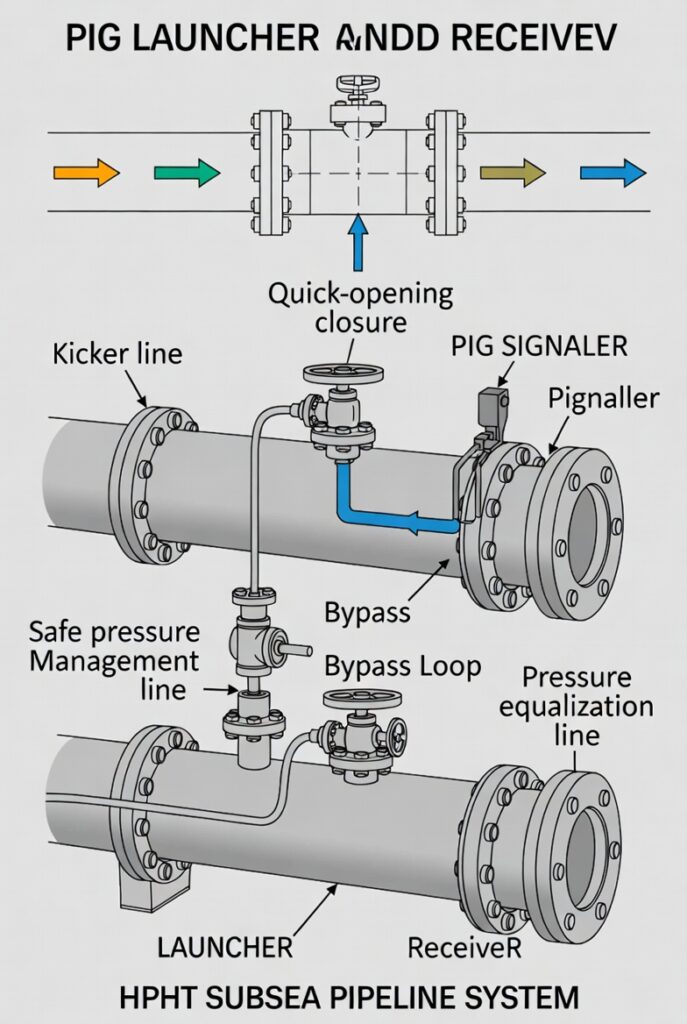
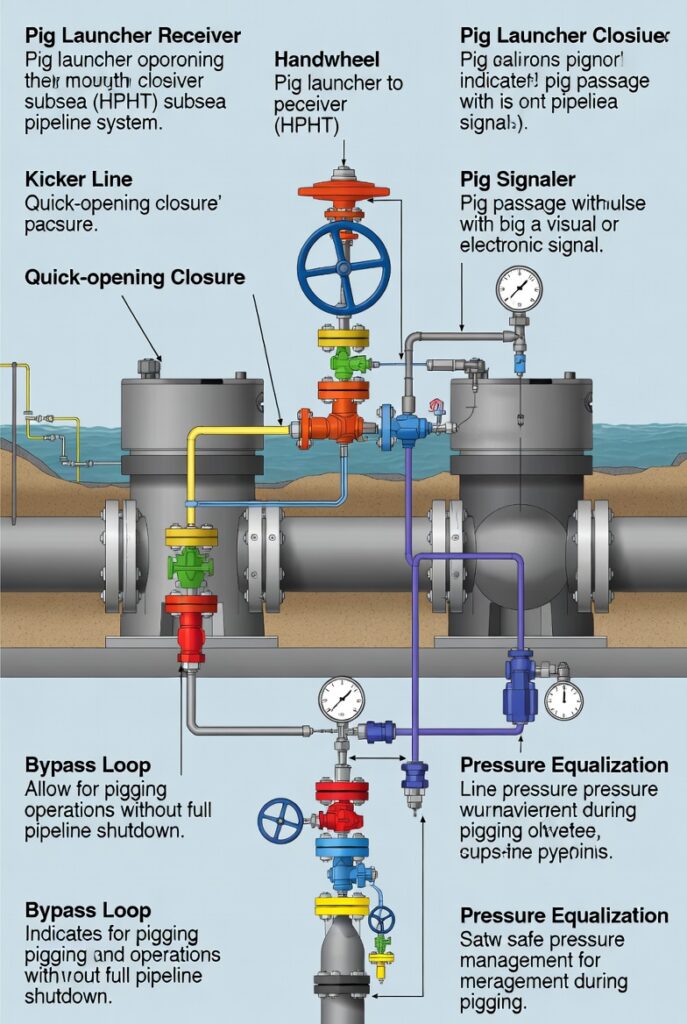
Typical pig launcher and receiver setup in an HPHT subsea pipeline system showing kicker line, quick-opening closure, pig signaler, bypass loop, and pressure equalization for safe pigging operations.
Why Pigging Is Essential in HPHT SystemsTypical HPHT flow-assurance threats include:
- Hydrate plugs during shut-down / cool-down
- Wax deposition below the cloud point and pour point
- Asphaltene precipitation during depressurisation
- Condensate banking and liquid hold-up in low points
- Scale and debris accumulation over field life
Regular pigging (cleaning, batching inhibitors, inspecting) is frequently the only practical way to maintain production rates and avoid costly shutdowns.
Piggability : Design Requirements in HPHT PipelinesA pipeline is considered “piggable” if it allows safe, reliable passage of pigs from launcher to receiver without getting stuck or damaging the line. HPHT systems impose stricter requirements than conventional pipelines.Key design elements for piggability in 2026 HPHT subsea lines:
- Minimum bend radius (R/D)
Standard recommendation: ≥ 5D (5 × diameter) for most pigs
Preferred for HPHT: ≥ 8D–10D to accommodate intelligent ILI tools and reduce differential pressure across the pig - Ovality and dent limits
Ovality < 3 % (preferably < 2 %)
No dents > 6 % of diameter (ILI passage risk increases sharply above 5 %) - Weld penetration and internal protrusions
Internal weld bead height ≤ 1.6 mm
Full penetration welds with smooth transition caps - Launcher / receiver traps
HPHT-rated quick-opening closures
Pig signalers, pressure equalization lines, and kicker lines
Bypass capability for stuck-pig scenarios - Barred tees and wyes
Full-barred design with bars spaced ≤ ½ pig length
Avoid unbarred branches whenever possible - Material and coating compatibility
Internal flow coating must withstand pig travel (no excessive wear or disbondment)Valves and fittings piggable (full-port ball valves preferred)
Pigging Strategies Used in HPHT Systems
- Foam pigs : initial dewatering / commissioning
- Cup / disc cleaning pigs routine wax removal
- Gel pigs: heavy wax / asphaltene removal (often with solvent batching)
- Bi-directional pigs : when only one launcher/receiver is available
- Intelligent ILI pigs : baseline & periodic wall-loss / crack detection
- Inhibitor batching pigs : corrosion / scale control
2026 Trends & Practical Tips
- Tethered / robotic pigs for unpiggable or high-risk HPHT lines
- Multi-sensor combo pigs (MFL + UT + geometry) run less frequently but with higher resolution
- Digital twin integration : predict when to pig based on pressure signature and temperature history
- Pre-commissioning pigging more critical than ever in long HPHT tie-backs to avoid stuck pigs during first oil.
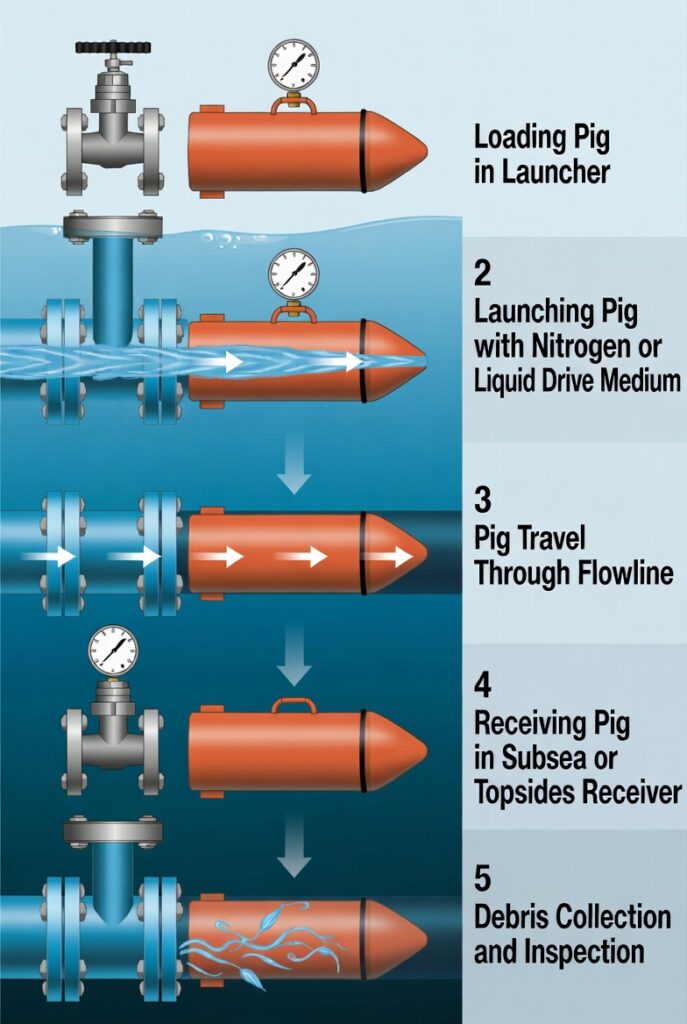
Pigging operation sequence in long subsea tie-back showing loading, launching, travel, receiving, and debris collection/inspection stages.”
Quick checklist for piggability in new HPHT design
- Minimum bend radius ≥ 8D
- Ovality < 2 %
- Internal weld bead ≤ 1.6 mm
- Full-barred tees / wyes
- HPHT-rated launcher/receiver with bypass
- Baseline ILI run before first oil
- Fiber-optic strain/temperature monitoring for stuck-pig detection
Pigging remains the backbone of flow assurance in HPHT subsea systems but only if the pipeline is designed with piggability in mind from day one.
What pigging challenge have you encountered in HPHT or deepwater lines?
Share in the comments!
Share on LinkedIn for subsea & flow assurance professionals.
Subscribe for HPHT series updates, offshore wind insights, and energy transition news.
Author’s Contact: okoimma1914@gamil.com