By Oko Immanuel, M.Eng in Subsea Engineering
Published: February 23, 2026
Installing HPHT subsea pipelines (>10,000 psi / 150°C) in deepwater remains one of the most technically demanding phases of offshore projects. The extreme pressures, temperatures, and long tiebacks require precise control over residual stresses, field joints, and seabed touchdown to prevent buckling, fatigue, or damage during lay. In 2026, with active deepwater developments in the Gulf of Mexico, West Africa, and emerging regions like Guyana, installation methods emphasize efficiency, diverless operations, and adaptations for energy transition fluids.
Drawing from recent OTC 2026 sessions, SPT Congress discussions, and industry trends (e.g., Saipem’s fleet expansions and Allseas’ ongoing Gulf projects), here are the primary techniques, HPHT-specific challenges, and emerging solutions.
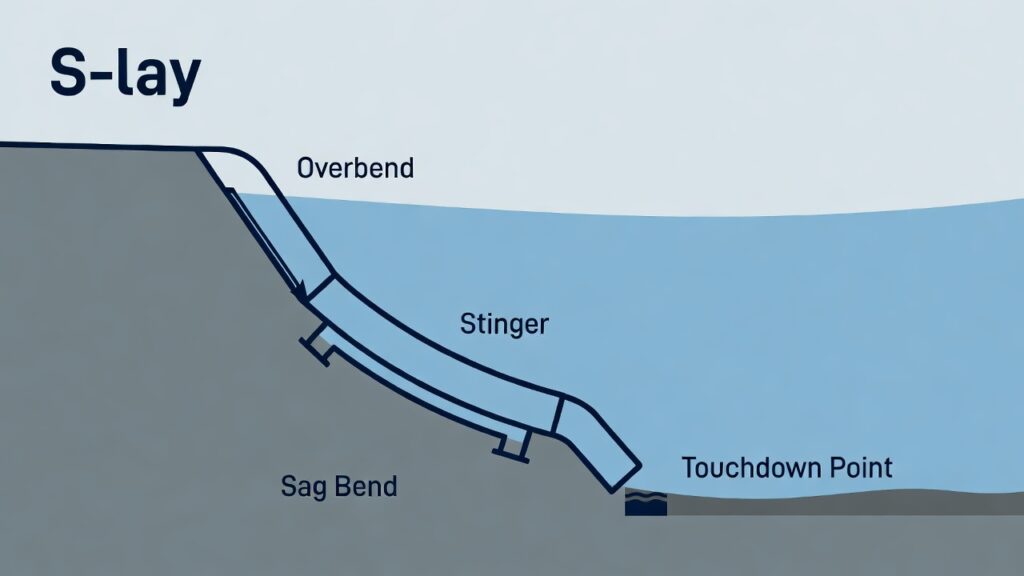
1. S-Lay Method: Versatile for Shallow to Mid-DepthS-lay uses a stinger to guide the pipe in an “S” shape from the vessel to the seabed—ideal for rigid flowlines in water depths up to ~1,500 m.
- HPHT advantages: High production rate; supports concrete-coated pipe for stability.
- Challenges: High thermal expansion risks residual curvature; long stingers needed for deeper water increase complexity and cost.
- 2026 relevance: Still widely used for moderate-depth HPHT tiebacks; advanced tensioners and dynamic positioning vessels minimize stresses.
(H2 : Diagram of S-Lay method showing over bend, stinger, sag bend, and touchdown point on the seabed.)
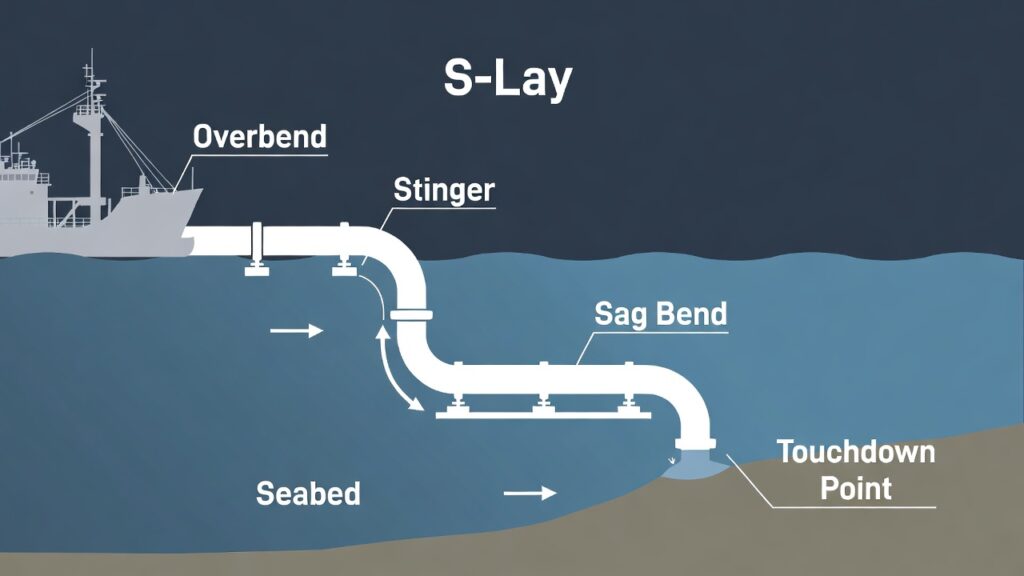
Tip: Use real-time FEA monitoring and post-lay surveys to verify as-laid configuration and prevent rogue buckling.
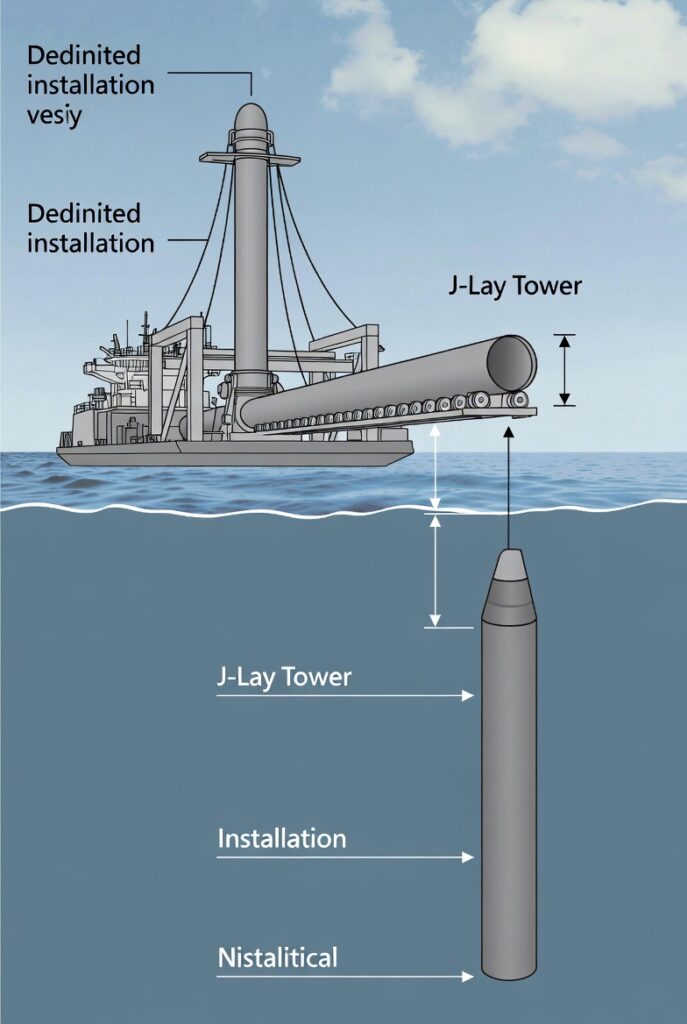
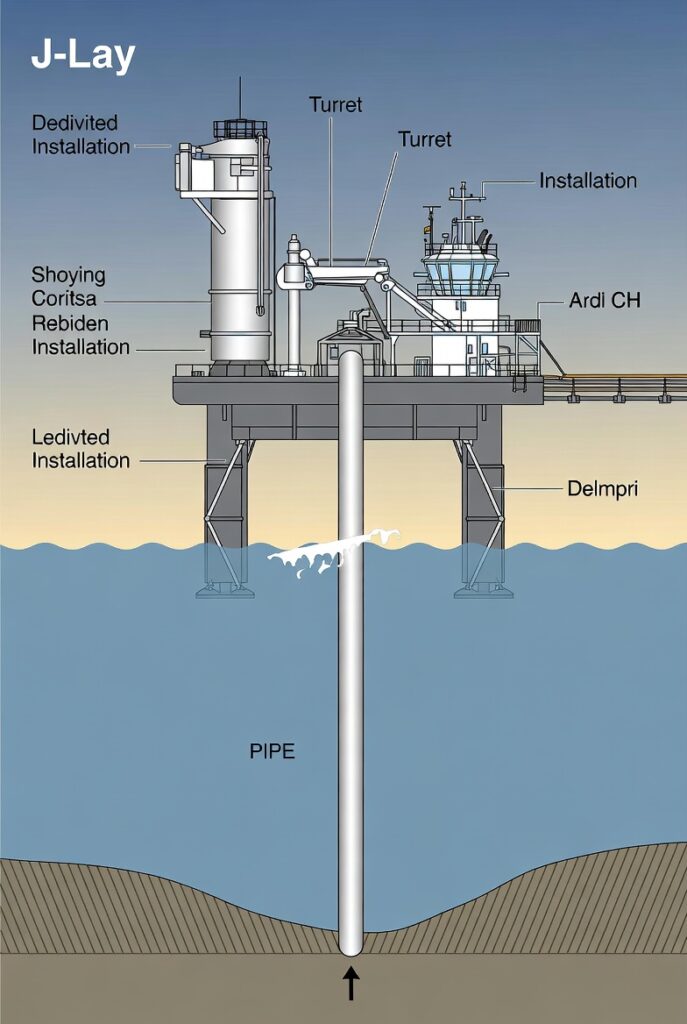
2. J-Lay Method: Preferred for Ultra-DeepwaterJ-lay suspends pipe nearly vertically from a tall tower, reducing bending stresses—suited for depths >2,000 m.
- HPHT advantages: Lower overbend stresses for thick-walled, high-strength steels; better catenary control.
- Challenges: Slower lay rates; field joint welding in the firing line is critical for HPHT integrity.
- 2026 innovations: Paired with induction heating for rapid, uniform pre-heat and high-quality girth welds (e.g., Saipem and Allseas vessels).
(Overview of J-Lay installation with near-vertical pipe deployment from a dedicated vessel.)Tip: Combine with automated welding and quality checks to ensure joint reliability in extreme conditions.
3. Reel-Lay Method: Fast for Flow lines and Risers
Reel-lay spools pre-welded pipe onshore onto a large reel, then unreels during installation—efficient for smaller-diameter HPHT flow lines.
- HPHT considerations: Reel spooling introduces plastic strain; coatings must withstand bending cycles.
- 2026 advancements: Improved reel straightening systems and coatings reduce residual stresses; suitable for gas/CO₂ lines in transition projects.
(Reel-lay installation diagram showing vessel with large reel deploying pipeline in deepwater.)Tip: Perform full-scale reel-on/reel-off fatigue testing to qualify HPHT pipe for long-term service.
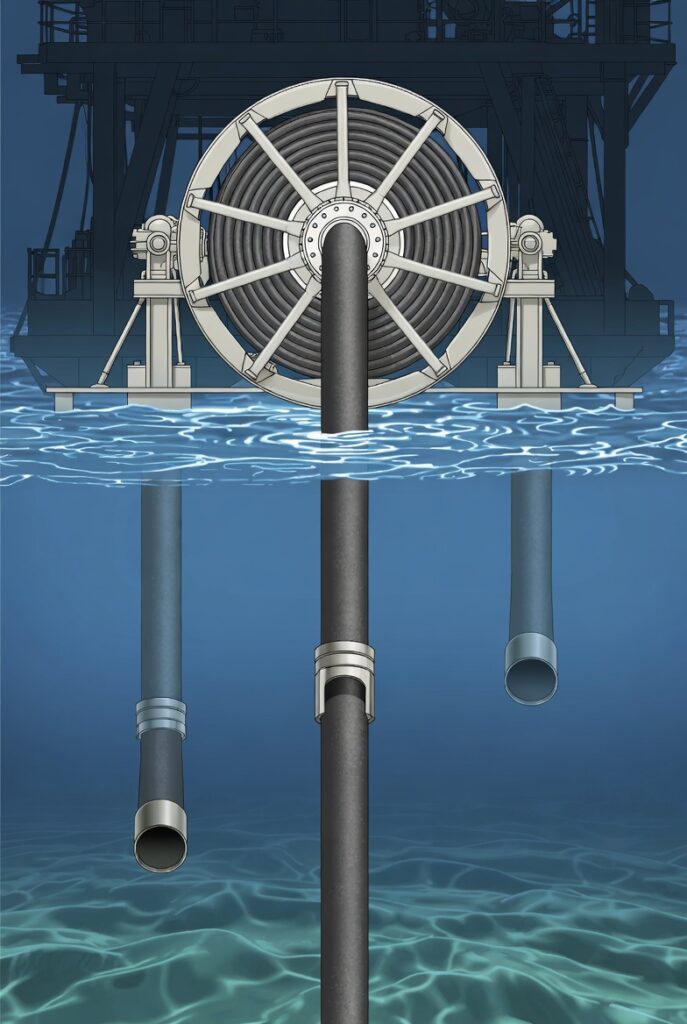
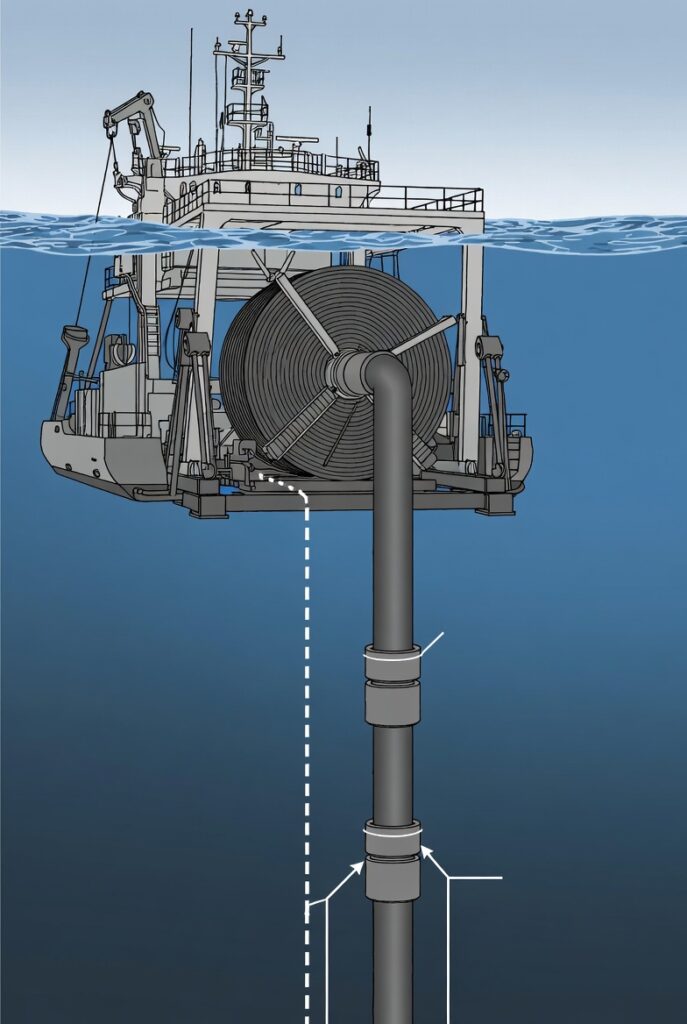
Key HPHT Installation Challenges in 2026
- Field Joints: Welding thick CRA-clad pipes requires precise preheat—induction heating advances ensure uniform temperature and faster cycles.
- Touchdown & Seabed Interaction: Uneven seabeds cause spans or high stresses; ROV monitoring and dynamic positioning help.
- Supply Chain & HSE: Specialized vessels and materials face delays; diverless tooling reduces risks.
- Energy Transition: Installing lines for CO₂/hydrogen needs compatible coatings and joint qualifications.
Quick 2026 Engineer Tips
- Select method by water depth and pipe specs: J-lay for ultra-deep, reel-lay for flowlines.
- Use FEA for lay stress simulations, including residual curvature and seabed variability.
- Invest in induction heating and automated welding for HPHT joint reliability.
- Conduct post-install surveys (side-scan sonar, ROV) to confirm no excessive spans.
- Track OTC/SPT for hybrid joints and autonomous monitoring tech.
Successful HPHT subsea pipeline installation in 2026 balances precision engineering with operational efficiency to deliver safe, reliable systems.
What’s your experience with lay methods on a deepwater project—S-lay, J-lay, or reel? Share in the comments!
Share on LinkedIn for offshore pros. Subscribe for the full HPHT series and free checklists.
About the Author
Oko Immanuel holds a Master’s degree in Subsea Engineering (with a Petroleum/Subsea focus) from Texas A&M University, where he studied installation techniques, risers, flowlines, and subsea hardware. Passionate about bridging theory and practical offshore solutions.