By Oko Immanuel, M.Eng in Subsea Engineering (Texas A&M University)
Published: February 19, 2026
Shell has confirmed that a recent U.S. general license for oil and gas exploration in Venezuela will enable progress on the long-awaited Dragon natural gas project. This offshore development, located in Venezuelan waters just ~20 km from Tobago, holds an estimated 3.5–4.5 trillion cubic feet of gas and is poised to deliver ~350 million cubic feet per day (MMcf/d) to Trinidad and Tobago’s infrastructure, feeding into Atlantic LNG terminals.
The project operated by Shell in partnership with Trinidad’s National Gas Company (NGC) and potentially involving BP has faced years of delays due to U.S. sanctions, political changes in Venezuela, and cross-border complexities. Recent U.S. Treasury Office of Foreign Assets Control (OFAC) licenses (issued last week) have cleared the path for Shell to advance planning, engineering, and negotiations, with Trinidad’s Energy Minister expressing optimism for an accelerated timeline. First gas is now targeted for Q4 2027 (mid-to-late 2027 in some updates), earlier than previous setbacks suggested.
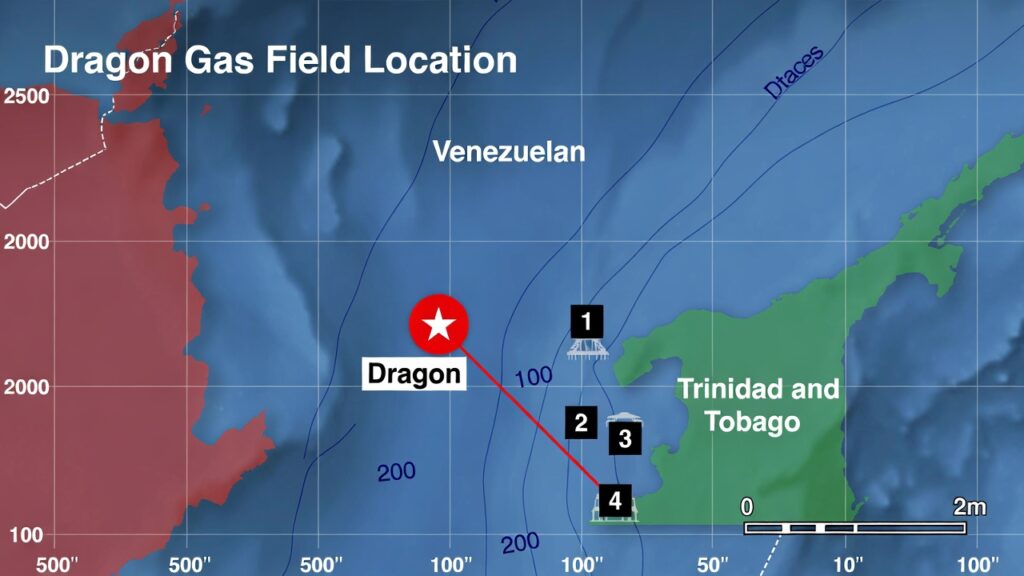
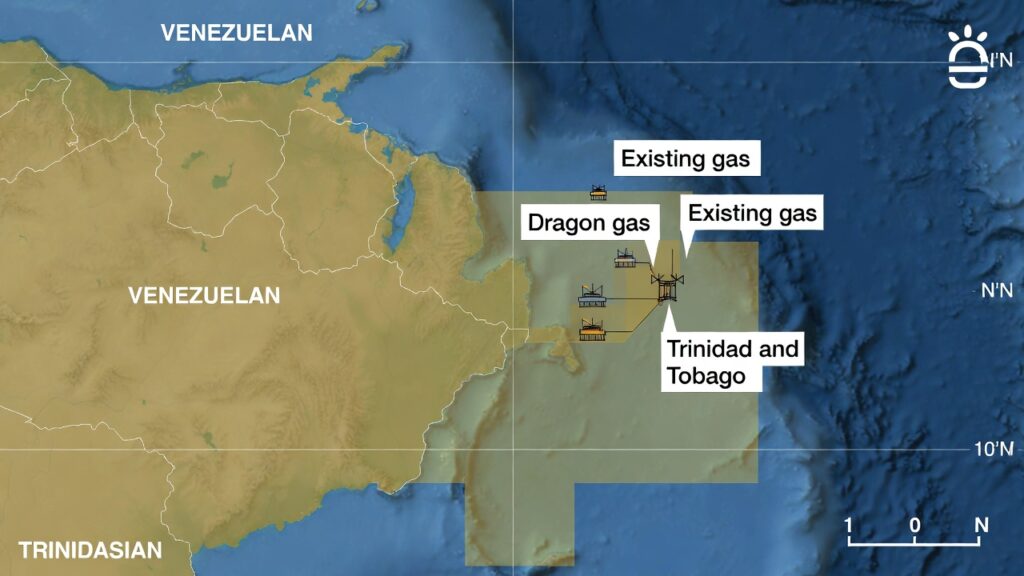
(Map of the Dragon gas field location in Venezuelan waters near the maritime border with Trinidad and Tobago, highlighting proximity to existing platforms and infrastructure.)
Subsea Development Highlights
The Dragon field requires a relatively short ~17–22 km subsea pipeline to connect production facilities in Venezuelan waters to Shell’s existing Hibiscus platform (offshore Trinidad’s North Coast) or other nearby infrastructure. This proximity is a major advantage: it minimizes installation costs compared to longer deepwater tiebacks and leverages Trinidad’s established processing and LNG export capabilities.Key subsea elements include:
- Subsea production system (trees, manifolds, flowlines) designed for high-integrity gas export.
- Pipeline routing across a complex seabed (potential pockmarks, currents, and shallow-to-mid depths).
- Tie-in to existing platforms, avoiding major new onshore builds.
Ties to Flow Assurance
Gas developments like Dragon emphasize robust flow assurance strategies to prevent blockages and ensure steady delivery:
- Hydrate management : High-pressure gas in cooler Caribbean waters risks hydrate formation during shutdowns or low-flow periods. Expect heavy reliance on low-dosage hydrate inhibitors (LDHIs), MEG injection, or direct electrical heating (DEH) for long-term operability.
- Wax and condensate dropout : While primarily dry gas, any condensate could deposit under temperature drops; insulation (pipe-in-pipe or wet) and pigging programs will be critical.
- Multiphase flow modeling : Tools like OLGA/PIPESIM will simulate transient behavior across the short tieback, optimizing startup/cooldown procedures.
Short, cross-border lines reduce some thermal risks compared to ultra-long HPHT oil lines, but pressure maintenance and fluid compatibility remain key challenges.
Integrity Considerations in Gas DevelopmentsGas projects demand high-integrity focus due to potential sour traces (H₂S/CO₂) and corrosion risks:
- Material selection :Corrosion-resistant alloys (CRAs) or clad pipes for internal protection; external cathodic protection (sacrificial anodes) for seabed exposure.
- Monitoring & inspection :Digital twins and fiber-optic sensing for real-time strain/temperature/corrosion tracking; periodic ILI (smart pigging) once operational.
- Risk assessment :Probabilistic methods to address seabed mobility, fatigue from pressure cycling, and geopolitical sensitivities in border areas.
With Shell reviewing the new licenses and Trinidad upbeat about progress, Dragon represents a strategic win for regional energy security boosting LNG exports and addressing Trinidad’s gas shortages.
This cross-border subsea tieback exemplifies how proximity, smart engineering, and evolving geopolitics can unlock reserves efficiently. As flow assurance and integrity experts, we watch closely: short pipelines like this demand precision in design to deliver reliable, low-intervention performance.
What subsea challenges do you foresee in short gas tiebacks like Dragon?
Drop a comment below let’s exchange insights on flow assurance or integrity strategies!Share on LinkedIn for offshore and gas pros. Subscribe for more updates on HPHT, flow assurance, integrity management, and emerging Caribbean projects.(Next in series: Subsea Pipeline Integrity Management in 2026 stay tuned! Aggie