By Oko Immanuel, M.Eng – Founder, Offshore Pipeline Insight
March 22, 2026
Subsea compression is one of the fastest-growing subsea technologies in 2026. It eliminates topside facilities, reduces flaring/venting, and enables longer tiebacks — directly supporting low-carbon LNG, CCS, and hydrogen projects.
Subsea Compression: Core Advantages & Applications
- Key benefit: Boosts gas pressure on the seabed → longer-distance export without onshore compression.
- 2026 status: Proven at Åsgard (Equinor, 2015), Gullfaks (2015), and now scaling globally (Jansz-Io, Norway; Bacalhau, Brazil; upcoming in GoM, North Sea, Australia).
- Manufacturers: Aker Solutions, MAN Energy, Baker Hughes, TechnipFMC — all offering compact, 10–20 MW subsea compressors.
- LNG tie-in: Compresses associated gas for export instead of flaring → lowers methane emissions.
- CCS tie-in: Boosts CO₂ for injection into distant reservoirs.
- Hydrogen potential: Compresses H₂ for offshore storage/export or power-to-gas projects.
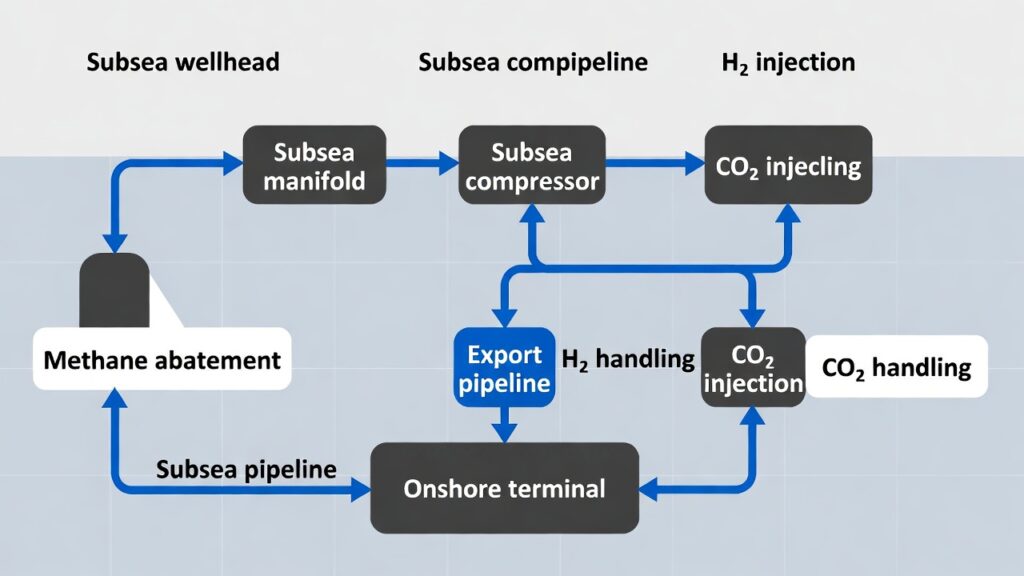
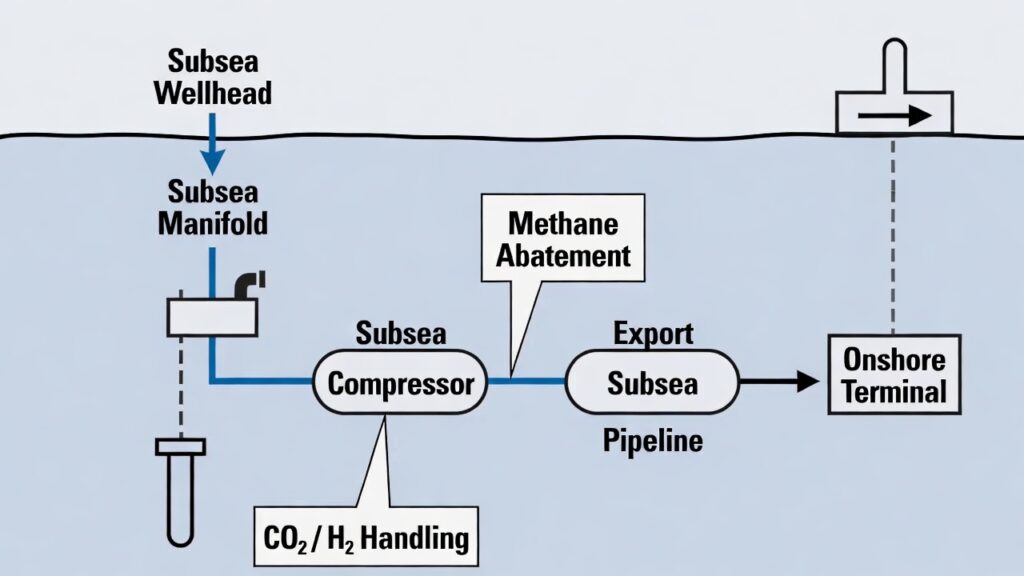
Figure 1: Subsea Compression Value Chain
( image: Diagram showing subsea well → manifold → subsea compressor → export pipeline → onshore terminal or CCS injection, with callouts for methane abatement and CO₂/H₂ handling.)
ExxonMobil LNG Projects in 2026
ExxonMobil is accelerating LNG as part of its integrated gas strategy.
- Golden Pass LNG : (Texas) 18 MTPA (startup late 2026). Exxon 30% stake with QatarEnergy. Feed-gas from GoM deepwater (HPHT tiebacks).
- PNG LNG (Papua New Guinea) : Expansion discussions ongoing.
- Mozambique LNG (Area 1) : Exxon has stake; restart progressing toward 2029 first LNG. Subsea tiebacks key.
- Qatar North Field : Trading & off take agreements support NFE/NFS growth.
Subsea focus: Exxon leverages HPHT subsea trees, flow lines, and manifolds from Guyana/GoM experience for LNG feed-gas reliability.
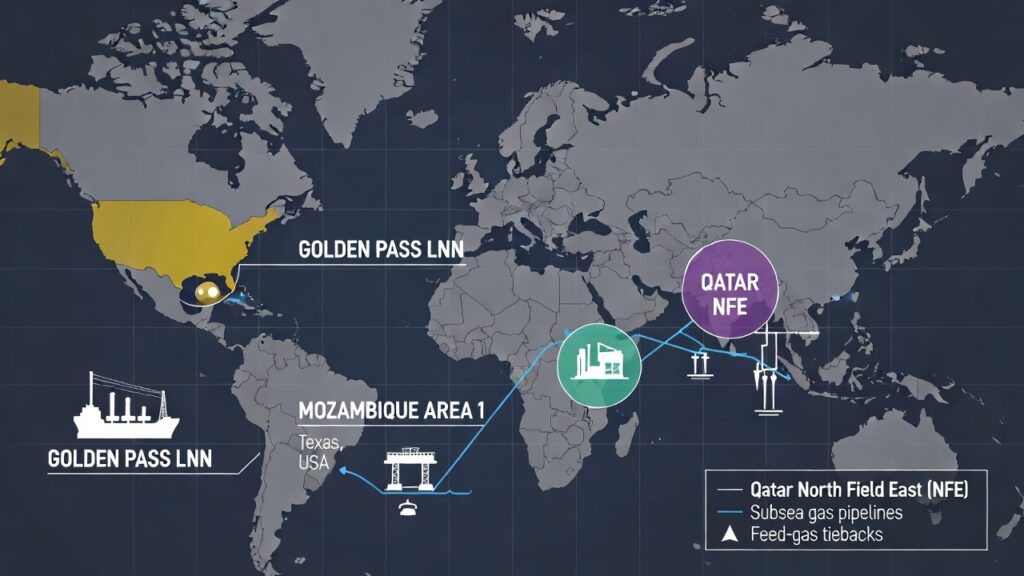
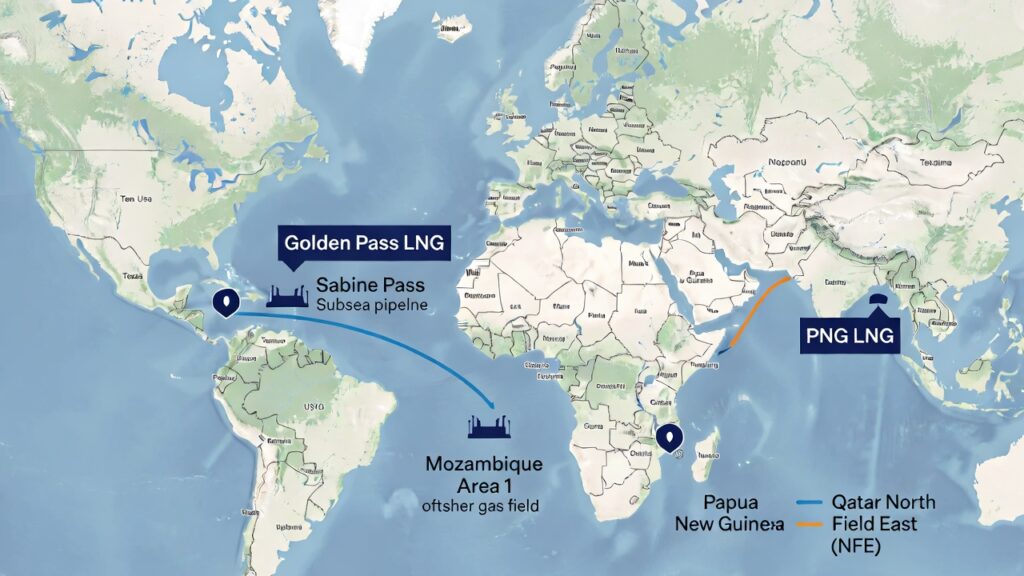
Figure 2: ExxonMobil LNG & Gas Supply Map
( image: World map highlighting Golden Pass, PNG LNG, Mozambique Area 1, Qatar NFE, with subsea pipeline icons for feed-gas tiebacks.)
Subsea Tech in SAF Production
Sustainable Aviation Fuel (SAF) production is ramping, and subsea tech plays a niche but growing role in feedstock supply.
- HEFA pathway : Uses waste oils/fats; most SAF today.
- Emerging routes : Algae bio-crude or municipal waste via Fischer-Tropsch.
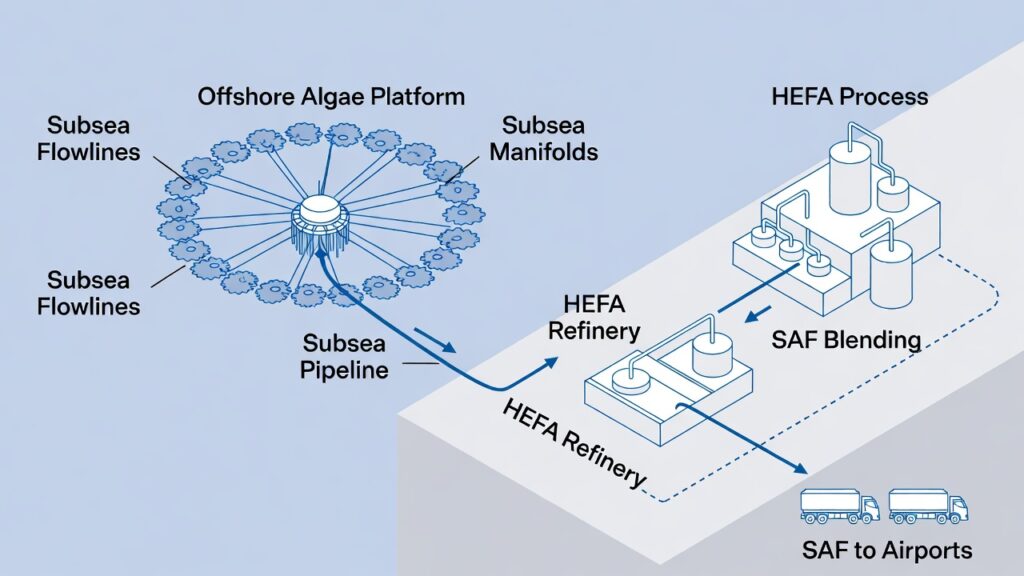
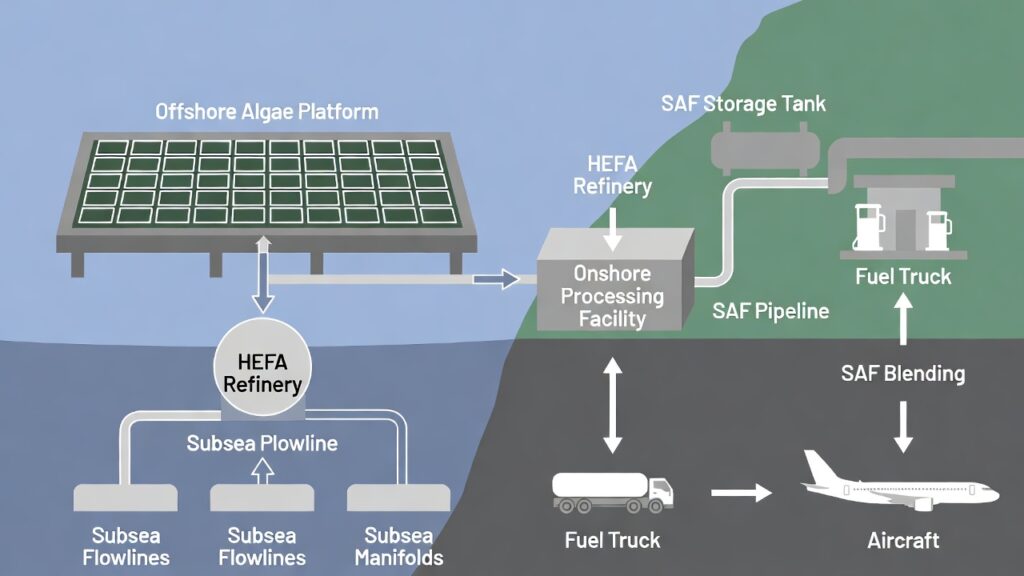
- Subsea potential : Offshore algae farms or bio-feedstock platforms → subsea export lines to onshore refineries. Shell, Chevron, and Exxon exploring offshore bio-crude pilots with subsea tiebacks.
- Subsea advantage : HPHT-rated flowlines and manifolds for bio-crude transport; subsea separation to reduce topside footprint.
Figure 3: SAF Feedstock & Subsea Pathway
( image: Flow diagram showing offshore algae platform → subsea pipeline → onshore HEFA refinery → SAF blending → airports, with callouts for subsea flow lines and manifolds.)
Hydrogen Energy Diversification
Hydrogen is a major diversification play for IOCs in 2026.
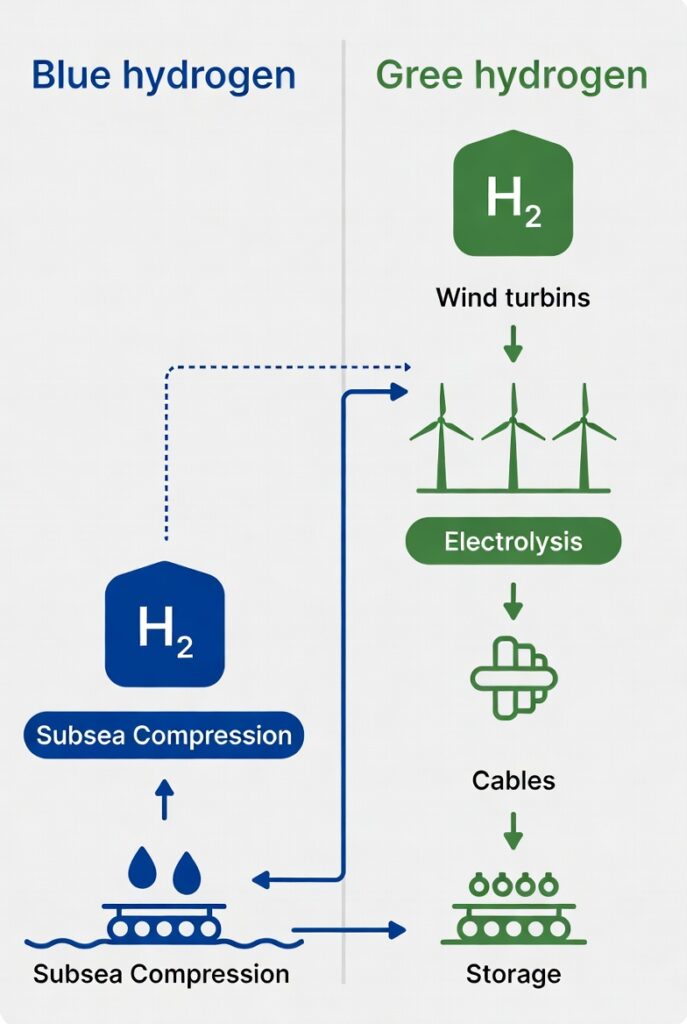
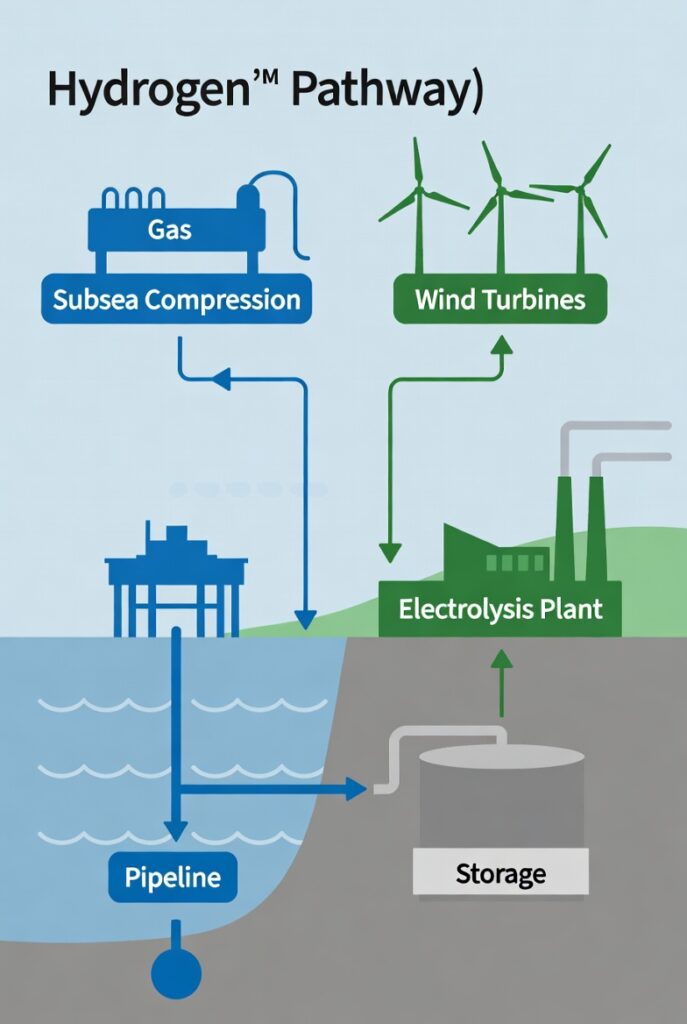
- Blue hydrogen Natural gas + CCS (Exxon Baytown, Chevron Gorgon).
- Green hydrogen Electrolysis powered by offshore wind (Shell/Equinor North Sea pilots).
- Subsea role: Subsea compression for H₂ export, subsea cables for offshore electrolysis power, and injection wells for underground storage.
Figure 4: Hydrogen Pathways & Subsea Integration
( image: Schematic showing blue H₂ (gas + CCS) and green H₂ (wind electrolysis), with subsea compression, cables, and storage callouts.)
Bottom Line
Subsea compression is unlocking longer tiebacks and lower-emission LNG/CCS/hydrogen projects. ExxonMobil is scaling LNG (Golden Pass, PNG, Mozambique) with strong subsea feed-gas support. SAF and hydrogen diversification are emerging subsea tech is key for offshore feedstock and transport.Engineers: Which subsea application excites you most compression for LNG/CCS, hydrogen export, or bio-feedstock tiebacks?
Comment or connect on LinkedIn.
Subsea is at the heart of the next energy wave.
Oko Immanuel
Subsea Engineering Specialist | Offshore Pipeline Insight