March 2, 2026By Oko Immanuel
Founder & Owner, Offshore Pipeline Insight
M.Eng in Subsea Engineering | Former Roughneck | Texas A&M Alumnus
In high-pressure, high-temperature (HPHT) subsea pipelines, flow assurance is critical to prevent disruptions from hydrates, wax, asphaltenes, scale, corrosion, and slugging. As deepwater projects expand in 2026 (e.g., Gulf of Mexico, North Sea), operators face elevated risks due to extreme conditions (>10,000 psi, >300°F). This post explores key challenges and solutions, drawing from O&G innovations.
Key Challenges
- Hydrate Formation: Low seabed temperatures + high pressure form ice-like plugs, especially in gas-rich flows.
- Wax & Asphaltene Deposition: Paraffins precipitate as fluids cool, restricting flow and increasing pressure drops.
- Scale Accumulation: Mineral deposits (calcium carbonate, sulfates) from produced water reduce pipeline diameter.
- Corrosion: CO₂/H₂S in HPHT fluids accelerate internal pitting; external threats from seawater.
- Slugging: Multiphase flow causes unstable surges, stressing pipelines and topsides.
These issues can lead to shutdowns, with remediation costs exceeding $50 million per incident.
Diagram: HPHT Flow Assurance Challenges & Mitigation
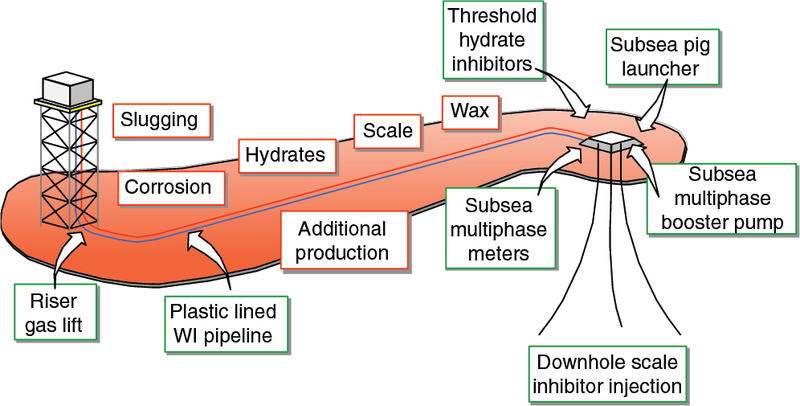
This schematic highlights common HPHT issues (corrosion, hydrates, scale, wax, slugging) and solutions like threshold inhibitors, subsea pig launchers, multiphase boosters, downhole injection, and plastic-lined WI pipelines.
Key Takeaways for 2026
HPHT flow assurance demands integrated approaches: combine design, chemicals, monitoring, and AI to minimize OPEX. Offshore transition (e.g., hydrogen pipelines) adds new challenges like H₂ embrittlement, but O&G expertise provides the foundation.
What do you think? Facing hydrate issues in your HPHT projects?
Comment below — share this post!
Stay tuned for more HPHT, subsea integrity, and transition insights. Gig ’em!#HPHTPipelines #FlowAssurance #SubseaEngineering #OffshoreEnergy #EnergyTransition #GigEm #AggieEngineers