By Oko Immanuel
Petroleum/Subsea Engineer | Founder, Offshore Pipeline Insight | Texas A&M Alumnus
March 12, 2026
Hey fellow engineers and offshore enthusiasts let’s get real about the stuff that keeps our subsea systems running (or failing spectacularly) in the harshest environments. Today, we’re tackling three hot topics: corrosion-resistant alloys holding up under high pressure, high temperature (HPHT) conditions; why elastomer seals bail out in extreme heat; and the metallurgy magic behind downhole tools that survive the abyss. These aren’t just theoretical they’re the frontline battles in deepwater ops, energy transition, and reliability. I’ll throw in some visuals to make it pop, because who doesn’t love a good diagram?
Grab your coffee, because we’re diving deep!
1. Corrosion-Resistant Alloys for HPHT: The Armor Against the Abyss
HPHT environments we’re talking pressures over 10,000 psi and temps above 150°C are like the ultimate stress test for subsea materials. Corrosion from H₂S, CO₂, chlorides, and seawater can eat through standard alloys faster than you can say “integrity failure.” That’s where corrosion-resistant alloys (CRAs) come in as the heroes.
Key players include:
- Super Duplex Stainless Steels (e.g., 25Cr): High chromium and molybdenum content for pitting resistance in chloride-rich waters. Great for flowlines and manifolds.
- Inconel Alloys (e.g., 625 or 718): Nickel-chromium blends with molybdenum for superior resistance to sulfide stress cracking (SSC) and crevice corrosion. Ideal for HPHT wellheads and risers.
- Titanium Grades (e.g., Ti-6Al-4V): Ultra-lightweight with top-notch resistance to seawater and acids used in subsea connectors where weight is a killer.
These alloys aren’t cheap (up to 10x standard carbon steel), but they pay off in longevity and reduced maintenance. In 2026, we’re seeing more hybrid designs CRA-clad carbon steel to balance cost and performance.
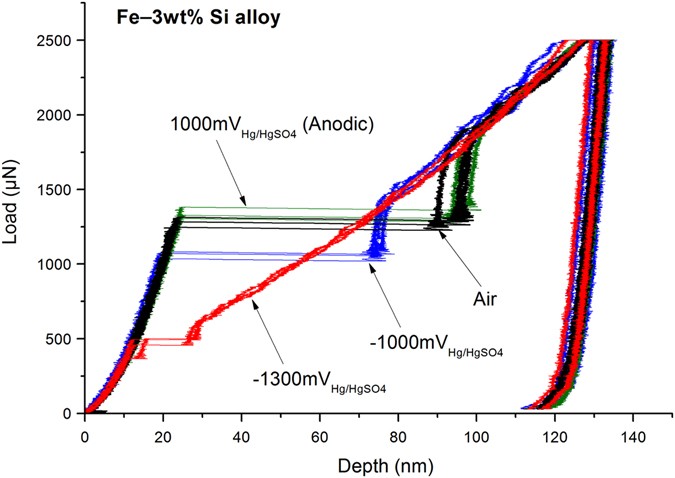
Figure 1: Load vs Depth Profile for Fe-3wt% Si Alloy in HPHT Conditions
This diagram shows anodic and cathodic polarization effects on alloy integrity a classic view of how CRAs withstand corrosive subsea stresses. Notice the rapid load drop in extreme environments; that’s where your alloy choice makes or breaks the system.
2. Elastomer Seal Failures in Extreme High Temperature: Why Rubber Cracks Under Pressure
Elastomer seals those trusty O-rings, gaskets, and packers made from materials like HNBR, FKM, or Viton are the unsung heroes of subsea containment. But in extreme high temperatures (HT > 150–250°C), they can fail spectacularly, leading to leaks, blowouts, or system shutdowns.Common failure modes:
- Compression Set: Seals lose shape and sealing force after prolonged HT exposure.
- Extrusion: High pressure pushes the elastomer into gaps, causing deformation and rupture.
- Thermal Degradation: Chains break down, leading to brittleness or softening.
- Chemical Attack: H₂S or CO₂ swells or hardens the material, accelerating wear.
In HPHT wells or subsea manifolds, failures often stem from mismatched materials e.g., standard nitrile crumbling at 200°C. Solutions? Switch to Perfluoro elastomers (FFKM) for temps up to 300°C or use metal-to-metal seals as backups.
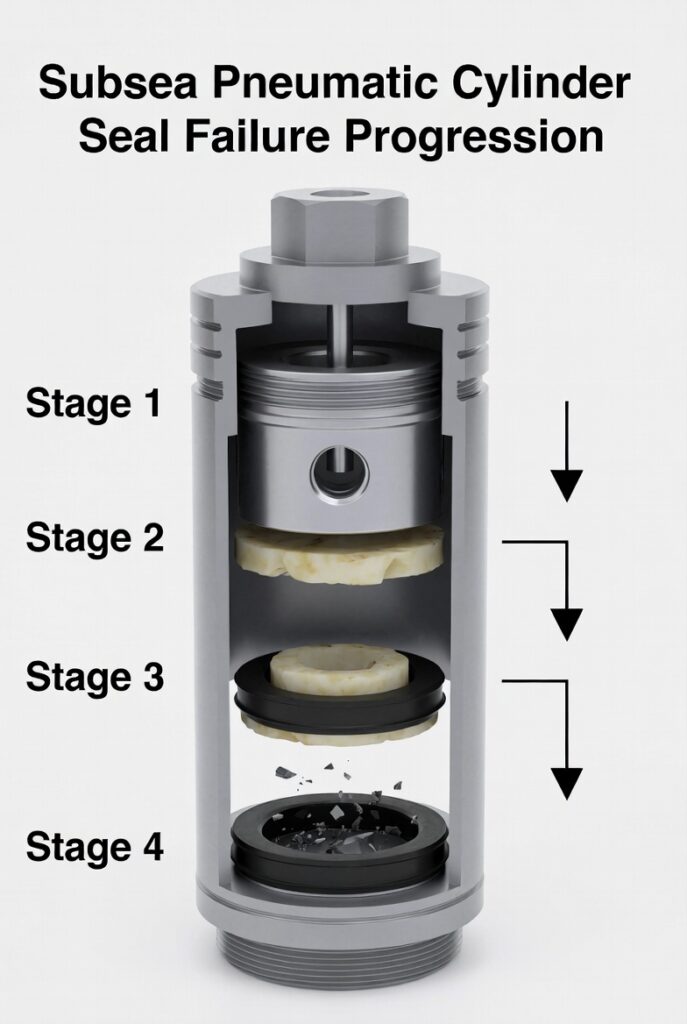
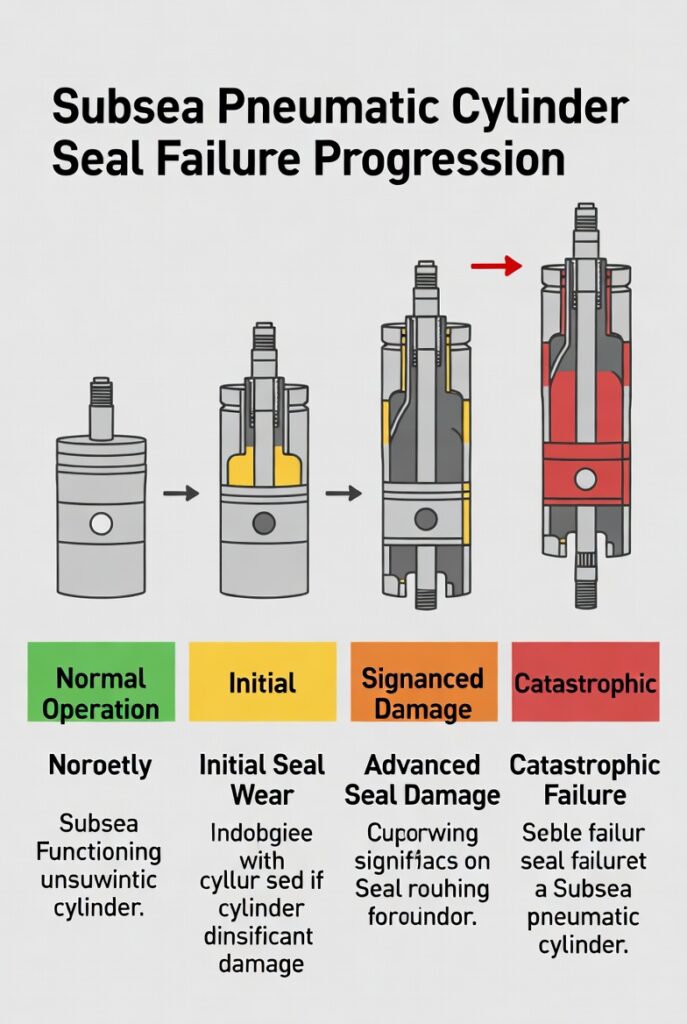
Figure 2: Subsea Pneumatic Cylinder Seal Failure Progression
Check this out — the diagram breaks down seal extrusion at 20–40m, compression set at 30–50m, water intrusion/corrosion at all depths, and structural deformation beyond 50m. It’s a vivid reminder: Depth and HT don’t play nice with elastomers without the right design.
3. Metallurgy for Downhole Tools: The Steel Behind the Drill
Downhole tools from drill bits and packers to logging while drilling (LWD) gear and completion hardware face brutal metallurgy demands: abrasion, erosion, high loads, and corrosive fluids deep underground.Core metallurgy principles:
- High-Strength Low-Alloy Steels (HSLA): For bits and casings balanced toughness and hardness (e.g., 4140 steel for drill collars).
- Tungsten Carbide Inserts: In PDC bits for extreme hardness against rock formations.
- Corrosion-Resistant Downhole Alloys: Like 13Cr stainless for CO₂-rich wells or Alloy 718 for sour service (H₂S resistance).
- Heat Treatment: Quenching/tempering for enhanced ductility in HT zones.
In 2026, we’re seeing advanced powder metallurgy for tools that withstand 300°C+ in geothermal or HPHT gas wells. Failures? Often from fatigue cracks or H₂S embrittlement mitigated with shot peening or non-metallic coatings.
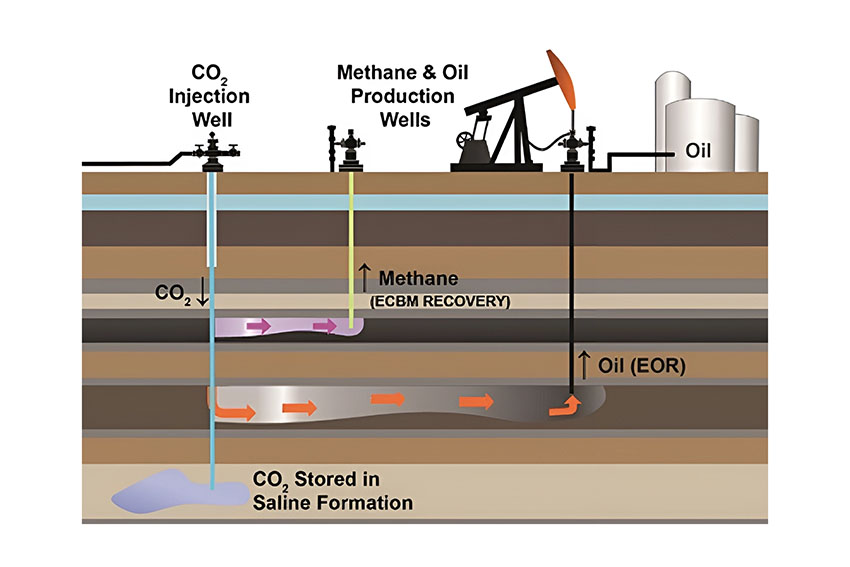
Figure 3: CO₂ Injection Well Metallurgy for EOR and CCS
This schematic shows CO₂ injection, methane/oil production, and storage in saline formations. Notice the metallurgy demands on injection wells — CRAs like 13Cr or Inconel are essential to prevent corrosion in these mixed environments.
Wrapping It Up: The Big Picture for Subsea Pros
Subsea materials aren’t just specs they’re the line between success and costly downtime. Choose CRAs wisely for HPHT to fight corrosion, engineer elastomers for HT resilience to avoid seal disasters, and optimize metallurgy for downhole tools to push exploration limits.
In 2026, with energy transition ramping, these choices are key to repurposing assets for CO₂/H₂ service without breaking the bank.
What’s your biggest material headache right now HPHT alloys, seal failures, or downhole metallurgy?
Drop a comment or email oko@offshorepipelineinsight.com. Subscribe for weekly deep dives + free checklists!